







automatic centrifugal pump
When they say “automatic centrifugal pump?”, many people imagine a regular pump with a connected float switch or pressure switch. But in practice, especially in industrial and serious economic systems, this is a much more complex concept. A common mistake is to assume that automation is limited to maintaining pressure in the water supply system. In fact, we are talking about a holistic control system, which must take into account dry-running protection, frequency control, and compatibility with the specific hydraulics of the system. In ourZhejiang Yangzijiang Pumping Industry Co.,LtdWhen assembling such units, you constantly come across the fact that the client wants “just a pump that turns itself on and off?”, and then it turns out that they also need a frequency converter, a properly selected membrane tank, and sensors that do not clog in a specific environment. This is where we start.
What is hidden behind the word "automatic"?
If we take our serial lines, for example, the samemultistage centrifugal pumpsin a vertical version, the basic version of the automation is a built-in relay and a “dry running” sensor. But this is just the tip of the iceberg. Real automation begins when the pump must operate in a variable flow system. Here you can’t do without frequency regulation (VFD). Many people think that VFDs are only about saving energy. Yes, there are savings, but the main thing is a smooth start, which dramatically reduces the load on the hydraulics and electric motor, and precise maintenance of a given parameter, be it pressure or level. We had a case during the installation of an irrigation system: they installed a regular automatic pump without a VFD, and every time it was turned on there was such a water hammer that the connections on the flanges literally leaked within a month.
Another nuance is the type of control. A local control cabinet with buttons is one thing. But integration into the general dispatch system of a building or technological line is a completely different level. Forautomatic centrifugal pumps, used in water treatment or chemical industries, often require data output via Modbus or similar protocol. It is necessary to carefully select or even modify control cabinets for a specific order. A ready-made solution for all occasions? simply doesn't exist.
And we must not forget about Wednesday. Automation, which works perfectly on clean water, can fail in a matter of days when pumping, relatively speaking, drainage waste or liquids with fibrous inclusions. Pressure sensors with a membrane made of ordinary rubber quickly fail. Therefore, for ourplastic chemical pumpsWe always offer the option of sensors made from certain grades of polymers or stainless steel. This is not a whim, but a necessity, identified after several unsuccessful launches at facilities where they saved on hardware. control systems.
Pump design: what determines the reliability of automation
It would seem that automation is an external unit. But its operation directly depends on the characteristics of the pump itself. Let's take, for example,self-priming pumps. Their key feature is the ability to remove air from the suction line. If such a pump uses automation with a simple pressure switch, then when the level drops and air is sucked in, the pump may begin to “stomp.” - switches on and off frequently, trying to create pressure. This quickly kills both the motor and the mechanical relay. Therefore, for self-priming models, we often recommend schemes using electronic press controls, which have a shutdown delay and a more intelligent response algorithm to changing conditions.
Another example -submersible pumps. Here the automation is located on the surface, and the pump is in the well or well. The biggest problem is the correct definition of “dry running”. The float switch in cramped well conditions may simply jam. Level sensors installed in the well itself are an expensive solution. There is often a compromise: they use a pressure switch with additional current protection (flow switch), which monitors that the pump is pumping water and not running “idle”. But setting it up is a separate art. If it is too sensitive, it will trigger falsely during natural voltage fluctuations in the network; if it is insensitive, it will not protect the pump. On test benchesZhejiang Yangzijiang Pumping Industry Co.,LtdWe work out these combinations in different modes, selecting optimal settings for standard models.
The material of the flow part is also a factor for automation. For example, when usingmagnetic pumpsfor aggressive media, the pump itself is reliable due to the lack of a seal. But the sensors in the control system must be equally robust. If you put an ordinary brass pressure switch on a line with acid, the consequences are predictable. Therefore, in the specifications, we always write down in a separate line the requirements for the material of automation devices compatible with a specific type of pump. This is not just paper work, it is a lesson learned after an incident with contact corrosion in a control cabinet at one of the chemical plants.
Assembly and configuration: where the pitfalls lie
Delivering the pump and control cabinet in separate boxes is half the battle. The fun begins in the editing. A common mistake installers make is installing a pressure sensor or relay directly on the pump outlet flange. Due to pulsations and vibrations, the readings will “jump”, which will lead to incorrect operation and constant protection activation. The sensor should be placed through a damper tube (flexible connection) or, ideally, at a point in the system where the flow is most stabilized. This seems like a small thing, but because of such a “trifle?” We responded to more than one warranty call where the client complained that the “automation was glitchy.”
Setting response thresholds is also not just for show. Especially for systems with a membrane tank. If the difference between on and off pressure (delta) is set too small, for example 0.5 bar, the pump will turn on every 30 seconds, even if no one is dispensing water. This is a “tactometer” mode, which sharply reduces the resource. If the delta is too large, there will be uncomfortable pressure drops in the tap. An experienced installer always asks the customer about the expected operating mode: are there many simultaneous points of analysis, are there instantaneous water heaters in the system that are sensitive to pressure changes. Based on this, it sets the settings. We post information about standard settings for our models in the technical section of the siteyangtzeriverpump.ru, but nothing can replace live adjustments on site.
Another point is power supply. High-quality automation is sensitive to voltage changes. In the conditions of Russian networks this is critical. Therefore, we install stabilizers or at least voltage control relays in control cabinets for critical facilities. Yes, this will make the kit more expensive. But it’s cheaper than replacing a burnt-out frequency converter after six months. We're on our ownproduction linesWe test the operation of pumping units at low (up to 180V) and high (up to 250V) voltage to ensure the stability of the protection.
From practice: cases from projects
I’ll tell you about one water supply project for a small village. There the task was to pump water from three wells into a common pressure tower. The customer initially wanted three independentautomatic centrifugal pump, each with its own automation. But after analyzing the water consumption graphs, they proposed a cascade control system for one cabinet. The bottom line: one main pump with a VFD operates, and when the flow rate increases, the second and third pumps are automatically connected in on/off mode. This provided huge savings on electricity and, most importantly, sharply reduced the number of starts and stops of each unit, increasing their service life. The key was to correctly configure the switching algorithm and provide for rotation of the main pump so that they wear out evenly. The system has been working for three years without any complaints.
And there was also the opposite, unsuccessful experience at an early stage. Deliveredlinear centrifugal pumpswith beautiful modern frequency converters for a hot water recirculation system in a hotel. But they did not take into account the ambient temperature in the technical room - it was under 45°C. Converters designed for max. 40°C, had an overheating emergency every few hours. We had to urgently organize additional cooling and change the modification of the cabinets to a more heat-resistant one. Now, when requesting automation for hot water supply or heating, the room temperature is one of the first questions in the questionnaire.
Another point is related to maintainability. We have switched to using modular components (relays, controllers, terminals) from well-known brands in cabinets, even if it is a little more expensive. Because in the past there were cases when, in order to repair automation systems assembled on unique boards, it was necessary to wait 2 months for spare parts from China. And with a modular system, a faulty unit can be replaced on site in 15 minutes, sending the broken one for repair. For the client this is a minimum of downtime. This decision was born precisely from feedback from service engineers who wander around the facilities.
Looking Ahead: Where Automation is Heading
Now the trend is not just automation, but “smart” ones. pumping systems with predictive elements. We're not talking about the distant future. There are already solutions where the controller, by analyzing the load graph and motor current, can warn of the onset of cavitation or bearing wear even before the pump fails. For industrial facilities, where stopping a pumping station means stopping the entire process line, this is invaluable. We are in our ownR&D areasWe are exploring the possibility of integrating such condition monitoring systems with our standard control cabinets. For now this is an option, but I think in a couple of years it will become, if not a standard, then a very popular option.
Another vector is simplification of setup and diagnostics. Modern frequency converters have built-in web servers. I connected to it via Wi-Fi from a smartphone at the site and saw all the parameters, graphs, and errors. This makes life much easier for service technicians. We are gradually starting to implement such solutions for large commercial orders. True, there is a snag with the Cyrillic alphabet in the interface and the reliability of wireless communications in basements - but these are solvable technical issues.
In the end, back to the beginning.Automatic Centrifugal Pumpis not a product, but a solution. A solution that consists of correctly selected hydraulic equipment, a well-designed control system, high-quality installation and fine-tuning for specific conditions. On the websiteZhejiang Yangzijiang Pumping Industry Co.,Ltdyou can look at the catalog and parameters, but the final selection and adaptation is always better done in dialogue with an engineer who knows not only the passport data, but also how this hardware behaves in real life, for years. Because water and electricity are simple things, but their combination is always a matter of practice, not just theory.
Correspondingproducts
Related Products


Best Sellingproducts
Best Selling Products-
 Corrosion-resistant stainless steel centrifugal pumps SFB and SFBX
-
 Vertical multistage centrifugal pumps made of stainless steel (light series) CDL and CDLF
-
 Metal electric diaphragm pumps DBY
-
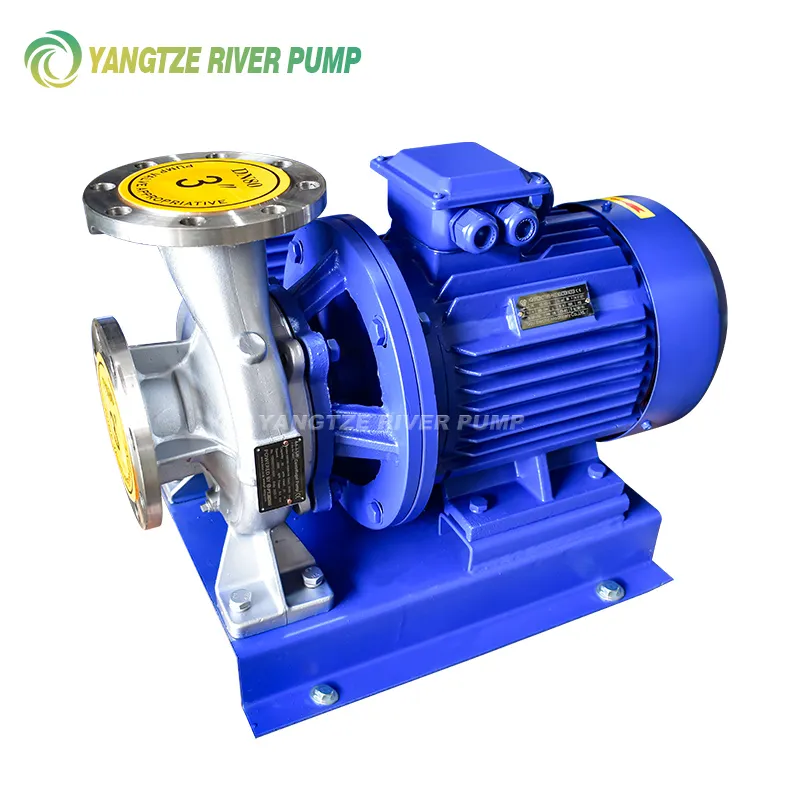 ISW and ISWH Single Stage Horizontal Pipeline Centrifugal Pumps
-
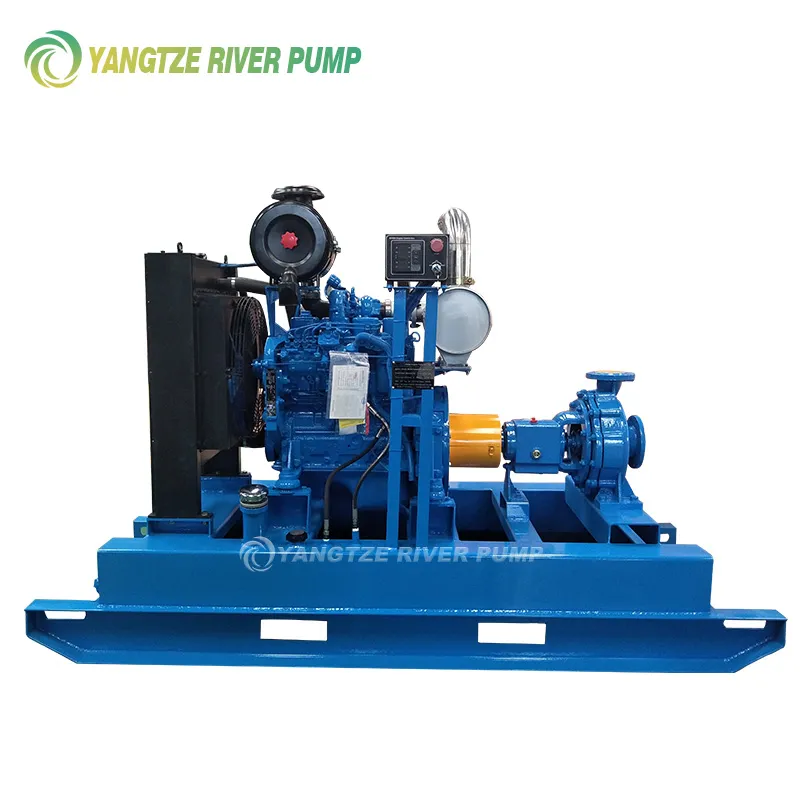 YZIS Diesel Single Stage Centrifugal Pumps
-
 Metal pneumatic diaphragm pumps QBK
-
 Mechanical diaphragm dosing pumps DJ-D
-
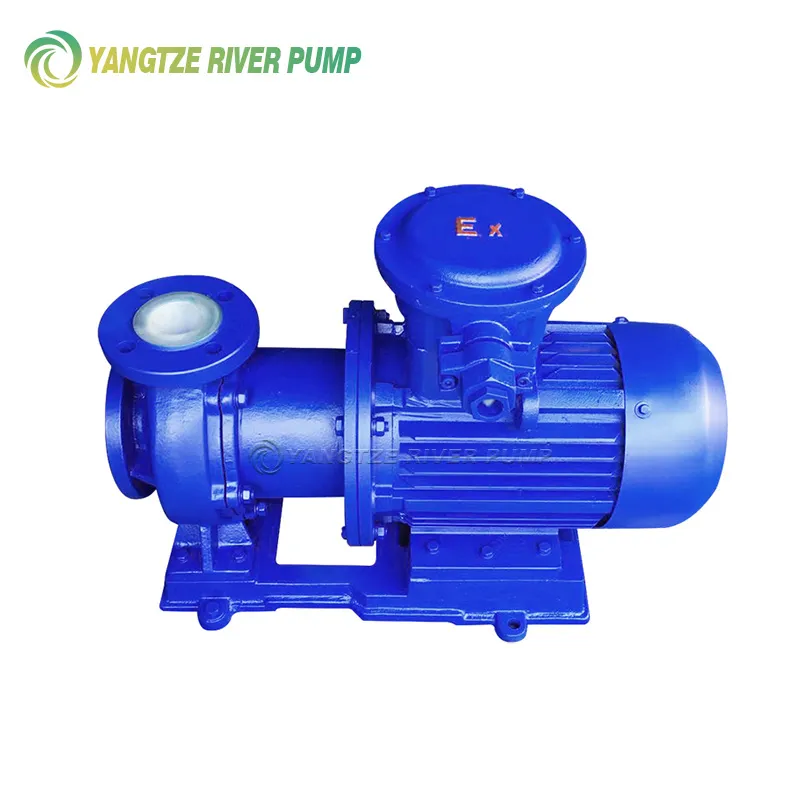 Magnetic pumps with fluoroplastic lining CQB-F
-
 Vertical pumps with PTFE lining YQF
-
 YCB Type Circular Gear Pumps
-
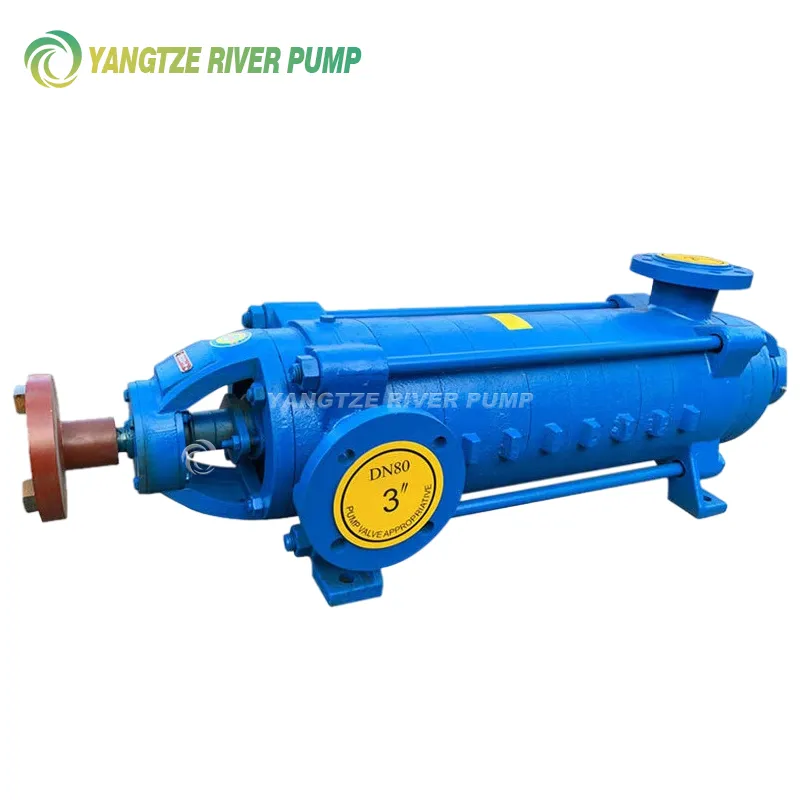 Horizontal multistage pumps for feeding DC boilers
-
 Sanitary screw pumps type GF
Relatedsearch
Related Search- diaphragm diaphragm pump
- centrifugal main pumps
- centrifugal pump for oil
- DIY screw pump
- Vertical single stage centrifugal pumps
- CDLF Complete water supply plants with frequency regulation and constant pressure
- Diesel single stage centrifugal pumps
- Long-distance deep well pumps
- centrifugal pumps for hot oils
- stage centrifugal pump