







stage centrifugal pump
When they talk aboutstage centrifugal pump, the first thing that comes to mind for most is high pressure. And this is logical, a cascade of impellers is essentially several ordinary pumps in one housing. But here’s what is often overlooked, especially when selecting for a specific system: the operating characteristic curve of such a unit is not just “steeper”, it is different in shape. And if we do not take into account this “gradation?” in hydraulic calculations, instability can occur at the point of operation, especially at partial loads. I got burned by this myself when they tried to replace one powerful single-stage pump with a multi-stage pump that seemed to have similar parameters according to the catalogue. The system “breathed” and vibration appeared. We had to figure it out, recalculate, and in the end they selected another model with a different number of steps and blade angle. Experience has shown: forstage centrifugal pumppassport data is only half the story, the second is how it will fit into a specific pipeline.
Design: where the main compromise lies
If we take the classic horizontal consolestage centrifugal pump, then its heart is a shaft on which sits a cascade of impellers and a discharge drum. It seems that the more steps, the better for pressure. But here the longitudinal hydraulic force comes into play. Each wheel tends to move the rotor towards the suction side. In single-stage pumps, this is combated by thrust bearings or wheel design. In multi-stage ones, a discharge drum or an opposing arrangement of steps is used. And here is the key point for reliability. If the unloading is not perfectly balanced (and in real conditions of wear and pressure fluctuations this happens), the shaft begins to “float”, the load on the supports increases, and axial vibration appears. I saw pumps that failed not because of wear of the seals, but precisely because of the progressive imbalance of axial forces. Therefore, when choosing, I always look not only at the number of steps, but also at how unloading is implemented. Some manufacturers, for example,Zhejiang Yangzijiang Pumping Industry Co.,Ltd, in their lines of multistage pumps, they focus specifically on the balanced design of the unloading device, which, judging by practice, seriously extends the overhaul period.
Another nuance is the body. Sectional or drum? For high pressures (conventionally, from 40-50 bar and above), they often go for a drum type; it is stronger, but more difficult to maintain - to get to the middle-stage wheels, you need to disassemble almost the entire assembly. A sectional housing, where each stage is a separate chamber fastened with tie rods, is easier to repair, but requires high production standards to ensure the geometry and tightness of all joints. On their websiteyangtzeriverpump.ruIt can be seen that both types are represented in the assortment, which indicates a wide coverage of technologies. In practice, for most industrial applications not associated with ultra-high pressures, the sectional design turns out to be more durable and repairable in the field.
The materials of the flow part are a separate matter. Both cast iron and stainless steel are suitable for water. But if we are talking about, say, hot network water with impurities or some kind of technological solution, then every element here - from the body of the first stage to the diffuser of the last - must be selected for the aggressiveness of the environment. A common mistake is saving on the material of the internal wheels. steps, they say, they are not at the entrance. But cavitation, if it exists, can also occur in the middle of the tract. Therefore, in serious projects we always require a passport indicating the grade of material for each group of parts. The mentioned company, judging by the description of their production lines, has a full cycle from R&D to testing, and this allows them to flexibly select materials to order, and not offer only standard options.
Scope of application and typical installation errors
Main nichestage centrifugal pump- these are, of course, water supply systems, booster stations, boilers, high-pressure washers, reverse osmosis. Where you need to squeeze out a lot of pressure from a relatively small flow rate. But there are also less obvious applications. For example, in some coating production lines that require the supply of reagents under stable and high pressure. Or in circulation circuits with high hydraulic resistance.
The most common installation mistake that I have seen is neglecting the requirements for the straight section at the inlet. For a single stage pump this is, say, 5 pipe diameters. For multi-stage, especially with the first impeller designed for high suction speeds, this section should be larger - 7-10 diameters. Otherwise, an uneven swirling flow at the entrance to the first stage causes cavitation and imbalance of the entire rotor. The result is noise, a drop in parameters and rapid wear. Once I came to the site with a complaint about the constant hum of the pump. It turned out that it was installed immediately after two bends at 90 degrees. Added direct insertion and the problem went away.
Another point is the strapping. Mandatory check valve and gate valve at the outlet - this is the ABC. But for multi-stage pumps, it is critical to provide soft start or frequency control. A sharp start under load creates enormous torque and hydraulic shock, which hit the studs connecting the sections of the body. Over time, they can “float” and a leak will appear. Therefore, the passport of serious units always contains a clause about the recommended starting method.
Comparison with other types: when stepped is not the best choice
Let's say the task is to pump liquid with high pressure, but also with variable flow rate. The first impulse is to takestage centrifugal pumpwith a frequency converter. But this is not always optimal. At low speeds, the efficiency of a multi-stage machine drops much faster than that of a single-stage machine. The hydraulics inside are more complex, with more local resistance. Sometimes a cascade of two or three single-stage pumps, switched on as needed, turns out to be cheaper and more efficient. This gives flexibility and better average efficiency under variable load conditions.
Or the situation with viscous liquids. The centrifugal principle, especially in a multi-stage design, no longer works well for media with a viscosity higher than, say, 50-80 cSt. This is where screw or gear pumps come into play. Available from the same manufacturerZhejiang Yangzijiang Pumping Industry Co.,Ltd, I also see single-screw pumps, which is logical - the company is covering various technological niches, and is not trying to solve all problems only with centrifugal machines. This is the right approach.
Another competitor for low flows but ultra-high pressures is the plunger pump. It gives a more stable pressure, regardless of flow. But he is also the source of pulsations. Therefore, the choice between staged centrifugal and plunger is often a choice between a relatively pulsating but smooth flow and a stable flow that requires pulsation dampers.
Maintenance and diagnostics: what to look for first
Scheduled maintenance forstage centrifugal pump- this is not just replacing the oil seal or mechanical seal. The first thing to do when stopping is to check the axial play of the rotor. It is the best indicator of the condition of the unloader and thrust bearings. An increase in play beyond the specification is a direct signal for deeper disassembly.
The second key point is to measure vibration not only in the radial, but also in the axial direction. Increased axial vibration is almost guaranteed to be a problem with the balancing of axial forces or wear of the thrust unit. Often they try to “treat” her. balancing the rotor, but this does not help if the reason is hydraulic.
When disassembling, I always pay attention to the condition of the guide vanes or diffusers (depending on the design). Their uneven wear, especially in stages, indicates that the pump has been operating for a long time in off-design mode, with a flow imbalance. This is valuable information for configuring the entire system. By the way, having your own testing station, likeZhejiang Yangzijiang Pumping Industry Co.,Ltd, is a big plus. This means that after repair or custom manufacturing, the pump can be run on a stand, take real characteristics and make sure that they correspond to the calculated ones, and not just “turn on and pump?”.
Prospects and outcome: what is changing in technology
The trend now is integration.Stage Centrifugal PumpIt is increasingly rarely supplied as a separate unit. This is a ready-made pump module assembled with a frequency converter, sensors, control and protection system on a common frame. The customer receives a “black box”, which only needs to be connected to the pipes and the electrical network. This is convenient, but from the point of view of maintainability and flexibility, it is debatable. It is more difficult to diagnose, it is more difficult to replace a component from another manufacturer.
In the design of the pumps themselves, I see a movement towards more efficient blade profiles calculated using CFD modeling. This allows you to reduce the number of stages to achieve the same pressure, which means making the unit more compact and reliable. The use of ceramic and wear-resistant polymer coatings for impellers in aggressive environments is also growing, which increases their service life.
As a result,stage centrifugal pump- this is not archaic, but a completely modern and developing type of equipment. His choice is always a search for a balance between pressure, flow, efficiency, reliability and cost of ownership. And the key to success is not in blind trust in the catalog, but in understanding the physics of its operation and the subtleties of its application in a specific system. As practice shows, including products from full-cycle companies like Yangtzejiang, when the manufacturer is deeply immersed in the topic from development to testing, this understanding greatly facilitates both selection and subsequent operation.
Correspondingproducts
Related Products




Best Sellingproducts
Best Selling Products-
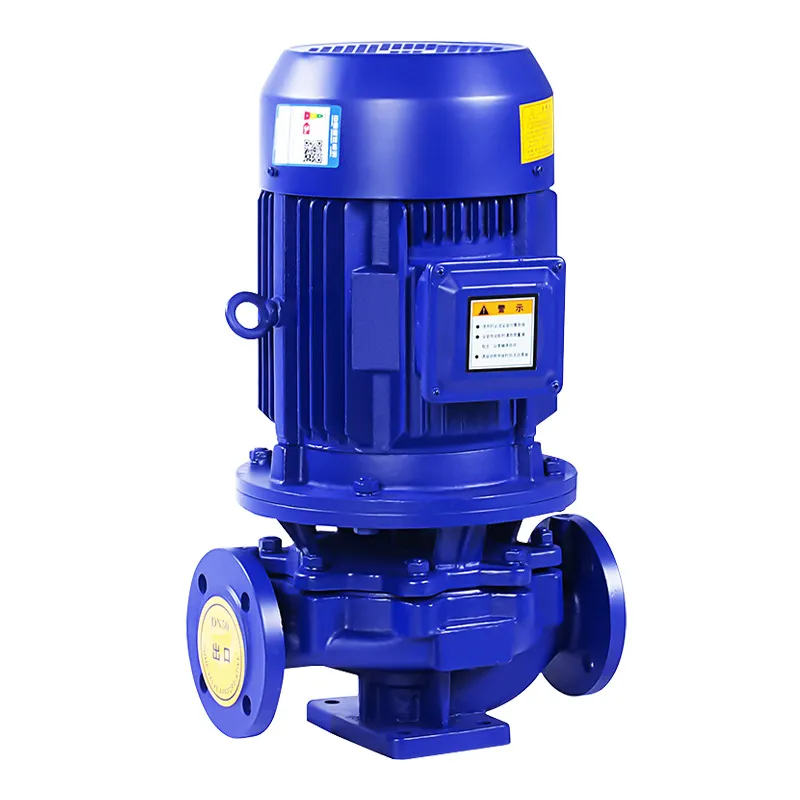 Vertical single-stage pipeline centrifugal pumps ISG and IHG
-
 Vertical pumps with PTFE lining YQF
-
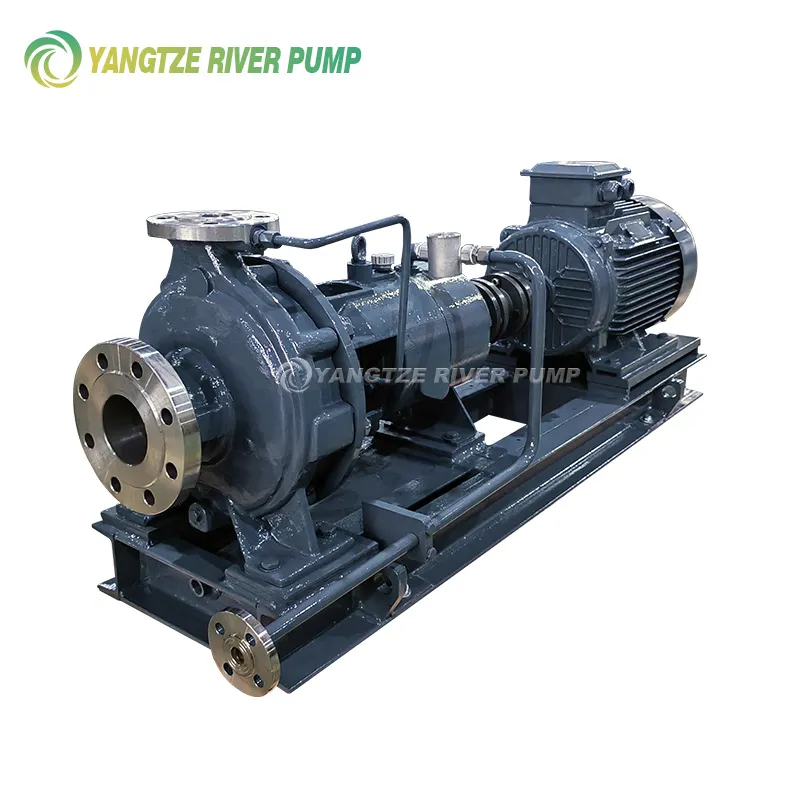 Petrochemical Process Pumps API 610 YZA
-
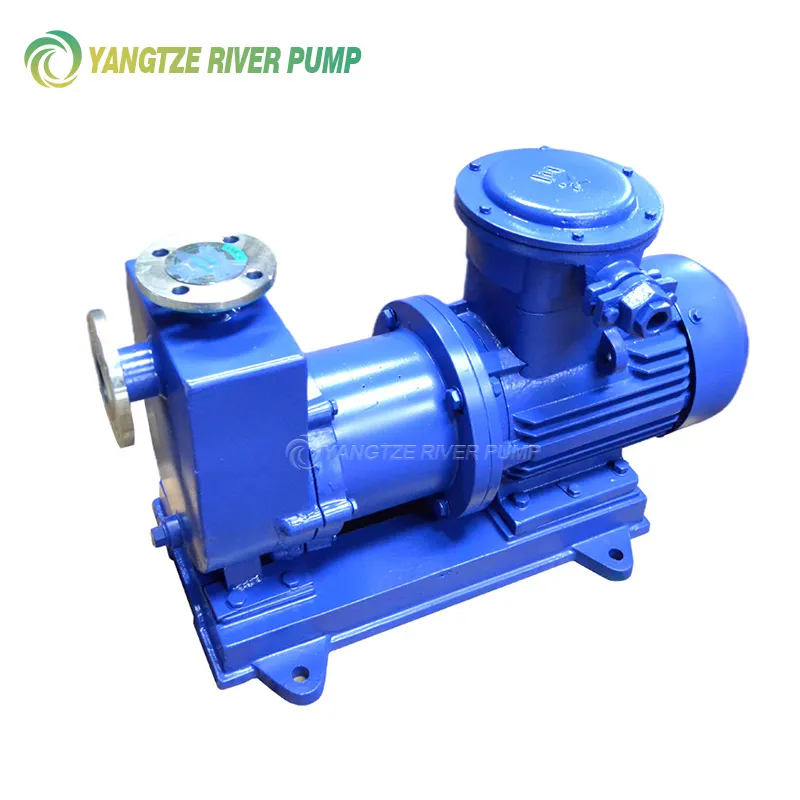 ZCQ Stainless Steel Self-Priming Magnetic Pumps
-
 Vertical multistage centrifugal pumps made of stainless steel (light series) CDL and CDLF
-
 Horizontal multistage pumps for feeding DG boilers
-
 Sanitary screw pumps type GF
-
 Non-clogging self-priming wastewater pumps ZW
-
 Metal electric diaphragm pumps DBY
-
 Corrosion-resistant stainless steel centrifugal pumps SFB and SFBX
-
 Horizontal multistage centrifugal pumps type D
-
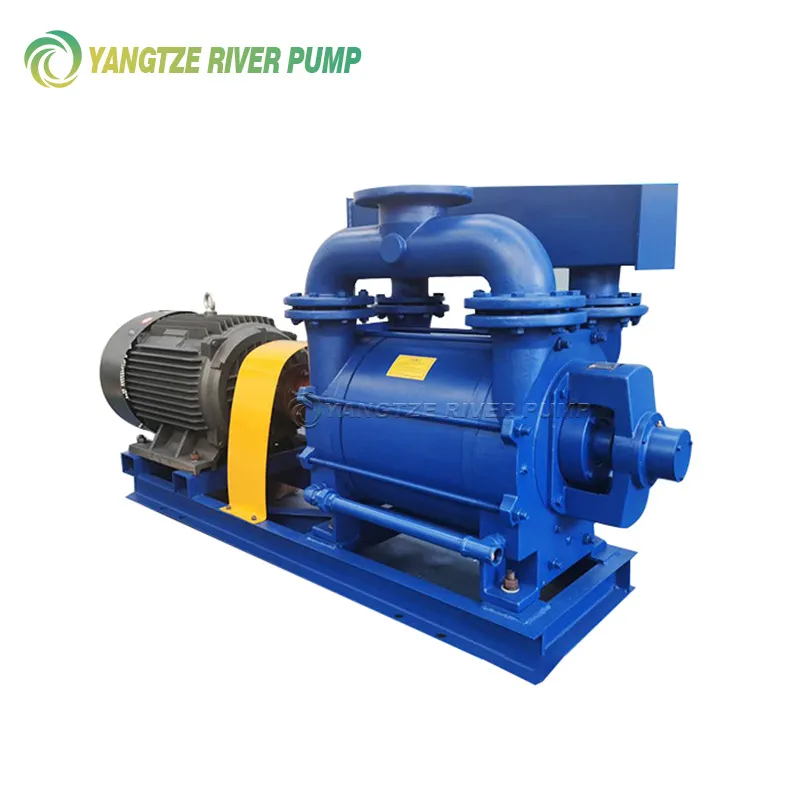 Liquid ring vacuum pumps type 2EB