







large centrifugal pumps
When they say “large centrifugal pumps?”, many people immediately imagine just a large unit. But in practice, the key thing is not the physical dimensions, but the set of parameters: flow, pressure, drive power, and most importantly, reliability in specific conditions. A common mistake is to assume that a large pump is a priori powerful and durable. In fact, if you incorrectly select the material of the flow part for the medium or underestimate the cavitation reserve, even the most massive apparatus will fail in a matter of months. We at Zhejiang Yangzijiang Pumping Industry LLC have encountered this more than once, especially when clients sent technical specifications with simplified environmental data.
Design nuances that you won’t see in the catalog
Let's take, for example, the bodylarge centrifugal pumpstwo-way input. In theory - an excellent solution for high costs, minimizing axial force. But there was a story at one of the thermal power plants near Novosibirsk: a pump of this design began to vibrate after six months of operation. We took it apart and it turned out that the wear of the sealing rings was different in the right and left cavities due to the uneven supply of flow from the inlet pipe. Catalogs rarely write about this effect; these are the subtleties of installation and strapping.
Or material. For larger units, cast iron is often offered as an economical option. But for sea water, even with protective coatings, this is risky. We had a project for a port terminal, where pumps with a cast iron body and a stainless impeller were initially installed. We convinced the customer to use full grade 316L stainless steel for all wet parts. More expensive? Yes. But three years later they sent thanks - a neighboring pier with “budget” ones. the pumps had already changed their rotors, and their equipment was operating normally.
Another point is the drive. With powers of 500 kW and above, direct connection to the electric motor via a coupling is no longer justified. For reallylarge centrifugal pumpssometimes it is more logical to consider a gearbox or even frequency conversion in order to get away from resonant frequencies and smoothly reach the operating mode. But this makes the project more expensive, and customers often save here and then pay for the repair of foundations and bearing units.
Testing as a critical step
At our production facility at Zhejiang Yangzijiang Pump Industry LLC we have our own test bench for pumps with nozzle diameters up to 500 mm. This is not for show. Before shipping, we race each large unit not only on water, but, if required, also on viscous liquids - for example, glycerin or fuel oil. Why? Because the characteristic curve, especially forlarge centrifugal pumps, on water and on a more viscous medium may differ by 15-20%. One day we almost shipped a pump for pumping molasses, which according to the passport (designed for water) was suitable. We decided to check it on a stand with a simulated environment - the lack of pressure was almost 18 meters. I had to quickly recalculate and change the wheel to a version with a different blade exit angle.
The most difficult thing in testing large machines is to reproduce real-life suction conditions. It is possible to catch cavitation at the stand, but often problems begin on site due to the non-ideal geometry of the suction pipeline - unnecessary turns, narrowing. Therefore, now in the documentation we make recommendations on the configuration of the suction line as a separate paragraph, and even draw sketches. This reduces the number of warranty claims.
And yes, noise and vibration. For an 800 kW pump, vibration levels of even 5 mm/s can become a serious problem after a year. Therefore, during testing we take vibration spectra for all bearing units. There was a situation with a mine drainage pump: everything was normal at the stand, but high-frequency vibration arose at the site. It turned out that the reason was a rigid welded support, which resonated with the rotational speed. I had to develop a damping gasket. Such nuances cannot always be calculated in theory.
Cases from practice: when theory lags behind reality
I’ll tell you about one of our projects - deliverylarge centrifugal pumpsfor the recycling water supply system of a metallurgical plant. Medium - water with a suspension of scale, temperature up to 45°C. According to the calculations, everything matched, we chose pumps with a wear-resistant coating based on chromium carbide. But after 9 months, the customer reported a drop in productivity. An autopsy showed that the main wear did not occur on the impeller blades, as expected, but in the area of the sealing gaps between the wheel and the housing, where the flow speed is maximum. The coating stayed there, but the gaps increased due to abrasive action, and overflow began. We had to quickly develop and supply replacement housing inserts with an increased thickness of the protective layer in these areas. Now, for such conditions, we immediately lay down such a structure.
Another example is working with low-boiling liquids. It would seem that the main thing is to ensure the necessary cavitation reserve. But for large pumps, thermal conditions are also important. There was a pump for the propane-butane fraction at the refinery. During downtime, even for a short period, the liquid in the housing could boil from the heat of the environment or from the heating of the bearings. At the subsequent start-up there is a water hammer. They found a non-standard solution: they introduced a system for purging the housing with inert gas during stops and installed temperature compensators on the suction pipe. This is not covered in standard pump textbooks.
And of course, logistics and installation. Dimensions and weight of several tons are a different story. Once it was necessary to dismantle part of the wall of a workshop at the customer’s site because the designers did not take into account the overall corridor for bringing the pump along with the frame and foundation slab. We now always request a shop floor plan with movement paths and offer flat-packed delivery options, even if this is a little more expensive. On-site assembly, of course, requires our specialist, but it eliminates such risks.
Service and feedback: what happens after shipment
Many manufacturers believe that they shipped the pump and forgot about it. We at Zhejiang Yangzijiang Pump Industry Co., Ltd. try to keep feedback. Especially forlarge centrifugal pumps, which are key equipment. Six months to a year after launch, we request data on power consumption, bearing temperature, and vibration level. This is invaluable information for finalizing the model range. For example, thanks to this practice, we have modified the bearing lubrication system for pumps operating in “start-stop” mode. The standard oil seal could not cope with temperature changes and oil leaked. We switched to a labyrinth seal with a drainage channel - the problem went away.
Another important point is training of customer personnel. Often breakdowns occur due to incorrect starting: incomplete opening of the valve on pressure, starting “dry” even for a few seconds. For large pumps this is fatal. Therefore, we always insist on conducting at least a brief briefing for operators. Sometimes we even shoot short videos on the procedure for starting and stopping a specific model. This reduces risks.
Spare parts. For large units, keeping a full set of spare parts in stock is expensive. But we have worked out a system where we stock critical and wear parts for every major model we sell: O-rings, shaft bushings, seal kits or mechanical seal cartridges. Upon request, shipment within 2-3 days. This disciplines both us and the customer to plan repairs in advance, and not in emergency mode.
Looking Ahead: Where Large Pump Development Is Heading
Now the trend is not just to increase the size, but to increase efficiency and intellectualize control. Forlarge centrifugal pumpseven a 1% increase in efficiency means tens of thousands of rubles in energy savings per year. We are experimenting with blade profiling using CFD modeling to minimize hydraulic losses in the flow path. The first test results showed an increase of 1.5-2% for type D and DS pumps of our production.
The second direction is monitoring. Built-in vibration and temperature sensors are almost standard. But now we are considering the possibility of installing sensors to indirectly assess the wear of the flow path - for example, through pressure pulsation analysis. This will give a forecast of the remaining life. These are pilot projects for now, but they are the future.
And finally, materials. Composite materials based on carbon fiber-reinforced polymers for large pump casings are still exotic due to the price. But for aggressive environments, where even high-alloy steel corrodes, this may be the solution. We are negotiating with one research institute about joint testing of a prototype hull made of this material. If the issues with creep and durability of compounds can be resolved, this could be a breakthrough for the chemical industry. All this is not for the sake of innovation for the sake of innovation, but to solve the very practical problems that we face at sites again and again.
Correspondingproducts
Related Products


Best Sellingproducts
Best Selling Products-
 Non-clogging self-priming wastewater pumps ZW
-
 Metal pneumatic diaphragm pumps QBK
-
 Corrosion-resistant stainless steel centrifugal pumps SFB and SFBX
-
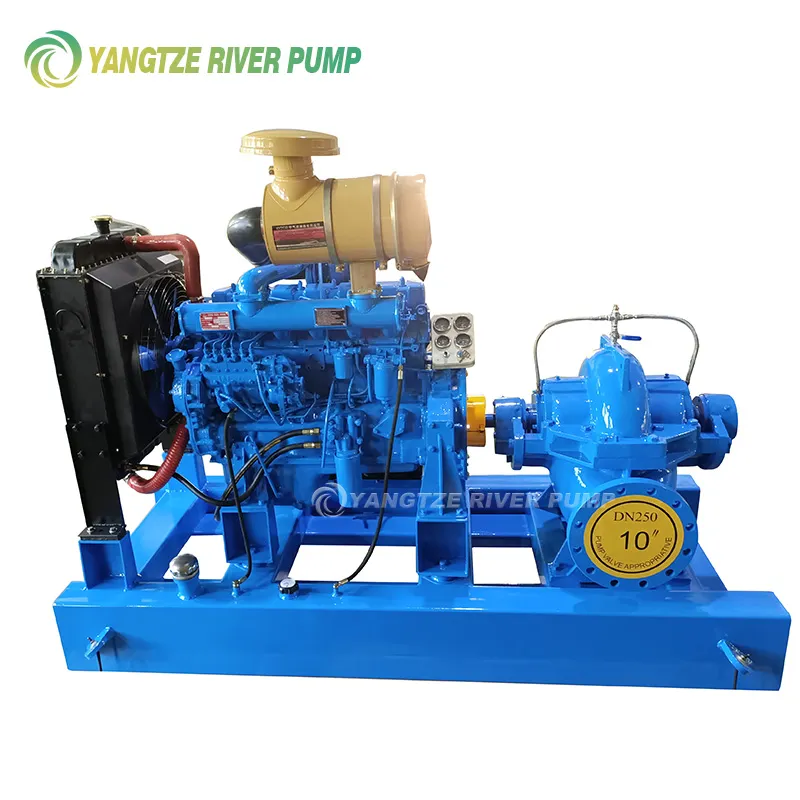 Diesel pumps with horizontal connector YZS and YZSH
-
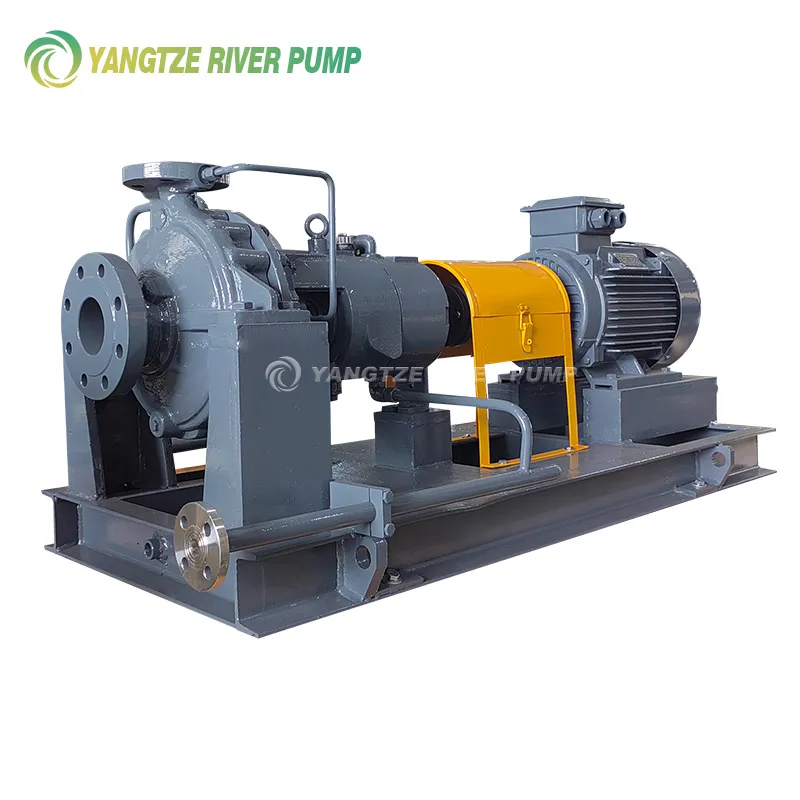 Petrochemical Process Pumps API 610 YZE
-
 Horizontal multistage centrifugal pumps type D
-
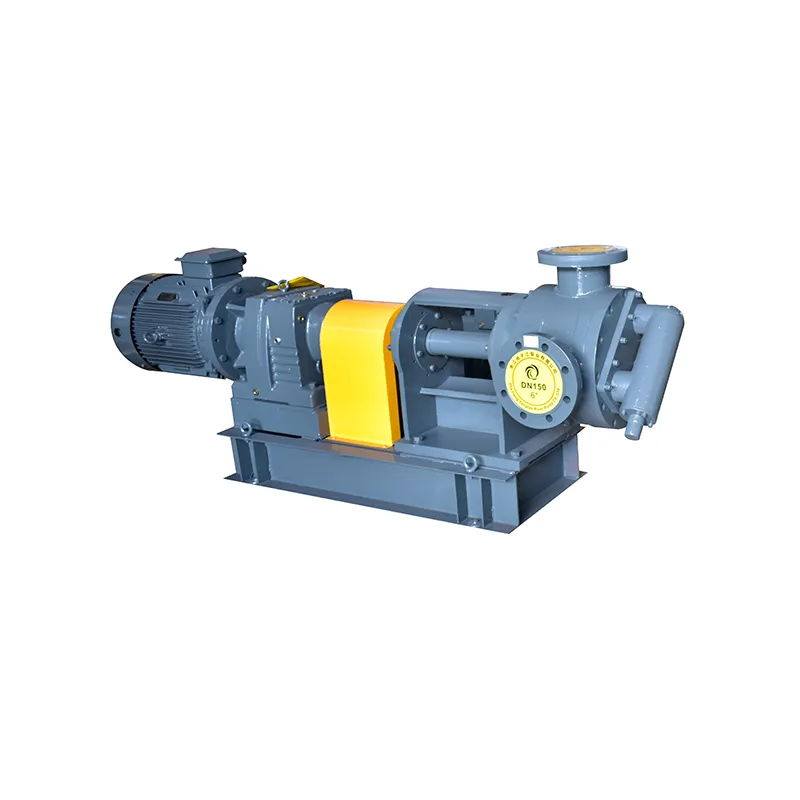 NYP High Viscosity Internal Gear Pumps
-
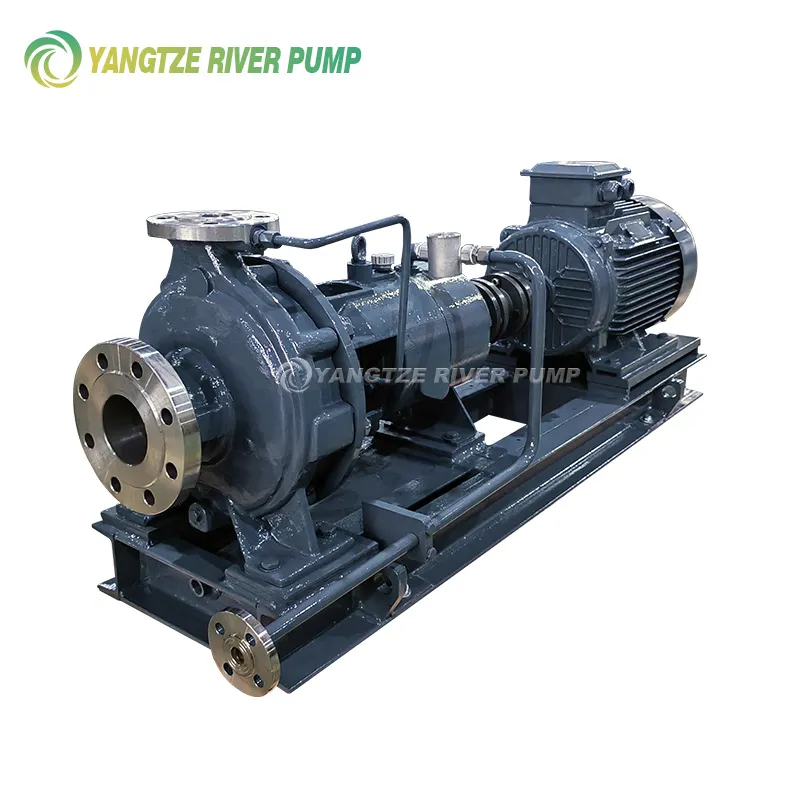 Petrochemical Process Pumps API 610 YZA
-
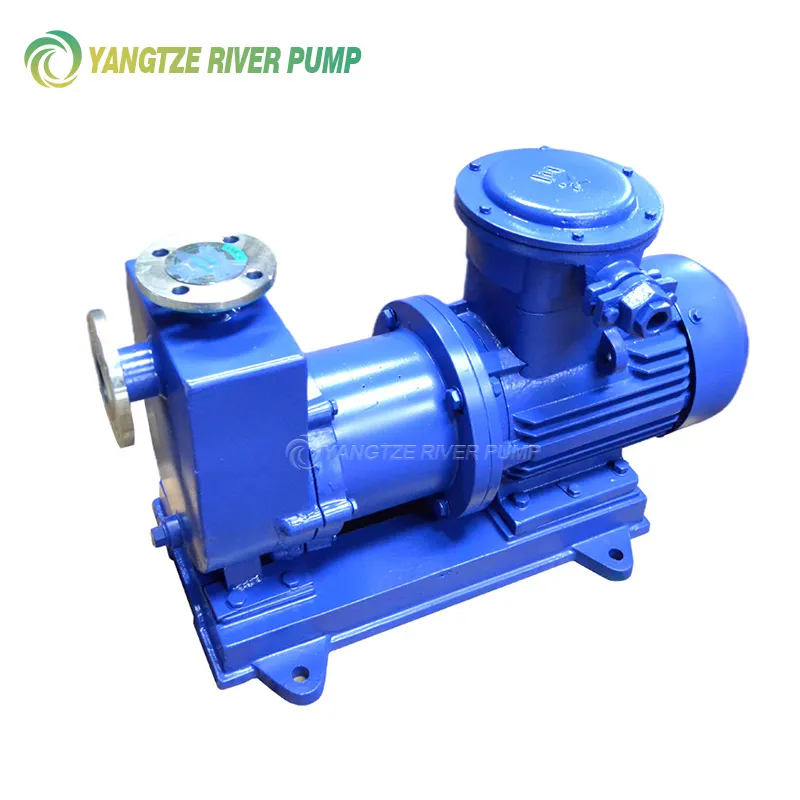 ZCQ Stainless Steel Self-Priming Magnetic Pumps
-
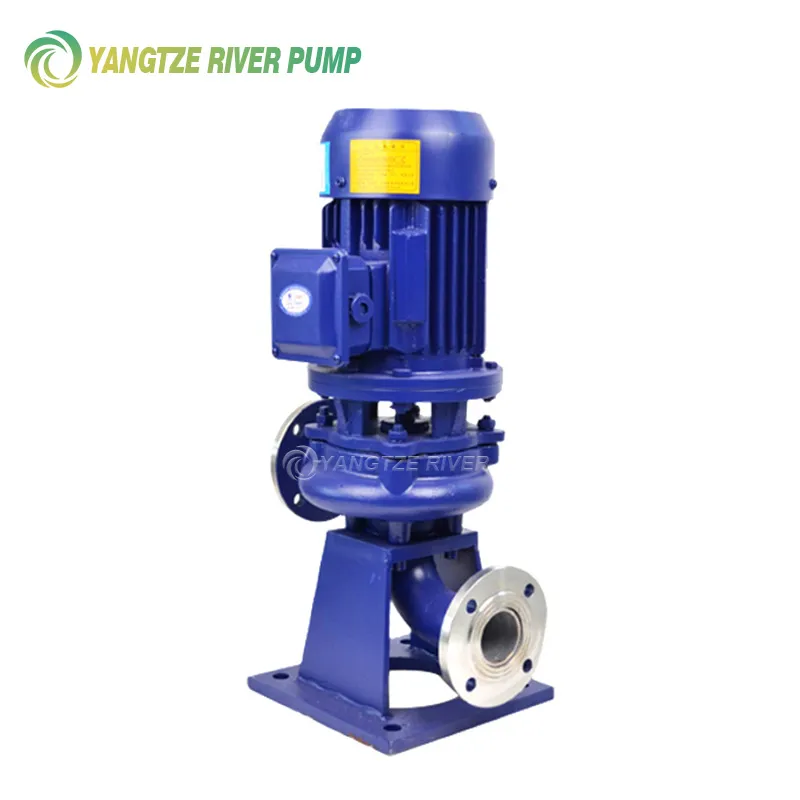 Non-clogging vertical wastewater pumps LW
-
 Vertical multistage centrifugal pumps made of stainless steel (light series) CDL and CDLF
-
 Infinitely variable screw pumps type G