







centrifugal pump head 40 m
When you see in the technical specifications “a centrifugal pump with a head of 40 m”, the first thought is - yes, some forty meters, this is not the limit. But here lies the main pitfall. Many people, especially those who are just starting to work with water supply or pumping systems, think that this is a guaranteed value at the outlet of the pipe under any conditions. In fact, this onehead 40 m- a parameter that needs to be “linked” very carefully. to a specific system: to the length of the pipeline, the number of elbows, shut-off valves, and even to the temperature of the pumped medium. I myself saw how my colleagues installed a unit designed for these 40 meters in a system with a lot of turns and high static pressure, and then they wondered why the performance was “not up to par”. This is not a fault of the pump, it is an error in calculating the hydraulic resistance. Therefore, for me, this figure is not a starting point, but rather a final one, which must be reached by choosing everything else correctly.
From theory to practice: how do they “live?” forty meter pumps
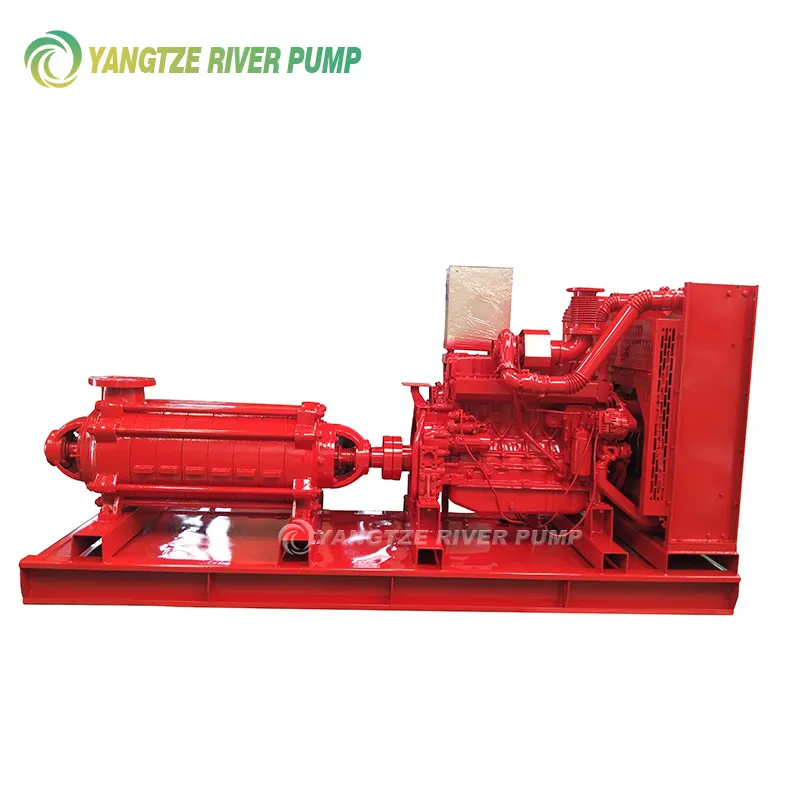
In our production work at Zhejiang Yangzijiang Pumping Industry LLC, we constantly have to balance between passport data and the customer’s actual conditions. Take our multistage centrifugal pumps for example. They often give out such parameters. Structurally - yes, several impellers on one shaft, each one adds energy, in total we can easily gain 40 or more meters of pressure. But the key word is “total?”. If the client needs exactlycentrifugal pumpwith such a pressure to supply water from a deep well to a high-rise building, then a multi-stage model is often the best choice. However, if the environment is aggressive, then we look towards chemical pumps with appropriate coating, where the pressure characteristics can be adjusted towards reliability, and not maximum.
But with single-stage models the story is more interesting. To produce a stable 40 meters, you need a wheel of the appropriate diameter and rotation speed. Sometimes it is easier and cheaper for the customer to take a slightly more powerful engine and a single-stage pump than a multi-stage one, if there are no strict restrictions on dimensions. We test each unit at the stands, and it happens that at nominal speed the pump shows 42-43 meters, but we write 40 in the passport. This is not a deception, it is a reserve and a guarantee that in real, slightly more severe conditions, it will definitely fulfill its task. This is the same practical approach that comes with experience in assembly and testing.
I remember one incident involving installation at a condensate pumping facility. The customer demanded exactly 40 meters according to the passport. We selected a model. When starting up, the pressure was normal, but after a couple of months noise began and the pressure dropped. We figured it out - it turned out that the system had a frequent “start-stop” mode, and somewhere a check valve was jammed, creating water hammer. The pump had something to do with it, but the system was “choking”. his. I had to modify the harness and install soft starters. Conclusion: on its ownhead 40 mis not a panacea unless you analyze the entire technological chain. Now I always ask leading questions about the operating mode and fittings.
Tests as a litmus test
All our pumps, before being sent to the client, undergo a full cycle of tests at our own test benches. This is not for show. For pumps with a stated head of 40 meters, this is especially important. We are ?racing? them not on water, but often on more viscous liquids, if this is specified in the order, we look at the Q-H curves. It happens that the theoretical calculation and the actual characteristics differ slightly due to tolerances in the casting of the impeller or the quality of surface treatment. This is normal for mass production. The main thing is to catch this deviation and either adjust the process or accurately indicate the parameters in the documentation. On the websiteyangtzeriverpump.ruWe honestly write that we combine the areas of R&D, production and testing - this is exactly what it’s about. Without our own testing ground, talking about guaranteed parameters would simply be frivolous.
During testing of one of the linear centrifugal pumps, just under the target of 40 meters of pressure, we encountered cavitation in certain modes. According to the data sheet, everything matched, but when simulating real suction conditions with a little support, a characteristic sound appeared. I had to return it to the designers and slightly modify the profile of the inlet pipe and the wheel. If this had not been done and shipped “as is?”, the client would have received a unit that quickly failed. Therefore, for me the number is ?40? - this is also the point after which you need to look especially carefully at the NPSH cavitation reserve.
Tests are also a test of “endurance”. We keep the pump under load at the design pressure for several hours, measure vibration and temperature of the bearing units. Forty meters is not a peak point, but a working point. And it should be in the zone of maximum efficiency of the unit. If during the tests we see that this point has shifted, for example, to 38 meters, this is a reason to look into it. Maybe it's the seals, maybe it's the assembly. There are no trifles here.
What is the required pressure often confused with?
A very common mistake is to confuse the concepts of pressure and pressure. The client says: “I need a system pressure of 4 bar.” And 4 bars is approximately 40 meters of water column. But! This is the pressure in a specific area. If the pump stands at the bottom and pumps upward, then these 40 meters must cover both the height difference (static head) and all losses along the length and in the fittings (dynamic losses). Often the customer only takes into account the height and forgets about losses; as a result, the pump operates at the limit, not delivering the required performance. I have to explain thatcentrifugal pump head 40 m, indicated in the catalog, is its ability to overcome the total hydraulic resistance of the system of 40 meters, and not create a pressure of 4 bar at any point.
Another confusion is with performance. Pressure and flow are inversely related to the pump characteristic. The higher the pressure, the lower the flow rate, and vice versa. And when they ask for a “pump of 40 meters and 50 cubic meters per hour?”, you need to clearly look at the summary schedule. Sometimes such an operating point is located at the very edge of the curve, where the efficiency is already low, the operation is uneconomical and dangerous from the point of view of cavitation. In such cases, we advise you to either reconsider the requirements for the system, or consider another model, maybe even from a different line, for example, a submersible type, if we are talking about a well.
There was a project where irrigation required exactly this balance: 40 m and high flow. Standard single-stage models were not suitable. We considered the option of two pumps in parallel, but this complicated the design. As a result, after consultations with engineers from R&D, they proposed a custom solution based on a multistage pump with an enlarged flow channel. Not the most typical solution, but it fit the requirements perfectly. This means that you cannot blindly follow the numbers from the technical specifications; sometimes you need a creative, but technically competent approach.
Materials and reliability: what is behind the numbers
A head of 40 meters is not only about hydraulics, but also about mechanical strength. In multistage pumps, which are often used for such applications, the pressure in the final stages can be significant. Therefore, the material of the housing, covers, and rotor is critically important. At Zhejiang Yangzijiang Co., Ltd., we use cast iron, stainless steel, alloys, and plastics for chemical pumps for different media. If you are pumping, relatively speaking, clean water, you can get by with cast iron. But if it is a solution with an abrasive, then even with the same 40 meters of pressure, the cast iron impeller can quickly fail. We have to offer an option with a wear-resistant coating or from a different material, even if this slightly changes the final cost.
Seals are a separate issue. With this pressure, the packing seals may require frequent maintenance. We almost always recommend mechanical seals matched to the media. An error in choosing a seal can lead to a leak, and in the case of aggressive liquids, an accident. Once there was a precedent with pumping an alkaline solution. The pump was ideal in terms of pressure, but the seal was standard, for water. In the first weeks it started leaking. It's good that you noticed it quickly. After this, in the selection questionnaire there is always a separate item asking about the chemical composition and temperature of the environment.
Reliability is also a margin of safety. Our designers always set a certain coefficient. When we talk abouthead 40 mas a maximum operating value, this means that the pump can operate for a short time in the region of 44-46 without catastrophic consequences. This is important for systems where pressure surges are possible. Our task is not just to sell a unit that will produce a number, but to supply equipment that will work for years under the client’s specific conditions. That’s why dialogue and detailed technical specifications are so important.
Instead of a conclusion: thinking out loud
So, returning to the original request... ?Centrifugal pump head 40 m? - this is not a window sign, but a whole complex of issues. This includes the correct selection of the type of pump (multistage, cantilever, submersible), analysis of the system, selection of materials, and understanding of the operating mode. From single stage to plastic chemical pumps, there's always an option in our range, but the key to success is in the details. You can’t just take the first model you come across with a suitable number from the catalog onyangtzeriverpump.ruand expect her to solve all problems. You need to look deeper: at the characteristic curve, at the cavitation reserve, at the recommendations for piping.
Personal experience suggests that the most successful projects are those where the customer and I, at the selection stage, discuss not only the required parameters, but also the entire process chain. Sometimes during such a conversation it turns out that what is really needed is a pressure of not 40, but 35 meters, but with a large margin of reliability or corrosion resistance. And this changes the choice in favor of, for example, a chemical pump made of special plastic. Or vice versa, we need a headroom, and then we look towards an adjustable drive.
In general, forty meters is an excellent benchmark, a serious application for a centrifugal pump. But behind this figure there must be competent calculation, high-quality manufacturing and, no less important, an honest conversation between the supplier and the buyer. Only then will the equipment work like a clock and not become a headache for the operation department. We try to adhere to this principle in our work.
Correspondingproducts
Related Products




Best Sellingproducts
Best Selling Products-
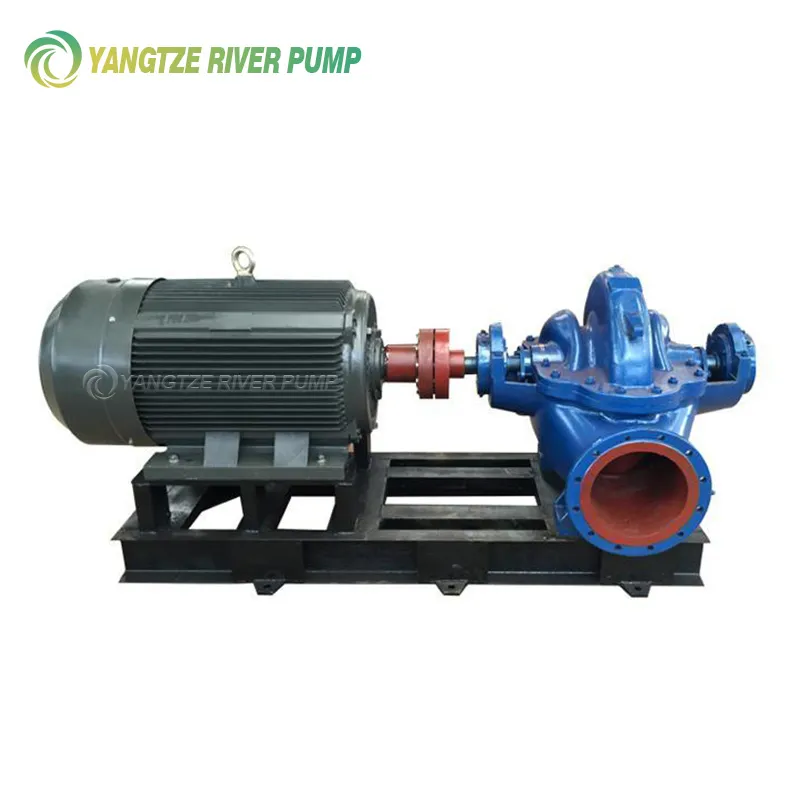 Single Stage Double Entry Centrifugal Pumps Type S
-
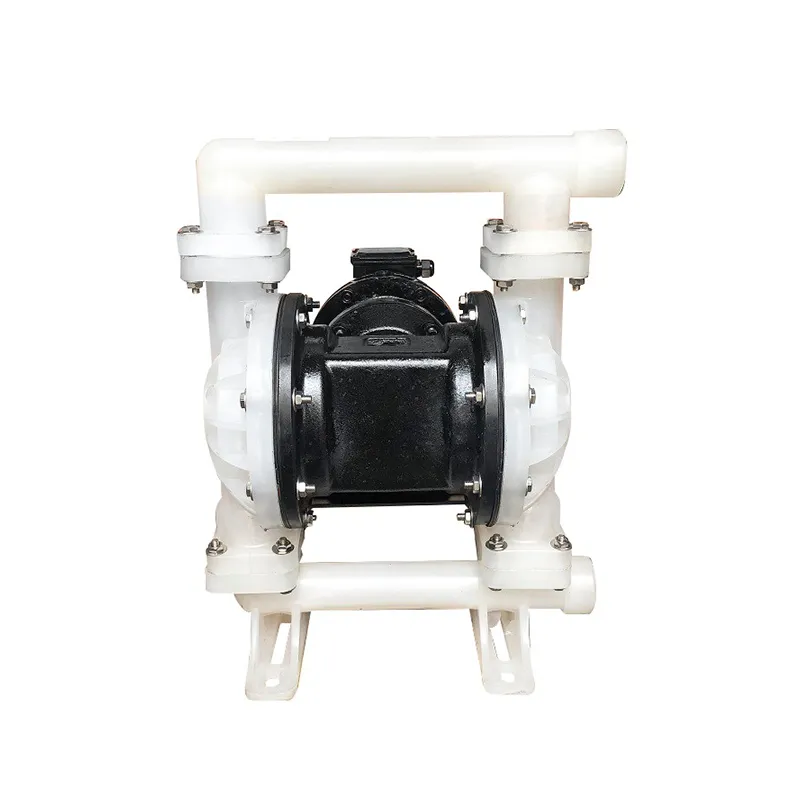 DBY Non-Metallic Electric Diaphragm Pumps
-
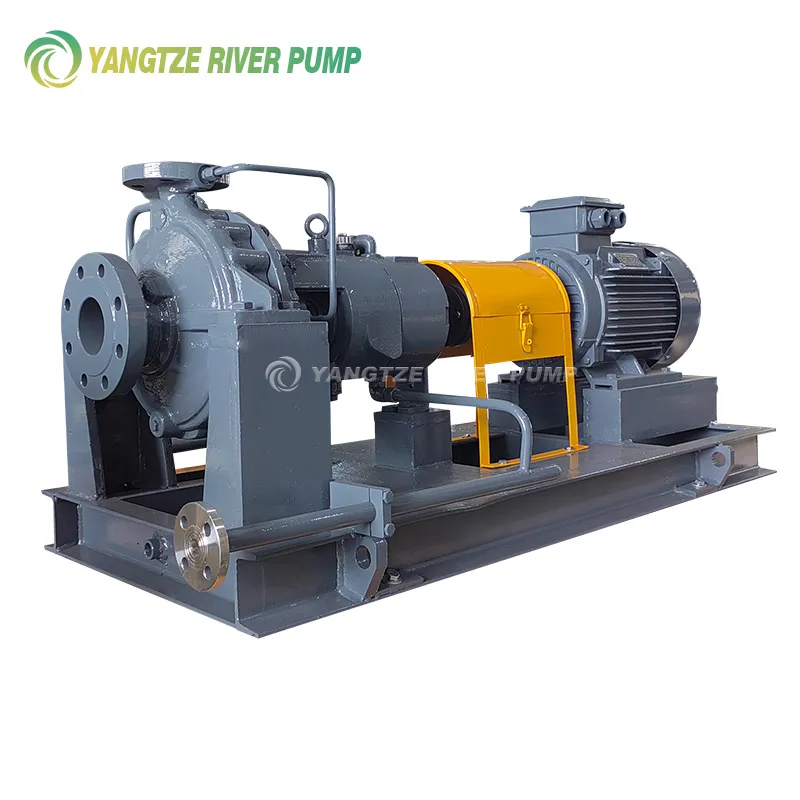 Petrochemical Process Pumps API 610 YZE
-
 Horizontal multistage pumps for feeding DG boilers
-
 Infinitely variable screw pumps type G
-
 YCB Type Circular Gear Pumps
-
 Geared screw pumps type G
-
 Metal electric diaphragm pumps DBY
-
 Sanitary screw pumps type GF
-
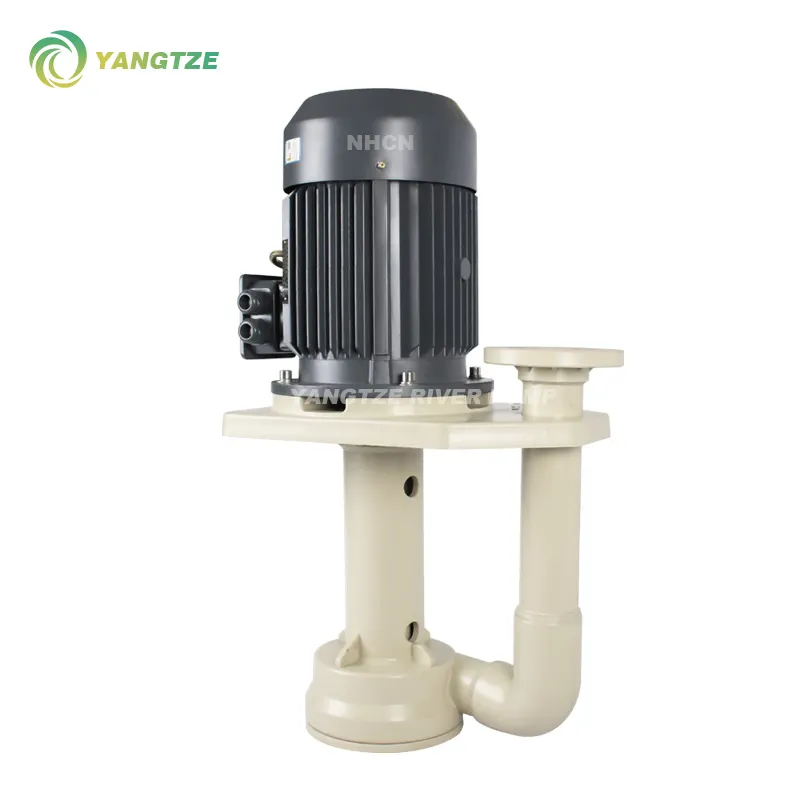 Vertical pumps for installation inside/outside tanks YZCN and YZCW
-
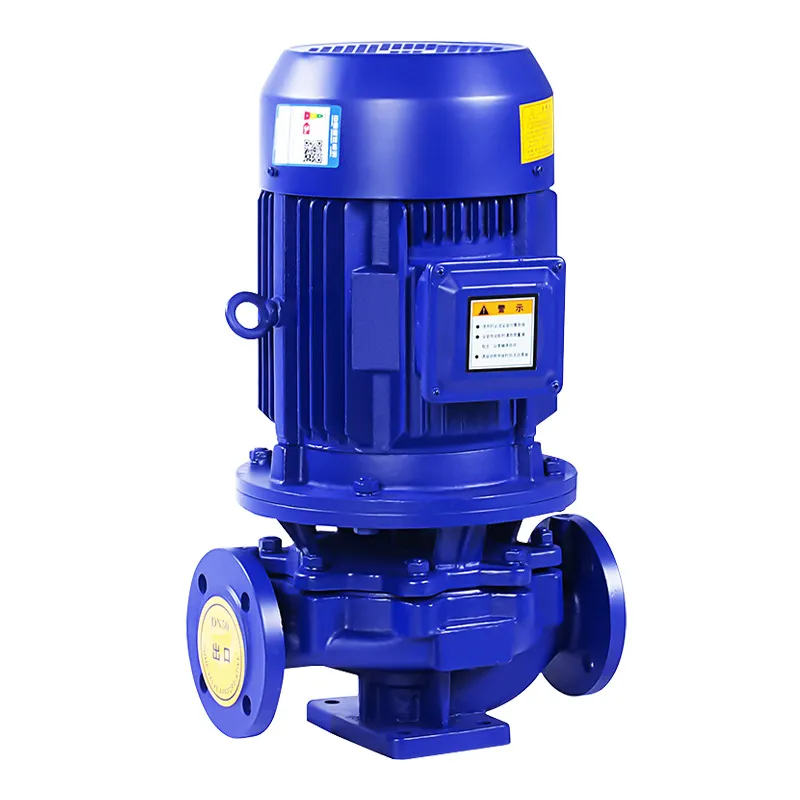 Vertical single-stage pipeline centrifugal pumps ISG and IHG
-
 XBC Diesel Intelligent Fire Pumps