







quality centrifugal pump
When they say “high-quality centrifugal pump?”, many immediately imagine a thick cast-iron body, a perfectly balanced impeller and a passport with efficiency figures. But behind these obvious things there is much more hidden - from the geometry of the supply to the nuances of processing the shaft seats. A common mistake is to chase the maximum pressure or flow according to the catalog, forgetting about the real operating mode, which most often lies somewhere in the middle of the Q-H curve. It is at this point that that very quality - or lack thereof - manifests itself.
What does this “quality” consist of? in practice
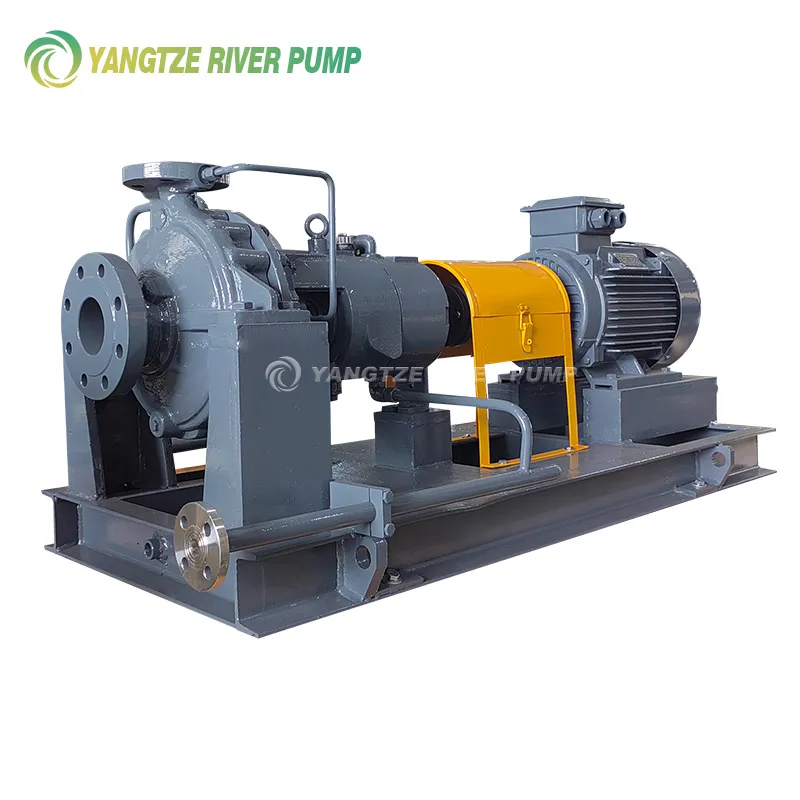
I'll try to explain it in my fingers. Let's take, for example, a regular console pump. It would seem that everything is simple: housing, impeller, shaft, bearing assembly. But quality begins with how the fluid approaches the impeller. If the suction pipe or chamber is made with sharp transitions or turbulence, the pump immediately loses its cavitation reserve and begins to make noise. This is not always visible on a test bench under ideal conditions, but in the field, on real piping, it comes out immediately.
Or take the shaft assembly. You can install good bearings, but if the seats on the shaft are processed with a tolerance that does not correspond to the class of these bearings, or if the thermal gap is not designed for the actual operating temperature, the unit will not last long. At one time weZhejiang Yangzijiang Pumping Industry Co.,LtdWe spent a lot of time going through seating and lubrication options for pumps that operate in cyclic mode with frequent starts. Standard solutions from textbooks often don’t work here.
Another point is materials. For water, ordinary stainless steel is also suitable, but if we are talking about some media, even slightly aggressive ones, or about suspensions, then a fine selection begins. And the quality of the pump is determined not just by the grade of steel, but by how this steel behaves in a particular hydraulic part. Corrosion-erosion is the scourge of many seemingly good models.
Experience that came with problems
I'll tell you about a case from practice. Somehow they staged a partylinear centrifugal pumpsto an object where a stable supply with minimal pulsation was needed. The pumps were assembled, as they say, “according to the textbook”, all clearances are normal, balancing is excellent. But on site it turned out that at a certain rotation speed vibration occurs, which is not critical for the pump itself, but unpleasant for the pipeline. They began to figure it out.
It turned out that the reason was not in the pump itself, but in the combination of its natural frequencies with the pressure frequency in the system. The solution was not to remake the pump, but to slightly adjust the operating mode and add a flexible insert. But this incident forced us to reconsider our approach to testing. Now we are at our stand, which you can learn more about atyangtzeriverpump.ru, we try not just to take Q-H curves, but to model different typical switching circuits in order to give recommendations on wiring in advance. This is the same “fine-tuning” that distinguishes a serial product from a truly high-quality one, ready to work in real, not ideal, conditions.
That is why our company has a structured process like this: from R&D to testing and service - everything is in one hand. This allows changes based on field data to be quickly incorporated back into the design. These are not always global changes; sometimes they are simply a different surface treatment or a different method of compaction. But the effect is obvious.
About multi-stage pumps and the myth of “the more stages, the better?”
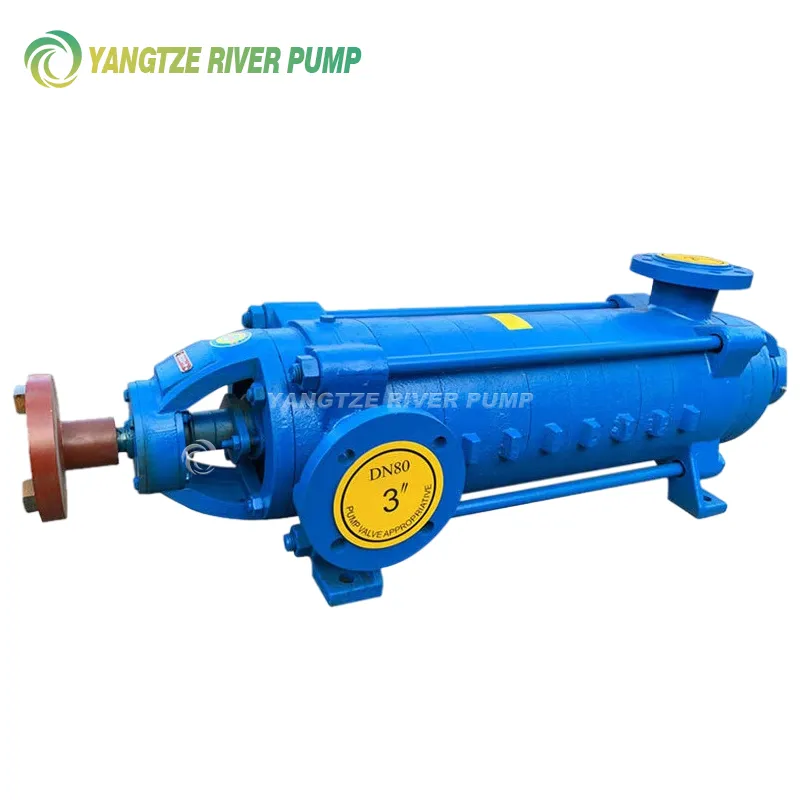
Cmultistage centrifugal pumpsits own story. There is a stereotype that since there are many stages, the pump is automatically more reliable and efficient. In reality, each additional stage means new relief holes, additional seals, more complex assembly and balancing of the rotor assembly. The risk of imbalance or misalignment increases.
The quality of such a pump is determined by the precision of manufacturing of all these stages and their alignment. When producing such units, we focus on monitoring the geometry of each diffuser and impeller, as well as on the final assembly of the rotor on a special stand, where the axial runout and radial clearances of the assembly are checked. The slightest deviation - and the pump will not only make noise, but also quickly wear out the seals.
And here our site comes to mind againyangtzeriverpump.ru, where we try not just to post a catalog, but to at least explain in general terms which systems and pressures are best suited for which designs. So that a person, when choosing between a single-stage and a multi-stage option, understands what he is paying for and what potential bottlenecks are? Every solution has a solution.
Chemistry, plastic and application limits
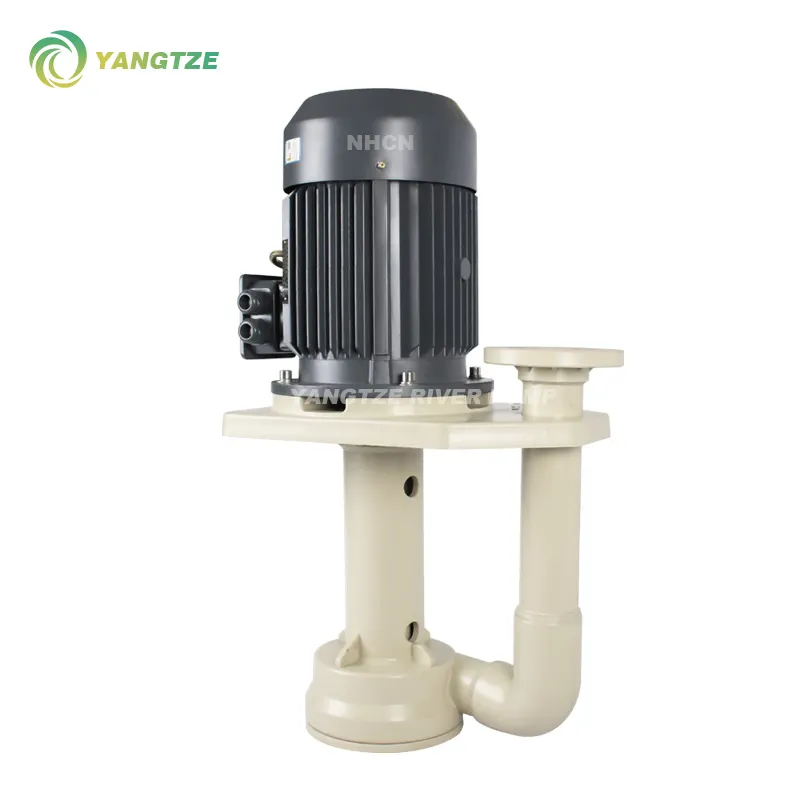
A separate song -plastic chemical pumps. Quality here is, first of all, the correct selection of polymer for a specific environment. You can make a hydraulically perfect impeller out of the wrong PP or PVDF and it will soften or crack within a month. On our eight production lines, we can experiment with materials, which is worth a lot.
But even with the right material there are nuances. Molding plastic parts is an art. Internal stresses, surface quality, dimensional accuracy - all this affects the service life. A poorly cast casing can over time lead to misalignment, misalignment, and the pump will begin to lose performance. Therefore, we have multi-stage control in this area: from visual inspection of castings to checking dimensions on a CMM.
And yes, for such pumps the design of the mechanical seal is also critical. Standard solutions for cast iron or stainless steel are often not suitable. It is necessary to select friction pairs (ceramics-carbon graphite, ceramics-siliconized graphite, etc.) specifically for the “medium-body material” pair. Empirically, after several unsuccessful deliveries in the past, we have compiled our own table of recommendations, which is now used by both technologists and managers.
Tests as a finishing touch, not a formality
Many manufacturers consider testing a formal stage to enter numbers into the passport. For us, the test section is the place where the pump is pressed to the limit. to condition. We test not only on water, but also on liquids with different viscosities (if possible), check the behavior during cavitation, and measure vibroacoustic characteristics.
It happened that a pump assembled according to all the drawings showed a slight but stable overheating of the bearing assembly during testing. We took it apart and looked - everything seemed to be in order. It turned out that the problem was in the lubrication and ventilation circuit of the bearing housing. We made changes to the casting mold of the case - added additional ribs for better heat dissipation and redesigned the labyrinth seals. Trifle? But it is precisely these little things that form the overall impression of the pump’s operation over the years.
This complex - design taking into account real conditions, control of materials and processes, not just the final product, and, finally, thoughtful, almost meticulous testing - this is our approach to getting the same result.quality centrifugal pump. Not as an abstract category, but as a concrete device that will silently and without surprises do its job at the customer’s site. And judging by the feedback, we are on the right track.
Correspondingproducts
Related Products




Best Sellingproducts
Best Selling Products-
 Horizontal multistage pumps for feeding DC boilers
-
 Vertical single-stage pipeline centrifugal pumps ISG and IHG
-
 YZSP Diesel Self-Priming Pumps
-
 Metal pneumatic diaphragm pumps QBK
-
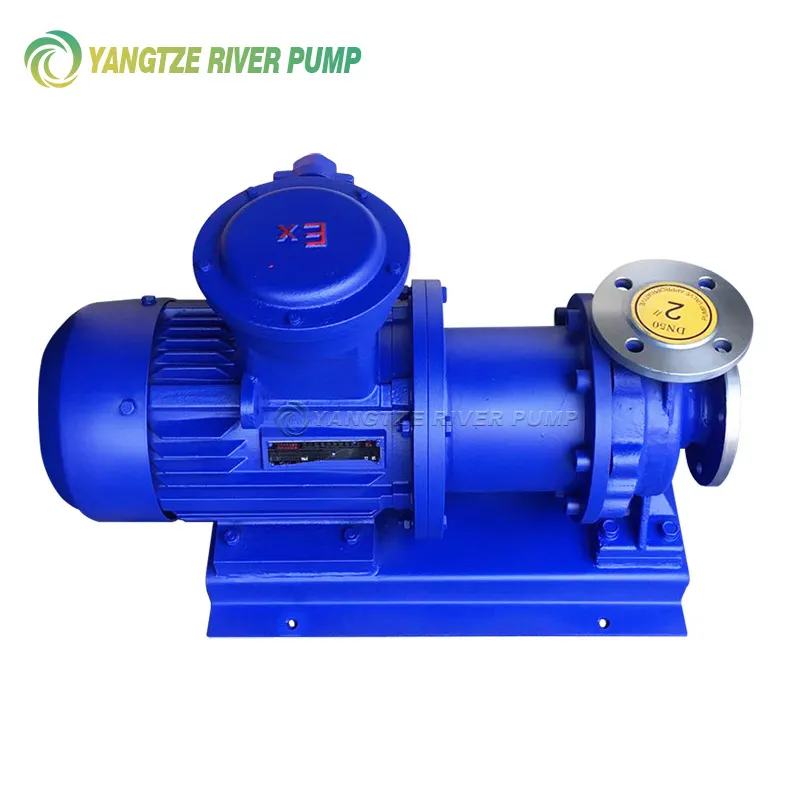 CQB Stainless Steel Magnetic Pumps
-
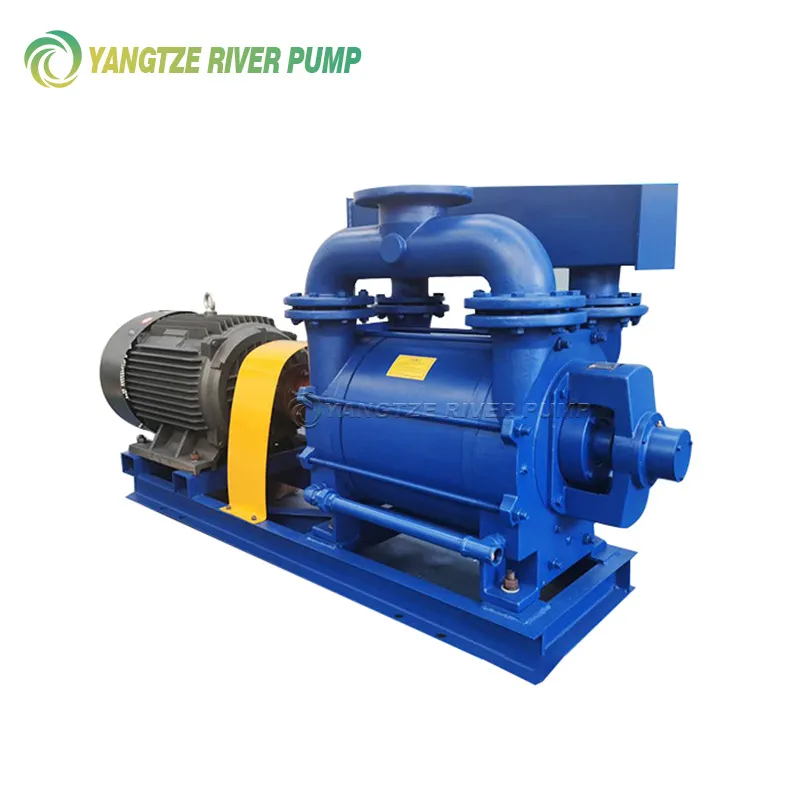 Liquid ring vacuum pumps type 2EB
-
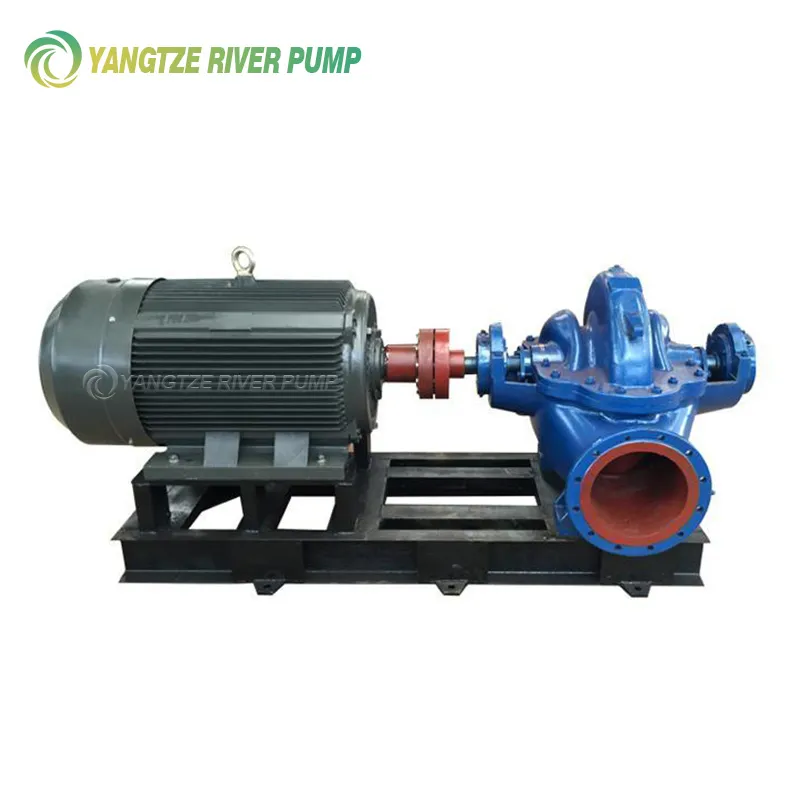 Single Stage Double Entry Centrifugal Pumps Type S
-
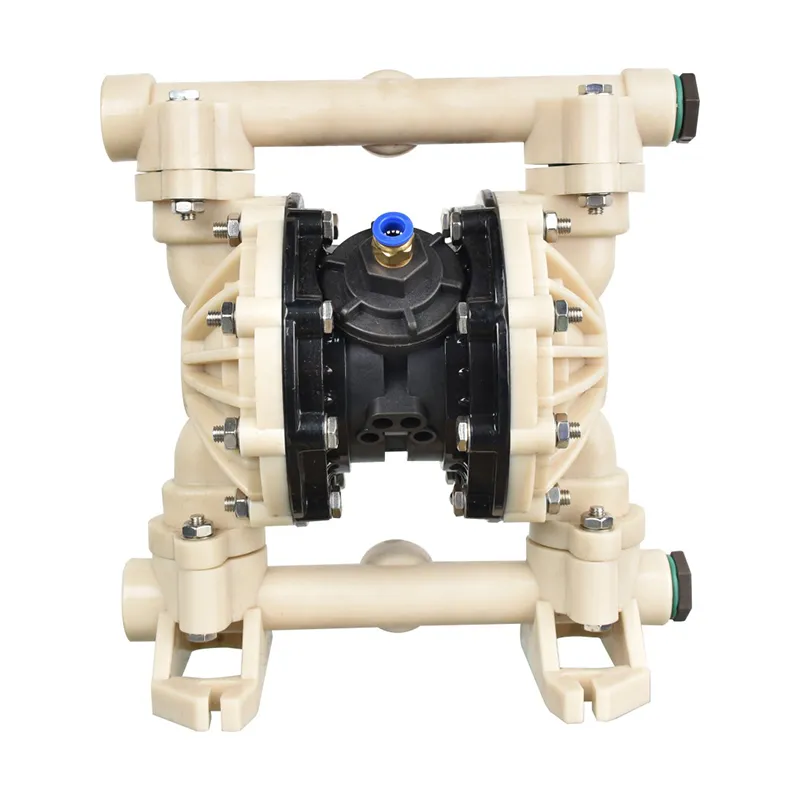 QBK Non-Metallic Air Operated Diaphragm Pumps
-
 Horizontal multistage centrifugal pumps type D
-
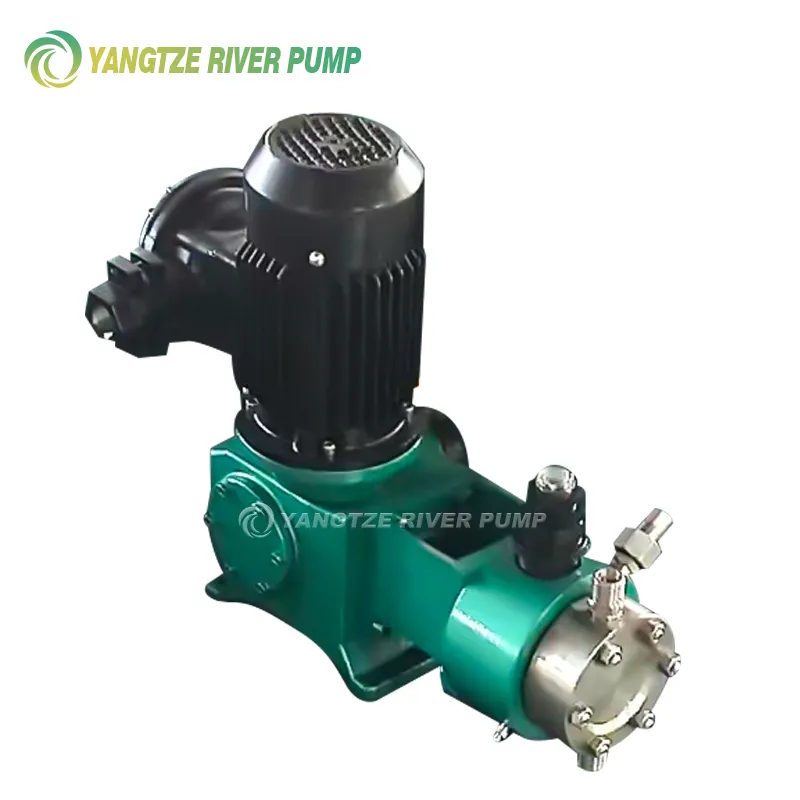 Plunger dosing pumps type DZ-X
-
 Vertical multistage centrifugal pumps made of stainless steel (light series) CDL and CDLF
-
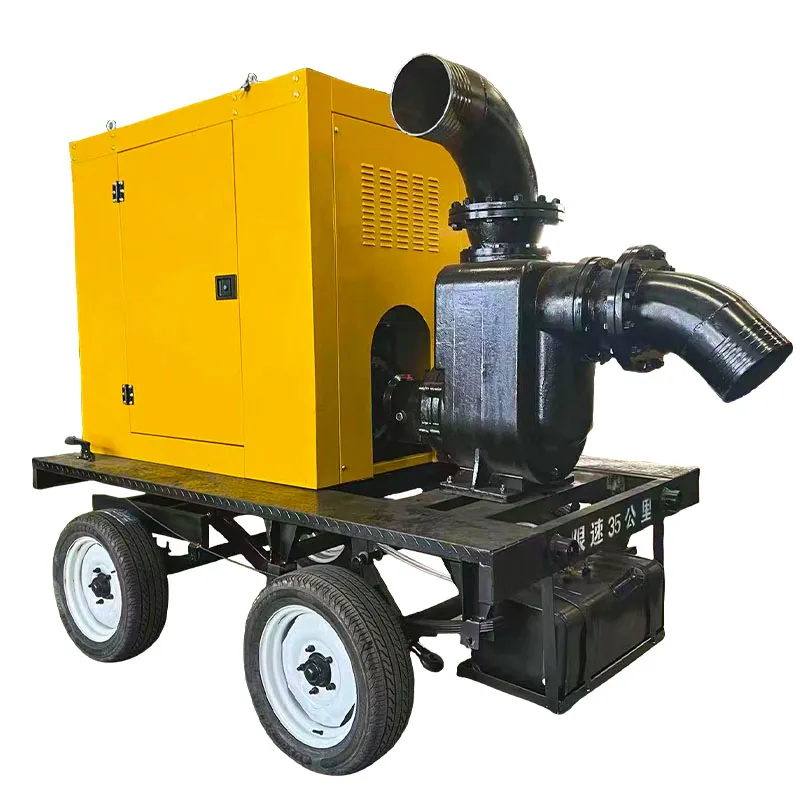 YZZW Diesel self-priming pumps
Relatedsearch
Related Search- submersible pump for sewage pumping station
- centrifugal pump 320
- diagram of a single-stage centrifugal pump
- liquid vacuum pumps
- Frequency controlled booster pumps
- QBK Non-metallic Air Operated Diaphragm Pumps
- XBC Diesel Intelligent Fire Pumps
- diaphragm transfer pumps
- magnetic water pump
- vertical type centrifugal pump