







centrifugal pumps in industry
When talking about industrial centrifugal pumps, graphs, Q-H curves, efficiency and NPSH immediately come to mind. This is, of course, the basis. But if everything was decided according to the passport, we, installers and service workers, would have much less work. Often the key problem is not in choosing a pump from a catalog, but in what happens to it after starting it in a real, far from ideal, system. Let's say, everyone knows about the harm of cavitation, but in practice I saw how at a chemical plant they stubbornly changed seals every three months, sinning on quality, and the reason was in an incorrectly calculated and installed suction line - the pump was simply “starving”, creating rarefaction zones. Or another case - they installed a powerful multi-stage pump to supply water under high pressure, and six months later the vibration was such that the pipelines were humming. We figured it out - it turned out that during the design they did not take into account hydraulic shocks during start-stop, the valve was fast-acting. About these “non-catalogue” ones? moments that determine whether the unit will work for ten years or two years, and I want to speculate.
From the drawing to the workshop: where does the “devil” lie?
Take, for example, the line of centrifugal pumps. It would seem like a classic that has been perfected for decades. But here is a concrete example from practice. One of the housing and communal services enterprises was faced with the task of modernizing a pumping station. For example, we chose modern single-stage cantilever pumps with improved efficiency. Everything is according to calculations, the parameters are accurate. We launched it, and a month later problems began with overheating of the bearing units. They started digging. It turned out that in the passport the operating mode was indicated as continuous, but in reality the station operated in a frequency-controlled mode, and a significant part of the time at low speeds. And at low speeds, the standard bearing lubrication and cooling system, designed for the rated speed, stopped working effectively. This is a typical mistake—selecting by a point on a curve, without analyzing the entire operating range. We had to modify the unit and install forced lubrication. The conclusion is simple: passport data is just a starting point. We must always look more broadly - at the system as a whole, at the real, and not design, operating mode.
Or another aspect - materials. For chemical production this is a different story. At our enterprise, Zhejiang Yangzijiang Pumping Industry Co., Ltd., we have a range of plastic chemical pumps. So, the key thing is not just to indicate “for acid?”. You need to understand the concentration, temperature, and the presence of abrasive inclusions. There was a case: we ordered a polypropylene pump for pumping hydrochloric acid of medium concentration. The material seems to be suitable. But during the process it turned out that solid particles periodically appeared in the flow - a product of an incomplete reaction or wear of the pipeline. A pure chemical pump without taking into account abrasive wear will not last long. We had to switch to an option with reinforced, more wear-resistant materials for the flow part or consider diaphragm pumps for such complex media. This is about the importance of the most detailed technical specifications. Often technologists give general information, and the nuances emerge later, during the work process.
And more about materials. For the food or pharmaceutical industry, in addition to corrosion resistance, surface cleanliness, the possibility of CIP cleaning, and compliance with sanitary standards come to the fore. Not any stainless steel pump will do here. We need special polishing of the seams, a design without stagnant zones. We take this into account in our production, but the customer does not always understand the difference in price between standard “stainless steel?” and sanitary performance. We have to explain with examples: a microcrack or roughness is a place for bacteria to multiply, a risk for the entire batch of product.
Installation and “first launch”: the moment of truth
You can talk here for hours. An ideally designed and manufactured pump can be ruined in a day by improper installation. A basic but timeless principle is alignment with the engine. We use laser alignment, this is already standard. But even with perfect alignment on the machine, after tightening the foundation bolts and connecting the pipelines, the picture may change. Especially if the pipelines are rigidly connected, without compensators. The pump must not bear the weight of the pipes! This is an axiom, which, unfortunately, is often violated. Vibration, overloading of bearings, destruction of the seal - the result is predictable.
Self-priming pumps stand apart. A convenient solution for many tasks where there is a need to remove air from the suction line. But their installation has subtleties. For example, it is critical to ensure the tightness of the suction piping. Even a small air leak nullifies their entire “self-priming” ability. ability. Or the liquid level in the housing during the first start-up - it must be strictly controlled, otherwise the pump simply will not start, it will spin “idle” and get hot. I remember a story at a construction site: the pump for pumping water out of the pit could not get into operation for a long time. The crew swore at the equipment. We arrived and checked - the length of the suction hose was about 20 meters, despite the fact that according to the passport, the maximum suction height for these conditions was 7 meters. You can't fool physics.
Commissioning is a separate ritual. Before the first start-up, it is necessary to check the direction of rotation (very trivial, but there are cases), pump the system, check for smooth rotation of the rotor manually. For pumps with gland seals - packing adjustment. Nowadays they often go for mechanical seals, but they also have their own nuances - the purity of the flushing liquid, the pressure in the seal chamber. If you skip this step, you will get a leak or overheating of the seal within the first hours of operation.
Operation: between scheduled maintenance and emergency repairs
The pump is started and running. Next is monitoring. The simplest and most effective way is to regularly measure vibration and temperature of bearing units. The increase in vibration is the first call. Maybe the impeller is out of balance due to wear or cavitation erosion. Maybe the fit is loose. Or maybe the problem is in the foundation or pipes. Thermography is also a great tool - overheating can indicate improper lubrication, overtightening of the bearing or the beginning of its destruction.
For units such as submersible pumps, diagnostics are more complicated - they are hidden in a well or reservoir. This is where current consumption analysis comes to the fore. An increase in current may indicate jamming or an increase in load due to sand accumulation or fouling of the impeller. A drop in current is, on the contrary, about “idle” operation. (for example, when the level drops). Therefore, a high-quality control system with current sensors and thermal protection is not a luxury, but a necessity.
Scheduled maintenance. Changing the oil in the bearing chambers (if grease-lubricated bearings are not used), checking the condition of the seals. For magnetic pumps, which we also produce, it is important to monitor the condition of the winding insulation and the integrity of the sealed casing - the “sleeve”. Their advantage is that they are completely sealed, but if the sleeve is damaged (say, from cavitation or corrosion), the product will get into the area of the magnets and stator, which will lead to failure. Their reliability is very high, but only when working within the design parameters of the environment.
When standard solutions don't work
There are technological processes where conventional centrifugal pumps, even those resistant to aggressive media, cannot cope. For example, pumping highly viscous liquids, suspensions with a high solid content, or shear-sensitive products. This is where other principles come into play. In our portfolio, for example, there are single-screw (screw) pumps. They cope well with viscous liquids, provide smooth flow without pulsations, and are gentle on the product. But they also have their own characteristics: they require precise adjustment of gaps, and are sensitive to “dry” operation.
Or diaphragm pumps. Their main advantage is the ability to pump abrasive, very dirty media, even with large inclusions. And they can work “dry?” no damage. Ideal for pumping sludge and thick pastes. But their productivity, as a rule, is lower than that of centrifugal ones, and there is a flow pulsation, which sometimes needs to be damped with dampers. There is always a choice, but it must be conscious, based on the actual properties of the pumped medium, and not on the habit or price of the unit itself.
Returning to centrifugal ones. Sometimes the problem is solved not by changing the type of pump, but by modifying the existing one. For abrasive media, impellers with increased clearance and made of particularly wear-resistant materials (for example, high-chromium cast iron, silicon carbide) can be used. For cavitation conditions, use special wheels with improved cavitation properties or install a pump with a large cavitation reserve. All this requires a dialogue between the customer’s technologist and the manufacturer’s engineer. On the websiteZhejiang Yangzijiang Pumping Industry Co.,LtdWe are trying to show not just a catalog, but an approach based on a full cycle - from R&D and testing at our stands to selection and service. Because a pump is not just a piece of hardware, it is an element of a system, and its operation depends on hundreds of factors.
Instead of a conclusion: thinking out loud
So, speaking about industrial centrifugal pumps, I would focus not on dry numbers from the table (although you can’t do without them), but on understanding the process. What are we downloading? How exactly does the production line work? What emergency situations are possible? Are there qualified personnel for maintenance? The answers to these questions are often more important than choosing between two models with a 1% difference in efficiency. Experience, including negative ones, such as overheating of bearings at low speeds, teaches you to look at equipment systematically. And it’s good when a manufacturer, such as our company, with its own production and testing lines, is ready to plunge into this process, to offer not just a product, but a solution, perhaps modifying the design to meet specific needs. Ultimately, the reliability of a pumping unit is the sum of accurate calculations, high-quality manufacturing, competent installation and thoughtful operation. If you miss one link, the whole chain can fail.
Correspondingproducts
Related Products



Best Sellingproducts
Best Selling Products-
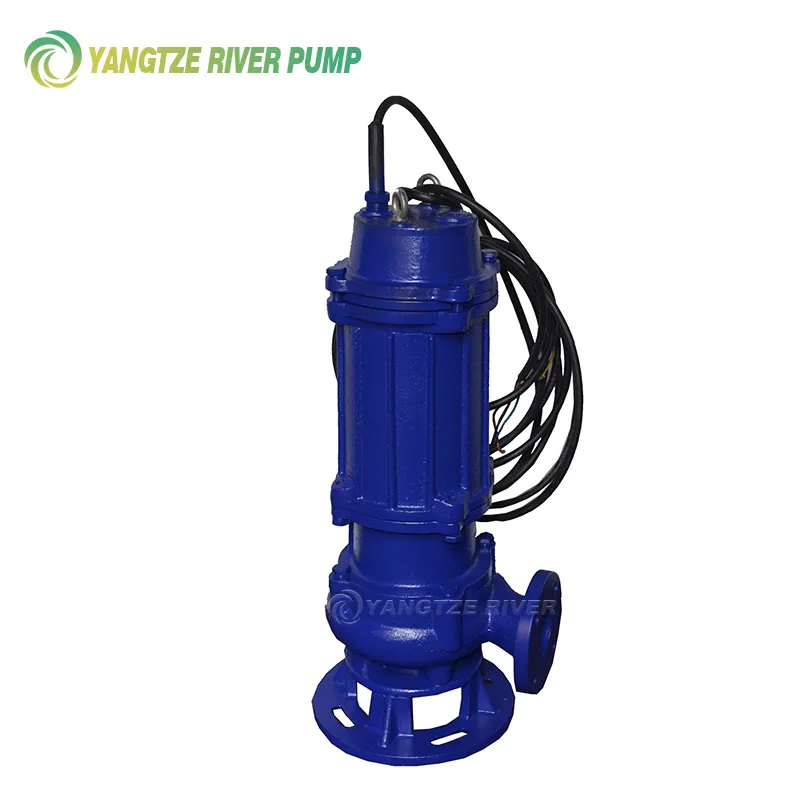 QW Non-clogging Submersible Sewage Pumps
-
 Metal electric diaphragm pumps DBY
-
 QJ type borehole pumps
-
 IHF PTFE Chemical Centrifugal Pumps
-
 Plastic self-priming centrifugal pumps FP and FS
-
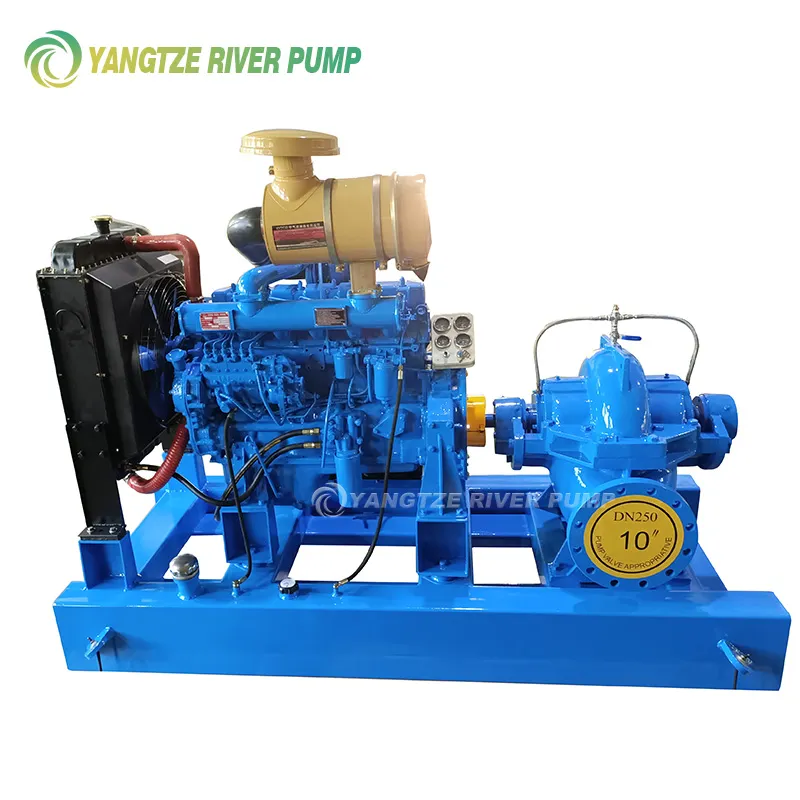 Diesel pumps with horizontal connector YZS and YZSH
-
 Corrosion-resistant stainless steel centrifugal pumps SFB and SFBX
-
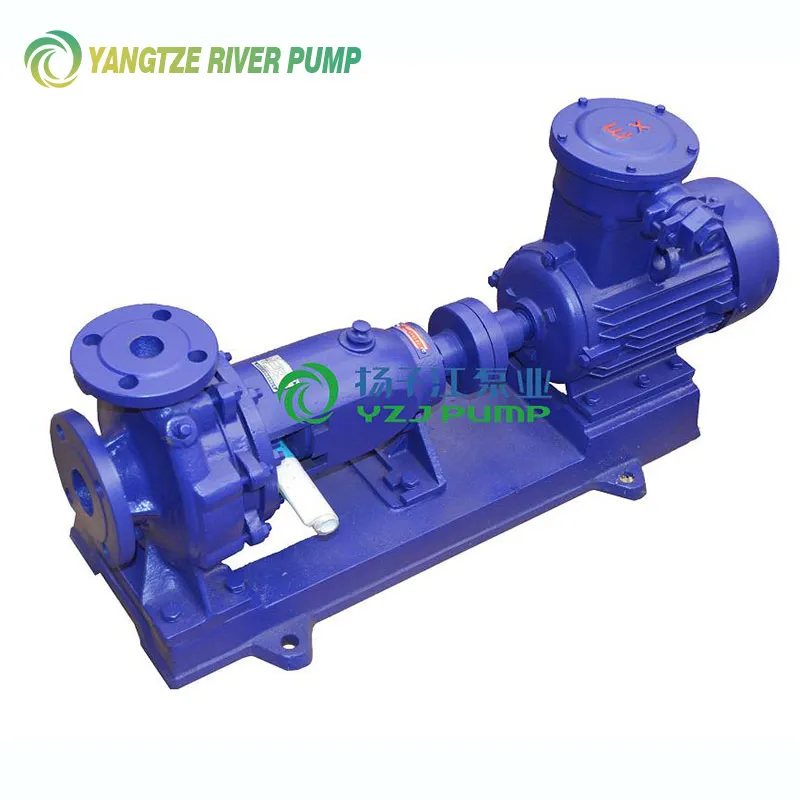 Horizontal chemical centrifugal pumps types IS and IR
-
 YW Vertical Submersible Sewage Pumps
-
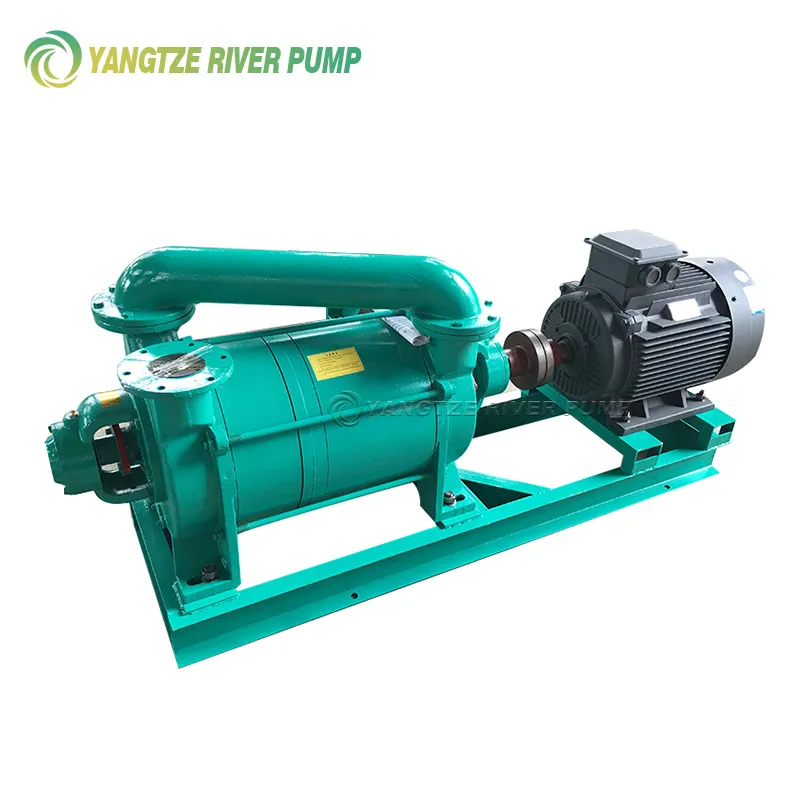 Liquid ring vacuum pumps type 2SK
-
 Horizontal multistage centrifugal pumps type D
-
 YZSP Diesel Self-Priming Pumps