







pump submersible centrifugal pump 7
When you see something like “submersible centrifugal pump 7” in a request, the first thought is that the person is looking for a seven-inch unit or maybe the seventh model in the line. But in practice, this often turns out to be a designation of the diameter of the casing in inches for which the well pump is designed. This is where confusion begins for those who encounter this for the first time. Many people think that the main thing is power, but in fact, if the diameter is not suitable, the pump simply will not fit into the well. At Zhejiang Yangzijiang Pumping Industry LLC, we constantly encounter such requests, and the first thing we clarify is the installation conditions, and not the abstract numbers in the name.
Why diameter is not just a number
Working withsubmersible pumpsfor wells, you constantly come across the same problem: the client measured the barrel inaccurately or the casing manufacturer specified the nominal, not the internal diameter. As a result, the pump rested 7 inches (about 178 mm) against the walls, although according to the passport everything should have fit. We have to explain that it is necessary to take into account not only the pump housing itself, but also the possible space for the cable, safety rope, and sometimes additional protection. In our production, where such units are assembled, for models under a 7-inch column, a gap of at least 5-7 mm is always provided - this has already become the rule.
There was a story with an order from the Moscow region: the client assured that he had a standard 180 mm pipe, but after the delivery of ourcentrifugal pumpit turned out that due to lime deposits, the actual passage was narrowed to 172 mm. The pump, naturally, did not work. I had to quickly select another model, with a narrower body, but with similar pressure parameters. This is the case when theory breaks down into practice, and you can’t do without flexibility in the assortment. By the way, on the website https://www.yangtzeriverpump.ru we try to describe these nuances in detail in technical cards, but, as you can see, not everyone reads them.
Another point is the case material. For narrow wells, stainless steel is often used; it is stronger and allows you to make the walls thinner while maintaining the internal diameter of the working chamber. But it's also more expensive. Sometimes clients ask to reduce the cost by offering composite materials, but for deep installations, especially with a high sand content, this is risky. In such cases, we usually advise not to skimp on the body, otherwise the repair will cost a pretty penny. Our production allows us to vary materials while maintaining geometry, which is critically important for non-standard tasks.
Submersible centrifugal mechanism: where are the weak points?
The very principle of centrifugal force for lifting water is reliable, but the submersible design has its own “pain points”. The first is cooling. The pump runs in water, but if the level drops below the intake pipe, the motor can overheat in a matter of minutes. In our models, which we produce on a full production line from R&D to testing, thermal protection is always installed, but I have also seen units where this option was not available. The result is predictable - failure in the first season with a low well yield.
The second point is resistance to abrasives. Water from a well is rarely perfectly clean; sand and fine suspended matter quickly wear out impellers, especially if they are made of standard technopolymer. For such conditions, we usually recommend multi-stage designs with wheels made of wear-resistant composites - although they are more expensive, their service life increases significantly. I remember testing one such pump on a stand with a sand mixture - after 500 hours of operation the drop in performance was less than 10%, which forcentrifugal pumpssubmersible type is a very worthy indicator.
And third is shaft balancing. At a depth of several tens of meters, even minimal vibration from imbalance leads to accelerated wear of bearings and seals. On our test benches, each assembled pump is tested for vibration resistance at different speeds. This is not just a formality, but a necessity that we learned from several unsuccessful batches about five years ago, when we had to recall an entire series due to complaints about hum and premature failures.
From single-stage to multi-stage design: when a transition is needed
Often, requests simply include “submersible centrifugal pump?”, without specifying the number of stages. And this is a key parameter for pressure. Single-stage models are good for shallow wells or wells where more productivity is needed with relatively little pressure. But if we are talking about a deep well, where the total lifting height exceeds 50-60 meters, a multi-stage solution cannot be done without.
Zhejiang Yangzijiang Pumping Industry Co., Ltd. has both in its product range. And from experience I will say that the choice often depends not only on depth, but also on the stability of the voltage in the network. Multistage pumps tend to be more sensitive to fluctuations because the motor operates under a higher load. You have to either install stabilizers, which is not always convenient in the field, or build into the design a wider voltage tolerance, which our engineers are constantly working on.
There was an illustrative case at a summer cottage in the Leningrad region: they installed a powerful multi-stage pump on a deep well, but the network was weak, especially in the evenings. As a result, when the voltage dropped below 200V, the pump began to “knock” — vibration due to uneven rotation of the shaft. We solved the problem by replacing it with a model with a soft start and a wider operating voltage range, which was specifically developed for such conditions. It is now part of the standard line.
Self-priming and submersible: limits of application
It is interesting that self-priming and submersible types are sometimes mixed in search queries, although these are fundamentally different solutions. A self-priming pump stands on the surface and can lift water from a depth, but usually no more than 8-9 meters. Submersible works in the water column, and its installation depth is limited mainly by the length of the cable and the strength of the materials. When a client asks for a “pump for a 40-meter well,” we are almost always talking about a submersible centrifugal pump, not a self-priming one.
But there are also hybrid tasks. For example, you need to pump water out of a pit where the level is constantly changing. Here the submersible pump can operate in partial immersion mode, but it runs the risk of capturing air and running dry. For such cases, we have models with an enhanced dry-running protection system and a special design of the intake pipe, but these are individual modifications that are made to order. On the main website https://www.yangtzeriverpump.ru we focus on standard applications so as not to cause confusion, but in negotiations with technologists we always work out non-standard scenarios.
By the way, about protection against dry running. This is one of the most common causes of breakdowns in the household segment. People install a pump, forget to control the level, and after a couple of hours of operation without water, the engine burns out. In our submersible models, starting from a certain power, such protection comes by default, but for the most budget lines it has to be installed optionally. And here a dilemma always arises: make the final price higher or risk that the user will save and then be left with a non-working pump. We are trying to find a balance.
Chemical resistance and materials: when water is not just H2O
In industrial applications, especially in the chemical or food industries, water often contains aggressive impurities. Standard AISI 304 stainless steel may not be suitable here; either more resistant alloys or plastic cases and working chambers are needed. Our production portfolio includes a line of plastic chemical pumps, and we adapt some of their solutions for submersible centrifugal models when work in aggressive environments is required.
For example, there was an order from a poultry farm where it was necessary to pump out water with a high chlorine content for disinfection. A conventional stainless steel pump began to corrode in the shaft area after just three months. We made an option with a housing and impeller made of special polypropylene, reinforced with glass fiber, and with EPDM oil seals. It has worked for more than two years without any complaints. This is to the question that there are no universal solutions, and the full production cycle, including our own R&D, allows us to solve such problems.
But there are pitfalls here too. Plastic, even reinforced plastic, has limitations on temperature and impact load. When installing in a deep well, you need to lower the pump very carefully so as not to hit the walls of the casing pipe. Once I had to sort out the failure - the bearing seat was cracked due to inaccurate descent. Now, in the instructions for such models, we write down the installation requirements as a separate paragraph, and add mounting clamps to the kit.
Bottom line: why ?7? - this is just the beginning of the conversation
So, going back to the original query 'submersible centrifugal pump 7'. The number 7 is a starting point that only speaks of a geometric limitation. Then the most interesting part begins: what pressure is needed, what is the flow rate of the well, what is the quality of the water, the stability of the power supply, the required automation. Without this data, any selection will be guesswork.
At Zhejiang Yangzijiang Pumping Industry Co., Ltd., having a full cycle from development to service, we are accustomed to looking at the task comprehensively. Often during the dialogue it turns out that the client needs not just a piece of equipment, but a solution with sensors, a control cabinet and a protection system. And rightly so, because the pump is the heart of the water supply system, and it must work reliably and for a long time, and not just meet the number in the specification.
Therefore, if we talk about a professional approach, then the conversation should begin not with the model, but with the conditions. And then even a pump with an inconspicuous marking ?7? will be able to work out his years without surprises, be it at a summer cottage or in an industrial circuit. The main thing is not to skimp on consultations and design on the shore, so as not to redo it later. This is probably the most important lesson that we have learned over the years of work in this field.
Correspondingproducts
Related Products



Best Sellingproducts
Best Selling Products-
 YCZ Chemical Process Pumps
-
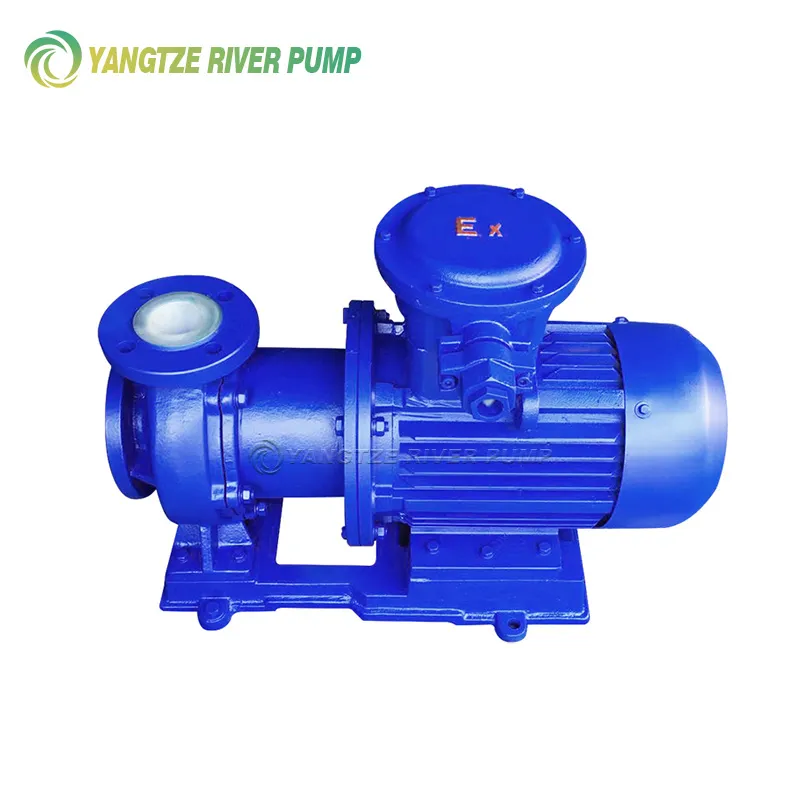 Magnetic pumps with fluoroplastic lining CQB-F
-
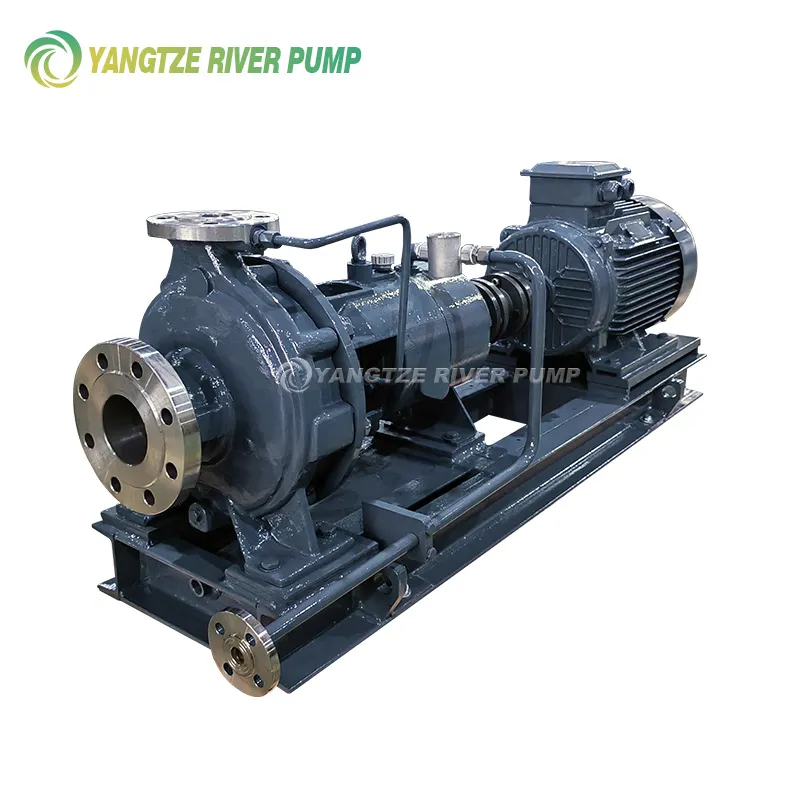 Petrochemical Process Pumps API 610 YZA
-
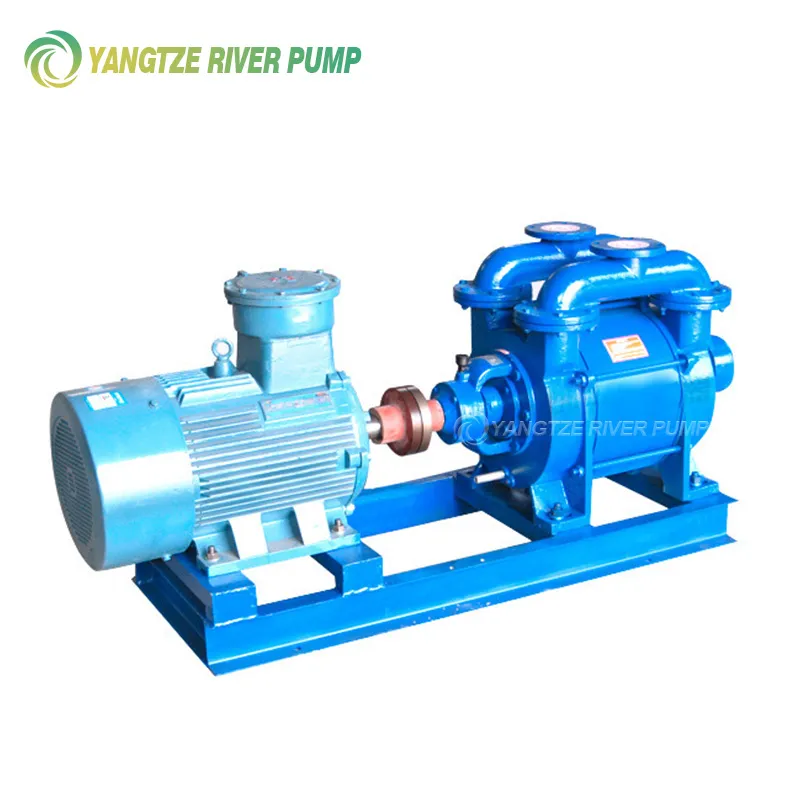 Liquid ring vacuum pumps type SK
-
 Metal electric diaphragm pumps DBY
-
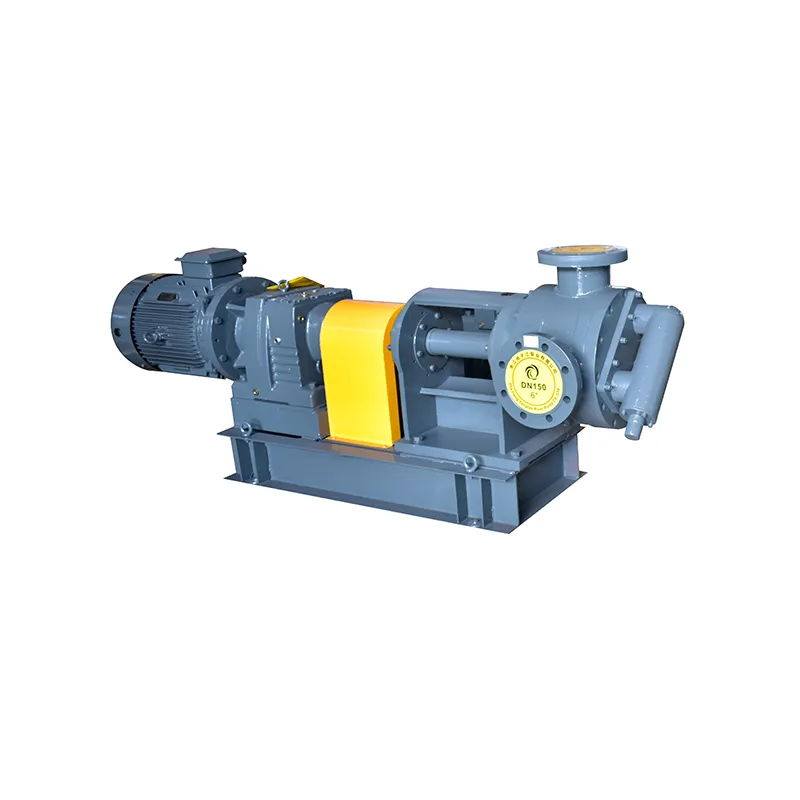 NYP High Viscosity Internal Gear Pumps
-
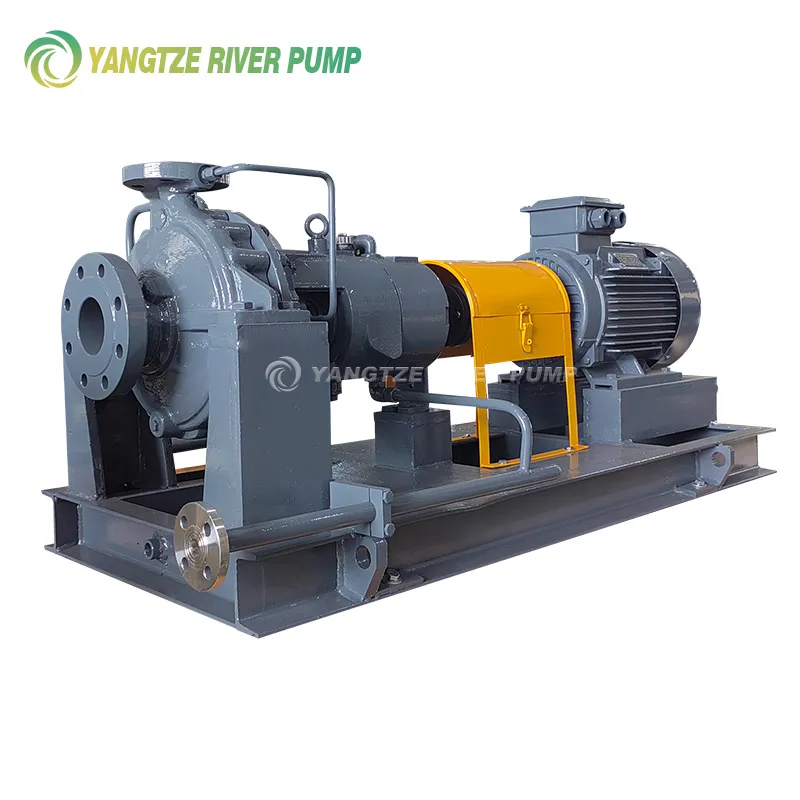 Petrochemical Process Pumps API 610 YZE
-
 Mechanical diaphragm dosing pumps DJ-D
-
 Horizontal multistage centrifugal pumps type D
-
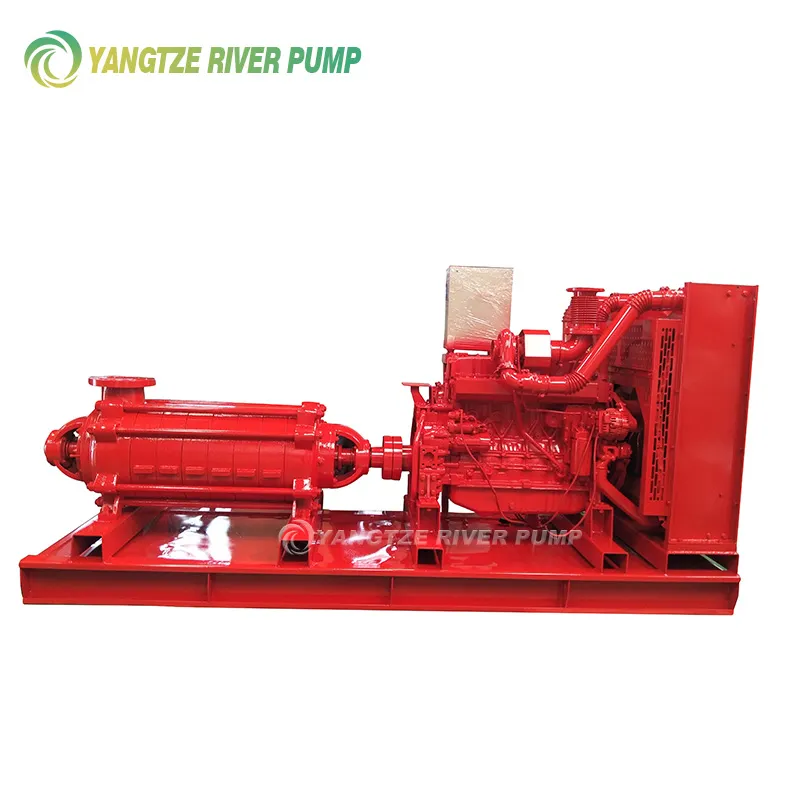 YZD Series Diesel Multistage Centrifugal Pumps
-
 Complete water supply installations with frequency regulation and constant pressure CDLF
-
 Infinitely variable screw pumps type G