







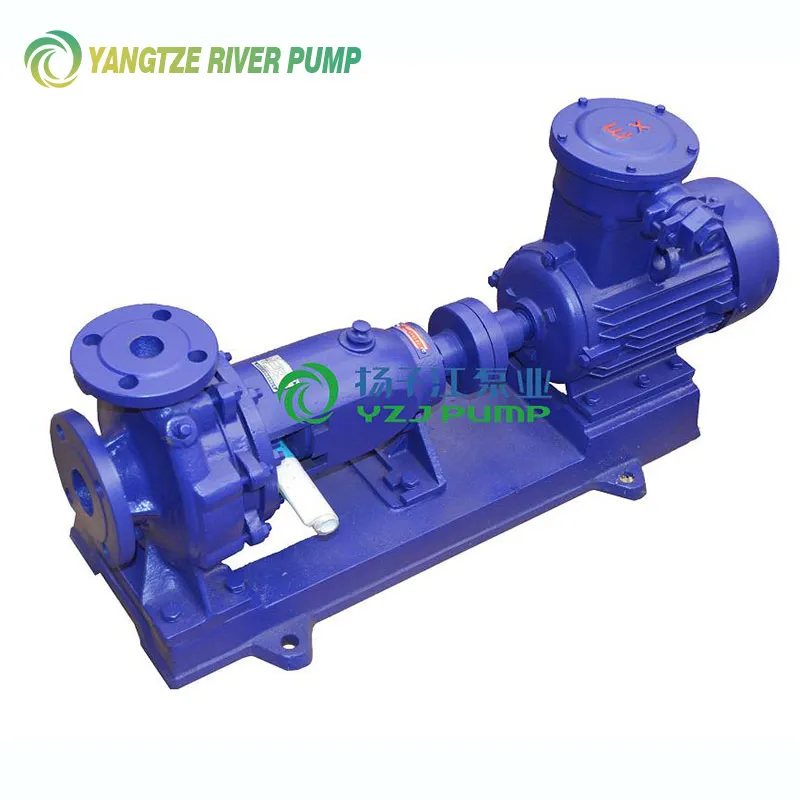
centrifugal rotary pump
When they say 'centrifugal rotary pump', many people immediately imagine a standard design - impeller, shaft, housing. But in practice, especially on an industrial scale, everything comes down to details, which are often kept silent in catalogs. The most common mistake is to assume that any centrifugal with a rotary operating principle will cope equally well with pumping, say, an abrasive suspension and clean water. This is wrong. Here at Zhejiang Yangzijiang Pump Industry LLC, hundreds of configurations have gone through test benches, and I have seen more than once how an incorrectly selected gap between the impeller and the sealing ring or shaft material literally “ate” the pump in six months of operation instead of the stated ten years. It’s these nuances that determine whether the unit will simply make noise on site or will actually work out its service life, and I would like to speculate.
From drawing to stand: where efficiency is lost
Take, for example, a production line for multistage centrifugal pumps. In theory, everything is smooth: design pressure, flow, cavitation reserve. But when you start assembling a prototype, little things come to light. Let's say the same rotor balancing. If it is carried out “according to the textbook”, at low speeds, and the unit then operates at 2900 rpm with a hot environment, the vibration may go beyond all permissible limits. We encountered this in our production - we had to implement dynamic balancing of the assembled rotor assembly with coupling, simulating operating temperatures. Only after this the parameters returned to normal.
Or another point - the flow part. Smoothness of the channel surface after casting or machining. It seems nonsense, but it is micro-irregularities, especially in multi-stage models where the flow passes through several bends, that cause up to 3-5% losses in efficiency. Our technologists debated for a long time whether it was worth polishing the channels in an expensive way for serial industrial pumps. We decided to do it selectively - for lines pumping viscous liquids, where every percentage of efficiency is critical. For water with suspensions - no, there the abrasive will still level the surface over time.
And the tests... That's a different story. Many manufacturers limit themselves to running on water. But we at Yangtzeriverpump.ru for key orders, especially for chemical pumps, always require flushing at the stand using the medium specified by the customer, albeit in a shortened cycle. There was a case with a plastic chemical pump for acid: according to the data sheet, everything matched, but when tested with a small admixture of solvent, the housing material began to “tan.” I had to urgently change the brand of polymer. Without such testing, the pump would fail on site.
Magnetic drive versus oil seals: a controversial choice
There is a lot of buzz these days about magnetically driven pumps (magnetic pumps) as a panacea for leaks. Yes, for aggressive or expensive environments this is often optimal. But there is a 'but' here too. The magnetic coupling is afraid of overheating. If cavitation or “closed valve” operation occurs in the system, even for a short time, the rotor inside may jam and the magnets will simply demagnetize. Repair is actually replacing the entire drive, which is expensive. We always emphasize this to our clients on the website yangtzeriverpump.ru: for the reliability of such a system, temperature sensors and dry-running protection are critically important. Sometimes a good old mechanical seal with a flushing system is a more durable option for tough conditions.
Another practical point with magnetic pumps is that they cannot be 'tuned' on site. With a classic centrifugal rotary pump, if the network parameters have changed, you can sharpen the impeller a little or replace it with a smaller diameter. With a magnetic coupling, this trick will not work - the balance and clearance will be disrupted. Therefore, when selecting, you need to reserve the parameters, which increases the initial cost. This is not always obvious to a buyer chasing modern technology.
From our range, magnetic pumps are well suited for pharmaceutical and plating lines, where cleanliness and safety are a priority. But for pumping, let’s say, lime milk into housing and communal services, I would still recommend proven single-stage centrifugal pumps with reinforced seals or even a submersible version - easier to maintain and more repairable.
Self-Suction: Magic with Limits
Self-priming pumps are a separate class. Clients often think that this is a magical device that will always and everywhere raise water from the depths. But their “trick” is the ability to remove air from the suction line during startup. If the suction path is leaky and air is constantly sucked in, the pump will work intermittently and overheat. I have seen many 'garage' installations where they hooked an old hose with cracks onto a self-priming pump and were surprised at the poor performance.
The key element here is the design of the working chamber and liquid ring. We have several models in production, and for each the maximum dry running time is clearly stated at the first start. Exceeded - the chamber overheats, deformation, and the pump loses its self-priming properties. This needs to be clearly communicated to installers. Sometimes it is easier and more reliable to install a conventional centrifugal pump with a check valve and a filling funnel - less headache.
An interesting experience was using a self-priming pump for pumping light petroleum products. Theoretically it is possible, but due to the low viscosity and high volatility of the liquid, the liquid ring did not form well at the start-up stage. I had to modify it - install a small receiver with working fluid in the harness. So there are no universal solutions, you always need to look at the specific environment.
Submersible and screw: when centrifugal force is not the main thing
Although our company produces both submersible and single-screw pumps, it is important to understand their place. A submersible centrifugal pump is often the solution for wells or well pumping. His main enemy is sand. Even if the passport says 'permissible sand content up to 50 g/m3', in practice this sand must be finely dispersed. The ingress of coarse particles or gravel quickly damages both the impeller and the protective bushings. We always advise installing a good mesh filter, although this reduces the debit.
But a screw pump (single screw pump) is a completely different mechanics. It is not centrifugal, but is often considered as an alternative for viscous or shear-sensitive media. We had an order for pumping gel with abrasive particles. A centrifugal pump would quickly kill the impeller, but the auger could handle it, because there is a displacement principle. But it has its own problem - limited supply and sensitivity to output pressure. If the line becomes clogged, the pressure will skyrocket and either the drive will break or the auger will spin in the stator.
Therefore, when we are approached with a non-standard task, we do not immediately start with the sale. First, we clarify: what we are pumping, what is the viscosity, temperature, is there an abrasive, what is the pressure in the line. Sometimes the right solution is not the most obvious diaphragm pump from our line, especially for dosing. It all comes down to the details of application.
Assembly and control: what remains behind the scenes
The presence of eight complete lines, from R&D to service, is not just a nice word on the website https://www.yangtzeriverpump.ru. It's about control. You can buy the best imported bearings and mechanical seals, but if during assembly the rotor group is not aligned with the housing, vibration will eat up both the bearing and the seal within a month. We have laser alignment on every assembly line, and this is not a luxury, but a necessity for industrial pumps that must work for years without stopping.
Another important stage is hydraulic testing of pressure housings. Seems like a routine. But it is here that sometimes hidden cavities in the casting are revealed that are not visible during external inspection. This is especially critical for high-pressure housings from multistage pumps. If you miss a defect, a rupture may occur in the object. We immediately reject such cases, without the right to remelt critical parts.
And the final touch is packaging. It would seem like a small thing. But I saw how pumps, perfectly assembled and tested, were damaged during transportation due to poor fastening on the pallet. Now we have a strict standard: the rotor assembly is additionally secured with ties inside the housing to avoid impacts of the impeller on the housing during transportation. This is the very “care” that distinguishes a simple product from a ready-to-use solution.
As a result, returning to the centrifugal rotary pump... This is not just a unit made of iron. This is a balance of calculations, materials, workmanship and, no less important, an understanding of where and how it will work. You can make an externally beautiful product, but without this 'inner' knowledge and attention to detail, it will not last long. And our task as a manufacturer is to convey these nuances to those who will use this pump, so that the choice is informed and the operation is uninterrupted.
Correspondingproducts
Related Products





Best Sellingproducts
Best Selling Products-
 Non-clogging self-priming wastewater pumps ZW
-
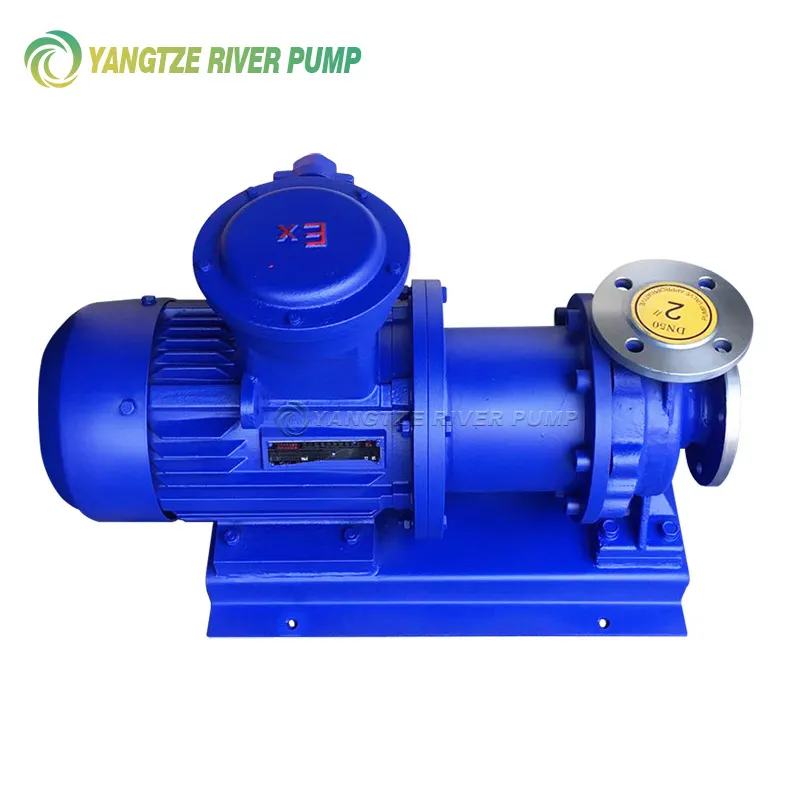 CQB Stainless Steel Magnetic Pumps
-
 Plastic self-priming centrifugal pumps FP and FS
-
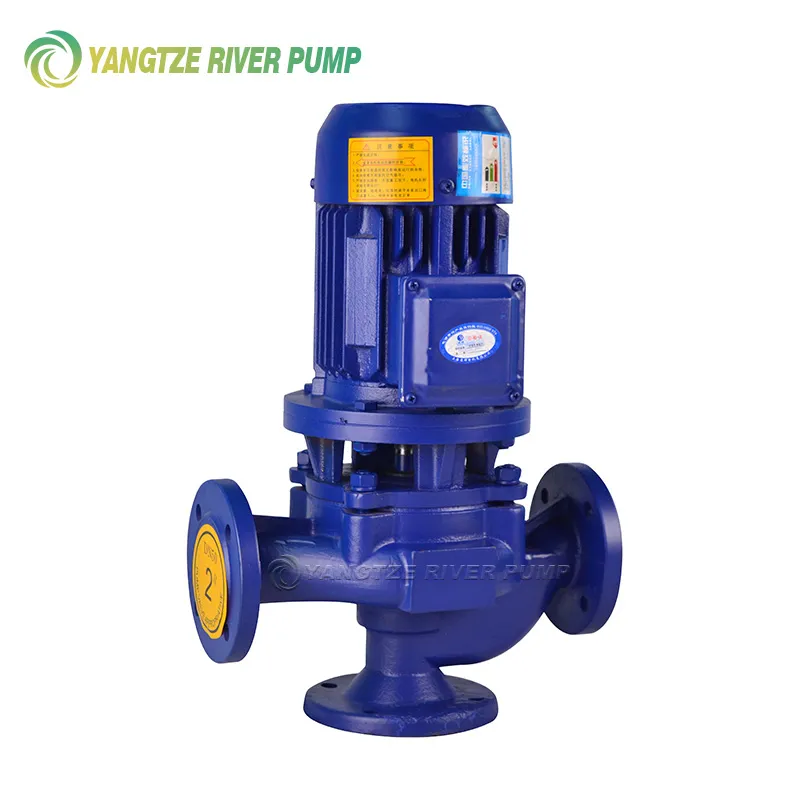 Pipeline wastewater pumps GW
-
 CQF Plastic Magnetic Pumps
-
 YCZ Chemical Process Pumps
-
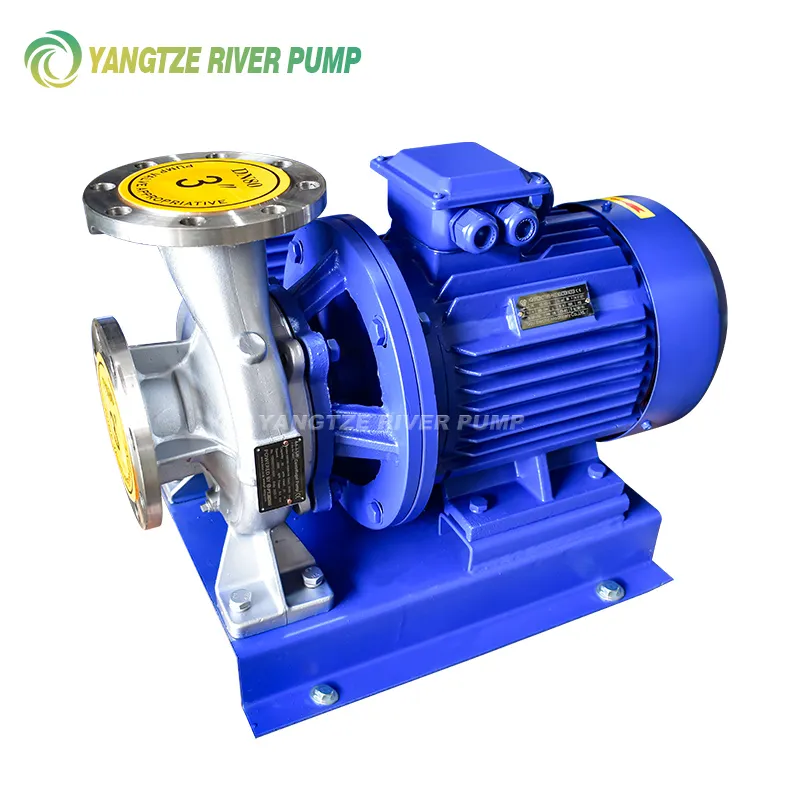 ISW and ISWH Single Stage Horizontal Pipeline Centrifugal Pumps
-
 Vertical pumps with PTFE lining YQF
-
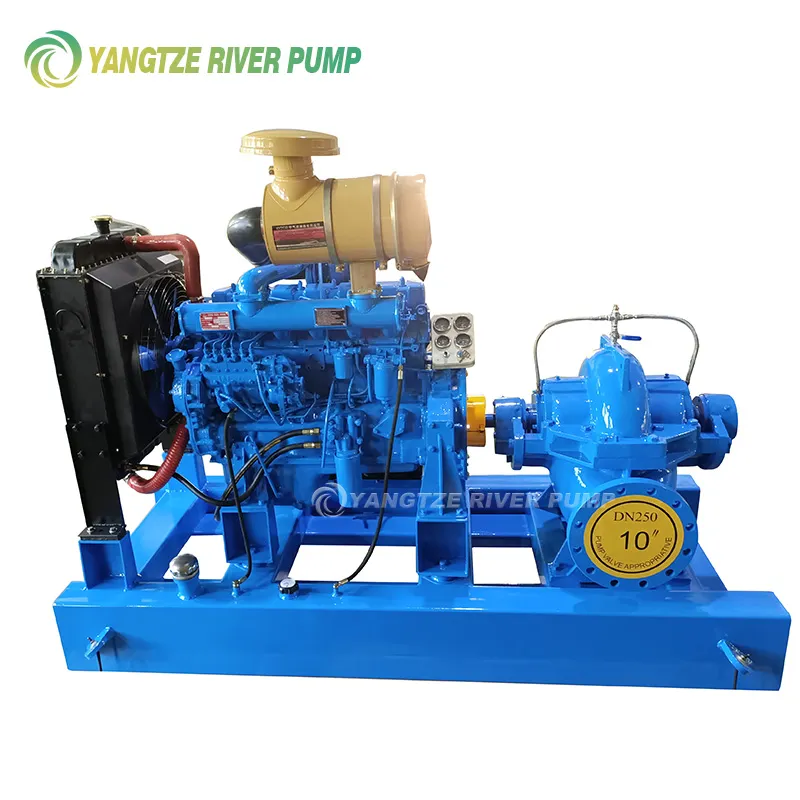 Diesel pumps with horizontal connector YZS and YZSH
-
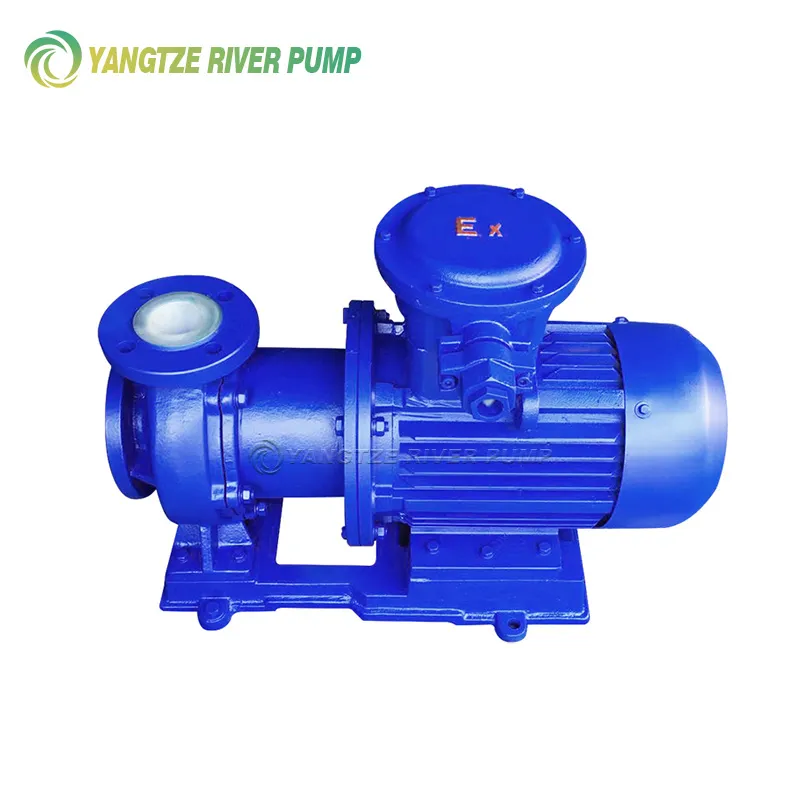 Magnetic pumps with fluoroplastic lining CQB-F
-
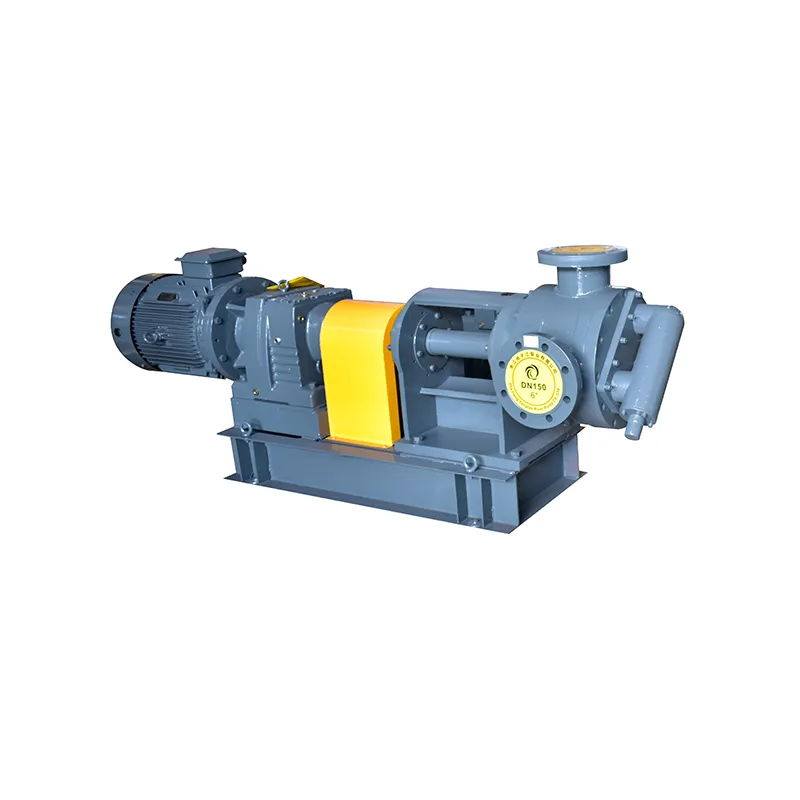 NYP High Viscosity Internal Gear Pumps
-
 Horizontal chemical centrifugal pumps types IS and IR