







vacuum centrifugal pumps
If we talk about vacuum centrifugal pumps, many people immediately imagine something like complex turbomolecular units for laboratories. In practice, in industry, this term often means centrifugal pumps that operate under vacuum conditions or create a vacuum for technological processes - and here the nuances begin, which are rarely written about in catalogs. A common mistake is to assume that any centrifugal can be plugged into a line with a vacuum, as long as the pressure and flow parameters are suitable. In fact, cavitation, operation of a locked valve when starting the system, choice of seal materials - these are the little things that determine whether the pump will work for a year or fail in a month.
Design and pitfalls when selecting
The main difference that immediately catches your eye when working with such pumps is the reinforced design of the housing and shaft. External pressure, especially in a deep vacuum, is no joke. In our practice onvacuum centrifugal pumpsHousings with increased wall thickness are often installed, especially when it comes to chemically active media. For example, to pump out solvent vapors, we once installed a pump made of AISI 316 stainless steel, but of standard thickness. Six months later there is a crack in the weld. It turned out that cyclic loads from variable pressure plus an aggressive environment did their job. After this, we always recommend a reinforced design for such tasks, even if it is more expensive.
Another point is seals. Gland seals in vacuum applications are almost always a headache. The slightest leak and performance drops, and there is a risk of air leaking into the system. Mechanical mechanical seals (MSU) are more reliable, but there is a nuance here: when operating under vacuum, the medium does not lubricate the friction pair well. You have to either provide external recharge, or very carefully select a couple of materials - carbon-graphite ceramics, for example, or special coatings. We are inZhejiang Yangzijiang Pumping Industry Co.,LtdFor our linear centrifugal pumps, which are often integrated into vacuum lines, by default we offer MTU with a barrier liquid supply from an external circuit. Yes, this complicates the tying, but then the client does not come back with complaints.
Tests. Many manufacturers conduct hydraulic tests on water. But a vacuum is different. On our websiteyangtzeriverpump.ruWe honestly write that the pumps are tested on real parameters, but in the workshop we always additionally test pumps intended for vacuum applications on a stand with an ejector. It is important to see how vibration behaves during a sudden load release, and how quickly the operating point is established. Sometimes, due to the hydraulics of the impeller, the pump may become unstable at a certain level of vacuum - this cannot be calculated, it can only be seen.
Experience of integration into real processes
One of the memorable cases was the modernization of the sludge dewatering line at the wastewater treatment plant. There were oldvacuum pumpsrotary type, which constantly clogged and required expensive maintenance. The task was to install centrifugal pumps to create a vacuum in drum filters. It would seem that take a high-pressure centrifugal pump and that’s it. But the environment is not clean air, but a vapor-gas mixture with drops of sludge and aggressive components.
We proposed a solution based on our linear centrifugal pump with a flow end made of ultra-polished polypropylene. Polypropylene is not the most durable material, but for this environment chemical resistance was more important. To compensate for the loads from the vacuum, the body was made of monolithic casting with stiffeners. And most importantly, we had to completely recalculate the suction piping system in order to minimize losses and avoid cavitation at the inlet. As a result, the pumps have been operating for three years now, and MTU replacement is scheduled once every year and a half. The client is happy, but at the start of the project there were many doubts - whether the plastic would hold up or whether it would tear.
Another common scenario is to usecentrifugal pumpsas part of vacuum systems for degassing liquids. Here, not only the ability to create a vacuum is critical, but also the smoothness of the adjustment. Frequency converters are often installed to accurately reach the required vacuum depth without jumps. We once installed a multi-stage centrifugal pump for syrup degassing in a food industry. Everything was fine until seasonal changes in the viscosity of the raw materials began. The pump, designed for water, began to “suffocate”, the pressure dropped. We had to quickly change the impeller to a modification with wider channels. Now in the form for ordering such pumps we have a separate item - “dynamic range of change in the viscosity of the medium?”.
Service and typical operating errors
The most common mistake you encounter on the road is incorrect starting.Vacuum Centrifugal Pumpoften switched on "dry" system, expecting that he himself will create a vacuum and raise the liquid. In theory, self-priming models are capable of this, but conventional centrifugal models are not. They need to be filled before starting. I saw how at one plant they burned three engines in a month, because the mechanic was sure that since the pump was in the vacuum line, it should “draw in”? water myself. I had to hang a huge sign with instructions directly on the unit.
Maintenance of MTU in such conditions is a separate issue. If the pump operates on steam or aggressive gases, condensate or reaction products may enter the seal barrier cavity. We always insist on installing additional pressure sensors in the barrier fluid make-up system. This is inexpensive, but allows you to avoid sudden failure. In the companyZhejiang Yangzijiang Pumping Industry Co.,LtdWe have even developed standard wiring diagrams for such cases - you can request them from our engineers. This is not advertising, but a necessity, proven by breakdowns.
Replacement of consumables. The impeller and seals seem to be everything. But in vacuum applications, bearing units also wear out, because radial loads can be non-standard. We have switched to long-life bearings (vacuum lubricated) for all pumps that go into such systems. Yes, the cost is higher, but the number of warranty cases has decreased significantly. Sometimes it is better to immediately install a more reliable solution than to later explain to the client why the pump stopped working in the middle of the process cycle.
Interaction with other types of pumps
An interesting point is the usecentrifugal pumpspaired with, for example, rotary vane vacuum pumps. Often the centrifugal acts as a booster, increasing system performance at medium vacuum levels. But the coordination of characteristics is important here. Once we had to deal with strong vibration on a common frame. It turned out that the rotational speed of the centrifugal pump (2950 rpm) caused resonance with the pulsations from the rotary pump. We decided to install a damping gasket and shift the operating points by adjusting the valve. It’s a trifle, but without experience you won’t guess.
By the way, our assortment also includes self-priming pumps, which are sometimes mistakenly attempted to be used for deep vacuum. Their limit is approximately 8-9 meters of rarefaction water column. They are not suitable for real vacuum applications, but work well in systems where you need to quickly remove air from the line before starting the mainvacuum centrifugal pump. We often offer such schemes for filtration systems.
If we talk about the future, there are more and more requests for hybrid solutions. For example, magnetic pumps (we also have them in production) with a completely sealed housing are an ideal candidate for working with hazardous or expensive media in a vacuum, because they have zero leakage. But their pressure limit is often lower than that of classic centrifugal ones. Therefore, we are now experimenting with cascade systems: the first cascade is a magnetic pump for pumping out of the reactor, the second is a powerful centrifugal pump to create a working vacuum. So far the tests are encouraging, but there are difficulties with synchronizing work.
Instead of a conclusion: practice versus theory
As a result, working withvacuum centrifugal pumpsis a constant balance between catalog parameters and real conditions. Not a single calculation will show how the pump will behave if there is a pocket for condensate in the pipeline in front of it, which will periodically be “thrown in.” drops into the impeller. Not a single instruction warns that when pumping out hot vapors, it is necessary to warm the pump casing before starting to avoid thermal shock.
Therefore our approach isZhejiang Yangzijiang Pumping Industry Co.,Ltd— it’s not just selling a pump from the list on the websiteyangtzeriverpump.ru, but first find out in detail in which process it will be used. Often, after such a conversation, the client understands that he does not need a standard, but a slightly modified model. And that's okay. Because reliable operation in a vacuum always means paying attention to details that would normally seem unimportant. And it is these details that ultimately determine whether the equipment will work or just take up space in the workshop.
Correspondingproducts
Related Products



Best Sellingproducts
Best Selling Products-
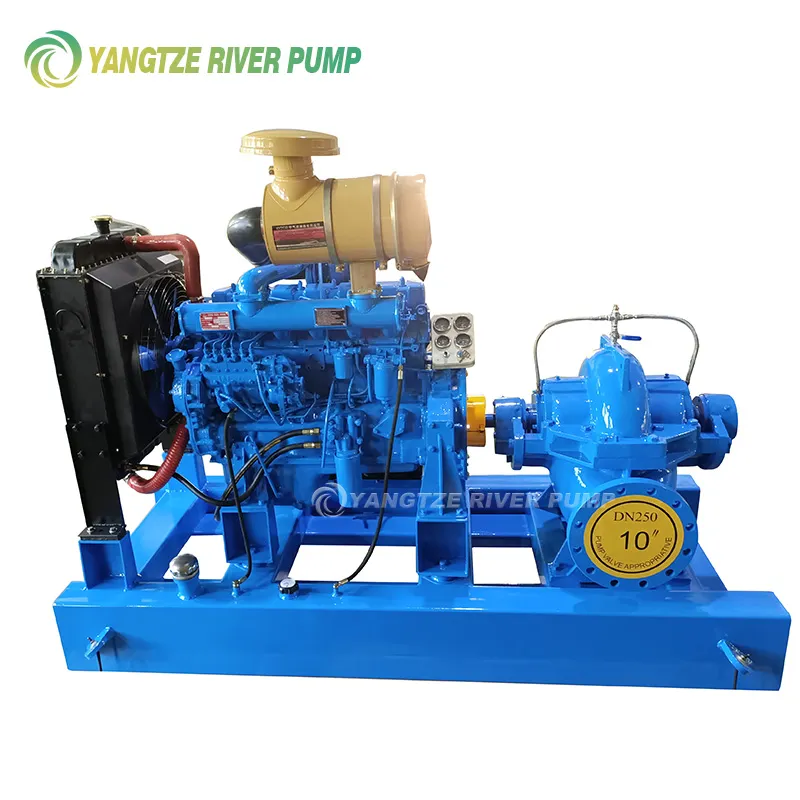 Diesel pumps with horizontal connector YZS and YZSH
-
 Infinitely variable screw pumps type G
-
 Horizontal multistage pumps for feeding DG boilers
-
 Vertical multistage centrifugal pumps made of stainless steel (light series) CDL and CDLF
-
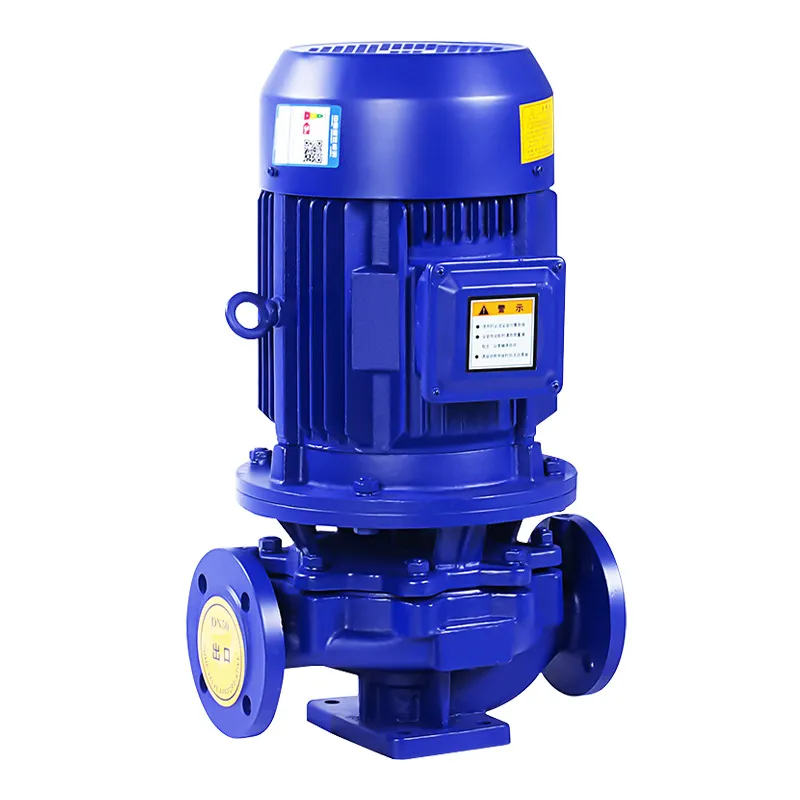 Vertical single-stage pipeline centrifugal pumps ISG and IHG
-
 YZSP Diesel Self-Priming Pumps
-
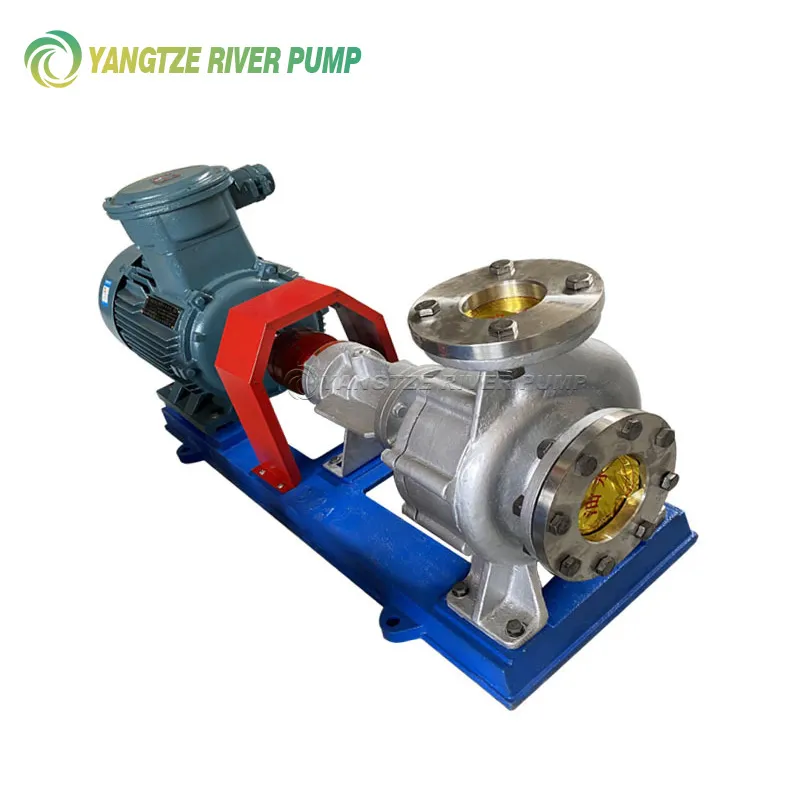 RY thermal oil pumps
-
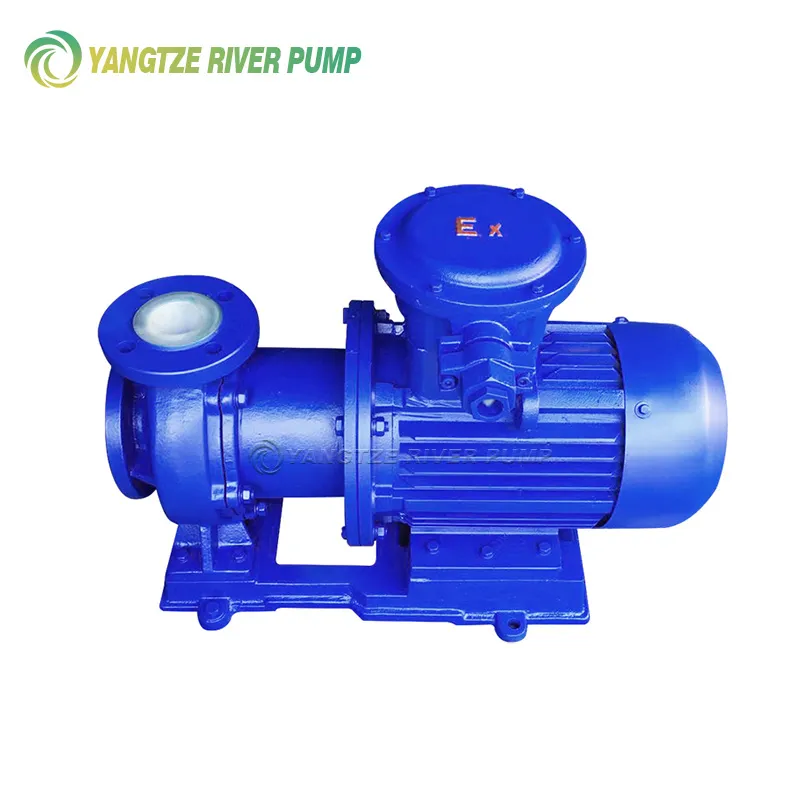 Magnetic pumps with fluoroplastic lining CQB-F
-
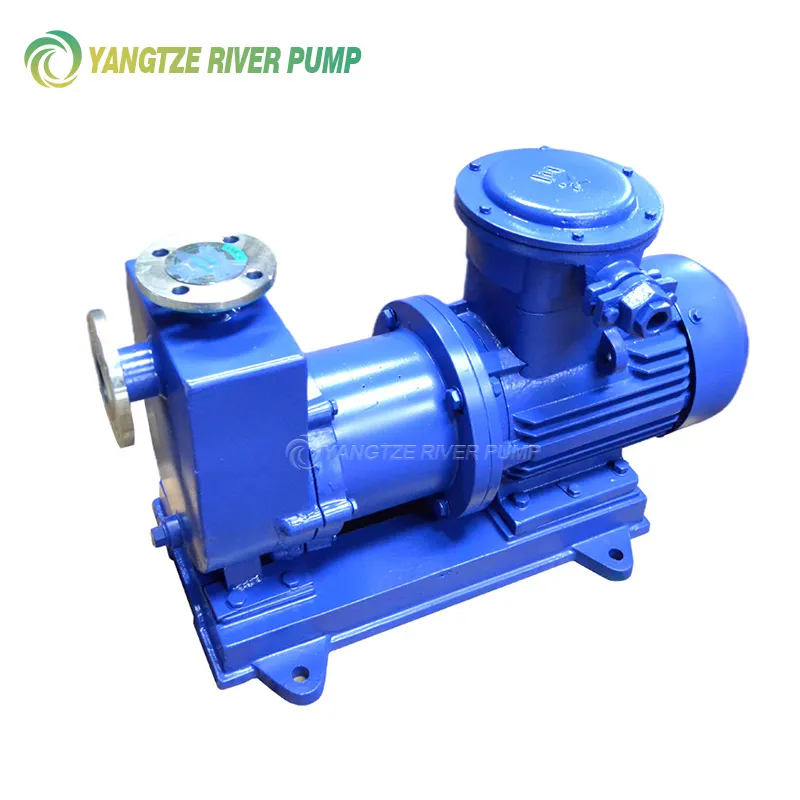 ZCQ Stainless Steel Self-Priming Magnetic Pumps
-
 Vertical pumps with PTFE lining YQF
-
 Plastic self-priming centrifugal pumps FP and FS
-
 YCZ Chemical Process Pumps