Industry Solutions: Wholesale Large Centrifugal Pumps Manufacturers
2026-05-31
- Industrial centrifugal pumps: selection criteria for bulk purchases in 2026
- Technical parameters that determine the reliability of centrifugal pumps
- Typology of industrial centrifugal pumps and areas of application
- Production control and certification: quality assurance for imports
- Logistics of wholesale supplies and minimization of import risks
- Cost-effectiveness: why a cheap pump is expensive
- Frequently Asked Questions
- Conclusion: a strategy for a strong partnership
Industrial centrifugal pumps: selection criteria for bulk purchases in 2026
The industrial equipment market in 2026 dictates new rules of the game: the purchase price has ceased to be the only decisive factor, giving way to the total cost of ownership (TCO) and the reliability of the hydraulic part.Centrifugal pumps, which form the basis of pumping systems in the chemical, oil and gas and water treatment industries, require careful selection not only in terms of pressure and flow rate, but also in terms of the materials of the flow part, the type of seal and the energy efficiency of the engine. In our practice of working with large industrial holdings, we observe an alarming trend: up to 35% of premature equipment failures occur due to a mismatch between the pump characteristics and actual operating conditions, and not due to manufacturing defects. This article is intended for chief engineers, technical directors and buyers who are making large-scale investment decisions in pumping equipment and are looking for a reliable partner for wholesale supplies.
We will not retell textbooks on hydraulics. Instead, we will analyze real cases, technical nuances that are often missed during tenders, and give clear recommendations on choosing a manufacturer. If you are looking for a simple solution that is “cheap and fast”, this article may seem overly detailed to you. But if your goal is to ensure uninterrupted operation of the production line for 10-15 years, avoid downtime costing millions of rubles, and obtain certified equipment that complies with CE and ISO 9001 standards, then the material below will be your practical guide to action.
Technical parameters that determine the reliability of centrifugal pumps
When forming technical specifications for the purchase of a batch of pumps, most specialists focus on two numbers: flow (m³/h) and pressure (m). This is a fundamental error that in the long term leads to cavitation, overheating of the bearings and destruction of the impellers. The hydraulic characteristic is just a point of operation on the curve, but it does not say anything about the safety margin of the structure or the ability of the unit to operate in transient conditions.
The first critical parameter we require in our customers' specifications is the NPSHr. Many manufacturers in the budget segment underestimate this figure in their catalogs to make the pump look more versatile. In practice, this means that at the actual temperature of the pumped medium (especially if it is above 60°C), the pump will begin to “starve”, creating microshocks inside the housing. One of our clients, a fertilizer manufacturing company, was faced with a situation where a batch of pumps failed after 4 months of operation. During the audit, it turned out that the declared NPSHr was 3 meters, but the real one when working with hot water reached 5.5 meters. The result is erosion of the impellers and vibration that destroys the shafts. We recommend that you always request test reports from the manufacturer that show actual NPSHr at various flow rates, not just at the point of maximum efficiency.
The second aspect is the materials used. For pumping aggressive media, the choice between stainless steel AISI 304, AISI 316L and lined alloys (fluoroplastic F46) determines the service life of the equipment. In the projects of Zhejiang Yangzijiang Pumping Industry Co., Ltd., we use a range of materials depending on the chemical activity of the environment. For example, for sulfuric acid with a concentration above 70%, standard stainless steel is absolutely not suitable - magnetic pumps lined with fluoroplastic of the CQB-F series or special chemical pumps YCZ are required here. An error in the selection of material at the design stage leads to through corrosion of the body within a few weeks, which creates a direct threat to the environmental safety of the enterprise.
The third parameter is the type of shaft seal. Traditional stuffing box seals require constant maintenance and allow micro-leakage, which is unacceptable for toxic liquids. Mechanical seals (mechanical seals) have become the standard, but their configuration matters. A single mechanical seal is suitable for water and neutral media, while a double seal with plan system (Industry Standard API 682) is required for volatile or hazardous liquids. In our product line, including the YCZ and FY models, we offer the installation of seals from the world's leading brands (Burgmann, Eagle) or our own designs, which have been leak tested in our test center. Ignoring this point in order to save 10–15% of the cost of the pump can lead to fines from environmental services that are many times greater than the amount saved.
Engine energy efficiency has also come to the fore in light of increasingly stringent industrial energy requirements. IE3 motors are becoming the minimum requirement, with larger installations increasingly requiring IE4 motors. When calculating the payback of a wholesale batch of pumps, it should be taken into account that the difference in engine efficiency of only 2% with round-the-clock operation of a 55 kW unit results in savings of tens of thousands of kilowatt-hours per year. We conduct a full audit of the customer's power system before large shipments to ensure that the selected motors meet local energy efficiency standards and actual grid loads.
Comparison table of fluid end materials
| Material | Applicability | Temperature limit | Cost (relative) | Risks of making the wrong choice |
|---|---|---|---|---|
| Cast iron (HT200) | Water, neutral liquids, oil | up to +120°C | Low | Corrosion in the presence of oxygen, destruction in acidic environments |
| Stainless steel AISI 304 | Food products, weak oxidizing agents | up to +180°C | Average | Intergranular corrosion in chlorine-containing environments |
| Stainless steel AISI 316L | Chemical industry, sea water | up to +200°C | High | Destruction in hot concentrated acids |
| Fluoroplastic (F46) / Lining | Aggressive acids, alkalis, solvents | up to +150°C | Very high | Peeling of the lining due to vacuum or thermal shock |
| Duplex steel (2205) | Oil and gas, high loads, abrasives | up to +250°C | Premium | High cost, difficult to handle during repairs |
The choice of material should be based not only on the compatibility table, but also on taking into account the abrasive properties of the medium. Even a chemically inert fluid containing suspended solids requires the use of materials with increased hardness or special design solutions, such as an open impeller, which is less prone to clogging. Our company's product range includes non-clogging self-priming wastewater pumps of the ZW series, which are specially designed to work with contaminated liquids, ensuring the passage of solids of a certain diameter without compromising performance.
Typology of industrial centrifugal pumps and areas of application
There is no universal pump. Trying to use one model for all tasks in an enterprise is a recipe for inefficiency. There are dozens of design types on the market, and understanding their differences is critical to ordering correctly. Let's look at the key categories represented in the modern industrial sector and their specifics.
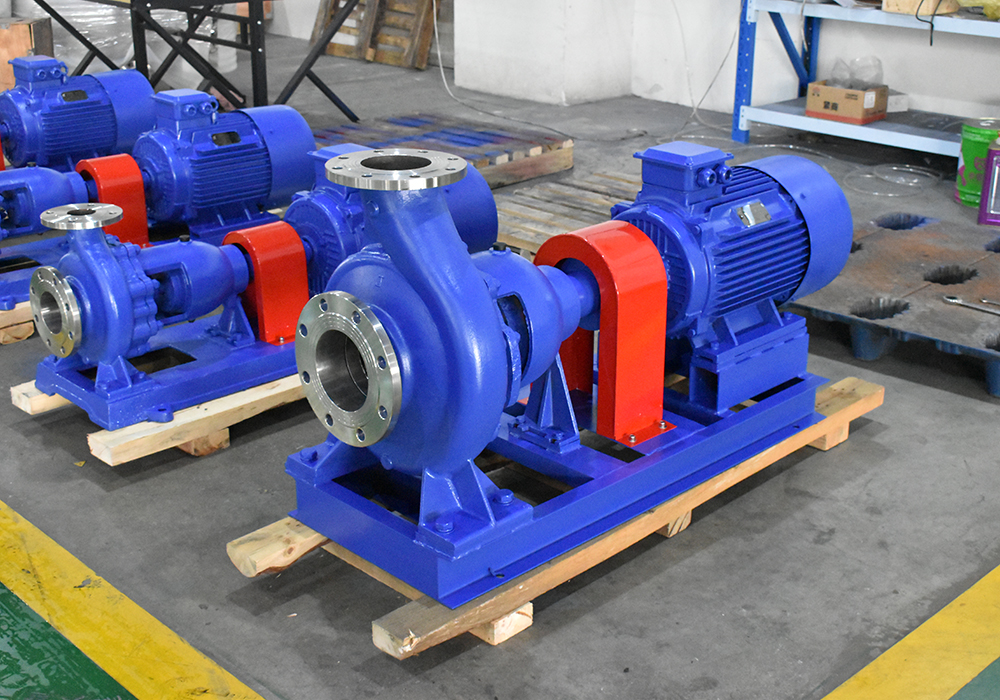
Cantilever centrifugal pumpsremain the most popular segment. They are easy to maintain, have a modular design and are suitable for pumping clean water and lightly contaminated liquids. However, their limitation is the inability to work with high-vacuum conditions at the inlet without pre-priming. For applications where a guaranteed self-priming effect is required, for example when pumping from tanks located below the pump level, specialized solutions are required. This is where self-priming models come into play, such as the ZW series or YZSP diesel units, which are capable of creating a vacuum and lifting liquid from a depth of up to 6–8 meters without the use of check valves on the suction line.
Vertical multistage pumpsIndispensable where high pressure with compact dimensions is required. The “pipe-in-pipe” design allows you to increase the number of stages, increasing the pressure without expanding the footprint of the installation. They are widely used in fire extinguishing systems, water supply of high-rise buildings and power supply of boilers. In our product line, the DC series horizontal multistage boiler feed pumps demonstrate high pressure stability, which is critical for the safety of boiler installations. It is important to note that vertical pumps are more sensitive to the quality of the foundation and alignment than their horizontal counterparts, so the installation requirements are stricter here.
Magnetic pumpsrepresent the pinnacle of evolution in the field of sealing. The absence of a movable shaft seal (oil seal) eliminates any leaks, since torque is transmitted through a magnetic coupling. This is the only correct solution for pumping expensive, toxic or flammable reagents. The range includes CQF plastic magnetic pumps for moderately aggressive environments, CQB-L vertical magnetic pumps for space saving and ZCQ stainless steel self-priming magnetic pumps for difficult starting conditions. The main nuance of operating magnetic pumps is the prohibition on running “dry”. Even a short-term absence of liquid leads to heating of the magnets and loss of their properties, as well as to the destruction of sliding bushings. Therefore, the installation of dry-running protection sensors is mandatory.
Screw and screw pumpsoccupy a niche of working with high-viscosity liquids. Centrifugal force is ineffective here, since viscosity dampens the flow rate. Sanitary screw pumps type GF, offered by us, provide a smooth, pulsation-free supply of food industry products, cosmetics or adhesives. They take care of the structure of the product without destroying the emulsion or damaging inclusions. However, their efficiency is usually lower than that of their centrifugal counterparts, and they require more frequent maintenance of the rubber stators when working with abrasives.
Submersible pumps(FY series) work directly in a container of liquid, which eliminates problems with suction and cavitation. They are ideal for deep wells, storage tanks and processes where it is important to minimize friction losses in the suction piping. The main requirement for them is high-quality engine insulation and protection against overheating when the liquid level decreases. Modern submersible chemical pumps are equipped with winding temperature and humidity monitoring systems, which allows them to be integrated into the overall plant dispatch system.
When purchasing in bulk, it is important to maintain a balance between specialization and unification. Purchasing too many unique models makes it difficult to stock parts and train staff. The strategy of Zhejiang Yangzijiang Pump Industry Co., Ltd. is to offer modular solutions, where the main components (bearing units, couplings, motors) are unified across different series, which simplifies the logistics of spare parts for the end user.
Production control and certification: quality assurance for imports
In a global supply chain, trust in a manufacturer is built not on marketing brochures, but on the transparency of production processes and the availability of independent certificates. For the Russian market, where industrial safety requirements are regulated by strict standards (TR CU, GOST), the presence of correct documentation is a pass to the site. But a paper certificate is just the tip of the iceberg. True quality comes from the shop floor.
Based in Zhejiang Province, our enterprise implements the principle of complete vertical integration. This means that we do not simply assemble pumps from purchased components. We control the entire cycle: from casting housings and machining of shafts to dynamic balancing of rotors and final assembly. Eight complete production lines are equipped with the latest generation of CNC machines, which guarantees micron precision of parts mating. Any deviation in the alignment of the shaft and housing leads to increased bearing wear and vibration. Our own testing center carries out testing of each product. We don't select random samples to test - we test everything. Parameters of performance, pressure, tightness, corrosion resistance and durability are recorded in the product passport.
CE and ISO 9001 certification is the basic level of compliance with international quality and safety management standards. However, work in specific industries, such as the oil and gas sector or nuclear energy, requires additional permits. On-site inspections by SGS confirm that the performance claims are true. The presence of national patents for design solutions that our company possesses indicates the status of a high-tech enterprise. We do not copy other people's developments, but create our own engineering solutions adapted to real operating conditions.
Particular attention is paid to incoming inspection of materials. Each metal melt undergoes spectral analysis before being put into production. The use of non-certified metal is a common problem with low-cost manufacturers, leading to sudden failures of housings under pressure. We eliminate this risk by working only with trusted suppliers of raw materials and having full batch traceability. Guaranteed assembly accuracy and end-to-end monitoring of the production cycle allow us to give honest product guarantees and ensure stable delivery of orders on time.
For Russian partners, an important aspect is the adaptation of products to climatic operating conditions. Equipment operating in Siberia or the Far East must withstand extremely low temperatures during storage and startup. Our engineers take these factors into account when selecting lubricants, steel grades and design of electric motors. Cooperation with international groups such as APP, HPO, NCHUAN and DALI has allowed us to accumulate unique experience in implementing projects in various climatic zones of the world, which we successfully translate into every order we ship.
Logistics of wholesale supplies and minimization of import risks
Purchasing industrial equipment in bulk from China is a complex logistics process where errors in planning can negate the full economic benefit of the low EXW price. Delivery time, packaging, customs clearance and cargo insurance are links in one chain that require professional management. Experience shows that unprofessional packaging is the cause of up to 20% of damage to equipment during sea transportation.
When shipping centrifugal pumps, especially large models with cast iron bodies, proper support on wooden pallets and the use of shock-absorbing materials are critical. Vibration in a container during a storm can lead to displacement of heavy components and deformation of fasteners. We use reinforced export packaging with moisture-proof barriers, since condensation inside the container is a common cause of corrosion of external surfaces even before customs clearance. Each pump is preserved with special compounds that prevent oxidation of metal surfaces in the high humidity conditions of the sea route.
The issue of Lead Time requires a realistic approach. Promises of “shipping in 7 days” for a complex industrial pump are often a sign that the manufacturer plans to supply stock inventory or an item of questionable quality. The actual production cycle of a quality pump, including casting, processing, assembly and testing, ranges from 3 to 6 weeks, depending on the complexity of the model and the volume of the order. Our company adheres to the principle of transparency: we provide the client with a production schedule with photo reports at each stage. This allows the customer to plan installation and commissioning work at their site without downtime.
The customs coding (HS Code) for centrifugal pumps (usually group 8413) must be determined precisely, taking into account the housing material and drive type. Misclassification may result in customs delays and additional charges. We provide a full package of accompanying documents, including invoices, packing lists, certificates of origin and technical passports in Russian, adapted to the requirements of local regulatory authorities. This speeds up the clearance process and allows equipment to get to the site faster.
Another important aspect is after-sales support. Purchasing equipment thousands of kilometers from the manufacturer should not mean losing communication. Our work model assumes the presence of a spare parts warehouse and the ability to quickly dispatch critical components (impellers, shafts, seal sets) in the event of an emergency. We understand that pump downtime stops production, so minimizing recovery time is a priority. An individual approach to each client includes not only the sale of hardware, but also technical advice, assistance in selecting the optimal solution and training the customer’s personnel in the operating features of specific models.
Cost-effectiveness: why a cheap pump is expensive
In the B2B sector, there is an illusion that the main savings are achieved at the time of purchase. CFOs often approve tenders by selecting the offer with the lowest starting price. However, the TCO (Total Cost of Ownership) methodology proves the opposite: the initial cost of a pump is only 10–15% of all costs over its entire life cycle. The remaining 85–90% is the cost of electricity, maintenance, repairs and production downtime.
Let's look at a specific example. Two pumps with the same passport data (flow 100 m³/h, head 50 m). Pump “A” costs $1000 and has an efficiency of 72%. Pump “B” costs $1500 and has an efficiency of 78%. The price difference is $500. When running 24/7 for a year, pump “A” will consume significantly more electricity. At an electricity tariff and an engine power of about 30 kW, a difference in efficiency of 6% will lead to excess consumption of electricity by approximately 15,000 - 18,000 kWh per year. In monetary terms, this can amount to an amount exceeding the difference in the price of pumps already in the first year of operation. By the fifth year, the savings from a more efficient pump will more than cover its cost.
In addition, cheap pumps often have shorter bearing and seal life. Replacing the seal every 6 months instead of once every 2 years entails costs for spare parts, the work of the service team and, most importantly, stopping the production line. The cost of an hour of downtime in a modern chemical or refinery plant can be in the tens of thousands of dollars. The reliability that companies like Zhejiang Yangzijiang Pumping Industry Co.,Ltd provides through the use of quality components and strict assembly controls is an insurance against these colossal losses.
It is also worth considering liquidity and maintainability. Standardized pumps from a reputable manufacturer are easier to sell or replace in the future. Unique or 非标 (non-standard) cheap models often become a “burden”, since it is impossible to find spare parts for them after they are discontinued. An investment in quality equipment is an investment in business predictability.
Frequently Asked Questions
What is the minimum order quantity (MOQ) for wholesale supply?
For standard centrifugal pump models, the minimum order is usually 5–10 units to optimize logistics costs. However, for large projects or non-standard modifications, we are ready to discuss individual conditions, starting from one piece of equipment, if this is a pilot project with scaling potential. The main thing for us is the beginning of a long-term partnership, and not a one-time deal.
Do you provide pumps with motors adapted to Russian standards (GOST)?
Yes, we understand the specifics of the Russian market. We can equip our pumps with electric motors that fully comply with GOST standards and have the necessary EAC certificates. Options with motors from European brands are also available if the project requires specific characteristics or if the customer has preferences for certain brands of drives.
How is warranty service provided when working with China?
Our warranty covers all defects in materials and workmanship for a period of up to 18 months from the date of shipment or 12 months from the date of commissioning. If a warranty case is identified, we promptly send the necessary spare parts by air delivery at our own expense. For critical situations, we offer video support from our engineers to diagnose and assist in replacing components by local customer personnel. In rare cases, if on-site repair is not possible, the issue of replacing the entire unit is considered.
Is it possible to order pumps for specific parameters that are not in the catalog?
Undoubtedly. Having our own design bureau and flexible production lines allows us to fulfill orders according to individual drawings or technical specifications. This may include changes in fluid end materials, shaft length, connection type, or special paint and marking requirements. We implement the principle of “engineering to suit the task”, and not just selling from a warehouse.
What are the production times for a typical batch of pumps?
The standard production time for a batch of up to 50 units is 20-30 working days after approval of drawings and receipt of advance payment. This period includes all stages of quality control and testing. During high season periods, lead times may be extended, so we recommend planning purchases in advance, especially if the project is tied to a tight construction or renovation schedule.
Conclusion: a strategy for a strong partnership
Selecting an industrial centrifugal pump supplier is a strategic decision that will impact a plant's operational efficiency for years to come. In an era when technology is developing rapidly, and environmental and safety requirements are becoming more stringent, you need a partner who does not just sell metal, but offers engineering expertise and reliable solutions. Zhejiang Yangzijiang Pumping Industry Co., Ltd., combining 20 years of experience, modern production facilities and focus on international standards, is ready to become such a partner for your business.
We offer not just products, but confidence in the future. From the accuracy of calculations to the quality of every bolt in the pump body, everything works for your profit and safety. A wide product line, covering 10 types of pumps and more than 30 basic models, allows you to solve almost any problem in pumping liquids, be it aggressive chemicals, viscous petroleum products or clean water.
Don't let reliability and efficiency fall by the wayside. Contact us today for technical advice and a quote for your project. Let's build a system together that will work flawlessly.
To study the full product catalog and technical specifications, follow the link:catalog of industrial centrifugal pumps.