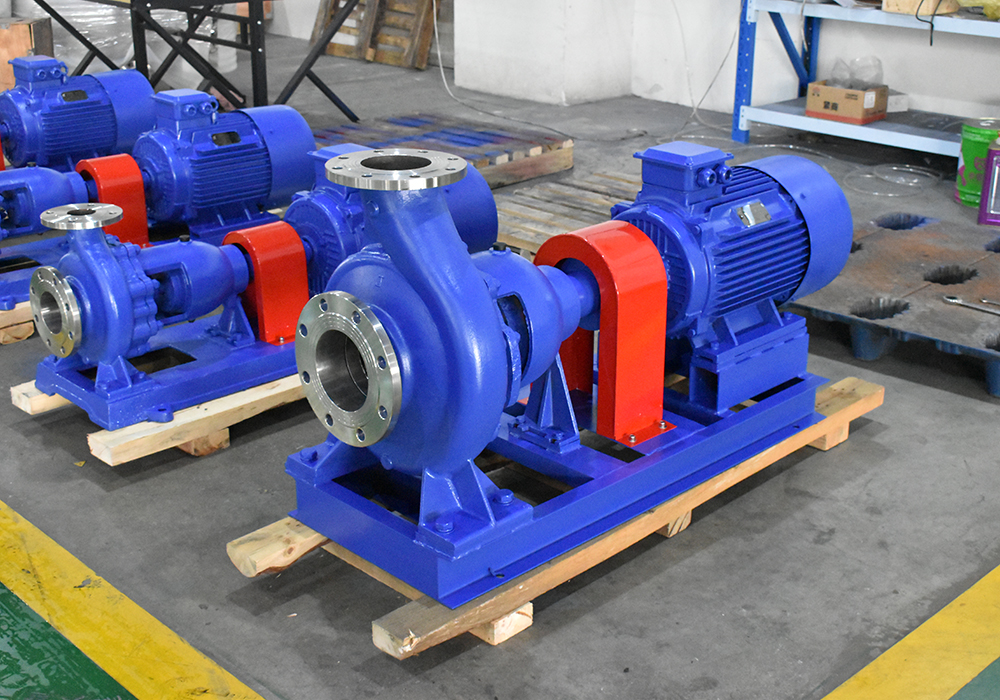
Chemical industry: centrifugal pump plastic factories案例
2026-05-31
- Why plastic centrifugal pumps have become the standard in the chemical industry
- Technical characteristics and materials: what really affects the resource
- Real implementation cases: from electroplating to pharmaceuticals
- Typical operating mistakes and how to avoid them
- Quality standards and certification: what to look for when purchasing
- How to choose a supplier: criteria for reliable partnership
- Frequently Asked Questions
- Conclusion: an investment in the reliability of your production
Why plastic centrifugal pumps have become the standard in the chemical industry
In the modern chemical industry, the choice between metal and polymer has ceased to be a matter of budget savings and has become a matter of technological survival of the enterprise. When we talk about pumping aggressive media,centrifugal pumpswith a flow part made of engineering plastics (PP, PVDF, ETFE) demonstrate durability indicators unattainable for traditional stainless steels, even premium grades. In our experience working with acid and fertilizer plants, we observed a situation where replacing a standard AISI 316L steel pump with a model with a fluoroplastic lining increased the overhaul interval from 3 months to 4 years. This is not a marketing figure, but the result of the material’s real resistance to pitting corrosion and intergranular fracture.
The main reason for this market transformation lies in the changing nature of production processes. Chemical reagents are becoming more complex, concentrations are higher, and environmental safety requirements are becoming stricter. Metal pumps, even with expensive alloys such as Hastelloy, often cannot withstand the combination of high temperature and the presence of chlorides. Plastic solutions developed by companies such as Zhejiang Yangzijiang Pumping Industry Co., Ltd. offer an alternative where the housing material itself is a barrier to chemical attack rather than just a passive container. Integrating over 20 years of experience in the development of such systems allows us to create units that can operate in conditions where metal dissolves in a matter of weeks.
The key to success is not just the availability of plastic, but proper molding and assembly engineering. Cheap analogues often suffer from uneven wall thickness or the presence of internal stresses, which leads to deformation when heated. A high-quality industrial pump must maintain its impeller geometry and clearances even with temperature fluctuations from -20°C to +95°C. That is why, when choosing equipment, it is important to look not only at the passport data, but also at the housing production technology and testing methods carried out by the manufacturer before shipment.
Technical characteristics and materials: what really affects the resource
When selecting chemical production equipment, engineers often focus only on pressure and throughput, overlooking the critical parameters of material compatibility. An error in choosing a plastic brand can cost an enterprise millions of rubles in losses due to line downtime and product contamination. We have identified three main aspects that determine real reliabilitycentrifugal pumpsin a hostile environment, based on analysis of hundreds of failures and successful implementations.
Polymer choice: PP, PVDF or ETFE?
Polypropylene (PP) remains the most popular material due to its optimal price and chemical resistance. It is ideal for pumping dilute acids, alkalis and saline solutions at temperatures up to 80-90°C. However, it has a limit: when in contact with strong oxidizing agents or organic solvents, it may lose strength. In cases where the media contains chromic acid or operates at temperatures above 100°C, it is necessary to switch to polyvinylidene fluoride (PVDF). This material has outstanding UV resistance and thermal stability up to 120°C, making it the standard for electroplating shops and pickling lines.
For extreme conditions where hydrofluoric acid or complex organic compounds are present at high temperatures, the only correct solution is ethylene tetrafluoroethylene (ETFE) or all-fluoroplastic structures. Although the cost of such pumps is higher, their ability to withstand vacuum and aggressive influences without degradation of properties pays off in the absence of emergency stops. It is important to understand that there is no “universal plastic”. Each project requires analysis of the chemical composition of the fluid, including impurities, which often become catalysts for destruction.
Impeller design and hydraulics
The geometry of the impeller in a plastic pump differs from its metal counterpart not only in material, but also in the approach to balancing. Due to the lower density of the plastic, the moments of inertia are different, which requires careful dynamic balancing to reduce vibration. In open systems where solids may enter, we recommend using open or semi-open wheels, which are less susceptible to clogging. Closed wheels provide higher efficiency, but require ideal cleanliness of the pumped medium.
Particular attention should be paid to the gap between the impeller and the housing. In plastic pumps, this gap is critical: too large will lead to a drop in pressure and cavitation, too small - to jamming due to thermal expansion. High-end manufacturers such as Zhejiang Yangzijiang Pump Industry Co., Ltd. use precision casting molds to ensure dimensional stability regardless of batch size. This ensures that a pump purchased today will have the same performance as a pump purchased five years ago, which is critical for fleet maintenance.
Seals and shaft protection
The weakest point of any pump is the shaft seal assembly. In chemical applications, the use of gland packing is virtually eliminated due to the inevitable leakage. Mechanical seals have become the industry standard, but there are nuances here too. Plastic pumps often use silicon carbide (SiC) seals paired with carbon or ceramic. The choice of friction pair depends on the presence of abrasive in the liquid: if there is a suspension in the medium, the SiC/SiC pair will be the most durable, although more expensive.
An alternative to mechanical seals are magnetic couplings, which completely eliminate contact of the shaft with the atmosphere. Models like CQF or CQB-L, offered by leading manufacturers, transmit torque through a sealed cup, eliminating the risk of toxic leaks. This solution is required when working with volatile organic compounds, toxic gases or expensive reagents, the loss of which is unacceptable. However, it is worth remembering that magnetic pumps are sensitive to dry operation and require protection from overheating of the magnets in case of violation of the operating mode.
Real implementation cases: from electroplating to pharmaceuticals
Theory is important, but only practical experience shows the true value of the equipment. Below we examine two specific cases from our practice, where replacing a pumping fleet led to measurable economic and technological results. These examples illustrate how to properly selectcentrifugal pumpssolves problems that seemed unsolvable when using metal analogues.
Case 1: Electroplating production and the problem of chromic acid
A large electroplating plant experienced systematic pump failures on its chrome plating line. Previously used stainless steel lined pumps failed every 4-5 months due to through corrosion of the housing and failure of the seals. Chromic acid vapor penetrated through microcracks in the coating, causing subcorrosive destruction of the metal. A line downtime to replace a pump took up to 8 hours, which disrupted the production schedule.
Solution:A process audit was carried out and the installation of CQB-F series centrifugal pumps with a solid casing made of F46 fluoroplastic and an impeller made of reinforced polypropylene was proposed. The seals were replaced with a silicon carbide/silicon carbide pair. Additionallyly, a bearing temperature monitoring system has been introduced.
Result:The first set of pumps worked for more than 3 years without a single leak. Corrosion of the housing was completely eliminated due to the monolithic structure of the plastic. Savings on the purchase of spare parts and repairs amounted to more than 60% over a three-year period. In addition, the risk of contamination of the chrome plating bath with metal corrosion products has disappeared, which has improved the quality of the coating of parts. This case clearly proves that the initial cost of a pump is not equal to the cost of owning it.
Case 2: Pharmaceutical synthesis and purity requirements
A pharmaceutical plant encountered a problem when pumping synthesis intermediates containing aggressive organic solvents at a temperature of 70°C. Existing pumps created a risk of contamination of the product with other metals (iron, nickel ions), which is unacceptable according to GMP standards. In addition, frequent seal replacements resulted in wastage of expensive raw materials.
Solution:Introduction of vertical magnetic pumps type GF of sanitary design. The “no seal” design ensures zero leakage. The flow part is made of PVDF, which is inert to all used solvents and is easy to clean when sanitizing the line. The smooth inner surface of the body prevented the formation of stagnant zones and crystallization of sediment.
Result:Full compliance with product purity validation requirements. Reduced raw material losses by 95% due to the absence of leaks. Simplify the line cleaning procedure (CIP) thanks to the ability to completely disassemble without special tools. The reliability of the system made it possible to automate the process of supplying reagents, eliminating the human factor when servicing the pumps.
These examples show that Zhejiang Yangzijiang Pumping Industry Co., Ltd. does not just supply equipment, but offers engineering solutions tailored to the specifics of each process. Having our own testing center allows us to simulate real operating conditions at the design stage, minimizing risks for the customer.
Typical operating mistakes and how to avoid them
Even the most advanced pump can fail prematurely if operating rules are violated. Statistics of service calls show that up to 70% of breakdowns of plastic pumps are associated not with manufacturing defects, but with installation errors and operating modes. Understanding these risks will extend the life of your equipment significantly.
Dry operation and cavitation
The plastic sleeve bearings used in most chemical pumps are lubricated and cooled by the fluid being pumped. Working without fluid even for a few seconds leads to instant overheating, melting of the bearings and jamming of the shaft. This is irreversible damage. To prevent such situations, it is necessary to strictly observe the requirement for the presence of liquid in the housing before starting and install “dry running” protection sensors.
Cavitation is another hidden pump killer. It occurs when the inlet pressure drops below the vapor pressure of the liquid, forming bubbles that collapse with enormous energy. In metal pumps this causes erosion, and in plastic pumps it can lead to vibration damage to the casing or impeller. If you hear the characteristic rock noise in the pump, immediately check the suction filter and lift height. Increasing the diameter of the suction pipe often solves the problem more effectively than replacing the pump with a more powerful one.
Thermal shock and mechanical stress
Plastic has a coefficient of linear expansion 10-15 times higher than that of steel. A sudden change in temperature (thermal shock), for example when a hot fluid is supplied to a cold pump or vice versa, can cause cracking of the housing. Always warm up or cool down the system gradually. It is also critically important to perform the piping correctly: the pipelines should not transfer forces to the pump nozzles. The use of expansion joints and proper fastening of pipes relieves mechanical stress, which during vibration can lead to fatigue failure of the flanges.
Incorrect viscosity selection
Centrifugal pumps are designed primarily for low-viscosity liquids (water, dilute acids). As viscosity increases, pressure and productivity drop sharply, and power consumption increases. Attempting to pump thick pastes or highly concentrated polymers with a conventional centrifugal pump will overload the motor and cause shaft failure. For viscous media, there are special versions or other types of pumps (screw, gear), which are also represented in the line of modern suppliers. Ignoring viscosity correction factors is a common design mistake.
Quality standards and certification: what to look for when purchasing
The industrial equipment market is saturated with offers, but not all of them correspond to the declared characteristics. When importing pumps from China or other countries, the key factor of trust is the availability of independent certificates and compliance with international standards. These are not just pieces of paper, but a guarantee that the pump has passed real tests.
The CE certificate confirms compliance with European directives on the safety of machinery and electrical equipment. This is the basic minimum for entering the EU market and many other countries. However, this is not enough for the chemical industry. Critical is the ISO 9001 certificate, which ensures that the plant has a well-established quality management system. This means that every pump that comes off the assembly line is manufactured to the same standard, and is not the result of hand-assembled “as it happens.”
Particular attention should be paid to test reports from SGS or similar independent laboratories. They confirm the chemical resistance of materials, the tightness of the housing under pressure and the compliance of electrical parameters. Zhejiang Yangzijiang Pumping Industry Co., Ltd., for example, provides complete documentation for each package shipped, including factory test reports. The presence of its own patents for design solutions also indicates that the manufacturer is investing in R&D, and not just copying other people's drawings.
When working with the Russian market, it is important to take into account the requirements of GOST and the availability of EAC certificates (TR CU). Adaptation of equipment to climatic conditions (UHL version) and local power supply standards is a prerequisite for trouble-free operation. Ignoring these requirements can lead to problems with customs clearance and difficulties with warranty service.
| Comparison parameter | Budget pumps (No-name) | Professional solutions (Factory version) |
|---|---|---|
| Housing material | Recycled plastic, possible inclusions | Primary virgin PP/PVDF with raw material certificate |
| Wall thickness | Uneven, saving material | Calculated, with a margin for pressure and temperature |
| Rotor balancing | Static or missing | Dynamic balancing class G6.3 or higher |
| Bearings | Regular graphite or low grade ceramic | High purity silicon carbide (SiC) |
| Tests | Spot or visual inspection | 100% tightness and performance test |
| Warranty | Formal, difficult to implement | Real support, availability of spare parts in stock |
How to choose a supplier: criteria for reliable partnership
Selecting a supplier of pumping equipment is a strategic decision that affects the continuity of the entire production. In the context of global logistics and complex supply chains, it is important to partner with a company that can provide not only sales, but also long-term support. Experience working with international groups such as APP, HPO, NCHUAN and DALI has taught us that the reliability of a partner is measured not only by the price on the price list.
The first criterion is vertical integration of production. Factories that control the entire cycle from case casting to assembly and testing can respond flexibly to customer requests and guarantee deadlines. Companies operating in an assembly shop using purchased components depend on third-party suppliers and often cannot quickly resolve a problem with the quality of a specific part. Our own testing center is a marker of a serious manufacturer who is not afraid to test their products before shipping.
The second criterion is technical expertise and consulting. A good supplier does not just accept an order, but asks questions: what liquid, what temperature, are there any solid particles, what operating mode? Zhejiang Yangzijiang Pumping Industry Co., Ltd. engineers conduct a detailed audit of the task before selecting a model to eliminate specification errors. The ability to obtain a customized solution, be it a special seal material or a non-standard connection, distinguishes professionals from resellers.
The third criterion is transparency and service. The presence of a spare parts warehouse, the ability to quickly ship samples, clear terms of warranty and post-warranty service create a foundation of trust. In our vision, the client's success is our success. Therefore, we rely on long-term partnership, providing complete technical documentation in Russian and maintaining communication at all stages of the equipment life cycle.
Frequently Asked Questions
What is the service life of a plastic centrifugal pump?
With proper operation and compliance of the material with the pumped medium, the service life of a high-quality plastic pump is from 5 to 10 years or more. The key factor is the absence of abrasive wear and compliance with temperature conditions. Sliding bearings usually require replacement every 1-2 years, depending on the intensity of work, which is a planned maintenance procedure.
Can a plastic pump be used to pump hot liquids?
Yes, but with restrictions on the material. Pumps made from polypropylene (PP) operate up to 90°C, from PVDF - up to 120°C, and from fluoroplastic (F46/ETFE) - up to 150°C and above. It is important to consider that as the temperature increases, the maximum outlet pressure decreases. Always refer to the operating point chart for the specific temperature.
What is the advantage of a magnetic pump over a mechanical seal pump?
The main advantage is absolute tightness. The absence of a moving shaft seal eliminates any leaks, which is critical for toxic, expensive or volatile liquids. Magnetic pumps also require no seal maintenance, reducing operating costs. However, they require protection from dry operation and are sensitive to ferromagnetic particles.
Do you provide spare parts for older model pumps?
Yes, we maintain a spare parts stock program for all current series, including impellers, shafts, bearings and seals. Thanks to standardization of production, most components are interchangeable within the same series, even when purchasing pumps in different years. For discontinued models, we notify customers in advance and offer analogues.
How quickly is delivery and commissioning carried out?
The standard production and shipment time from a warehouse in China ranges from 7 to 15 working days for standard items. Delivery to Moscow or large regional centers takes from 20 to 35 days, depending on the logistics route. We provide detailed installation instructions and are ready to organize supervised installation or online consultation with our engineers to launch the equipment.
Conclusion: an investment in the reliability of your production
The chemical industry does not forgive compromises in matters of equipment reliability. Choosing the right onecentrifugal pumpis not just a purchase of iron and plastic, it is an investment in the stability of the technological process, personnel safety and environmental responsibility of the enterprise. Switching to modern plastic solutions allows you to reduce the total cost of ownership, minimize the risk of accidents and improve the quality of the final product.
Zhejiang Yangzijiang Pumping Industry Co., Ltd. is ready to become your reliable partner in solving problems of any complexity. Our 20 years of experience, our own production base and commitment to quality are confirmed by thousands of successfully operating pumps around the world. We don't just sell equipment, we offer comprehensive solutions adapted to your realities.
Don't let pump problems slow down your business. Contact our technical specialists today to audit your pumping station and select the optimal equipment. Receive a commercial offer with a detailed calculation of efficiency and payback periods.
Catalog of industrial centrifugal pumps | Contact us todayfor engineer consultation.