







Installation and operation procedure for IH centrifugal pumps for the chemical industry
2026-09-17
The installation and operating procedures of IH centrifugal pumps play a particularly important role in the transport of liquids in the chemical industry. For many users, improper operation leads to a significant reduction in the service life of centrifugal pumps, and in some cases even to their immediate failure. Operating procedures and precautions when working with centrifugal pumps: three stages - starting, running and stopping a centrifugal pump - are of great importance for the normal operation of both the equipment itself and the entire production process as a whole. Chemical centrifugal pumps refer to centrifugal pumps used in the chemical industry. Compared with other types of pumps, chemical centrifugal pumps have the advantages of simple structure, low wear, stable operation, low noise, uniform fluid flow, easy adjustment and high efficiency. Translated by DeepL.com (free version)
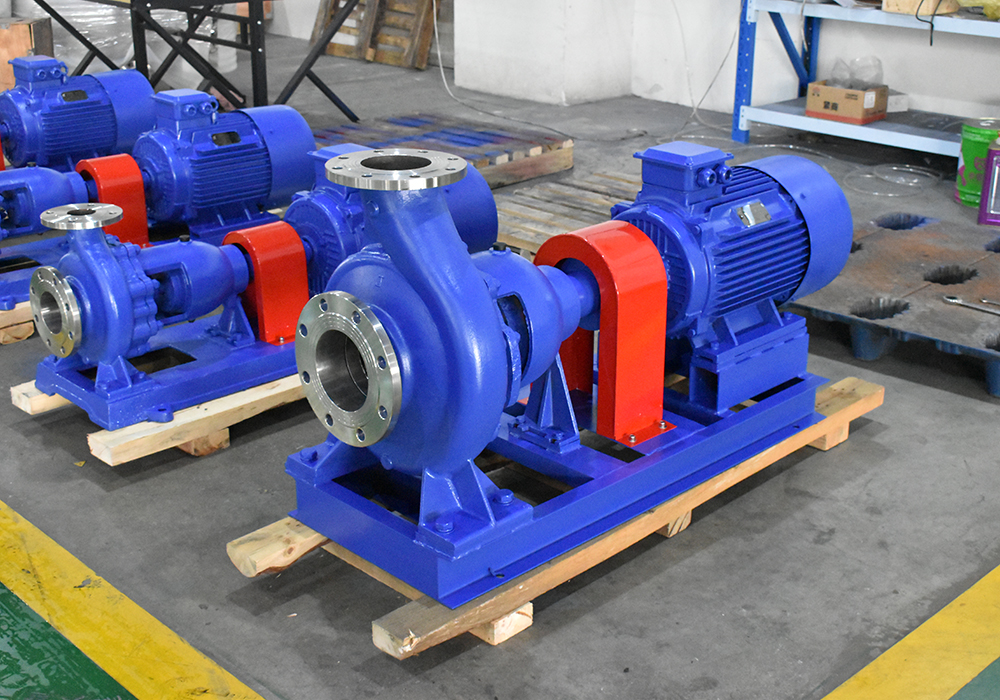
Procedure for installation and operation of centrifugal pumps
Procedure for installation and operation of centrifugal pumps for the chemical industry
1. The key point in the assembly process of chemical centrifugal pumps is to accurately determine the suction lift. Suction height refers to the distance from the surface of the reservoir to the axis of the impeller of a chemical centrifugal pump.
It cannot be identified with the permissible altitude coefficient of suction vacuum. The permissible high-altitude suction vacuum coefficient indicated in the technical description or on the nameplate of a chemical centrifugal pump refers to the vacuum value at the cross-section of the suction pipe of the pump and is determined during tests at a pressure of 11 standard atmospheres and a water temperature of 20 ° C. This does not take into account the water flow conditions after connecting the suction piping accessories.
At the same time, the installation height ratio for a chemical centrifugal pump is the residual part of the value obtained after subtracting the pressure loss in the suction pipeline from the permissible suction vacuum height ratio; it must take into account the actual suction lift ratio taking into account the terrain. The installation height ratio of the chemical centrifugal pump should not exceed the design value, otherwise the pump may not be able to suck in water.
2. The design value is affected by the pressure loss in the suction pipeline, so it is recommended to select a shorter pipeline configuration and, if possible, minimize the number of bends and other fittings; You can also consider using larger diameter pipes to reduce the flow rate of water in the pipe.
3. If the altitude and water temperature at the installation site of the chemical centrifugal pump are different from the test standards (for example, the local altitude above sea level is about 300 meters or the temperature of the pumped water is more than 20°C), the calculated values must be adjusted to take into account the atmospheric pressure at different altitudes and the vapor pressure when the water temperature is above 20°C. However, at water temperatures below 20 °C, saturated vapor pressure can be ignored.
4. When installing pipelines, the suction pipeline must be highly sealed, preventing air and water leakage, otherwise it will break the vacuum at the inlet of the chemical centrifugal pump, leading to a decrease in water flow and, in serious cases, even making it impossible to pump water. Therefore, it is necessary to carefully carry out work on sealing the ends of pipelines to ensure the quality of installation of connections.


