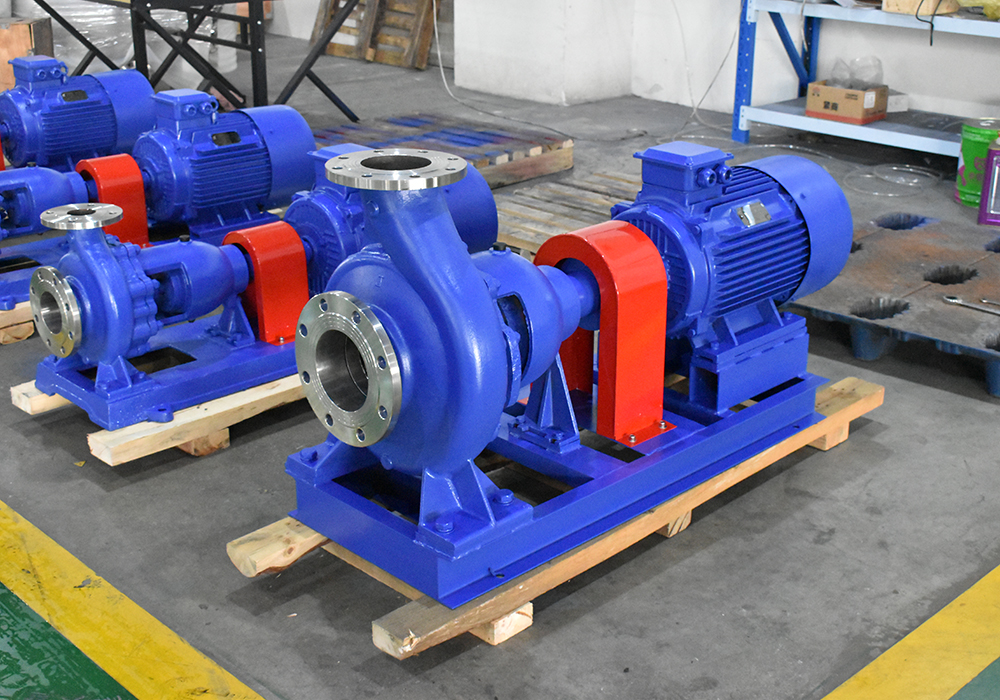
SFB Corrosion Resistant Stainless Steel Centrifugal Pumps Manufacturer: Features Overview
2026-05-28
Technical characteristics and selection criteria for corrosion-resistant centrifugal pumps SFB
Centrifugal pumps of the SFB series, made of stainless steel, are a specialized solution for pumping aggressive media, where standard cast iron or bronze counterparts fail within several months of operation. In our practice, we have repeatedly encountered situations where enterprises suffered losses due to incorrect selection of material for the flow part: for example, at one chemical plant in Tatarstan, the use of a pump with a seal made of ordinary rubber led to a leak of sulfuric acid with a concentration of 30% after just two weeks of operation, which required stopping the line and costly cleaning the area. This is why selecting equipment that can withstand a specific chemical environment becomes not just a matter of purchasing, but a strategic objective to ensure continuity of the production cycle.
The SFB Series is designed to meet the need for a balance between corrosion resistance and hydraulic efficiency. The key parameter here is the grade of stainless steel used - most often it is AISI 304 or AISI 316L, and the difference in cost between them can reach 25%, but saving on material in aggressive environments is unacceptable. If your application involves pumping hydrochloric acid or chloride-containing solutions, using 304 steel will result in pitting almost instantly, while 316L provides protection against this type of damage due to the addition of molybdenum. We recommend that you always request a metal quality certificate (Mill Certificate) from the supplier, which indicates the chemical composition of the alloy, since there is no visual difference between steel grades, and the consequences of an error can be catastrophic.
Zhejiang Yangzijiang Pump Industry Co., Ltd., as a Russian-Chinese manufacturing enterprise with over 20 years of experience, integrates these requirements directly into the development process of its product lines, including models similar to SFB. Our own testing center conducts tests for cavitation resistance and chemical inertness of materials before launching each batch into mass production, which allows us to guarantee that the declared characteristics correspond to the actual operating conditions at the facilities of partners like APP and HPO. This approach to vertical integration—from R&D to after-sales service—eliminates the “pig in a poke” risk that often occurs when purchasing equipment from resellers without their own production facilities.
Design features and material of execution
The basis for the durability of the SFB pump is not only the grade of steel of the housing, but also the quality of the internal surfaces. The roughness of the flow path directly affects the hydraulic resistance and the tendency to form deposits. On our production lines, equipped with modern equipment, we control this parameter strictly within the limits of Ra 1.6–3.2 microns for standard versions and up to Ra 0.8 microns for sanitary versions. The smooth surface not only improves the efficiency of the unit by 3-5%, but also prevents the adhesion of viscous components, which is critical when working with food products or pharmaceutical substances.
The pump shaft is another element that requires close attention. In cheap analogues, the shaft is often made of the same steel as the housing, however, at high speeds and the presence of abrasive inclusions in the liquid, this leads to rapid wear in the seating areas of bearings and seals. In the high-quality versions that we supply, the shaft is made of hardened steel or ceramics, and in particularly aggressive environments it can be protected with an additional fluoroplastic cover. One of our customers encountered a situation where the shaft of a competitor's pump became deformed due to thermal expansion when pumping a hot alkaline solution, which led to the rotor seizing and the motor burning out. To avoid such scenarios, the SFB design provides increased shaft strength and an optimized shaft cooling system.
The bearing assembly in this type of centrifugal pump is usually open or closed, depending on service requirements. Open units require regular lubrication, but allow visual monitoring of the condition of the bearings, while sealed bearings reduce maintenance labor costs, but have a limited service life at high temperatures. For temperatures above 80°C, we recommend using bearings with high temperature grease and making sure they can be replaced without completely disassembling the pump. This requirement is often ignored when designing systems, which leads to the fact that replacing a bearing turns into a major overhaul of the entire unit.
Shaft seal types: oil seal vs. mechanical seal
The choice of shaft seal type determines the tightness of the pump and the frequency of its maintenance. A traditional s packed gland allows minimal leakage to lubricate and cool the packing, which is unacceptable when dealing with toxic, expensive or environmentally hazardous fluids. The mechanical seal completely eliminates leaks, but requires higher installation accuracy and is sensitive to dry running. In our practice, we have recorded many cases of failure of mechanical seals precisely because of short-term “dry” operation when filling the system, so we strongly recommend equipping such pumps with dry-running protection sensors.
The material of the friction pair of the mechanical seal is selected based on the properties of the pumped medium. The most common combination is graphite/ceramic (carbon/alumina), which is suitable for most neutral and slightly alkaline waters. However, in acidic environments, especially those containing abrasive particles, this pair wears out quickly. In such cases, silicon carbide/silicon carbide (SiC/SiC) or tungsten carbide pairs must be used. The price difference between a standard seal and the SiC/SiC version can be up to 40%, but the service life increases by 5-7 times. Zhejiang Yangzijiang Pumping Industry Co., Ltd. offers a wide range of seal options, including single and double mechanical seals with an intermediate barrier fluid chamber, allowing the safe pumping of volatile and explosive liquids.
An important aspect is the seal flushing system. For media that tend to crystallize when exposed to air (for example, some salts or sugar syrups), a constant supply of clean water or solvent to the seal chamber is necessary. The absence of such a system leads to crystals clogging the space between the rings, causing overheating and destruction of the seal in a matter of hours. We recommend that you always check with technologists the properties of the liquid at the interface in order to correctly configure the flushing plan (Plan 11, Plan 21 or Plan 32 according to API 682 standard).
Hydraulic parameters and operating points
When selecting an SFB centrifugal pump, it is critical to work not with the maximum characteristics indicated in the catalog, but with the actual operating point on the system characteristic. Many engineers make the mistake of selecting a pump based on maximum head and ignoring the shape of the Q-H curve. A flat curve can lead to unstable operation and cavitation with small changes in network resistance, while a steep curve provides flow stability but limits the control range. In our projects, we always plot the system curve overlaying it on the pump curve to ensure that the operating point is in the Best Efficiency Point (BEP) zone.
Cavitation is the main enemy of any centrifugal pump, especially those made of stainless steel, which, despite its strength, is susceptible to erosive destruction when steam bubbles collapse. The permissible suction head (NPSHr) of the pump must be at least 0.5–1.0 meters less than the available headroom (NPSHa) in the system. Ignoring this rule leads to characteristic noise, vibration and rapid chipping of the impellers. We have seen cases where new pumps failed after a month of operation solely due to a low liquid level in the suction tank or a suction line that was too long with too many elbows.
The performance of the SFB series pumps varies over a wide range, allowing them to solve problems from laboratory installations to mainline pumping. However, it is worth remembering that the viscosity of the liquid significantly affects the operation of the centrifugal pump. When pumping media with a viscosity above 20 cSt (centistokes), friction losses begin to increase, pressure drops and efficiency decreases. For such tasks, it may be necessary to recalculate the characteristics using special coefficients or consider alternative types of pumps, for example, auger or screw, which are also included in the product line of Zhejiang Yangzijiang Pumping Industry LLC. Our specialists conduct a detailed analysis of the rheology of the liquid before issuing recommendations in order to eliminate the situation when the pump “does not pull” a thick product.
| Parameter | Standard version (AISI 304) | Reinforced version (AISI 316L) | Special version (Duplex/Super duplex) |
|---|---|---|---|
| Applicability | Food industry, water, weak alkalis | Chemical industry, sea water, acids | Oil and gas, high concentrations of chlorides, hydrogen sulfide |
| Max. temperature | up to +120°C | up to +180°C (with appropriate seal) | up to +250°C |
| Pitting resistance | Low (risk at Cl > 200 ppm) | High (up to Cl 1000 ppm) | Extreme (up to Cl 5000+ ppm) |
| Cost | Basic (100%) | +20-30% to base | +80-120% to base |
| Service life (average) | 3-5 years in a neutral environment | 7-10 years in an aggressive environment | 15+ years in extreme conditions |
Application of centrifugal pumps in various industries
The SFB corrosion-resistant pumps are used in a variety of industries where equipment reliability directly impacts safety and profitability. In the chemical industry, such pumps are used for pumping acids, alkalis, solvents and suspensions. The key factor here is not only corrosion resistance, but also intrinsic safety. Our clients from the petrochemical sector often require explosion-proof pumps (Ex d IIB T4), which is achieved by using special motors and design elements that prevent the formation of sparks due to friction or impact.
In the food and pharmaceutical industries, requirements are shifting towards hygiene and sterilization capabilities. Pumps must be designed to avoid stagnant zones where bacteria can grow. Surfaces should be polished to a mirror finish, and connections should be made with quick-release clamps (Sanitary Clamps) for easy cleaning. Zhejiang Yangzijiang Pumping Industry Co., Ltd. produces special sanitary version pumps that meet 3-A and EHEDG standards, which are successfully used in milk, juice and cosmetics bottling lines. It is important to note that even small scratches inside the flow part can become a source of corrosion and contamination of the product, so the installation of such pumps requires special care.
Water treatment and ecology are another area where SFB pumps are widely used. Pumping reagents (coagulants, flocculants, sodium hypochlorite) requires resistance to oxidizing agents. Hypochlorite, for example, is a strong oxidizing agent that will quickly degrade many metals, but 316L stainless steel does the job as long as there are no dead zones. Also, such pumps are used to supply wastewater to treatment plants, where resistance to abrasive wear from sand and silt is important. In this case, we recommend using open or vortex type impellers, which are less sensitive to contamination, although they have a slightly lower efficiency.
Experience shows that there is no universal solution. What works perfectly in a dairy plant can quickly fail in a galvanizing plant. Therefore, when ordering equipment, it is necessary to provide the most complete information about the pumped medium: chemical composition, temperature, presence of solid inclusions, required performance and pressure. Our engineers are ready to conduct a free audit of your application and suggest the optimal configuration, based on data obtained through cooperation with international groups such as NCHUAN and DALI.
Common operating errors and their consequences
One of the most common causes of premature pump failure is operation in cavitation mode. As mentioned earlier, this phenomenon causes metal erosion and bearing failure. Often cavitation occurs not due to an error in the design, but due to a clogged suction filter or a change in the liquid level in the tank during operation. Regular monitoring of pump vibration and noise allows problems to be identified at an early stage. We recommend installing vibration sensors on critical equipment and setting up an alarm system to detect when threshold values are exceeded.
The second common mistake is starting the pump with the pressure valve closed. Although centrifugal pumps can operate briefly at closed pressure (idle mode), prolonged use in this mode leads to overheating of the fluid inside the housing, thermal expansion of parts and jamming of the shaft. This is especially dangerous for pumps with mechanical seals, where overheating causes deformation of the rings and loss of tightness. The operating instructions should clearly outline the startup procedure: first open the suction valve, fill the pump with liquid, close the pressure valve (to reduce the starting torque of the engine), start the engine and then smoothly open the pressure valve.
The third problem is related to improper storage and conservation of equipment. If the pump is planned to be stored for more than a month, it must be preserved: drain the remaining liquid, rinse with water (if an aggressive medium was pumped), dry it and fill it with preservation oil. Moisture remaining inside, especially in combination with salt or acid residues, will continue to have a corrosive effect even when not in use. We have recorded cases where new pumps, which had been in storage for six months without preservation, had to be sent for major repairs before the first start-up due to corrosion of the shaft and bearings.
Production process and quality control
The quality of the pump is determined at the casting and machining stage. The use of defective castings with cavities or slag inclusions is unacceptable, since these defects become centers of corrosion. At Zhejiang Yangzijiang Pumping Industry Co., Ltd., each batch of metal undergoes spectral analysis before being poured into molds. After casting, the parts are subjected to heat treatment to relieve internal stresses, which prevents deformation of the housing during operation. The geometry of the flow path is controlled using coordinate measuring machines (CMMs), which guarantees compliance of the hydraulic profile with the design models.
Pumps are assembled in clean areas, observing the tightening torques of threaded connections. Overtightening the flange bolts can lead to housing deformation and misalignment, and undertightening can lead to leaks. Each assembled pump undergoes hydraulic testing on a stand, where pressure, performance, power consumption and vibration levels are checked. A test report is attached to each product, which confirms compliance with the declared characteristics. Having our own testing center allows us to test pumps on real liquids that simulate customer conditions, and not just on water.
Product certification is a mandatory step in entering the international market. Our pumps are CE certified to confirm compliance with European safety and electromagnetic compatibility directives, and are also ISO 9001 certified to ensure consistent quality management processes. SGS inspections are carried out regularly and confirm that there are no hidden defects. For the Russian market, products are adapted to GOST requirements and are ready to undergo certification by local authorities, which simplifies the commissioning procedure at industrial facilities in the Russian Federation.
Logistics and service support
The supply of industrial equipment from China to Russia requires careful logistics planning. Pump packaging must provide protection from shock and moisture during transportation by sea, rail or road. We use reinforced wooden boxes with desiccant absorbers and fixation of the unit inside. Delivery time for standard models ranges from 2 to 4 weeks from order confirmation, while custom pumps can take up to 6-8 weeks. It is important to take these timings into account when planning production line upgrades to avoid downtime.
After-sales service plays a critical role in ensuring trouble-free operation of equipment. We offer a full range of services: from installation supervision and commissioning to training of customer personnel. The presence of a spare parts warehouse in Russia allows you to quickly replace worn out elements (bearings, seals, impellers) without waiting for delivery from China. Our service team is ready to go to the site within 48 hours to diagnose problems. Long-term partnership is built on transparency and willingness to solve client problems, and not just sell a product.
The warranty applies to all main components of the pump, subject to compliance with the operating rules. We don’t just replace the failed part, but analyze the cause of the failure to prevent the situation from reoccurring. This approach allows our partners to minimize risks and focus on their core business. The company's vision is to become not just a supplier of hardware, but a reliable partner in solving problems of pumping liquids of any complexity.
Frequently Asked Questions
What is the service life of SFB stainless steel centrifugal pump?
The service life directly depends on operating conditions and correct selection. When operating in design mode (at the highest efficiency point) with clean liquid and timely maintenance, the pump life is 10-15 years before major repairs. In aggressive environments or in the presence of abrasive, the period can be reduced to 3-5 years, however, the use of materials of increased resistance (duplex steel, silicon carbide in seals) can extend this period. The main condition for long service is the absence of cavitation and operation in the permissible temperature range.
Can the SFB pump be used to pump hot water?
Yes, the SFB series pumps are designed to handle hot liquids, but with certain limitations. The standard version with EPDM or Viton seal is designed for temperatures up to +120…+140°C. For higher temperatures (up to +200°C and above), a special design with cooling of the support bracket and the use of high-temperature seals is required. It is also necessary to take into account the thermal expansion of parts when installing pipelines in order to avoid distortions and loads on the pump housing.
Do magnetic pumps require special maintenance?
Magnetic pumps, unlike pumps with a mechanical seal, do not require maintenance of sealing units, since they are sealed and do not have moving connections to the atmosphere. The main attention should be paid to the plain bearings, which are lubricated by the pumped liquid. It is strictly forbidden to operate the magnetic pump “dry” even for a few seconds, as this leads to instant overheating and destruction of the bearings and magnetic coupling. It is recommended to install flow or engine power sensors to protect against dry running.
How to choose the right electric motor power?
The engine power is selected with a margin relative to the power on the pump shaft at the operating point. Typically, the safety factor is 1.1–1.2 for low powers and 1.05–1.1 for large ones. Insufficient power reserves can lead to overload and engine burnout if the fluid flow or density accidentally increases. Excessive reserve leads to excessive energy consumption and a decrease in system efficiency. Our engineers perform accurate power calculations taking into account the density of the pumped medium and possible deviations in network characteristics.
Do you provide drawings and 3D models for integration into the project?
Yes, for each pump type we provide a complete set of technical documentation, including dimensional drawings in PDF and DWG format, as well as 3D models (STEP, IGES) for use in computer-aided design (CAD). This allows designers to accurately fit the equipment into the workshop layout, calculate the loads on the foundation and design the piping. The documentation is available in Russian and English and complies with international standards for design documentation.
Conclusion and recommendations for choosing a supplier
Choosing a corrosion-resistant centrifugal pump is an investment in the reliability of your operation. Savings at the initial stage of purchasing cheap equipment often results in multiple costs for repairs, downtime and replacement of failed components. Manufactured to strict quality standards, the SFB Series stainless steel pumps provide predictable results and long service life. The key to success lies in detailed analysis of operating conditions and cooperation with a manufacturer with real engineering experience and production capabilities.
Zhejiang Yangzijiang Pumping Industry Co., Ltd. is ready to offer you not just a product catalog, but a comprehensive engineering solution. Our 20 years of experience, our own testing facilities and CE and ISO 9001 certifications ensure that you receive equipment that meets the highest requirements. We work with clients from more than 40 countries and understand the specifics of Russian industrial standards. From consultation to installation and service, we accompany you at every stage.
Don't risk the safety and efficiency of your business. Entrust the task of pumping aggressive media to professionals. Contact us today for a personalized quote and technical advice. Our specialists will help you choose the optimal modelcentrifugal pumpstailored to your needs, they will calculate the cost and delivery time, and also provide all the necessary documentation for project approval.