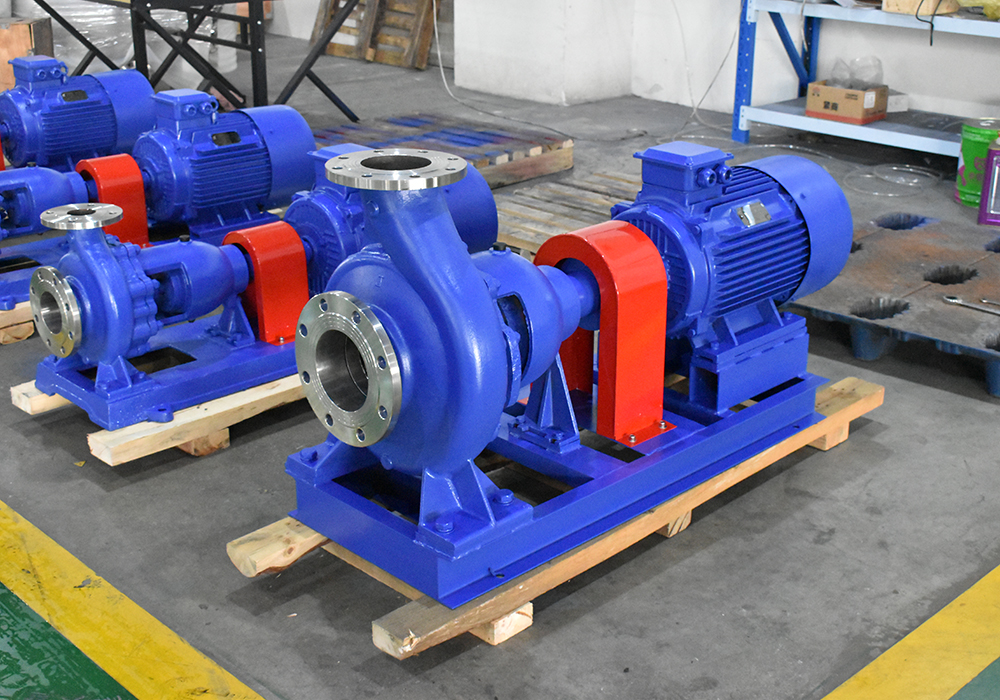
Environmental standards 2026: Buy a centrifugal pump 100 cubic meters factories
2026-06-02
- 2026 environmental standards and selection of 100 m³/h centrifugal pumps
- Technical requirements for pumping equipment in the context of new environmental standards
- Criteria for choosing a centrifugal pump with a capacity of 100 m³/h
- Comparative analysis: Chinese production versus European brands in 2026
- Procurement risks and how to avoid them when purchasing industrial equipment
- Practical steps for implementing and maintaining pumping systems
- Frequently Asked Questions
- Conclusion
2026 environmental standards and selection of 100 m³/h centrifugal pumps
With the advent of 2026, the industrial landscape of Russia and the CIS countries has undergone fundamental changes in terms of environmental regulation. Now purchasecentrifugal pumpwith a capacity of 100 cubic meters per hour, it is not just a matter of hydraulic performance, but the complex task of meeting new emission standards, energy efficiency and tightness. In our practice, we see that enterprises that ignore the updated GOST requirements and international energy saving directives face fines that are three times the cost of the equipment itself. The key trend of this period is the transition from simple pumping devices to intelligent systems with a minimal carbon footprint.
The market is saturated with offers, but not every unit is able to pass strict certification in the current conditions. When you're looking for an opportunitybuy a centrifugal pumpfor the plant, it is important to understand: the “100 cubic meters” parameter has become the basic reference point around which the requirements for the materials of the flow part, the type of seal and the engine protection class are built. We analyzed hundreds of applications from production sites in the oil, gas and chemical sectors and identified a critical error: many buyers are choosing equipment based on 2023 data sheets, without taking into account stricter regulations on volatile organic compound (VOC) leaks. This leads to downtime after just six months of operation.
In this article, we will analyze the technical nuances of choosing equipment for the new realities of 2026, based on real experience in implementing solutions in enterprises with a continuous production cycle. You will learn which certificates are now mandatory, why Chinese production has reached a new level of quality and how to avoid hidden costs when operating a capacity of 100 m³/h.
Technical requirements for pumping equipment in the context of new environmental standards
The new standards of 2026 dictate strict limits for any industrial equipment working with liquids. If previously the main criterion was reliability, today environmental safety and energy efficiency of class IE4 and higher come to the fore. Forcentrifugal pumpswith a power supply of 100 m³/h, this means reconsidering approaches to the design of the impeller and sealing system.
The first thing auditors pay attention to when inspecting an enterprise is the leak prevention system. Traditional stuffing box seals have practically fallen out of use in the segment of work with aggressive media. Monitoring data shows that even microscopic leaks, previously considered acceptable, are now classified as violations of environmental standards. In response to this, manufacturers such asZhejiang Yangzijiang Pumping Industry Co.,Ltd, shifted the focus of development to magnetic drives and double mechanical seals with a leakage control system. Their experience of more than 20 years in the industry has allowed them to create a line of equipment where the likelihood of the pumped medium entering the atmosphere is reduced to zero thanks to the use of casings made of fluoroplastic and stainless steel of the highest grades.
The second critical aspect is energy consumption. The pump, which consumes 100 cubic meters of liquid per hour, operates around the clock. The difference in efficiency between an outdated model and a modern unit can range from 8% to 12%. Over the course of a year, this means tens of thousands of kilowatt-hours of saved electricity and a significant reduction in indirect CO2 emissions. New regulations require that specific energy consumption per unit of liquid pumped does not exceed certain threshold values. Ignoring this factor during procurement leads to the fact that the plant will not be able to obtain the “green” status necessary to participate in government tenders or export products to countries with strict environmental control.
Requirements for noise and vibration levels have also become more stringent. In urban areas or near residential areas, the installation of pumping equipment without proper vibration insulation is now prohibited. Modern manufacturing plants integrate dynamic rotor balancing systems at the assembly stage. For example, testing centers like those at high-tech enterprises in Zhejiang province load-test each product, recording vibration characteristics in three planes. This ensures that the 100 m³/h pump will operate quietly and reliably even during long cycles.
When choosing equipment, it is necessary to request not only a product passport, but also test reports for compliance with current ISO 14001 standards and local eco-standards. The absence of these documents may cause the inspection authorities to stop production. We recommend that you immediately screen out suppliers who cannot provide a recent CE or EAC certification with an issue date no later than this year.
Criteria for choosing a centrifugal pump with a capacity of 100 m³/h
Selection of a pump with a specific flow characteristic of 100 cubic meters per hour requires an in-depth analysis of the process flow chart. An error in calculations at this stage is costly: either the pump will operate in cavitation mode, quickly breaking down, or it will be overpowered, consuming excess energy and causing the motor to overheat. In our engineering practice, there have been cases when, due to incorrect selection of pressure, an enterprise lost up to 30% of the impeller life in the first three months of operation.
The key parameter here is not only flow, but also pressure. For most industrial applications, at a flow rate of 100 m³/h, the required head varies from 20 to 80 meters of water column. However, when it comes to pumping viscous media or suspensions, hydraulic losses in the pipeline increase exponentially. Here it is important to take into account not only the length of the route, but also the number of bends, valves and lifts. Many buyers make the mistake of relying only on the length of the pipeline, forgetting about local resistances. This leads to the fact that the pump does not actually produce the declared 100 cubic meters, but operates at a point with a flow rate of 60-70 m³/h, which violates the production technology.
The material used for the flow path is the second most important selection factor. For clean water, cast iron with an anti-corrosion coating is sufficient. But if your task is pumping acids, alkalis or abrasive slurries, the use of special alloys or polymers is required. The product line of modern manufacturers includes models lined with fluoroplastic (like the CQB-F series) or made entirely of stainless steel (YCZ series). Such materials provide resistance to corrosion even at high temperatures, which is critical for chemical production. The use of cheap analogues without proper protection leads to through corrosion of the housing and emergency stops.
The type of drive also plays a role. In conditions of unstable power supply or requirements for precise dosing, variable frequency pumps are increasingly being used. They allow you to smoothly change the performance from 30% to 100% of the nominal, maintaining the pressure in the system constant. This is especially true for boiler plants and water treatment systems, where liquid consumption is uneven throughout the day. DC series horizontal multistage pumps, for example, are ideal for such applications, delivering high heads while maintaining compact dimensions.
Do not forget about the temperature of the pumped medium. Standard seals are rated up to +80°C. If the technology requires working with hot media (+120°C and above), a special design with cooling of the bearing assembly and heat-resistant materials is required. Ignoring this parameter leads to rapid failure of the bearings and jamming of the shaft. Always check the temperature range in the technical specifications before sending a request to the supplier.
Comparative analysis: Chinese production versus European brands in 2026
In 2026, the dichotomy “European quality versus Chinese price” is completely outdated. The market has transformed, and now leading Chinese factories offer a product that is not inferior in technical characteristics and reliability, and sometimes even surpasses its European counterparts, especially in the segment of specialized chemical pumps. The difference lies not in the quality of the metal, but in the approaches to service, logistics and adaptation to the specific tasks of the customer.
Let's consider the key aspects of comparison using the example of equipment for pumping 100 m³/h of aggressive media:
| Comparison parameter | Traditional European brands | Modern Chinese manufacturers (High-Tech) |
|---|---|---|
| Delivery time | From 12 to 24 weeks. Complex logistics and plant loads often lead to delays. | From 4 to 8 weeks. Optimized supply chains and stock availability of popular models (eg CQF magnetic pumps). |
| Cost of Ownership (TCO) | High starting price. Expensive original spare parts and paid service. | 30-40% lower initial cost. Availability of spare parts and flexible pricing policy for service. |
| Adaptability to order | Strict standardization. Design changes are only possible for large serial orders. | High flexibility. Possibility of customizing materials, shaft length, type of connection for a specific project, even in small batches. |
| Certification | Full ATEX, PED, CE package. Impeccable documentation. | Availability of CE, ISO 9001, SGS. Leading factories (including Zhejiang Yangtzejiang LLC) successfully pass audits of international concerns (APP, HPO). |
| Technological level | Conservative, time-tested solutions. Slow adoption of innovations. | Active introduction of new alloys, composites and digital monitoring systems. Status of high-tech enterprises. |
One of our clients, a large petrochemical holding, was faced with a situation where a European supplier was unable to replace a pump impeller on time, which threatened to shut down the line for a month. A solution was found quickly thanks to cooperation with a Chinese partner, who manufactured the reinforced alloy part in 10 days and delivered it by air freight. This case showed that in modern conditions the speed of the supplier’s response is more important than the brand on the nameplate.
Companies likeZhejiang Yangzijiang Pumping Industry Co.,Ltddemonstrate that vertical integration - from R&D to casting and assembly - allows quality control at every stage. Our own testing centers conduct tests for cavitation, tightness and durability, the results of which are comparable to the data of the world's leading laboratories. The presence of patents for design solutions confirms that these are not just assembly shops, but full-fledged engineering hubs.
When choosing between production regions, it is important to evaluate not only the price “here and now,” but also the availability of service in 5-10 years. European factories often discontinue models, leaving customers alone with the problem of finding spare parts. The Chinese industrial ecosystem, on the contrary, has supported the production of popular series for decades, ensuring the maintainability of the equipment fleet.
Procurement risks and how to avoid them when purchasing industrial equipment
Purchasing centrifugal pumps for critical production lines involves a number of risks that can offset any savings at the start. In 2026, the main threats shifted from the plane of “under-delivery” to the plane of “non-compliance with declared characteristics” and “hidden defects in materials.”
The first risk is the use of counterfeit or substandard materials. Unscrupulous suppliers may replace labeled AISI 316 stainless steel with a cheaper AISI 304 analogue or even painted cast iron. It is difficult to distinguish them visually, but in an aggressive environment such a pump will collapse within a few months. To avoid this, require the provision of metal quality certificates (Mill Certificate) indicating the melt and chemical composition. Large factories, such as the Zhejiang manufacturer mentioned above, provide these documents automatically and allow independent inspection by SGS before shipment.
The second risk is mismatch of the hydraulic curve. It often happens that a pump that produces 100 m³/h on a stand with water, when working with a real medium (for example, with high viscosity or solids content), loses up to 20% of its performance. This occurs due to incorrect recalculation of characteristics or the use of simplified calculation models. Insist on conducting tests on water with the construction of a real pressure-flow characteristic (Q-H curve) and transfer of the protocol to you. Make sure your process operating point is in the area of maximum pump efficiency and not at the edge of the curve.
The third risk is problems with logistics and customs clearance. Equipment weighing several hundred kilograms requires proper preservation and packaging. Damage during transportation is common. Check whether the contract price includes cargo insurance and professional packaging (wooden boxes with moisture protection). Also make sure that the HS code is correct to avoid delays at customs due to certification issues. Experienced exporters take care of these issues by providing a full package of documents for customs clearance in the destination country.
The fourth risk is the lack of post-sales support. Buying a pump is the beginning of a relationship, not the end. Find out in advance: does the supplier have service engineers in your region? How quickly can they go to the site? Is there a spare parts warehouse? A company with 20 years of experience in the international market usually has a well-functioning after-sales service system, including remote diagnostics and video support.
We recommend including warranty clauses in the contract with a clear description of the complaint procedures. The warranty should cover not only the replacement of parts, but also compensation for losses associated with equipment downtime due to the fault of the manufacturer. This disciplines the supplier and forces him to more carefully control quality before shipment.
Practical steps for implementing and maintaining pumping systems
Successful operation of a centrifugal pump begins long before it is connected to the network. Proper installation and commissioning can extend the life of equipment significantly. Below is an algorithm of actions based on best practices for installing industrial equipment.
- Foundation preparation and leveling.The pump must be installed on a rigid, vibration-proof foundation. A misalignment of even 0.5 mm can lead to increased wear of the bearings and coupling. Use a laser tool to align the motor and pump shafts. This is the most important stage, which installation teams often ignore, relying on the “eye gauge”. Remember: a crooked shaft guarantees quick death of the seals.
- Pipeline piping.The pump inlet pipe should not experience mechanical stress from the pipes. Use expansion joints or flexible inserts. The diameter of the suction pipe must be equal to or greater than the diameter of the pump inlet to avoid cavitation. Install a check valve and shut-off valves on the pressure line. Check all pressure connections for tightness before starting.
- Filling and removing air.Centrifugal pumps do not run “dry” and cannot independently remove air from the system (unless it is a self-priming model like ZW or YZSP). Before starting, be sure to fill the pump housing and suction line with liquid through the special valve. Air in the system will cause cavitation noise and a drop in pressure.
- Checking the direction of rotation.Before connecting the load, run the motor briefly to check the direction of shaft rotation. It should match the arrow on the pump body. Reverse rotation will strip the impeller threads and break the shaft within seconds.
- Monitoring parameters at startup.Start the pump with the valve closed at pressure (to reduce the starting current), then open it smoothly until it reaches operating mode. Monitor the motor current, bearing temperature (not higher than 70-80°C) and vibration level. Any deviations from the norm require immediate stopping and analysis of the causes.
Regular maintenance is the key to long service life. Create a schedule to check bearing oil levels, seal conditions, and bolt tightness. Keep a log of observations, recording changes in background noise and vibration. This will help predict failure before it occurs and move from reactive to preventive repair.
Frequently Asked Questions
What is the service life of a Chinese-made centrifugal pump?
Subject to operating conditions and regular maintenance, the service life of a high-quality Chinese pump is 10-15 years or more. The key factor is not the country of origin, but compliance with technological discipline during production and correct selection for the task. Products from certified factories with their own casting and quality control (ISO 9001) show a resource comparable to European analogues.
Can CQB-F series pumps be used for sulfuric acid?
Yes, magnetic pumps lined with fluoroplastic (F46/PFA) are designed specifically for pumping aggressive acids, including sulfuric acid of any concentration at temperatures up to +120°C. The magnetic coupling eliminates leakage, making them an ideal choice for hazardous environments. However, for abrasive suspensions, other options should be considered, since fluoroplastic is sensitive to mechanical abrasion.
What is the minimum order quantity (MOQ) and delivery time to Russia?
For standard models, the MOQ is often as low as 1 piece, which is convenient for repair needs. For non-standard designs, an order of 2-3 units may be required. The average production and delivery time to the regions of Russia is 5-7 weeks when using multimodal transport (road + railway). Express delivery of samples is possible by air in 10-14 days.
Do you provide drawings and passports in Russian?
Yes, all supplied equipment is supplied with technical documentation in Russian, including passports, operating manuals and wiring diagrams. This is a mandatory certification requirement in the GOST and EAEU systems. The plant's engineers are fluent in technical terminology and are ready to adapt the documentation to the specific requirements of your project.
Conclusion
The choice of a centrifugal pump with a capacity of 100 m³/h in 2026 is a strategic decision that affects the environmental safety and economic efficiency of the entire enterprise. New standards require that equipment not only perform the pumping function, but also meet high criteria for energy efficiency, tightness and reliability. The market offers a wide range of solutions, and the key to success lies in partnership with a trusted manufacturer who can back up their words with certificates and real cases.
Companies choosing the path of cooperation with integrated production complexes, such asZhejiang Yangzijiang Pumping Industry Co.,Ltd, gain access to advanced technologies, flexible service support and quality assurance backed by international standards. More than 20 years of experience, own testing centers and presence in 40 countries make such partners a reliable link in your production chain.
Don't let outdated stereotypes limit your choices. Modern industrial equipment from China is a synthesis of high technology, strict quality control and economic feasibility. Make the right choices today to keep your plant running smoothly tomorrow.
Buy centrifugal pumps from the manufacturer with delivery— start collaborating with professionals now. Contact us today to receive a detailed technical and commercial proposal and engineer consultation.