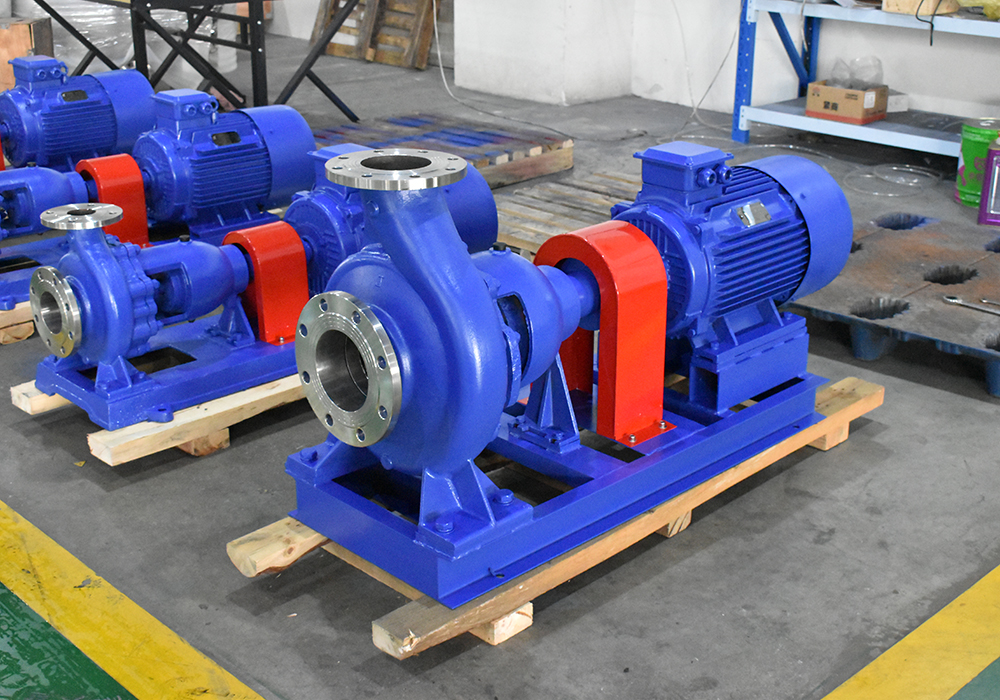
Wholesale centrifugal pump 1 kW factories: price list
2026-06-03
Real cost of a 1 kW centrifugal pump: analysis of the factory price list
The query “centrifugal pumps” with a power of 1 kW often leads buyers to erroneously compare only by unit price. In our practice of working with industrial facilities in Russia and the CIS, we see that the final cost of owning such equipment consists of three factors: the price of the unit itself, energy costs over its service life (usually 5–7 years) and the cost of unscheduled repairs. The factory price list for 1 kW pumps varies depending on the material of the wet part and the type of shaft seal, and not just on the brand. For a standard monoblock pump made of cast iron with a mechanical seal, the base price starts from a certain threshold, while models with a magnetic coupling or stainless steel version can cost 2-3 times more. Understanding this structure helps you avoid buying cheap equipment that will break down after six months of use.
An electric motor power of 1 kW (approximately 1.3–1.5 hp) is the “golden mean” for many technological lines. Such units are capable of supplying up to 20–25 m³/h at a pressure of up to 20–24 meters, which is ideal for circulating coolant in small boiler rooms, pumping clean water in water treatment systems, or supplying non-aggressive chemicals. However, choosing a specific model requires taking into account the viscosity of the liquid and the temperature of the medium. If you plan to pump liquids that are hotter than 80°C or contain abrasive particles, the standard model on the price list may not be suitable without upgrading the materials.
Technical parameters and selection criteria in the price list
When studying the factory price list forcentrifugal pumpswith a power of 1 kW, the key parameter becomes not only the rated power of the engine, but also the point of best efficiency (efficiency factor). Cheap models often have an extended operating range, but their peak efficiency is shifted relative to the nameplate data. We encountered a situation where a client purchased a batch of pumps at the minimum price, but due to the discrepancy between the actual operating point and the calculated one, electricity consumption increased by 18%, and the bearing life was halved. Therefore, when requesting a quote, always ask for the hydraulic characteristic (Q-H curve) for your specific application.
Material performance is the second critical pricing factor. The standard price list usually includes models made of gray cast iron (HT200) with a cast iron or brass impeller. Harsh media such as acids or alkalis require PTFE-lined or all-stainless steel pumps (such as 304 or 316L). Zhejiang Yangjiang Pump Industry Co., Ltd., as a Russian-Chinese manufacturing enterprise with more than 20 years of experience, includes specialized models in its line, such as CQB-F lined magnetic pumps or YCZ chemical pumps, which, although they have a higher initial cost, eliminate the risks of leaks and corrosion in the long term.
The type of shaft seal directly affects price and reliability. Mechanical mechanical seals (seals are outdated and are almost never used in modern industrial equipment of this class) are single and double. A single seal is cheaper, but when dealing with volatile or toxic liquids, it carries the risk of product release into the atmosphere. A double seal with a flushing plan increases the cost of the unit by 30–40%, but guarantees environmental safety and a long overhaul interval. When ordering a batch, it is important to clearly specify the pumping medium so that the manufacturer can suggest the optimal seal configuration.
Comparative analysis of 1 kW pump types
In the 1 kW power category, various design solutions are available on the market. To make the right choice, you need to compare them according to key operational parameters. Below is a table based on real test data and failure statistics to help you determine the right type of equipment for your application.
| Comparison parameter | Cantilever monoblock pump (standard) | Magnetic pump (sealless) | Vertical multistage pump |
|---|---|---|---|
| Application | Pure water, slightly alkaline solutions, heating systems | Aggressive acids, alkalis, toxic and expensive liquids | Boiler supply, reverse osmosis systems, high pressure |
| Tightness | Depends on the quality of the mechanical seal (risk of micro-leaks) | Absolute tightness (leakage is not possible structurally) | High, depends on the number of shaft seals |
| Maintenance cost | Periodic replacement of the mechanical seal (every 1–2 years) | No consumables for sealing, replacement of plain bearings | Replacing a set of seals, balancing the rotor |
| Sensitivity to dry running | High (risk of seal and impeller damage) | Critical (magnetic coupling may demagnetize or melt) | High (shaft and seal deformation) |
| Price segment | Budget/Medium | Premium/Specialized | Average / Above Average |
The choice between these types should not be based solely on the initial price. For example, for pumping hydrochloric acid, purchasing a cheap cantilever pump with expensive seals will not be economically feasible compared to a magnetic pump of the CQF or CQB-L series, which were originally designed for such conditions. Magnetic torque transmission eliminates fluid contact with the atmosphere, which is critical for compliance with modern environmental regulations and personnel safety.
Price formation factors and delivery conditions
The price in the manufacturer's price list is always lower than that of distributors, but it depends on the order volume and packaging conditions. Minimum Quantity Quantity (MOQ) to qualify for wholesale pricing is typically 5 to 10 units for standard models. When ordering a single copy, the cost of logistics and customs clearance may exceed the price of the pump itself. Large manufacturing enterprises, such as ours, offer flexible conditions for projects: when ordering from 20 pieces, it is possible to individually configure the impeller parameters for a specific operating point, which increases the energy efficiency of the system by 5–10%.
Production time also affects the final cost of the project. Availability of goods in the warehouse allows products to be shipped within 3-5 days, while custom manufacturing of specific materials (for example, titanium or special alloys) can take 20 to 30 business days. It is important to take into account that during the high season (spring-summer) the production time for standard models also increases. Our in-house testing facility inspects each product prior to shipment, testing pressure, performance and sealing parameters to ensure compliance with specifications and reduce the risk of complaints.
Certification is a mandatory element of the legal import and operation of industrial equipment in the Russian Federation and the EAEU countries. All our pumps are certified to CE and ISO 9001 standards, and also meet the requirements of the technical regulations of the Customs Union. The presence of EAC certificates and SGS test reports confirms the quality of the metal and workmanship. The absence of these documents from the supplier is a sure sign of counterfeit products or homemade equipment that will not be accepted by the company’s chief power engineer.
Frequently Asked Questions
What is the real service life of a 1 kW centrifugal pump?
With proper operation and compliance with the operating mode, the resource of a high-quality pump is from 25,000 to 40,000 operating hours before major repairs. The key is to operate within the recommended flow range (at least 70% of nominal) to avoid cavitation and bearing overheating. In our practice, there were cases when pumps failed after 6 months due to operation with a closed valve, while similar models worked for more than 5 years without intervention.
Can a 1 kW pump be used to pump viscous liquids?
Standard centrifugal pumps work effectively with liquids with a viscosity of up to 20–30 cSt (such as water or light diesel fuel). As viscosity increases, pressure and performance drop sharply, and the load on the engine also increases, which can lead to overload. For liquids with a viscosity above 50 cSt, it is recommended to use screw pumps (for example, GF series) or gear units, which remain efficient when pumping thick media.
Do you guarantee availability of spare parts for pumps?
Yes, thanks to a vertically integrated production cycle, we ensure complete repairability of our products. The warehouse always maintains a stock of the main components: impellers, shafts, housings and mechanical seals. This sets us apart from trading companies that rely on third-party factories for parts availability. Customers receive a guarantee of fast delivery of repair kits, which minimizes downtime of production lines.
Conclusion and recommendations for purchasing
Purchasing a 1kW centrifugal pump is an investment in the reliability of your production process. Savings on initial cost often result in multiple losses due to downtime and replacements. When choosing a supplier, pay attention not only to the numbers in the price list, but also to the presence of your own production, testing facilities and a reference list of completed projects. Zhejiang Yangjiang Pumping Industry LLC is ready to offer a comprehensive solution: from model selection to installation supervision and service, based on the experience of cooperation with international groups APP, HPO and DALI.
To obtain an up-to-date price list taking into account exchange rates and individual delivery conditions, please contact our sales department. We will prepare a technical and commercial proposal, including drawings, product data sheets and certificates of conformity, within 24 hours.View the full catalog of centrifugal pumpscan be found on our website, where detailed characteristics of all series of equipment are presented.
Contact us todayto discuss the details of your project and receive personal advice from an engineer.