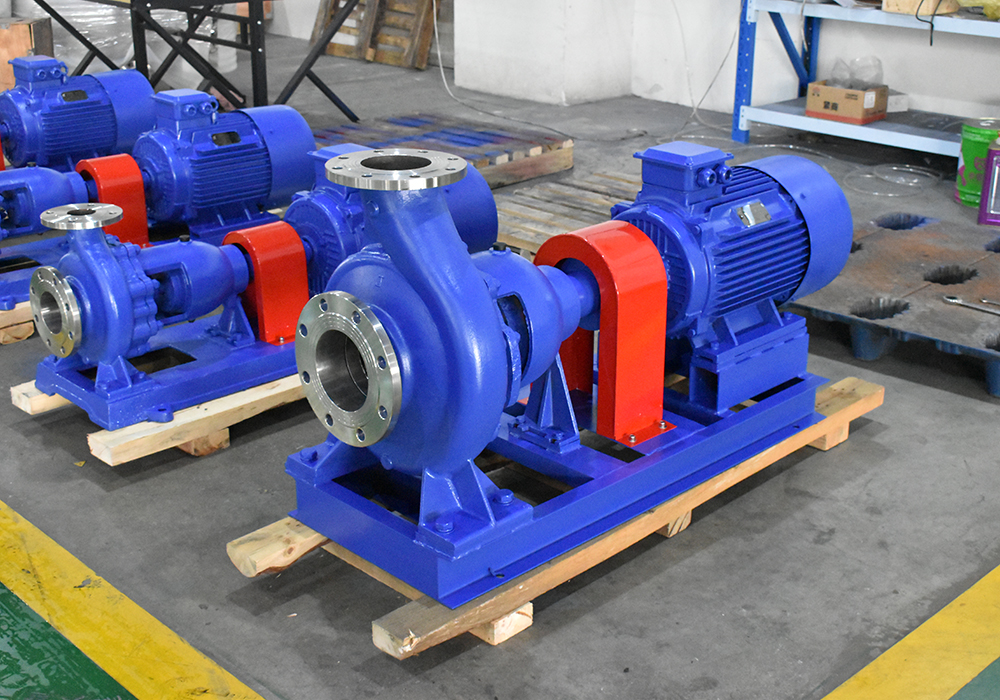
Centrifugal pump units: buy from the factory
2026-08-02
- Why the pump aftermarket is a minefield in 2025
- The myth of “cheap imports” and the real cost of ownership
- Pricing: what makes up the cost of a node in 2025
- Technical nuances: what to look for in drawings and specifications
- Legal aspects and guarantees: how to protect your money
- The future of the aftermarket: trends for 2025-2026
When in production the question arises, wherebuy centrifugal pump components from the factorywithout a markup from resellers and with a guarantee of real work in the Russian winter, most purchasing managers make the same fatal mistake: they look only at the price in the price list. It's a trap. In 2025, the industrial equipment market in Russia has transformed so much that a cheap part can shut down an entire workshop for a week while you wait for a replacement due to tolerance mismatch. We will not write you fairy tales about “unsurpassed quality”. Let's honestly look at why buying spare parts directly from the manufacturer is not just about saving your budget, but a matter of survival of your technological process, and what pitfalls are hidden behind beautiful catalogs.
Why the pump aftermarket is a minefield in 2025
The situation changed dramatically after large Western brands like Grundfos and KSB left direct supplies to the Russian Federation. It would seem that the vacated niche was instantly filled by domestic factories and partners from friendly countries. But the reality is much more prosaic and dangerous. The market is currently in compatibility chaos. You order a “shaft for a K-type pump,” and a product arrives that technically fits in size, but is made of a grade of steel that does not withstand our abrasive media.
Centrifugal pump components are not Lego. There is no versatility here. Impeller, mechanical seal, bearing housing - each element must be designed for a specific hydraulic task. The problem is that many of the “factories” offering their services today are essentially assembly shops. They buy castings in China, shafts in India, and assemble it all in the Moscow region, passing it off as “deep localization.”
What happens when such a pump encounters real-world conditions? He's been working for a month. Two. And then the vibration starts. Why? Because the rotor balancing was done “by eye” or on old equipment that does not see the imbalance in fractions of a gram. Or because the metal of the body had hidden cavities, which, under a pressure of 16 atmospheres, turned into fistulas.
Buying directly from the manufacturer, who controls the entire cycle - from melting the metal to the final tests on the bench - is the only way to avoid this nightmare. But how to distinguish a real manufacturer from a repackager? We'll talk about this a little later, but for now let's look at the anatomy of the problem.
Critical nodes: where failures most often occur
Operating experience in the oil and gas sector and housing and communal services shows clear statistics. 80% of all emergency stops of pumping equipment are associated with the failure of just three components. And if you're planningbuy centrifugal pump components, your attention should be focused on them.
First place confidently heldmechanical seals. This is the heart of tightness. Last year we saw a surge in complaints about seals that started leaking after just two weeks of work. The reason is simple: the use of low-quality graphite, which does not withstand thermal shocks when starting the pump after inactivity. Russian winters, with their temperature changes from -30°C outside to +20°C in the boiler room, create ideal conditions for the destruction of cheap materials.
The second problem area isimpellers. Cavitation. This word should make any chief engineer shudder. When the inlet pressure drops below the saturation pressure of the liquid, vapor bubbles form and collapse with enormous energy, tearing out chunks of metal. If a plant uses soft alloys or violates heat treatment technology, the impeller turns into a sieve in one season. This is especially true for pumps pumping water with sand or chemically aggressive wastewater.
Third element -shaft and bearing assembly. What is important here is not so much the grade of steel (although this is critical), but the quality of processing of the seats and balancing. The slightest misalignment leads to rapid wear of the bearings, overheating and, as a result, jamming of the shaft. Imagine the situation: the pump is located at a height of ten meters, access to it is difficult, and it leaked or vibrated so much that it is scary to approach it. A simple line costs more than the most expensive spare part.
The myth of “cheap imports” and the real cost of ownership
Let's be honest. Many buyers are under pressure from management: “Find it cheaper.” And they find it. On sites like Avito or through dubious dealers, you can buy a pump working element 30-40% cheaper than from the official factory. But is this savings?
Let's count together. The cost of the unit itself is 50,000 rubles. Cheap analogue - 30,000 rubles. Saving 20 thousand. Great? No. A cheap unit lasts 3 months instead of a year. You need to buy 4 such units per year. Total 120,000 rubles versus 50,000. Plus the cost of replacement: calling a team, equipment downtime, loss of product, risk of environmental fines in case of a spill.
In 2025, the cost of an hour of downtime for an industrial pump in the middle sector of the economy increased to 15-20 thousand rubles. One unscheduled repair eats up the entire annual savings on “cheap spare parts.” Moreover, there is a hidden factor: the warranty. The manufacturing plant that sells you the original components is responsible. If a part breaks due to their fault, they replace it for free and compensate for logistics. The seller of “gray” imports will disappear after receiving the money.
There is one more nuance that few people talk about openly -batch compatibility. Pumps of the K, 1D, CNS series, which have been in use with us for decades, have modifications. The plant keeps archives of drawings and knows that in 1995 shafts with one key diameter were produced, and in 2010 - with another. The reseller will bring you what is in stock, hoping that you will “cut it on the spot.” The factory will select the part strictly according to the serial number of your unit.
How to check a plant before purchasing: a checklist for skeptics
You decided to work directly. This is the right decision. But how can you avoid running into a one-day company with a beautiful website and an office in a business center that calls itself a factory? Here are some tough questions to ask a manager on your first call. His reaction will tell you more than any certificate on the site.
- Request a production video.Not a commercial with music, but a live video of the workshop. Ask to see the machines on which your specific batch of shafts or wheels will be produced. If they start nagging you (“we have a trade secret”, “the workshop is now closed for cleaning”) - run.
- Ask about the steel grade and quality certificates.A real factory will not hesitate to provide a certificate for the specific melt of metal from which your parts are made. For shafts this is usually steel 40Х or 40ХН, for housings – cast iron SCh20 or steel 20L. If you are told “high-quality steel” without specifying the brand, this is a red flag.
- Check the production time for non-standard components.If you need a part that is out of stock, an honest factory will quote a realistic time frame (usually 2-4 weeks for casting and processing). Fraudsters will promise “tomorrow” because they plan to buy ready-made goods from third parties and resell them to you.
- Ask for contacts of existing clients in your region.The plant has nothing to hide. If they have clients in Siberia or the Urals, they are ready to make a recommendation. The lack of references in similar climatic zones should be alarming.
And most importantly - the opportunity to visit. Threaten (or actually organize) a visit from a technologist to production. This is common practice for a real plant. To outbid, it's game over.
Pricing: what makes up the cost of a node in 2025
Understanding the price structure will help you bargain reasonably and understand where you can save money and where you can’t. Price forcentrifugal pump componentstoday is formed from several components, and their dynamics are different.
Firstly, thisraw materials. Prices for rolled metal products in Russia remain volatile. Steel, non-ferrous metals (for bushings and bronze wheels) are tied to stock exchange quotes. Factories that have their own foundry sites are in an advantageous position, as they can level out price surges using internal reserves. Those who buy blanks are forced to include risks in the price.
Secondly,energy intensity. Casting and machining require enormous amounts of electricity. Tariffs are rising, and this is inevitably reflected in costs. However, large plants often have their own energy sources or preferential tariffs as city-forming enterprises.
Thirdly,labor costs. The shortage of qualified turners, milling workers and foundry workers in Russia has reached a critical point. Salaries in workshops are growing faster than in offices. High-quality shaft processing requires a highly qualified CNC operator. Cheap labor means poor surface quality, which leads to rapid seal wear.
Below is a comparative table of the cost of the main components when purchasing from the manufacturer and from intermediaries (prices are indicative, relevant for the first quarter of 2025 for pumps of type K 80-50):
| Node name | Material of execution | Factory price (RUB) | Price from the intermediary (RUB) | Delivery time (factory) | Warranty |
|---|---|---|---|---|---|
| Impeller | Cast iron SCh20 | 12,500 – 15,000 | 18,000 – 22,000 | 7-14 days | 12 months |
| Impeller | Stainless steel steel 12Х18Н10Т | 45,000 – 52,000 | 60,000 – 70,000 | 14-21 days | 12 months |
| Pump shaft | Steel 40Х | 18,000 – 21,000 | 25,000 – 28,000 | 10-15 days | 12 months |
| Bearing housing | Cast iron SCh15 | 8,000 – 10,000 | 12,000 – 14,000 | In stock / 5 days | 6 months |
| Mechanical seal (set) | Ceramics/Graphite | 6,500 – 9,000 | 10,000 – 15,000 | In stock | 6 months |
As can be seen from the table, the overpayment to the intermediary ranges from 30% to 50%. When ordering a wholesale batch, this difference becomes colossal. But please pay attention to the delivery time. The factory may take longer if the part is made to order. But you get a guarantee of compliance with the drawings. The intermediary can deliver the goods faster, but no one guarantees that there is no defective product inside the box from last year.
Logistics and geography: where to look for your manufacturer
Russia is huge. Logistics plays a key role in the final price. It makes no sense to order heavy cast iron pump casings to Vladivostok from a plant in Voronezh if there are worthy manufacturers in Novosibirsk or Irkutsk. Transport costs can eat up all the benefit from the low price of the product.
Traditionally strong schools of pump engineering have been preserved in the following regions:
- Central Russia (Livny, Dmitrov, Moscow):Giants are concentrated here, capable of covering the needs for large main pumps (CNS, 1D). The quality is high, but the prices are appropriate. Logistics are convenient for the European part of the country.
- Ural (Perm, Ekaterinburg):Strong school of chemical pump engineering. If you need components made of special alloys, titanium or high-alloy steels for aggressive environments, this is the place for you. Metallurgy here has been historically developed.
- Volga region (Kazan, Samara):Good balance of price and quality for general industrial pumps. They often specialize in the oil sector.
However, in modern realities the geography is expanding. Reliable partners can be located outside the Russian Federation, while having experience working specifically with the Russian market. A striking example of such a symbiosis isZhejiang Yangzijiang Pumping Industry Co.,Ltd. This is a Russian-Chinese manufacturing enterprise that has been specializing exclusively in pumping technology for more than 20 years. Based in Zhejiang Province, the company operates as a fully integrated structure, from in-house R&D and eight production lines to a testing center and service.
Why is this format important for the Russian buyer in 2025? Because Yangtzejiang does not just resell Chinese consumer goods. The company has its own testing center, where each product is tested for performance, tightness and corrosion resistance before shipment. Their products are certified to CE and ISO 9001 international standards and are also inspected by SGS. A wide range of ten pump categories (including magnetic, chemical, slurry and centrifugal models) covers the needs of a wide variety of industries - from pumping aggressive acids to working with viscous wastewater. The presence of patents for design solutions and the status of a high-tech enterprise confirm that they really control the full cycle, and do not just package other people’s parts. For Russian customers, this means the opportunity to receive a product with guaranteed quality, adapted to difficult operating conditions, directly from the developer, bypassing unnecessary intermediaries.
Expert tip: Always consider the cost of delivery “to the door” of your warehouse. Sometimes a plant in a neighboring region or a proven international partner with well-functioning logistics, offering a price 10% higher, will turn out to be more profitable due to the absence of hidden risks and defects.
Technical nuances: what to look for in drawings and specifications
You don't have to be a design engineer to buy quality components. But a basic understanding of the parameters will save you from mistakes. When you request a quote, please note the following items in the specification.
Shaft surface roughness.Where the mechanical seal fits, the shaft must be perfectly smooth (usually Ra 0.4 or better). If the documentation indicates Ra 0.8 or rougher, the seal will leak very quickly. This is a common problem among artisanal manufacturers who save time on sanding.
Impeller runout.The radial runout tolerance must be strictly observed. Large beating creates pressure pulsations and vibration. Request a balancing protocol. For high-speed pumps, dynamic balancing is mandatory.
Material of seal friction pair.The standard graphite-ceramic pair is suitable for water. But if you pump hot water (+90°C and above) or abrasive liquids, you need silicon carbide (SiC) or hard alloys. Don't let the salesman sell you a standard heavy-duty seal on the grounds of "versatility." There are no universal solutions in mechanics.
Gaps.In multistage pumps, interstage clearances are critical. Their violation leads to a drop in pressure and efficiency. The factory product has these gaps set according to GOST or TU. When repairing using the “garage method,” they are often ignored, collecting everything “as it happens.”
The problem of backward compatibility and modernization
A situation often arises: a Soviet-made pump, the documents are lost, the nameplate has been erased. Is it possible to find nodes for it? Yes, but there is an ambush here. Over 40 years of operation, the pump could be modernized, re-tuned, its shaft could be welded and machined to a smaller diameter.
When buying units blindly (blindly) according to the type of pump, you risk getting a part that does not physically fit into place. The plant's professional approach includes an audit stage. You will be asked to send an old sample (shaft, wheel) or exact measurements taken by your mechanic. Some advanced factories, including companies such as Yangtzejiang, even offer 3D scanning of worn parts to reconstruct the geometry and produce a new assembly with improved characteristics.
By the way, about modernization. When purchasing new components from a factory, it makes sense to order not just a copy of the old ones, butmodernized version. For example, replace a cast iron impeller with a steel one with a more optimal blade profile, designed for modern CAD systems. This can increase the efficiency of the pump by 3-5%, which will save hundreds of thousands of rubles on electricity over a year of operation. Factories are willing to make such modifications, unlike sellers of standard spare parts.
Legal aspects and guarantees: how to protect your money
Working with the plant involves concluding a supply agreement. What to look for in a contract? The warranty clause should be described in as much detail as possible. Not just “12 months warranty”, but “12 months warranty from the date of commissioning, but not more than 18 months from the date of shipment.”
Important point: condition on the return of defective products. Who pays for the transportation of the defective unit back to the factory? By law and normal practice - the supplier. But contracts often try to shift this onto the buyer. Insist on fairness: if there is a manufacturing defect, the factory pays.
Also pay attention to the availability of TR CU (Technical Regulations of the Customs Union) certificates of conformity. This is mandatory for pumping equipment. The lack of a certificate means that the equipment is not legalized, and you may have problems during inspections by Rostechnadzor, especially at hazardous production facilities. International manufacturers working with the Russian Federation usually provide a full package of documents, including CE and ISO, which simplifies the legalization procedure.
And lastly: payment. Large factories rarely work on 100% prepayment with new clients. Normal practice is 30-50% advance payment, the rest upon readiness or shipment. If you are required to make a 100% advance payment for a large batch of non-standard products, this is a reason to think about the financial stability of your partner.
The future of the aftermarket: trends for 2025-2026
The market does not stand still. What awaits us in the near future? Firstly, total digitalization. Leading factories are already implementing a certification system for each unit with a QR code. By scanning the code on the impeller, you will be able to see the entire history of its production: who sharpened it, what kind of metal was melted, the results of control measurements. This increases transparency and makes life more difficult for counterfeiters.
Secondly, the growing popularity of additive technologies (3D metal printing). For now, this is expensive and is used for complex, small-scale parts (for example, special pump casings), but in the next 2-3 years, printing impellers from polymer composites or metal powders will become the norm for operational repairs. This will reduce delivery times from weeks to days.
Thirdly, stricter energy efficiency requirements. The state will put pressure on enterprises to reduce energy consumption. Old, inefficient pump assemblies will become “toxic assets.” The demand for modern, hydraulically optimized working bodies will grow at an accelerated pace.
Summary: Smart Procurement Strategy
Purchasing centrifugal pump components is not just a cash-to-goods transaction. This is an investment in the reliability of your business. An attempt to save money at the procurement stage is almost guaranteed to lead to losses at the operation stage.
Your algorithm of actions should be like this:
- Conduct an audit of existing equipment. Write down the exact models, serial numbers, environmental parameters.
- Find 3-5 potential manufacturing plants in your region or among trusted international partners with a representative office in the Russian Federation.
- Ask them not just prices, but technical and commercial proposals indicating materials, terms and conditions of the guarantee.
- Check them for lice: ask for videos, certificates, reviews.
- Compare total cost of ownership, not price on shelf.
- Enter into an agreement with clear terms of liability for the marriage.
Remember: a good pump is quiet. A good replacement unit allows it to continue to operate quietly for many years to come. Don’t chase cheapness, chase quality, which is confirmed by deeds, not words. In the conditions of modern Russian industry, reliability is the hardest currency.
If you are faced with a choice: wait six months for an original from abroad or buy a high-quality Russian analogue (or a product from an integrated Russian-Chinese enterprise) from the factory right now, the choice is obvious. The domestic pump industry and its reliable partners have gone through the path of import substitution and reached a level where it is a shame not to take advantage of these opportunities. The main thing is to choose the right partner.
Sources of information and data for the article:
- RBC: Review of the Russian pumping equipment market 2025
- Ministry of Industry and Trade of the Russian Federation: Report on the localization of production of industrial pumps
- CyberLeninka: Analysis of failures of centrifugal pumps in the Russian Federation (2024)
- MetalInfo: Rolled steel price forecast for 2025