Buy large centrifugal pumps: top 5 factories - Manufacturer
2026-08-02
If you are right now looking for wherebuy large centrifugal pumpsto resuscitate stopped production or launch a new line under sanctions pressure, then this article is not just a list of factories. This is an attempt to figure out what is really hidden behind the beautiful brochures of 2025 and why half of the offers on the market can turn your budget into dust by winter. We tested current offers from the top 5 manufacturers who actually ship equipment here and now, and do not promise “delivery in six months.” Spoiler: the leader in the rating in terms of price may turn out to be an outsider in terms of reliability, and vice versa.
Why the old rules for choosing pumps no longer work in Russia
Let's be honest. Just three years ago, an engineer could simply open the Grundfos or KSB catalog, point his finger at the desired characteristic and forget about the problem. Today this script is dead. Marketlarge centrifugal pumpsin the Russian Federation experienced such a storm that the maps of the area have changed beyond recognition. And the point is not even that Western brands have officially left - they have left, leaving behind a vacuum that is filled with anything.
You might think that Chinese analogues will solve all the problems. You are wrong. In the segment of high-pressure and high-performance equipment, the “celestial” often suffers from one critical drawback: metal. Don't trust passport information on paper. In 2024–2025, we encountered a wave of complaints when impellers made of the declared stainless alloy began to corrode or collapse from cavitation faster than their Russian counterparts made of conventional cast iron with high-quality processing.
What worries Russian customers today? Not efficiency (although this is important), but three things:
- Availability of spare parts in a warehouse within a radius of 500 km from the facility.
- Adaptation to our frosts and our water.
- A real guarantee, not a fiction.
I have personally seen projects where an imported pump worth millions of rubles stood idle for months only because a bearing assembly of a specific design could not be replaced without the manufacturer. But the plant was silent. Therefore, when choosing a manufacturer of large centrifugal pumps, we now look not at the brand, but at the service infrastructure.
The “gray import” factor and the risks of 2026
Many companies are still trying to transport European equipment through third countries. This is a road to nowhere. Firstly, the price has increased by 2.5–3 times. Secondly, warranty obligations in such schemes are usually absent as a class. If the pump leaks after a month, you will be left alone with the problem. Moreover, supply chains are unstable. By ordering “Europe” today, you risk receiving the cargo only by the summer of 2026, when your needs may have already changed.
Russian factories, on the contrary, have learned to scale quickly. Yes, they had problems with casting quality at the beginning of 2024, but by the end of the year, most market leaders had introduced new quality control at the input raw material level. And this is the key point: the domestic manufacturer now answers with its head, and not with an offshore company.
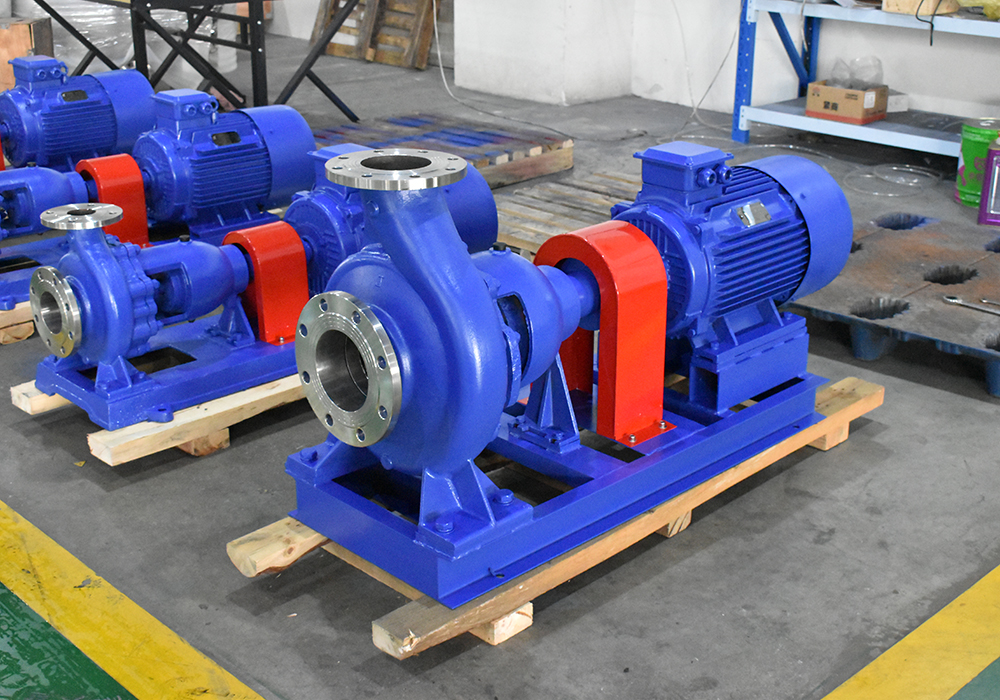
However, to be fair, not all the Chinese market is created equal. There are enterprises operating on principles close to Russian reliability requirements. A striking example -Zhejiang Yangzijiang Pumping Industry Co.,Ltd. This is not a typical assembly shop, but a Russian-Chinese manufacturing enterprise with more than 20 years of history specializing exclusively in pumping technology. Unlike many competitors, the company offers a complete vertically integrated cycle: from its own R&D and casting to testing and service. Their approach is based on strict quality control (confirmed by CE, ISO 9001 and SGS inspections) and an in-house testing facility where each unit is tested for leaks, corrosion resistance and durability. This level of transparency and technological discipline allows them to compete successfully even in difficult conditions, offering solutions for pumping aggressive and abrasive media that Russian industry often requires.
Top 5 factories: who really makes large centrifugal pumps in 2025
We have selected five enterprises that not only assemble ready-made components using a screwdriver, but have a full production cycle: from casting housings to dynamic balancing of rotors. The rating is based on actual shipments in the fourth quarter of 2024 and the first months of 2025.
1. Livgidromash (Oryol region)
An old school that was able to be reborn. Livgidromash is perhaps the most powerful player in the heavy industrial pumps segment. Their CNS series (sectional centrifugal pumps) remains the de facto standard for many industries.
Why are they at the top:They have retained their own foundry base of enormous capacity. Given the shortage of high-quality castings in the country, this is a trump card. They can cast a pump body with a diameter of half a meter where others would spend months searching for a supplier.
In 2025 they modernized the rotor balancing line. Previously there was a problem with vibration at high speeds in some models. Now, according to reviews from chief mechanics of large state district power plants, the vibration level has decreased to values comparable to the best world samples of 10 years ago.
Nuance:The design and ergonomics leave much to be desired. This is a tank, not a sports car. Maintenance requires a skilled old-school machinist who understands scraping and why a packing seal is sometimes better than a mechanical seal in our dirty networks.
2. Uralgidromash (Sverdlovsk region)
The Urals have always been famous for their reliability “to death”. Their equipment often operates in conditions where another pump would immediately seize. The main focus is on mine and mud pumps, but their line of mainline centrifugal units deserves special attention.
The main advantage of Uralgidromash is working with aggressive environments. If your job is to pump highly abrasive or chemically active wastewater, look here. At the beginning of 2025, they introduced a new series of lined pumps, where the internal surface is protected with special polymers of their own production.
Price? Above the market average. But if you calculate the cost of an hour of downtime in your production, the overpayment pays off instantly. The service network is well developed, especially in the regions of the Urals and Siberia.
3. HMS Livny (Former Nasosenergomash)
A giant member of the HMS group. The scale of production is amazing. They make everything from small household pumps to giant nuclear power pumps. In the context of the request “buy large centrifugal pumps,” they are interesting for their horizontal D-type pumps (double-entry).
In 2024–2025, the plant relied on import substitution of components. If previously critical bearings and mechanical seals were purchased in Europe, now solutions from Russian partners and proven Chinese first-tier brands (not no-name) have been introduced.
Weak point:Bureaucracy. It can be difficult for a small business to work with such a giant. The timing of approval of documentation may be delayed. But if you need a pump for an individual project with unique parameters, this is them. The engineering center is capable of calculating and manufacturing a non-standard machine.
4. Dimitrovgrad Pump Manufacturing Plant (Ulyanovsk region)
A dark horse that has made a breakthrough in the last two years. Specialization: energy and housing and communal services. Their pumps for heating networks are now installed in dozens of large cities in Russia.
Why should you pay attention? They were one of the first to implement a predictive analytics system in their new models. Vibration and temperature sensors are integrated directly into the pump housing and transmit data to the SCADA system. This is becoming a must-have trend for 2026: the smart pump itself will tell you when to change the oil before it burns out.
The pricing policy is very aggressive. Often they dump the market to take away volume. The quality remains at a decent level, although there are complaints about the quality of painting and equipment (sometimes you have to buy additional vibration isolators separately).
5. Novosibirsk plant "Nasosenergoprom"
A regional leader who perfectly feels the pulse of the market beyond the Urals. They have better logistics to the Far East and Central Asia than their European competitors in the best of times.
Their feature is modularity. The design of the pumps allows you to quickly change the flow part without replacing the entire unit. This is critical for remote fields where it is not possible to maintain a hangar-sized warehouse of spare parts.
At the end of 2024, they launched a production line for titanium alloy pumps for the petrochemical industry. Expensive, but for certain environments it is the only solution that lasts longer than three months.
Hidden threats: what sellers are silent about
Now let's move on to what you won't find in advertising brochures. I want to warn you about the risks that have become relevant right now.
Problem No. 1: “Left” casting.Due to high demand, some small subcontractor factories began to skimp on the grade of iron or steel. Externally, the case looks perfect, but inside there are pores and cavities. Under pressure of 16–25 bar, such a housing can crack after six months of operation.Tip:require ultrasonic testing protocols (UTC) of the housing before shipment. Feel free to send your representative to the factory.
Problem #2: Electric motors.The pump itself may be excellent, but the motor that is installed on it (often purchased separately) may not correspond to the declared energy efficiency class IE3 or IE4. In the context of rising electricity tariffs, this will result in millions of losses per year of operation. Check the engine passport: who is the manufacturer, where is it assembled, is there any real certification.
Problem No. 3: Personnel shortage.Even the best pump needs to be installed and started correctly. Currently in Russia there is an acute shortage of qualified pumping equipment installers. The factory may sell you a unit, but if it is installed with a skewed foundation or improper shaft alignment, it will die quickly. Make sure that the supplier you choose offers installation supervision. It’s better to overpay 50 thousand rubles for an engineer’s visit than to lose a pump for 2 million.
Comparison table: characteristics and delivery conditions (2025)
To make it easier for you to navigate, I have summarized the main data in a table. Pay attention to the timing - they are average, but reflect the real situation at the beginning of 2025.
| Factory / Manufacturer | Main specialization | Average production time | Warranty (standard) | Features of the service |
|---|---|---|---|---|
| Livgidromash | Sectional pumps (CNS), feeding | 45–60 days | 18 months | Large regional centers with mobile teams |
| Uralhydromash | Mine, soil, chemical | 30–45 days | 12 months | Strong positions in the Urals and Siberia |
| HMS Livny | Mainline (type D), nuclear | 60–90 days (custom orders up to 120) | 24 months | Full engineering, turnkey commissioning |
| Dimitrovgrad | Heating networks, sewerage | 20–35 days (warehouse program) | 12 months | Built-in monitoring systems |
| NEP Novosibirsk | Oil and gas, modular solutions | 40–55 days | 18 months | Fast logistics to the East |
| Zhejiang Yangzijiang | Chemical, magnetic, slurry pumps | 30–50 days (export) | 12–18 months | International support, CE/ISO certification |
The prices in the table are not indicated intentionally. They change every week depending on the exchange rate and the value of the metal. However, the trend is this: over the past year, prices for domestic pumps have increased by about 15–20%, which is still significantly cheaper than parallel imports, which have risen in price by 100% or more.
How not to lose money when buying
The procurement process for a large centrifugal pump today is a minefield. Here is a checklist of actions that will save your budget:
- Request a questionnaire.Never buy a pump “about the same as it was before.” Conditions may have changed. Flow, pressure, temperature, viscosity, presence of solids - everything must be double-checked by the plant's hydraulics.
- Request general layout drawings before payment.Check the dimensions. It often happens that a new Russian pump is 20 cm longer than its imported counterpart and simply does not fit into an existing room without redevelopment.
- Check the type of seal.For large pumps, the stuffing box seal is a thing of the past, but mechanical seals (Ends) should be either from the world's leading brands (if they are still available) or from top Russian manufacturers (for example, Chelnyuplottenie or analogues). Cheap Chinese ends will start flowing in a month.
- Spare parts agreement.Immediately include in the contract the supply of a set of spare parts (bearings, shaft, impeller) for 2–3 years of operation. Then finding them can be more difficult and expensive.
Forecast for 2026: where the market is heading
I will risk making a prediction that may seem bold. By mid-2026, we will see the final formation of new technical standards in the Russian Federation. GOSTs, which have been gathering dust on shelves for decades, will be updated to suit the realities of new equipment.
Expect variable frequency drive (VFD) pumps to increase in popularity out of the box. Factories will begin to offer integrated solutions: pump + motor + control cabinet from one vendor. This will remove the problem of liability (“who is to blame for the pump vibrating: the electrician or the mechanic?”).
I also predict consolidation of the market. Small assembly shops that emerged in 2023–2024 in the wake of hype will begin to go bankrupt. Only those who have their own metallurgy and design bureau will remain. Therefore, when choosing a partner now, look at the depth of its production chain.
Another important point is digitalization. By 2026, the lack of a digital passport for a large pump will be considered bad manners. When purchasing equipment today, make sure that the plant provides access to an electronic model of the product, where you can order any part using the drawing number online.
Editor's personal opinion
I’ll be honest: the transition to domestic large centrifugal pumps was painful. The first batches of 2023 suffered from childhood diseases. But what I see on the shop floor at the beginning of 2025 inspires cautious optimism. Russian engineers were able not only to copy Western models, but also to adapt them to our harsh reality.
If you are faced with a choice: wait for an unknown “European” pump to be delivered with a gray guarantee or take a modern Russian (or proven international) unit with live service - I would vote for the latter. The risk of downtime is too great.
Don't be afraid to ask difficult questions to plant managers. Ask about the steel grade, about balancing, about tests. An adequate manufacturer will only be delighted with your competence. And if they start acting up, run away from there before it’s too late.
Ultimately,buy large centrifugal pumpstoday is not just a transaction. This is a strategic decision that will determine the stability of your business for years to come. Choose wisely, check the facts and don't believe left-wing advertising. Nowadays, trust must be earned by deeds, not words.
And remember: the cheapest pump is the one that doesn’t break. And the most expensive one is the one that stopped your production during the peak season. Draw conclusions.
Sources of information and regulatory framework
- Ministry of Industry and Trade of the Russian Federation: Reports on the state of mechanical engineering 2024-2025
- Rosstandart: Updated GOSTs for pumping equipment (project 2025)
- EnergyLand.Info: Analytics of the power engineering market, January 2025
- Kommersant: Review of industrial production in the regions of the Russian Federation, February 2025
- ABOK: Bulletin of professionals in the field of heating, ventilation and water supply (special issue on pumps)