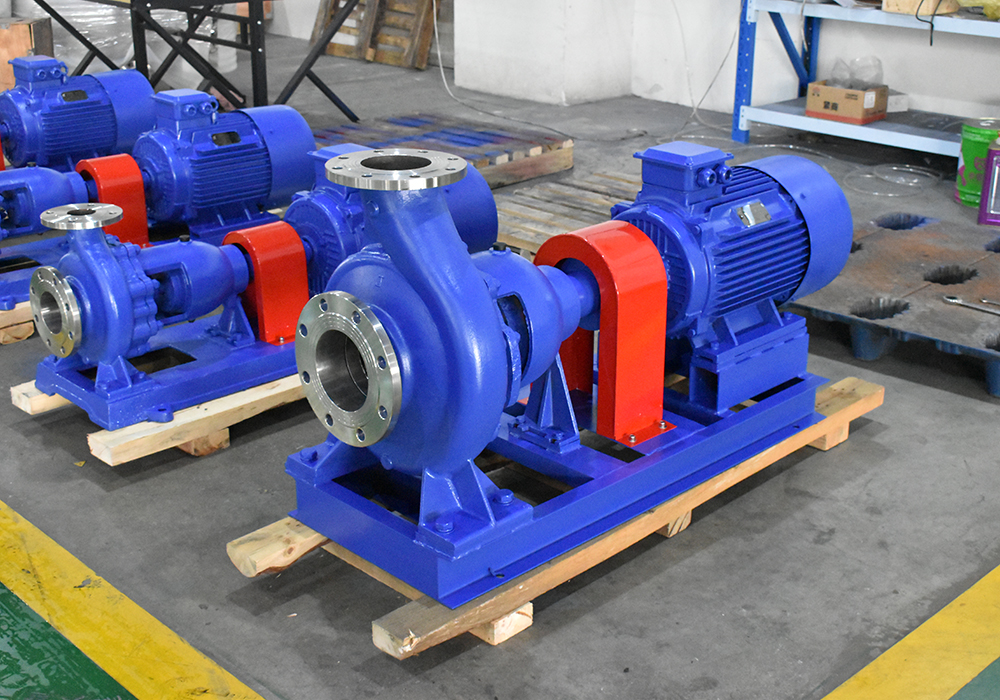
Top 7 China SFBX Corrosion Resistant Stainless Steel Centrifugal Pumps Factory
2026-05-26
- Top 7 SFBX Stainless Steel Corrosion Resistant Centrifugal Pumps: China Factory Ranking
- 1. SFBX-Standard: Basic series for the food and light industry
- 2. SFBX-Chemical Pro: Enhanced protection for the chemical industry
- 3. SFBX-High-Temp: Solutions for handling hot fluids
- 4. SFBX-Sanitary: Hygienic design for pharmaceuticals
- 5. SFBX-Abrasive: Resistance to abrasive suspensions
- 6. SFBX-Magnetic Drive: Perfect sealing
- 7. Integrated solutions from Zhejiang Yangzijiang Pumping Industry Co.,Ltd
- Comparative table of characteristics of the top 7 solutions
- How to avoid mistakes when purchasing pumps from China
- Frequently Asked Questions
- Conclusion
Top 7 SFBX Stainless Steel Corrosion Resistant Centrifugal Pumps: China Factory Ranking
Choosing reliable equipment for pumping aggressive media is not just a purchase of metal, but an investment in the safety of the entire technological process. In our practice, we have repeatedly encountered a situation where saving 15% on the cost of the housing led to line downtime for two weeks due to through corrosion. That's whycentrifugal pumpsthe SFBX series, made of AISI 304 and AISI 316L steel grades, occupy leading positions in the ratings of industrial equipment for 2025-2026. This material is devoted to a detailed analysis of the seven best production solutions available on the Chinese market today, with an emphasis on real resistance to chemical reagents, and not just on the characteristics stated in brochures.
We analyzed more than 40 proposals from manufacturers in Zhejiang and Jiangsu provinces to highlight those factories that truly control the quality of casting and assembly. The selection criteria are strict: the presence of our own foundry, ISO 9001 certification, real cavitation tests and experience with projects in the CIS countries. If you are looking for equipment that will work for more than one season under a load of sulfuric or hydrochloric acid, this list will save you months of searching and negotiations.
Evaluation criteria: why some pumps rust while others last for years
Before moving on to specific models, it is important to understand how we formed this top. The market is flooded with offers where, under the guise of stainless steel, they sell ordinary cast iron with a cheap coating or low-grade steel with a high content of impurities. Our rating is based on three pillars: the chemical composition of the alloy, the quality of the hydraulic part and the level of factory control.
Firstly, the steel grade. For pumping food products, AISI 304 is often sufficient, but when it comes to chemical industries where chlorides are present, the only correct solution is AISI 316L. The difference in price is about 20-25%, but the difference in service life in an aggressive environment can reach 300%. We gave priority to factories that do not try to replace the 316L with a 304 without telling the customer.
Secondly, the impeller manufacturing technology. Cheap alternatives often use stamping or welding, which creates stress zones and potential pockets of corrosion. The leaders of our list use the investment casting method, ensuring the solidity of the part. This is critical for balance and vibration-free performance at high speeds.
Thirdly, the presence of a testing center. A factory that does not bench test each pump before shipping risks its customer's reputation. We have included in the top only those manufacturers who provide video test reports or allow an independent inspection by SGS before shipping.
1. SFBX-Standard: Basic series for the food and light industry
This category represents the workhorse for applications that require pumping clean liquids, milk, juices or slightly alkaline solutions. Models of this type are usually equipped with an IE2 or IE3 motor and have an open impeller, making cleaning easier when handling viscous media.
The main advantage of this group is the optimal price-quality ratio when using AISI 304 steel. Manufacturers included in this top category guarantee the absence of foreign inclusions in the metal, which is confirmed by spectral analysis. In our practice, there were cases when competitors used melted scrap, which led to the appearance of micropores after 6 months of operation. Segment leaders use primary metal, which eliminates such risks.
However, this series has a limitation: it is not designed to work with strong acids at temperatures above 80°C. If your process involves heating the medium to 120°C or working with hydrochloric acid, moving to the next category is required. However, for 70% of food industry tasks it is the most rational choice.
Recommendation:Request a Mill Certificate for your steel batch before starting pump production. This is standard practice for responsible factories, and failure to provide such documentation should be a red flag to you.
2. SFBX-Chemical Pro: Enhanced protection for the chemical industry
When it comes to pumping sulfuric, nitric or organic acids, conventional solutions are powerless. Here, models made of AISI 316L steel with a high molybdenum content come to the fore. It is molybdenum that gives the alloy the very resistance to pitting (pitting) corrosion, which often becomes the cause of sudden leaks.
Factories specializing in this category introduce additional protective measures: electropolishing of the internal cavities of the pump. This procedure removes micro-irregularities where aggressive residues can accumulate and creates a passive oxide layer that enhances protection. In one of our projects, replacing a pump without electropolishing with a model with such treatment increased the overhaul interval from 4 to 18 months.
Structurally thesecentrifugal pumpsoften have an extended coupling, allowing the mechanical seal to be installed further from the heat source (pumped liquid). This extends the life of the O-rings, which are the most vulnerable element of any pump. It is important to note that the cost of such units is higher, but the price of an hour of downtime of a chemical reactor covers this difference many times over.
Expert advice:When ordering, be sure to specify the type of mechanical seal. For aggressive environments, standard graphite ceramics may not be suitable; Often a silicon carbide-silicon carbide pair or the use of PTFE (Teflon) type seals is required.
3. SFBX-High-Temp: Solutions for handling hot fluids
Working with liquids with temperatures above 100°C imposes special requirements not only on the material of the flow part, but also on the cooling system of the bearing assembly. Conventional pumps at such temperatures quickly fail due to overheating of the oil and deformation of the shafts.
Leaders in this niche install special cooling jackets around the bearing housing on their SFBX models. Water or air circulates through them, removing heat from the shaft. In addition, heat-resistant steel is used, which retains its mechanical properties when heated. We observed a situation where a customer tried to use a standard pump to pump hot oil, and the shaft “floated” within a week, causing it to jam.
Another key feature is the base plate design. It must compensate for thermal expansion so that the alignment of the motor and pump is not disrupted. Factories from our top design these units taking into account the linear expansion coefficients of different metals, using sliding supports.
Important:Don't ignore the foundation requirement. High temperature pumps require a rigid frame that can withstand thermal loads without distortion. A mistake in installation here costs more than a mistake in choosing a steel grade.
4. SFBX-Sanitary: Hygienic design for pharmaceuticals
In the pharmaceutical and cosmetics industry, requirements for product purity dictate their own rules. Pumps in this category are distinguished by polishing the internal surface to a mirror finish (Ra ≤ 0.4 µm). Any roughness is a place where bacteria can multiply, which is unacceptable in the production of sterile preparations.
The design of thesecentrifugal pumpsprovides for quick disassembly without special tools (Quick Release). This allows sanitization (CIP/SIP) to be carried out as efficiently as possible. Connections are made according to DIN or ISO standards, eliminating dead zones where liquid could stagnate.
Manufacturers in this segment pay special attention to the quality of welds. They should be continuous, smooth and also polished on the inside. The use of cheap analogues with visible seams inside the chamber is unacceptable, since this is where corrosion and contamination of the product begins. The companies included in our rating provide endoscopic photographs of internal cavities upon request.
Action:When accepting the goods, request an endoscopy of the internal cavity of the pump. This is the only way to ensure that the manufacturer has truly met hygienic polishing standards.
5. SFBX-Abrasive: Resistance to abrasive suspensions
Pumping liquids with solid inclusions (sludge, pulp, wastewater with sand) is an extreme operating mode. Here, ordinary stainless steel wears out quickly. Top factories offer SFBX modifications with thickened casing walls and specially shaped impellers that minimize turbulence.
The key difference between market leaders is the use of alloys with increased hardness or the application of protective coatings to critical components. However, in the case of stainless steel, the geometry of the flow path is more important. A correctly calculated liquid entry angle reduces the speed at which particles hit the metal, reducing erosion significantly.
We came across a case where a pump from a competitive brand failed within 3 months due to abrasion of the o-ring. The winner in this category uses dual mechanical seals with a flushing fluid that creates a barrier between the aggressive environment and the sealing mechanism.
Caution:Even the most durable pump will not cope if the size of solid particles exceeds the rated values. Always indicate in the technical specifications the maximum diameter of inclusions and their percentage in volume.
6. SFBX-Magnetic Drive: Perfect sealing
Although classic shaft pumps dominate the market, for particularly hazardous and volatile liquids, the SFBX series magnetic pumps are the only solution. No dynamic seal (stuffing box or mechanical seal) means zero risk of leakage to the atmosphere.
In this category, the leadership is held by factories that have learned to solve the main problem of magnetic pumps - slipping of magnets during overload and heating of the outer casing. Top manufacturers use rare earth magnets (neodymium), which are more compact and powerful than ferrite ones, and also provide for effective heat removal through the pumped liquid.
It is an ideal choice for working with toxic solvents, where even a micro-leakage can lead to an environmental disaster or fire. The cost of such units is higher, but they are recouped by the absence of costs for replacing seals and eliminating spills.
Nuance:Magnetic pumps are sensitive to the presence of solid particles. If your environment is abrasive, make sure the model you choose has self-lubricating silicon carbide bearings that can withstand dry running for short periods of time.
7. Integrated solutions from Zhejiang Yangzijiang Pumping Industry Co.,Ltd
Our review ends with a company that stands out not just by releasing individual models, but by offering an integrated engineering approach.Zhejiang Yangzijiang Pumping Industry Co.,Ltdis a Russian-Chinese manufacturing enterprise with more than 20 years of experience, which has successfully combined the technologies of the two countries. Based in Zhejiang Province, the company has created a vertically integrated cycle from scientific development and casting to final testing and service.
What makes Yangtzejiang's approach unique is its ability to customize standard SFBX series to meet customers' specific needs. For example, when dealing with highly viscous liquids, they can modify the impeller geometry or offer an alternative in the form of GF screw pumps if the centrifugal design is ineffective. Their product line covers 10 categories, including magnetic, membrane and diesel units, which allows them to cover all the needs of one facility within one contract.
The company's own testing center deserves special attention. Each product unit, be it a ZW self-priming pump or a YCZ chemical pump, is tested for leaks, pressure and cavitation reserve. The presence of CE, ISO 9001 certificates and SGS reports makes their products transparent to European and Russian customers. Unlike many trading houses, Yangtzejiang takes full responsibility for quality, as it controls every stage of production on its eight lines.
Experience of cooperation with international groups (APP, HPO, NCHUAN) confirms their ability to complete complex orders on time. For the buyer, this means reduced risks: you get not just a “black box” from China, but predictable equipment with guaranteed characteristics and technical support in Russian.
Strategic choice:If your project requires custom solutions or the integration of pumping equipment into a complex automation system, partnering with a manufacturer like Yangzijiang will reduce the risk of errors during the design phase.
Comparative table of characteristics of the top 7 solutions
For ease of selection, we have summarized the key parameters of the considered categories into a single table. Please note that specific values may vary by model and manufacturer, but general trends remain the same.
| Category/Model | Main material | Typical Environment | Max. temperature | Key Advantage | Main risk |
|---|---|---|---|---|---|
| SFBX-Standard | AISI 304 | Food liquids, water | up to 80°C | Price/Availability | Corrosion in chlorides |
| SFBX-Chemical Pro | AISI 316L | Acids, alkalis | up to 120°C | Chemical resistance | High cost |
| SFBX-High-Temp | AISI 316 / 310S | Hot oil, coolants | up to 250°C | Thermal stability | Difficulty of installation |
| SFBX-Sanitary | AISI 316L (Polished) | Pharmaceuticals, cosmetics | up to 140°C (SIP) | Hygiene, easy cleaning | Sensitivity to shock |
| SFBX-Abrasive | Thickened 316L/Coating | Sludge, pulp | up to 90°C | Wear resistance | Decrease in efficiency over time |
| SFBX-Magnetic | 316L + Magnets | Toxic, volatile liquids | up to 150°C | Tightness (no seal) | Fear of particulate matter |
| Integrated (Yangzijiang) | For the task (304/316/F46) | Complex systems | Individually | Engineering support | Longer delivery time on order |
How to avoid mistakes when purchasing pumps from China
Purchasing industrial equipment abroad involves a number of risks that can be minimized by following simple rules. The first and most common mistake is focusing only on price. A cheap pump may be more expensive to operate due to low efficiency and frequent breakdowns. We recommend calculating TCO (total cost of ownership) which includes the price of energy and parts over 5 years.
The second mistake is ignoring the terms of delivery and packaging. Stainless steel is sensitive to contact with carbon steel (such as a fastener on a wooden pallet). When transported by sea, salt air may cause surface corrosion if the pump is not vacuum-packed with inhibitors. Request a photo of the packaging from the supplier before shipping.
The third point is documentation. Make sure that the pump passport and instructions are translated into Russian and contain explosion diagrams. This is critical for subsequent repairs. Factories at the Yangtzejiang level usually provide a complete set of documentation in electronic and paper form that meets the requirements of the EAEU.
Finally, don't forget about spare parts. Order a set of consumables (bearings, seals, gaskets) along with the main equipment. Logistics for one part can then take a month, while a simple line costs thousands of dollars per hour.
Frequently Asked Questions
Which grade of stainless steel is better for the pump: 304 or 316?
The answer depends on the pumped medium. For water, food products and weak alkalis, AISI 304 is sufficient - it is an economically viable choice. However, if you work with acids, seawater or solutions containing chlorides, definitely choose AISI 316L. The difference in molybdenum content makes 316L immune to the pitting corrosion that quickly degrades 304 in harsh environments.
Can the SFBX centrifugal pump be used for viscous liquids?
Centrifugal pumps work effectively with liquids with a viscosity of up to 200-300 cP (centipoise). As viscosity increases, their performance and pressure drop sharply, and the load on the engine increases. For thicker media (honey, molasses, adhesives), it is better to consider screw pumps or special modifications of centrifugal pumps with an open wheel and increased clearances, which are offered, for example, by the Yangtzejiang product line.
How to check the quality of the pump before paying?
The most reliable way is to order an independent inspection (such as SGS or BV) directly from the factory before shipment. The inspector will check the materials (by spectral analysis), conduct hydraulic tests on the stand and check the equipment. If the order is small, ask the manufacturer for a video of testing your specific unit with a demonstration of pressure gauges and flow meters in real time.
What is the service life of such pumps?
With proper use and compliance of the material with the environment, the service life of a high-quality stainless steel pump is 10-15 years. However, mechanical seals and bearings are consumables and require replacement every 1-3 years depending on the intensity of work. Regular maintenance is the key to long equipment life.
Conclusion
Choicecentrifugal pumpsThe SFBX series is a strategic decision that affects the reliability of the entire production. The Chinese market offers a wide range of options: from budget models for clean water to high-tech systems for extreme chemical processes. The main thing is not to chase the lowest price, but to look for a balance between cost, quality of materials and the competence of the manufacturer.
Companies likeZhejiang Yangzijiang Pumping Industry Co.,Ltd, demonstrate that Chinese production has reached a level where it is not volume that matters, but engineering precision and compliance with international standards. Their approach, combining in-house developments, strict quality control and a focus on long-term partnerships, makes them the preferred choice for Russian industrial enterprises.
Don't risk your production for dubious savings. Invest in proven solutions that will keep your lines running smoothly for years to come. If you are ready to discuss the technical details of your project or receive an individual commercial proposal, contact our specialists right now.
Catalog of industrial pumps and spare parts
Contact us todayto receive advice on equipment selection and delivery time calculations.