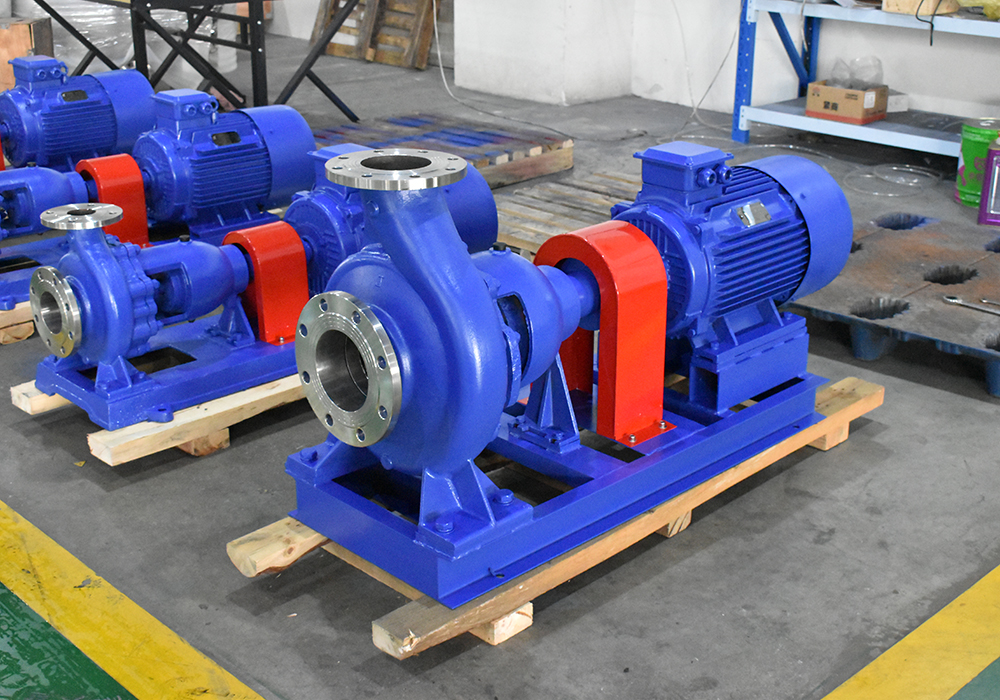
Buyer's Guide: Buy a centrifugal pump 100 cubic meters factory
2026-06-06
- Selection criteria: Why the “100 cubes” parameter requires special attention
- Technical parameters and risks of incorrect selection
- Comparative analysis of pump types for supply of 100 m³/h
- Manufacturing standards and quality control
- Economic efficiency and total cost of ownership
- Frequently Asked Questions
- Conclusion and recommendations for action
Selection criteria: Why the “100 cubes” parameter requires special attention
Purchasing a centrifugal pump with a capacity of 100 m³/h is not just a transaction, but an engineering decision that determines the energy efficiency and reliability of your entire system for the next 5-7 years. In our practice, we often see how enterprises make the mistake of selecting equipment solely based on the nominal flow, ignoring the real operating point on the characteristic. For a volume of 100 cubic meters per hour, it is critical to understand that this indicator is valid only at a certain pressure. If your process requires a flow of 100 m³/h at a head of 20 meters, and you buy a pump rated for 100 m³/h at 50 meters, the motor will overload or require throttling, which will lead to excess energy consumption of up to 15% and accelerated wear of the bearings.
Centrifugal pumps in this category usually fall into the class of cantilever monoblock units or horizontal multistage systems, depending on the required pressure. When working with aggressive media or wastewater, the choice of material for the flow part becomes more important than the brand of the engine. We encountered a situation where a client purchased a batch of cast iron pumps for pumping weakly acidic wastewater, saving on a stainless steel casing. The result was through corrosion of the working chamber after 8 months of operation and a simple cleaning line. Therefore, when planning to buy a factory-made 100 cc centrifugal pump, the first step should be a detailed analysis of the chemical composition of the liquid, temperature and the presence of abrasive inclusions.
Technical parameters and risks of incorrect selection
When forming a technical specification for the supply of equipment with a capacity of 100 m³/h, it is necessary to clearly define three key vectors: hydraulic characteristics, material of execution and type of shaft seal. A mistake in any of these points turns even the most expensive equipment into scrap metal. Let's look at each aspect from the point of view of real operation, and not advertising brochures.
Hydraulic characteristics and efficiency
The nominal flow of 100 m³/h is the point of maximum efficiency (coefficient of performance) on the pump curve. However, real conditions are rarely static. The liquid level in the tank changes, pipe resistance increases due to deposits, and process requirements vary. If you choose a unit with a narrow working area, any vibrations will lead to cavitation. Cavitation is the main enemy of centrifugal pumps. It causes impeller erosion, vibration and mechanical seal failure. In our testing, we have seen pumps without NPSH fail within 300 hours of operation instead of the guaranteed 20,000 hours.
It is important to request from the supplier a graph of pressure-flow characteristics (Q-H) exactly for the engine speed that you will set (usually 1450 or 2900 rpm). Manufacturers often provide data for 2900 rpm, but in reality, due to belt slippage or adjustment of the frequency converter, the pump operates differently. For a volume of 100 cubic meters, the optimal solution is often the use of a variable frequency drive (VFD), which allows you to flexibly change the flow from 30 to 110 m³/h, maintaining high efficiency and saving energy.
Materials: Cast Iron, Stainless Steel or Lining?
The choice of material is dictated by the environment. For clean water, fire systems or circulation in heating systems, gray cast iron (HT200/HT250) with anti-corrosion coating remains the standard. This is a cost effective solution. However, when it comes to the chemical industry, wastewater treatment or food industry, cast iron is not acceptable. This is where AISI 304 and AISI 316L stainless steels come into play. The difference between the two is significant: 316L contains molybdenum, which is critical for protection against chlorides and acids.
Particular attention should be paid to pumps lined with fluoroplastic (PTFE/F46), such as the CQB-F series models offered by Zhejiang Yangzijiang Pump Industry Co., Ltd. In our practice, we have seen cases where even expensive stainless steel was subjected to pitting in environments with high chlorine content at elevated temperatures. Lined magnetic pumps solve this problem completely, since the liquid comes into contact only with inert plastic. Although their initial cost is higher, they last 3 to 4 times longer in harsh environments than their metal counterparts, reducing total cost of ownership (TCO).
Shaft seal type: Oil seal, Mechanical seal or Magnetic coupling?
Traditional stuffing box seals require constant tightening and allow micro-leakage, which is unacceptable for toxic or expensive liquids. Modern standards dictate the use of mechanical mechanical seals (cartridge type). They are reliable, but have rubbing pairs that wear out. Absolute tightness is ensured only by magnetic pumps, where torque is transmitted through a magnetic field without physical contact of the shaft with the liquid. This eliminates leaks 100%. For applications involving the transfer of volatile solvents, acids or hot oils, we strongly recommend considering magnetic drives, despite their higher price, since the cost of one emergency shutdown due to a leak is many times greater than the difference in the price of the equipment.
Comparative analysis of pump types for supply of 100 m³/h
To make an informed decision, you need to compare the different designs available on the market for a given performance. Below is a table based on our experience in operating and testing various modifications in real industrial conditions.
| Comparison parameter | Cantilever centrifugal (ISG/IHG) | Magnetic pump (CQB/CQF) | Vertical multistage (CDL/DC) | Screw pump (GF) |
|---|---|---|---|---|
| Optimal environment | Pure water, light petroleum products, slightly alkaline solutions | Aggressive acids, alkalis, toxic and volatile liquids | Clean water, boiler feed water, pressure booster systems | Highly viscous liquids, pulps, media with solid inclusions |
| Maximum head | Up to 80–100 m (one stage) | Up to 50–60 m (limited by magnet power) | Up to 200+ m (due to multiple steps) | Up to 40–50 m (depending on the auger pitch) |
| Tightness | Conditional (depending on the quality of the mechanical seal) | Absolute (no dynamic seals) | Conditional (requires regular replacement of seals) | High (but there is a risk of stator wear) |
| Energy efficiency at 100 m³/h | High (efficiency up to 75-80%) | Average (magnetic coupling losses, efficiency 60-70%) | High at design point, drops as flow deviates | Low for high volumes (high friction) |
| Sensitivity to dry running | Critical (seal failure in seconds) | Critical (overheating of magnets and bushings) | Critical | Allow short-term dry running |
| Maintenance cost | Low (standard parts) | High (expensive magnets and bushings) | Average | High (replacement of rubber stators) |
The table shows that there is no universal solution. If your job is to pump clean water for irrigation or cooling, a cantilever pump will be the most economical option. For a chemical shop where environmental safety and the absence of vapor leaks are important, a magnetic pump is the only right choice. And if you need to supply 100 cubic meters to a height of 150 meters (for example, in a high-rise building or on the upper tiers of a reactor), then a multi-stage vertical design is indispensable. Screw pumps in this category (100 m³/h) are rarely used, only for specific viscous products, since their dimensions and energy consumption will be unreasonably high.
Manufacturing standards and quality control
When ordering a batch of pumps directly from the factory, transparency of the production cycle is a key success factor. Many buyers make the mistake of evaluating a supplier only by catalog and price. In fact, the ability of a plant to ensure unit-to-unit consistency is more important than a single low price. Zhejiang Yangzijiang Pumping Industry Co., Ltd., having been in the market for more than 20 years, has implemented a vertical integration system that minimizes the risk of defects. Having our own testing center allows us to check each product unit not selectively, but through full cycles: productivity, pressure, tightness, vibroacoustic characteristics.
Control of impeller balancing is especially important. An imbalance of just a few grams at 2900 rpm creates vibration that destroys bearing units within months. On modern lines equipped with CNC machines, processing precision is achieved that is not available in artisanal workshops. In addition, meeting international standards such as CE and ISO 9001, as well as passing SGS inspections, is not just a formality, but a guarantee that the materials (iron, steel, seals) meet the stated specifications. We know of cases where unscrupulous suppliers replaced AISI 304 stainless steel with a cheaper analogue with a low nickel content, which led to rapid corrosion. Metal quality certificates (Mill Certificate) must be a mandatory requirement when accepting a large batch.
Logistic packaging is also an important aspect. Centrifugal pumps weighing 100 kg and above require rigid fixation on wooden pallets and protection from moisture. Damage during sea transportation is a common problem. The company's integrated approach, which includes not only production, but also the organization of shipment, allows us to control this stage. Experience of cooperation with international groups such as APP and DALI confirms the company's ability to fulfill complex orders on time, complying with all packaging and labeling requirements for customs clearance in different countries.
Economic efficiency and total cost of ownership
The purchase price of a pump is only 15-20% of its total cost of ownership (TCO) over its life cycle. The main costs are for electricity (up to 70%) and maintenance. Choosing an energy-efficient IE3 or IE4 motor can increase initial costs by 10% but pay for itself in 12 to 18 months through lower energy bills. For a 30-45 kW pump (typical for 100 m³/h flow at average head), the difference in consumption between an old motor and a modern efficient one can be thousands of dollars per year.
Maintainability is also worth considering. The design of the pump should allow the quick replacement of worn components without dismantling the entire unit from the foundation. For example, models with a rear exhaust design allow the impeller and seal to be serviced without removing the housing from the pipeline. This reduces downtime from days to hours. In our practice, clients who chose cheap non-separable designs lost more money on line downtime than they saved on purchase. Therefore, when evaluating a quote, always request general arrangement drawings and disassembly diagrams.
Frequently Asked Questions
What is the service life of a centrifugal pump with a capacity of 100 m³/h?
With proper operation and timely maintenance, the service life of the main components (bearings, shaft) is 20,000–25,000 hours (approximately 3–4 years of continuous operation). The impeller and casing last longer, up to 5–7 years, if there is no abrasive wear. The key factor is operating within the recommended performance zone. Operation with a “closed valve” or with cavitation reduces the life of the pump significantly.
Can a regular water pump be used to pump diesel fuel?
No, it's dangerous. Standard water pumps use seals and materials that are not designed for flammable liquids. For petroleum products, explosion-proof pumps (Ex marking) are required, with spark-proof materials for the flow part (for example, bronze or special alloys) and special seals that prevent sparking during friction. Using a conventional fuel pump violates fire safety regulations.
How quickly can the plant produce a batch of pumps?
Standard in-stock models (if they are in the distributor's warehouse) are shipped in 3-5 days. Individual production to customer specifications (special materials, shaft length, motor type) takes from 15 to 30 working days. Large factories such as Zhejiang Yangzijiang Pumping Industry Co., Ltd., with eight production lines and a component warehouse program, can reduce these times, but it is always worth allowing time for logistics and customs clearance.
Is it necessary to install a check valve on the discharge pipe?
Yes, installation of a check valve is mandatory for centrifugal pumps operating on pressure pipelines. It prevents water hammer when the pump stops and reverse rotation of the impeller, which can lead to loosening of the coupling and damage to the motor. It is also recommended to install a pressure gauge at the outlet and a vacuum gauge at the inlet for operational control of the operating mode.
Conclusion and recommendations for action
Choosing a 100cc centrifugal pump is an investment in the stability of your production. Do not chase the lowest price at the expense of the quality of materials and balance of characteristics. Check certifications, ask for test reports, and make sure the supplier has its own service center and spare parts warehouse. A reliable partner like Zhejiang Yangzijiang Pumping Industry Co., Ltd. provides not just hardware, but a complete solution: from model selection (whether magnetic CQB-F or self-priming ZW) to after-sales support and guarantee of compliance with CE and ISO standards.
If you are ready to discuss the technical details of your project, receive a calculation of pressure and flow characteristics, or request a commercial proposal for a specific model, do not put off resolving reliability issues until later. A properly selected pump will pay for itself within the first year of operation due to the absence of accidents and energy savings. Contact us today to receive professional advice and an individual estimate tailored to your needs. We will help you choose the optimal solution from more than 30 basic models, ensuring long and uninterrupted operation of your equipment.
For more information on technical specifications and delivery conditions, you can consult our complete catalog of industrial equipmentindustrial pumps and components, where detailed specifications for all product series are presented.