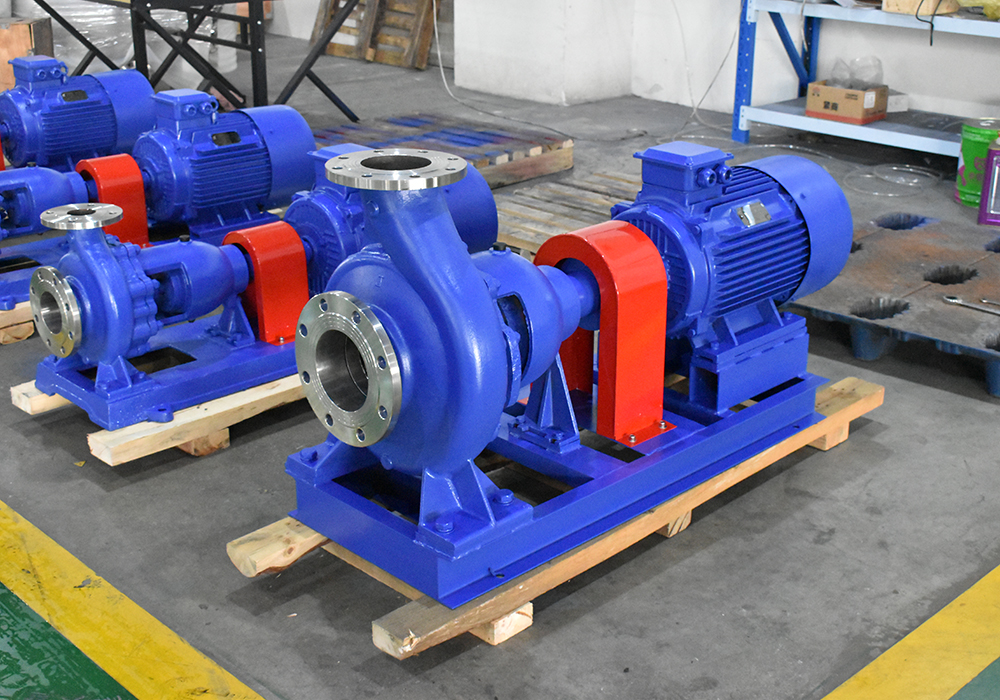
Step by step repair: China SFBX Corrosion resistant stainless steel centrifugal pumps factory
2026-05-30
Step-by-step repair of corrosion-resistant centrifugal pumps SFBX series: experience and technology
In our practice of servicing industrial equipment, we often encounter a situation wherecentrifugal pumpsmade of stainless steel fail not due to wear of mechanical parts, but due to errors during assembly after scheduled repairs. The SFBX series, designed to handle aggressive environments, requires pinpoint precision when restoring seals and balancing the impeller. Improperly tightening housing bolts or ignoring microcracks in O-rings can result in acid or alkali leakage within 48 hours of startup. In this article, we will analyze the real-life algorithm of actions, based on more than 20 years of manufacturing and service experience, so that you can avoid downtime and costly accidents.
Repairing pumping equipment is not just replacing parts according to instructions. This is a process that requires an understanding of the metallurgy of alloys, hydrodynamics and the specifics of chemical reactions. We have seen cases where plants lost up to 30% of line productivity due to service engineers using standard gaskets instead of the specialized fluoroplastic equivalents recommended for SFBX models. Our goal is to provide you with a clear, field-tested plan of action that will minimize risk and extend the life of your equipment.
Preparation for repair: diagnostics and safety
The first stage of any repaircentrifugal pumps- this is not disassembly, but careful preparation and isolation of the unit from the production line. A mistake at this stage is the most costly: residual pressure in the pipeline or unwashed residues of aggressive liquid can lead to personal injury and damage to parts during dismantling. Before starting work, it is necessary to completely de-energize the electric motor, block the shut-off valves on the suction and pressure pipes and drain the remaining pumped medium into neutralizing containers.
Particular attention should be paid to diagnosing the condition of the housing. The stainless steel used in the SFBX series (typically 304 or 316L) is highly resistant to general corrosion, but is susceptible to pitting and intergranular failure in weld areas or under gaskets. In our practice, there was a case when a client tried to repair a pump with visible traces of corrosion on the outer surface, without noticing a through fistula in the volute area. The launch of such a unit led to the release of hot chemicals and the shutdown of the workshop for three days. Therefore, visual inspection should be accompanied by ultrasonic flaw detection of critical areas, especially if the pump was operated with chlorides or acids at elevated temperatures.
To carry out high-quality repairs you will need the following set of tools and materials:
- A torque wrench with a torque range that matches the body threads (critical to prevent misalignment).
- Puller set for safe removal of impeller and coupling without damaging the shafts.
- A new set of seals (gaskets, seals or mechanical seals), strictly corresponding to the chemical resistance of the pumped medium.
- Specialized bearing lubricant resistant to high temperatures and moisture.
- Personal protective equipment (chemical-resistant gloves, goggles, apron), so even after washing, reagent residues may remain in the pores of the metal.
Do not neglect to mark parts when disassembling. Even if the pump appears symmetrical, the position of the cover relative to the body and the orientation of the impeller are important in restoring factory clearances. Take photographs of each stage of disassembly - this will help avoid mistakes during reassembly, especially if the repair is performed by a new employee.
Dismantling and troubleshooting of main components
Disassembly processcentrifugal pumpsThe SFBX series requires consistency and accuracy. You should start by disconnecting the electric motor and removing the clutch protective cover. Check the alignment of the motor and pump shafts before complete dismantling: often the cause of vibration lies precisely in the displacement of the axes, and not in the breakdown of the pump itself. If the shaft runout exceeds acceptable standards (usually more than 0.05 mm per 100 mm of length), the problem may be frame or foundation deformation, which must be corrected before installing the repaired unit.
When removing the casing (volatile), be careful with the mounting bolts. Unscrew them crosswise, gradually loosening the tension to avoid distortion and jamming of the lid. In pumps that are operated for a long time in conditions of salt crystallization, the housing may “stick” to the main plate. Using a hammer to knock down the lid is strictly prohibited - this will lead to deformation of the seats and a violation of the seal. Use special pullers or carefully heat the joint area (if the technology allows for this environment) using induction heaters.
After removing the impeller, carry out a detailed inspection. The blades should not have traces of cavitation erosion (characteristic pits and spongy metal structure) or mechanical damage from foreign objects. Even slight imbalance of the impeller due to uneven wear or buildup of reaction products will cause severe vibration that will quickly destroy the bearings and mechanical seal. In our testing center of Zhejiang Yangzijiang Pumping Industry Co., Ltd., we balance each impeller dynamically, but when doing on-site repairs, we often have to limit ourselves to a visual assessment and replace the unit if there is the slightest doubt.
Inspect the pump shaft. The surface in the contact area with the seal must be perfectly smooth, without scoring or corrosion pits. Any roughness will become a channel for liquid leakage. If deep damage is found on the shaft, it must be replaced or restored by surfacing followed by grinding to a mirror finish. Also check the condition of the bearing assembly. Play in rolling bearings is unacceptable; When rotating the shaft by hand, no jamming should be felt or noise should be heard. Sliding bearings are checked for wear in the bearings.
Replacing seals and restoring tightness
Tightness is the main reliability parametercentrifugal pumpsworking with hazardous liquids. Most leaks occur due to improper selection or installation of sealing elements. The SFBX series can use both gland seals and modern mechanical seals (mechanical seals). The choice depends on the requirements for environmental safety and the properties of the pumped medium.
If your pump is equipped with a mechanical seal, remember: this is a precision assembly that is sensitive to cleanliness and alignment. When installing a new set, touch the polished surfaces of the sealing rings with your fingers - grease marks can disrupt the operation of the friction pair. O-rings must be installed freely, without twisting or stretching. Use only silicone grease or grease compatible with the fluid being pumped to facilitate seating. Never use petroleum products to lubricate rubber seals exposed to oxygen or aggressive oxidizers - this may cause fire or rapid destruction of the rubber.
When installing the gasket between the body and the cover, make sure that the seating surfaces are perfectly clean of old sealant residue and corrosion. Use a scraper made of soft metal or plastic to avoid scratching the stainless steel. The gasket should lie flat, without wrinkles. Tightening of the housing bolts is carried out strictly according to the “star” pattern or crosswise in several stages. First, all bolts are tightened by hand, then by 30% force, then by 70% and finally by the full torque specified in the technical data sheet. Violation of this sequence is the most common reason that the pump begins to “sweat” or leak immediately after starting.
We recommend using expanded graphite or PTFE gaskets for most chemical applications as they provide better thermal expansion compensation and chemical inertness than traditional paronite or rubber. Zhejiang Yangzijiang Boiler Industry Co., Ltd.'s product range, including the CQB-F magnetic pump and YCZ centrifugal pump models, uses precisely these materials to guarantee a long service life even under extreme conditions. If you repair the pump yourself, make sure that the thickness of the new gasket exactly matches the original, otherwise the axial clearance of the impeller will change, which will affect the efficiency and pressure.
Assembly, alignment and commissioning
Final stage of repaircentrifugal pumps— assembly and performance testing. After installing all internal components and closing the housing, check the free rotation of the shaft again. It should rotate easily, without jamming or extraneous sounds. If the shaft is difficult to turn, do not try to “work” it by force - this is a sign of an assembly error (overtightened bearings, shaft misalignment or too small a gap). Disassemble the assembly again and find the cause of resistance.
A critical step is to align the pump and motor. Even a perfectly repaired pump will fail in a matter of weeks if the shaft axes do not coincide. The permissible displacement usually does not exceed 0.05–0.1 mm, depending on power and speed. Use a laser alignment tool or indicator dial to check the parallelism and angular misalignment of the couplings. Adjustment is made by installing shims under the engine feet. Ignoring alignment leads to destruction of bearings, breakage of shafts and rapid wear of seals.
Before the first start, be sure to fill the pump with liquid (“priming”). Running a centrifugal pump dry, even for a few seconds, can damage the mechanical seal and cause overheating of the working parts. Open the shut-off valve on the suction line, fill the liquid through the special hole until all air comes out, then close the hole. The shut-off valve on the pressure line should be closed or slightly open at start-up (depending on the type of pump characteristic) to reduce the starting load on the engine. After starting, smoothly open the pressure valve and bring the pump to operating mode.
Monitor operating parameters during the first hours of operation: bearing temperature (should not exceed 70–75°C), vibration level and absence of leaks at joints. If the pump begins to vibrate excessively or make noise, stop it immediately and find out the cause. Possible causes: air entering the suction line (cavitation), clogged filter, incorrect direction of motor rotation (for three-phase motors) or residual imbalance.
Common mistakes and how to avoid them
An analysis of service reports shows that most breakdowns after repairs are not due to the quality of spare parts, but to a violation of the work technology. Here are the three most common mistakes that even experienced mechanics make:
- Use of unsuitable lubricants.An attempt to save money and use universal lithium grease where a specialized composition that is resistant to washout by water or chemicals is required leads to rapid bearing failure. Always check the lubricant chemical compatibility chart.
- Torque violation.“The tighter you tighten it, the safer it is” is a dangerous misconception. Overtightening the housing bolts deforms the flanges, creating leakage channels and can lead to stripped threads. Undertightening causes vibration and loosening of connections due to pressure pulsations. Use only a torque tool.
- Ignoring the condition of the foundation and piping.Often the pump is repaired, but pipeline distortions, which create additional loads on the pump pipes, are ignored. The pipes must approach the pump freely, without tension. The pipe mounting must have its own supports that do not transfer weight to the pump body.
Another important recommendation: keep a repair log for each unit. Record the dates of replacement of seals, bearings, defects identified and measures taken. These statistics will help predict the life of nodes and plan preventive maintenance before an accident occurs. State-of-the-art monitoring systems implemented at our partners' sites, such as APP and HPO, transmit vibration and temperature data in real time, enabling the transition from reactive repairs to predictive maintenance.
When is repair not economically feasible?
Repair is not always the best solution. There is a threshold of economic feasibility, after which it is easier and more reliable to buy a new pump. If the cost of spare parts and labor exceeds 60–70% of the cost of new equipment, and the pump itself has significant wear on the housing or irreversible changes in the geometry of the flow path, replacement will be a more profitable option. The new pump will provide the declared efficiency, manufacturer's warranty and compliance with modern energy efficiency standards.
In addition, older models may not meet current safety or environmental regulations. For example, switching from packing seals to mechanical or magnetic couplings can dramatically solve the problem of leaks in your production. Zhejiang Yangzijiang Pumping Industry Co., Ltd. offers a wide range of modern solutions, including CQF and CQB-L series magnetic pumps, which completely eliminate the possibility of leakage due to the absence of movable shaft seals. Investment in new equipment often pays off through reduced product wastage, reduced maintenance costs and improved overall process reliability.
It is also worth considering the availability of spare parts. For pumps that are no longer in production or have a unique design, locating original parts can take weeks, increasing downtime. In such cases, upgrading the unit with the installation of equipment from the current market leader, which has a warehouse program and service support in your region, is a strategically correct step.
Frequently Asked Questions
How often do seals in SFBX centrifugal pumps need to be replaced?
Seal life depends on many factors: type of fluid being pumped, temperature, presence of abrasive particles and operating mode (continuous or start-stop). On average, mechanical seals last from 12 to 24 months under normal use. However, if you are working with highly abrasive slurries or media prone to crystallization, the interval may be reduced to 3-6 months. The main indicator of the need for replacement is the appearance of a drip leak or an increase in vibration. Do not wait for the pump to stop completely due to a leak; planned replacement at the first signs of wear will cost less than eliminating the accident.
Is it possible to make a gasket for the pump housing yourself?
Theoretically, it is possible to cut a gasket from sheet material (paronite, Teflon, graphite), but we categorically do not recommend doing this for critical components operating under pressure and with aggressive chemicals. Factory-made gaskets have a calibrated thickness, special perforation or coating that ensures a perfect fit to uneven metal. A homemade gasket often has uneven thickness, which leads to misalignment of the lid and local leaks. The risk of downtime and damage from chemical spills is many times greater than the cost savings of a complete seal kit.
What should I do if the pump vibrates a lot after repair?
Vibration after repair is a signal of a serious assembly error. The main reasons: misalignment of the motor and pump shafts (the most common cause), imbalance of the impeller (for example, due to uneven cleaning of deposits), damage to the bearings during installation or the presence of air in the suction line (cavitation). It is also possible for a foreign object to get into the flow part. It is necessary to immediately stop the pump, check the alignment with a laser device, and make sure that the filter is clean and there are no air pockets. If simple measures do not help, repeated disassembly will be required to check the shaft geometry and impeller fit.
What advantages do pumps with magnetic coupling have over conventional centrifugal pumps?
Magnetic coupling pumps (such as the CQF or ZCQ series) transmit torque through a sealed shield without physical contact between the motor shaft and the pump shaft. The main advantage is complete tightness and the absence of any leaks, since there is no through hole for the shaft and, accordingly, there are no seals that can wear out. It is an ideal solution for pumping toxic, expensive, flammable or ultra-pure liquids. In addition, they require less maintenance since there is no rubbing seal pair. However, they are sensitive to the presence of solid particles and require protection from dry operation, which can lead to overheating of the magnets.
Where to find original spare parts for Zhejiang Yangzijiang pumps?
To ensure reliability and maintain the warranty, it is recommended to use only original spare parts manufactured by the manufacturer. Zhejiang Yangzijiang Pump Industry Co.,Ltd maintains a stock of the most popular components for all series of pumps, including SFBX, YCZ and FY. You can contact our sales or service support department to select a repair kit based on the serial number of your equipment. The use of non-original analogues may lead to discrepancies in dimensions and materials, which will reduce the life of the pump and void the warranty.
Repairing industrial pumping equipment is a task that requires high qualifications and responsibility. Proper execution of each step, from diagnostics to commissioning, determines the reliability of your production for months to come. If you doubt your abilities or are faced with a complex malfunction, do not take risks. Professional service and timely modernization of the equipment fleet are the key to the uninterrupted operation of your enterprise.
We are ready to offer you not only high-qualitycentrifugal pumpsand spare parts, but also full technical support at all stages of operation. Contact us today for advice on selecting equipment or organizing service. Our specialists will help you optimize your costs and increase the efficiency of your pumping systems.
Find out more about our solutions for the chemical and food industries on pagecatalog of stainless steel centrifugal pumps.