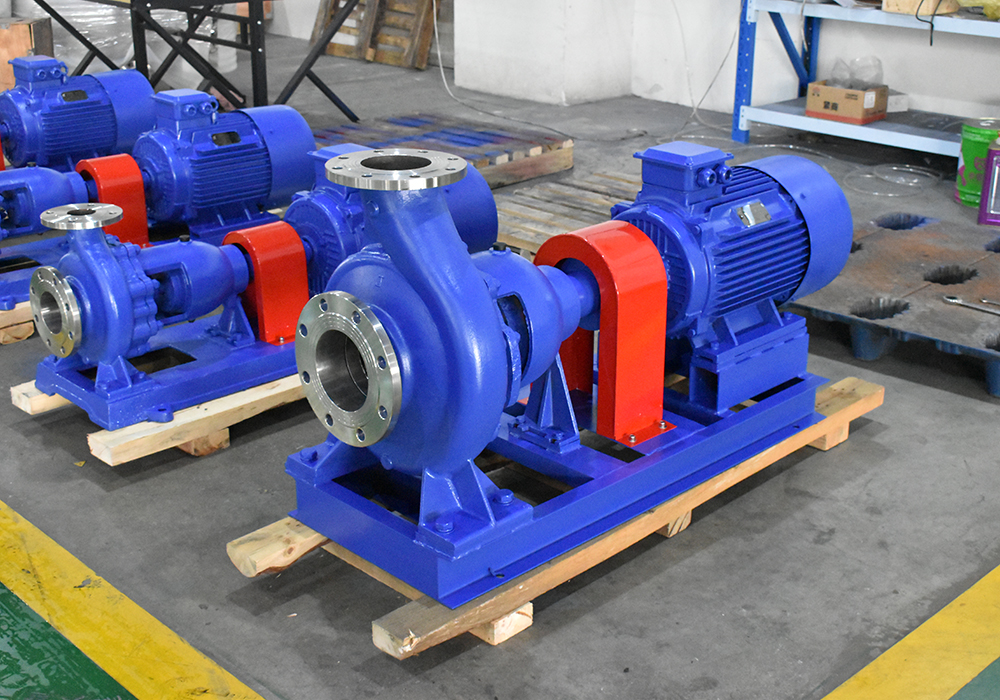
Installation Instructions: Buy IS Types Horizontal Chemical Centrifugal Pumps Manufacturer
2026-05-29
- Pre-installation: Tools, conditions and critical equipment check
- Step-by-step instructions for installing the foundation and base frame
- Shafting Alignment: A Critical Step for Bearing Life
- Installation of suction and pressure pipelines: Hydraulic nuances
- Start-up, running-in and initial diagnostics of system operation
- Frequently asked questions about operation and maintenance
Pre-installation: Tools, conditions and critical equipment check
Successful operation of any industrial unit begins not at the moment the engine starts, but at the stage of proper installation. For horizontal chemical centrifugal pumps type IS, which are the de facto standard for pumping clean and mildly aggressive liquids with temperatures up to 80°C, installation errors are particularly costly. In our practice, we have repeatedly encountered situations where a new pump failed after two weeks of operation solely due to misalignment of the shaft line or lack of proper vibration isolation of the foundation. The key parameter that determines the durability of the unit is the alignment of the motor and pump shafts, the deviation of which should not exceed 0.05 mm per meter of coupling length.
Before starting physical work, you must ensure that you have a full set of tools and that the site meets technical requirements. You will need: a set of open-end and ring wrenches, a precision level (sensitivity of at least 0.02 mm/m), a dial indicator for alignment, jacks of various lifting capacities and a torque wrench. Do not neglect checking the equipment itself upon receipt. Even products from such trusted manufacturers asZhejiang Yangzijiang Pumping Industry Co.,Ltd, which undergoes strict quality control on eight production lines and has CE and ISO 9001 certificates, may receive hidden defects during transportation. Inspect the housing for cracks, check the free rotation of the shaft by hand (it should rotate smoothly, without jamming or extraneous noise) and make sure that the packaging lubricant is intact.
The foundation for an IS type pumping unit must be made of concrete of a grade not lower than M200 and have a mass exceeding the mass of the unit by at least 3–4 times. This is critical for vibration damping. If you are installing the pump on an existing floor, make sure that its load-bearing capacity is designed to withstand dynamic loads. The surface of the foundation must be strictly horizontal; a slope of no more than 2 mm per linear meter is allowed. A common mistake is trying to level the pump only using shims under the feet, ignoring the curvature of the concrete pad itself. This results in internal stresses in the pump housing when the bolts are tightened, which over time causes deformation of the housing and failure of the mechanical seal.
Step-by-step instructions for installing the foundation and base frame
The installation process of a horizontal centrifugal pump requires a sequential approach, where each stage depends on the quality of the previous one. Violation of technology at the foundation preparation stage makes it impossible to achieve the required alignment accuracy in the future. Below is a detailed methodology based on many years of experience of service engineers and recommendations of manufacturers.
- Marking and preparing the seat.Clean the surface of the foundation from oil, dust and construction debris. Using a level or laser level, mark centerlines corresponding to the design position of the pump. It is important to take into account technological clearances for maintenance: the distance from the pump housing to the wall must be at least 1 meter to access the rear and remove the rotor. If you plan to fill the frame with concrete (for a monolithic installation), install the formwork so that the upper edge of the frame protrudes 5–10 mm above the level of future pouring. We recommend using anchor bolts with a diameter of at least M16, buried in concrete to a length of at least 10 bolt diameters.
- Initial frame installation and rough alignment.Using lifting mechanisms, carefully lower the assembly unit (pump + motor on a common frame) onto the foundation. Place temporary wedges under the anchor bolt locations. Do not fully tighten the bolts at this stage. Your task is to first align the frame “by eye” along the axes. Use stacks of metal plates of varying thicknesses to initially lift the frame off the foundation. Avoid using wooden wedges as they may warp under load or absorb moisture, changing their geometry. Check the horizontalness of the frame in the longitudinal and transverse directions. The permissible deviation at this stage is up to 1 mm/m.
- Grouting (if applicable) or installing permanent gaskets.For IS type pumps operating in constant vibration conditions, installation on a grouted frame is preferred. Prepare a cement-sand mortar with the addition of plasticizers to improve fluidity and avoid shrinkage. Carefully fill the space under the frame, avoiding the formation of air voids that can become vibration resonators. If the method of installation on metal spacers is used (which is more often used during repairs or on steel structures), make sure that the number of spacers is minimal (no more than 3-4 pieces at one point), and their area covers the area of the paw support by at least 70%. Each gasket must fit snugly against the adjacent one; tapping with a hammer should not produce a ringing sound indicating leakage.
- Precise leveling.After the mortar has set or the shim package has been installed, proceed with the final adjustment. Place a precision level on the machined frame areas (usually special bosses near the feet or machined flange surfaces). By adjusting the height of the support screws or the thickness of the spacer packs, achieve horizontality within 0.05 mm/m. Please note: the level must be checked at several points around the perimeter of the frame, since the frame itself may have casting or welding defects. In our practice, there was a case when the frame of a new pump had a helical deformation, and alignment along only one axis led to the shaft jamming when tightening the bolts. Always check the geometry in two perpendicular planes.
- Final tightening of anchors and control measurement.When the frame position is secure and correct, perform final tightening of the anchor bolts. Use a torque wrench and tighten the bolts in a crisscross pattern, distributing the force evenly. Sudden or uneven tightening can cause the frame to shift and disrupt the achieved horizontal position. After tightening, be sure to recheck the level. If the readings change by more than 0.02 mm/m, loosen the bolts and repeat the procedure. Only after confirming the stability of the frame position can we proceed to the most important stage - shaft alignment.
Shafting Alignment: A Critical Step for Bearing Life
Alignment (adjustment) of the coupling halves of the pump and electric motor is an operation that determines the life of the bearing units and mechanical mechanical seal. Failure statistics show that more than 60% of premature failures of centrifugal pumps are due to misalignment. For IS series pumps operating at high speeds (2900 or 1450 rpm), the accuracy requirements are particularly stringent. A radial displacement of no more than 0.05 mm and an angular discrepancy of no more than 0.2 mm/m (or 0.02 mm at the coupling diameter) are allowed.
There are two main alignment methods: using feeler gauges and a straight edge (for low power units up to 15 kW) and using indicator brackets (for all industrial applications). We strongly recommend using the indicator method, regardless of the pump power, as it allows you to detect parallel and angular displacement simultaneously with high accuracy. The indicator bracket is installed on the coupling half of one of the shafts (usually a pump), and the indicator probe rests on the cylindrical surface or end of the engine coupling half. Before starting measurements, it is important to eliminate the axial play of the shafts by fixing them in the working position, otherwise the measurement results will be unreliable.
The measurement process consists of simultaneously rotating the shafts 360 degrees and recording the indicator readings at four points: 0°, 90°, 180° and 270°. The difference in readings at points 0° and 180° indicates parallel displacement, and the difference at points 90° and 270° (taking into account the geometry of the indicator installation) indicates angular displacement. Position adjustments are made by adding or removing shims under the motor feet (for vertical correction) and moving the motor horizontally with the side adjustment screws (for horizontal correction). Remember the rule: if you need to raise the rear of the engine by 0.1mm, then you need to add exactly 0.1mm of spacer under each rear leg. A common mistake made by beginners is to try to correct angular misalignment using only vertical shims, which inevitably leads to a new parallel misalignment.
Particular attention should be paid to thermal expansion. IS type pumps often pump hot liquids. If the operating temperature of the medium exceeds 60–70°C, the center of the pump, when heated, will rise above the center of the cold motor due to thermal expansion of the housing and supports. In such cases, it is necessary to carry out “hot alignment” or make corrections for the cold state, lowering the motor axis below the pump axis by a calculated amount (usually 0.05–0.10 mm depending on the height of the axis and temperature). Ignoring this factor leads to the fact that when reaching the operating mode, the alignment is disrupted, causing intense heating of the bearings and destruction of the seals.
Installation of suction and pressure pipelines: Hydraulic nuances
Proper piping of the pump guarantees the absence of cavitation and engine overload. The pipelines must be independent of the pump housing; Any load from the weight of the pipes or their thermal expansion should not be transferred to the pump flanges. This can cause the casing to become distorted and the impeller to jam. To compensate for possible displacements and vibrations, use flexible inserts (vibration hoses) on the suction and discharge pipes, installing them as close to the pump as possible.
Suction pipe:
The diameter of the suction pipe must be equal to or greater than the diameter of the pump inlet pipe. The use of smaller diameter pipes increases the flow velocity, which leads to an increase in hydraulic losses and a decrease in NPSH. The suction line route should be as short and straight as possible, with a minimum number of bends and bends. If using an elbow at the pump inlet is unavoidable, install it with the long side facing the pump so that the flow equalizes before entering the impeller.
A critical element is the installation of the eccentric adapter. It should be installed with the flat side facing up to avoid an air pocket at the top of the transition. Concentric adapters on the suction are prohibited, as they inevitably accumulate air, which then enters the pump, causing cavitation noise and a drop in pressure. A check valve must be installed in front of the pump (if it is necessary to retain liquid in the pipe when stopping) and a shut-off valve. A coarse filter (basket) is required to protect the impeller from solids, even if the liquid is considered clean.
Pressure pipe:
A check valve is installed on the pressure line immediately after the pump to protect against water hammer in the event of a sudden stop, and then a shut-off valve. The valve is necessary to regulate the flow and carry out repair work without emptying the entire system. When starting the pump, the valve should be closed (to reduce the starting current), and it should be opened smoothly after the unit reaches its rated speed. Pipelines must have reliable supports and fastenings; Sagging pipes are unacceptable. If the route is long, provide thermal expansion compensators.
When installing flange connections, use paronite or spiral wound gaskets that are resistant to the pumped medium. The bolts should be tightened evenly in a cross pattern. Undertightened bolts lead to leaks, and overtightened bolts lead to deformation of the flanges and squeezing out the gasket. After assembling the entire system, it is recommended to conduct hydraulic tests of the pipeline with a pressure exceeding the operating pressure of 1.25–1.5 times to ensure the tightness of the connections before starting the pump.
Start-up, running-in and initial diagnostics of system operation
The moment of the first start-up is the culmination of installation work, requiring maximum concentration. Before applying voltage to the motor, perform a final checklist: check the direction of rotation of the shaft (by briefly turning it on), make sure that all fasteners are tight, protective covers are installed, and the area around the pump is free of foreign objects. Pay special attention to the bearing lubrication system: the oil level should be between the oil indicator marks, and the oil itself should be clean and correspond to the viscosity specified in the passport (usually I-20A or I-30A industrial oil).
Never run a centrifugal pump dry. The absence of liquid in the working chamber, even for a few seconds, will lead to instant overheating and destruction of the mechanical mechanical seal (oil seal). Fill the pump and suction line with liquid through the special filler fitting or open the valve if the system is gravity-fed. Open the valves to release air from the pump housing and pressure pipe until a continuous stream of liquid appears without bubbles. Air locks are a common cause of unstable operation, vibration and false pressure gauge readings.
Launch algorithm:
1. Close the valve on the pressure line (for pumps with specific speed ns < 150, which includes most IS models).
2. Turn on the electric motor.
3. Smoothly, within 10–15 seconds, open the pressure valve until the required operating mode is achieved. Long-term operation with the valve closed is unacceptable (more than 2-3 minutes), since all the engine energy is converted into heat, heating the liquid inside the housing, which can lead to its boiling and damage to the pump.
4. Monitor the following parameters: motor current (should not exceed the rated one), inlet and outlet pressure, bearing temperature (should not exceed 70–75°C) and vibration level.
During the break-in process (first 4-8 hours of operation), periodically check the condition of the packing or mechanical seal. For the stuffing box, drip leakage is allowed (10–20 drops per minute) to cool and lubricate the rubbing surfaces. The complete absence of leakage in the stuffing box indicates that it is overtightened, which will cause overheating of the shaft and rapid wear. For mechanical seals, when in good condition, there should be no leakage at all. If you observe excessive bearing heating or unusual noise, stop the unit immediately to determine the cause. Most often this is a consequence of misalignment or debris getting into the impeller.
Frequently asked questions about operation and maintenance
How often should shafts be re-aligned?
The initial alignment check should be carried out 24–48 hours after the start of operation, as the initial shrinkage of the foundation and heating of the structure occurs. In the future, under normal operating conditions, it is recommended to perform a scheduled inspection every 6–12 months. However, if the pump is subject to frequent thermal cycles (heating and cooling) or operates in conditions of strong external vibration, the interval should be reduced to 3 months. Any intervention in the piping or replacement of foundation elements also requires an unscheduled alignment check.
Can IS pumps be used to pump aggressive chemicals?
Standard IS series pumps are made of gray cast iron (housing) and steel (shaft, impeller) and are designed for water and neutral liquids. For aggressive media (acids, alkalis, solvents), the use of the standard IS version is unacceptable due to the risk of rapid corrosion and destruction. In such cases, the companyZhejiang Yangzijiang Pumping Industry Co.,Ltdoffers specialized options such as the YCZ chemical pumps or the CQB-F fluoroplastic lined magnetic pumps, which are designed specifically to handle aggressive media. The choice of material for the flow part must strictly correspond to the chemical resistance of the pumped liquid.
What should I do if the pump creates a lot of noise and vibration during operation?
Noise and vibration are symptoms that cannot be ignored. The most likely causes: cavitation (insufficient suction pressure, clogged filter), shaft misalignment, bearing wear or impeller imbalance. First, check the inlet pressure and make sure the filter is not clogged. If the suction parameters are normal, stop the pump and check the alignment with an indicator. It is also worth listening to the bearings with a stethoscope: a characteristic hum or crackling sound will indicate the need to replace them. Operating the pump in cavitation mode for a long time will lead to erosive destruction of the impeller and casing.
Which type of shaft seal is better: stuffing box or mechanical?
The choice depends on the requirements for tightness and operating conditions. Gland packing is cheaper, easier to maintain and allows little leakage, which is acceptable for pumping water in systems where product loss is not critical. It also handles contaminated liquids better. The mechanical mechanical seal ensures a complete seal, which is essential for expensive, toxic or volatile liquids. However, it is more sensitive to shaft distortions, dry running and abrasive inclusions. For modern industrial facilities, we recommend installing mechanical seals as a standard solution to improve environmental safety and reduce product losses.
Proper installation of an IS type horizontal chemical centrifugal pump is an investment in the reliability of your production. Compliance with installation technology, careful alignment and correct start-up allow you to increase the overhaul interval by 2–3 times compared to average indicators. CompanyZhejiang Yangtzejiang Nasal Industry Co.,Ltd, with more than 20 years of experience and its own testing center, guarantees the high quality of its products, but remember: even the most advanced pump requires a professional attitude during installation. Do not skimp on the installation stage so as not to overpay for repairs in the future.
If you have any difficulties selecting equipment, calculating system parameters, or require advice on specific operating conditions, our technical specialists are ready to help. We work with customers in more than 40 countries, providing support at all stages of the equipment life cycle.Contact us todayto obtain detailed technical documentation or place an order for pumping equipment that meets your needs.