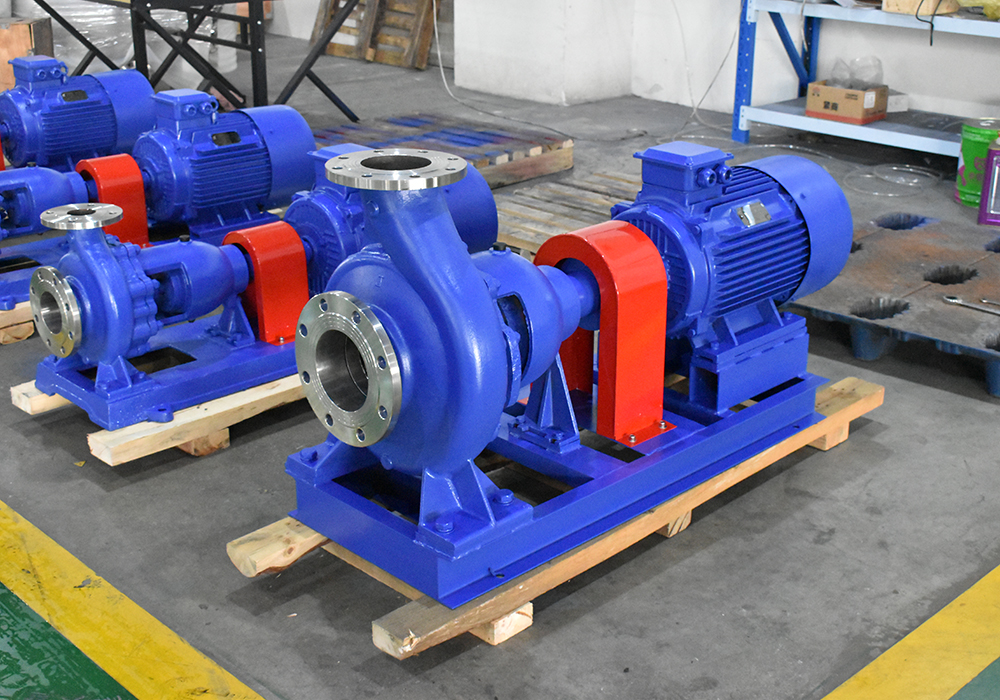
Wholesale Centrifugal Pumps for Petrochemicals Manufacturer
2026-05-23
- Centrifugal pumps for petrochemicals: wholesale selection criteria and production specifics
- Materials of execution and corrosion resistance in aggressive environments
- Energy efficiency and total cost of ownership (TCO)
- Comparative analysis of pump types for various petrochemical tasks
- Frequently Asked Questions
Centrifugal pumps for petrochemicals: wholesale selection criteria and production specifics
Choosing a supplier of centrifugal pumps in 2026 is no longer a matter of simply comparing prices in catalogues. The petrochemical equipment market requires buyers to have a deep understanding of hydraulic characteristics, compatibility of materials of the pumped medium and realistic payback periods for capital costs. We are seeing a situation where enterprises that save 15-20% on the initial purchase of cheap equipment lose up to 300% of this amount in the first year of operation due to downtime and replacement of seals. Our company, Zhejiang Yangzijiang Pumping Industry Co., Ltd., which has been specializing in the development and production of industrial pumps for more than 20 years, daily faces the consequences of such errors when carrying out service work for customers in Russia and the CIS. In this article, we'll explore the technical nuances that differentiate a reliable industrial unit from a one-off solution, and explain why vertically integrated production in China has become a key driver for Russian refineries.
Why flow parameters are more important than rated power
Design engineers often make the mistake of focusing solely on the motor's rated power (kW), while ignoring the actual operating point on the characteristic curve. Centrifugal petrochemical pumps operate in variable pressure and viscosity environments, where an operating point shift of just 10% to the left or right of the BEP results in catastrophic increases in radial shaft loads. In our practice, we recorded a case at one of the refineries in the Volga region, where a series of pumps failed after 4 months of operation, not because of the quality of the metal, but because of incorrect selection of pressure. The customer chose a model with a head reserve “just in case,” which led to the pump operating in the extreme right part of the curve, causing cavitation and destruction of the impeller. This highlights the need to accurately calculate Q-H characteristics before placing a bulk order.
When purchasing a batch of equipment, it is critical to request from the manufacturer not just a general catalog, but individual hydraulic calculations for your specific production line. Modern models, such as our YCZ chemical process pumps or DC horizontal multistage pumps, are designed to operate over a wide range of efficiencies without loss of stability. We recommend that you always check the NPSH (NPSH) value - if the manufacturer only specifies the minimum value, but does not provide a graph of NPSH versus flow, this is a signal of poor product engineering. For aggressive environments typical of petrochemicals, the cavitation margin should be at least 0.5–1.0 meters above the calculated value in order to compensate for possible pulsations in the pipeline.
Materials of execution and corrosion resistance in aggressive environments
Petrochemical production involves working with sulfur compounds, acids, alkalis and hydrocarbons at high temperatures, which makes the choice of material for the flow part a matter of safety for the entire enterprise. Standard cast iron or 304 stainless steel (08Х18Н10) is often insufficient for pumping hot acid sludges or solutions with high chloride content. In such cases, the only correct solution is to use pumps lined with fluoroplastic or made of super duplex steels. Our CQB-F fluoroplastic lined magnetic pumps exhibit exceptional resistance to most inorganic and organic acids, providing complete sealing due to the absence of packings. Operating experience shows that the service life of such pumps in environments with pH < 2 exceeds 5 years, while analogues made of conventional stainless steel require replacement after 6-8 months.
However, the choice of material should not be formulaic. Abrasive wear caused by the presence of solid particles in oil or cracked products requires the use of materials with high surface hardness, such as silicon carbide or special ceramic coatings. We have seen cases where customers have installed expensive PTFE pumps on lines with high sand content, resulting in rapid abrasion of the lining. The optimal solution here is our non-clogging self-priming wastewater pumps ZW or sanitary screw pumps type GF, whose design minimizes contact of abrasive with critical components. When creating technical specifications for wholesale purchases, be sure to indicate the chemical composition of the medium, temperature and percentage of the solid phase - this will allow plant engineers to select a material that will last for decades, not months.
It is important to note that even the best material is useless if the casting or assembly technology is violated. Our company's own testing center provides comprehensive testing of each product unit in terms of corrosion resistance. We carry out accelerated tests in salt fog chambers and aggressive solutions, simulating 10 years of operation in a few weeks. This approach allows us to guarantee the absence of hidden casting defects, which often cause through corrosion in the most unexpected places of the body. All products undergo mandatory certification in accordance with international standards, including the European CE certificate, which confirms that the materials comply with the declared characteristics.
Sealing and environmental standards: the transition to magnetic drives
Tightening environmental standards in the Russian Federation and the EAEU countries in 2025-2026 has made the problem of leaks through mechanical seals one of the most acute for petrochemical enterprises. Traditional packings and even modern double mechanical seals have a limited service life and require constant monitoring of the barrier fluid system. Any microcrack or wear of the rings leads to the release of toxic substances into the atmosphere, which threatens the enterprise with huge fines and production stoppage as prescribed by Rosprirodnadzor. The solution to this problem lies in the mass transition to magnetic drive pumps, where torque is transmitted contactlessly through a separating sleeve. Plastic magnetic pumps CQF and vertical magnetic pumps CQB-L, offered by our company, completely eliminate the possibility of external leaks, since their design simply does not allow the shaft to pass through the housing.
The introduction of magnetic pumps at the sites of our partners, such as the international industrial groups APP and HPO, has reduced product losses due to evaporation and leakage to almost zero. However, this technology has its limitations that you need to be aware of when designing. The magnetic coupling is sensitive to dry operation and the presence of ferromagnetic particles in the pumped medium. If metal scale gets into the liquid, it can jam the impeller, causing the magnets to overheat and become demagnetized. Therefore, the installation of such pumps requires the presence of coarse filters on the suction line and dry-running protection systems. Our ZCQ self-priming stainless steel magnetic pumps partially solve this problem due to the special design of the flow part, which allows pumping liquids with small inclusions, but control of the cleanliness of the medium remains a priority.
For high-temperature processes where the use of standard magnetic materials is not possible due to the risk of loss of coercive force, we offer specialized solutions using rare earth magnets (NdFeB), which maintain properties at temperatures up to +350°C. This is critical for distillation and rectification processes. Integration of such pumps into existing technological chains requires careful analysis of thermal conditions, since heat from the pumped liquid is transferred to magnets through the sleeve. Incorrect calculation of coolant circulation can lead to thermal breakdown. Our company’s engineers carry out detailed thermal calculations for each project in order to eliminate such risks even at the stage of approval of documentation.
Energy efficiency and total cost of ownership (TCO)
When assessing the economic feasibility of purchasing pumping equipment in bulk, many purchasing managers look only at the invoice price. This approach is a fundamental mistake in today's economy, where energy costs account for up to 70% of the total cost of ownership (TCO) of an industrial pump over its 10-year life. The difference in efficiency between a pump of class IE2 and a pump of class IE4 can be only 3-5%, but in terms of round-the-clock operation of a powerful unit this results in hundreds of thousands of rubles in annual overpayment. Our diesel pump units and electric centrifugal pumps are designed to maximize hydraulic efficiency by using computer flow simulation (CFD) to design impeller geometry.
Let's look at a specific example. The company purchased a batch of 90 kW pumps at a low price. The efficiency of these pumps was 82%, while similar models of our production, tested in our own center, show an efficiency of 88%. At first glance, the difference is insignificant. However, with 8,000 hours of operation per year and an electricity tariff of 6 rubles per kWh, the overpayment will be more than 230,000 rubles per year per pump. For a fleet of 50 units, this amount will exceed 11 million rubles annually. Thus, the higher initial price of quality equipment pays for itself in less than two years, and then begins to generate net profit due to resource savings. The company adheres to the principle of “success through quality”, focusing on reliability and long-term partnerships, which is confirmed by the successful implementation of projects with groups such as NCHUAN and DALI.
In addition, energy efficiency is directly related to reliability. Pumps with low efficiency often have incorrect hydraulics, which leads to increased vibration and stress on the bearing units. This reduces the overhaul interval and increases the cost of spare parts and labor of service engineers. The use of variable frequency drives (VFDs) in conjunction with our pumps allows us to further save up to 30% energy by adapting performance to the actual needs of the process, rather than throttling the flow with valves. We recommend viewing pumping equipment not as an isolated unit, but as part of an intelligent enterprise energy management system.
Wholesale logistics and production facilities
Organizing the supply of large-sized industrial equipment from China to Russia in the current geopolitical conditions requires the manufacturer not only to provide high-quality products, but also to have a well-functioning logistics scheme. Our company's production base includes eight complete production lines equipped with modern equipment, which allows us to create prefabricated containers for the specific needs of the customer without long downtime. Guaranteed assembly accuracy and end-to-end monitoring of the production cycle allow us to ensure consistent delivery of orders on time. We understand that downtime at an oil refinery due to lack of spare parts is more expensive than the pump itself, so we build up safety stocks of running models in warehouses aimed at the Russian market.
The shipping process begins long before the goods leave the factory gates. Before packaging, each centrifugal pump undergoes comprehensive tests on a stand, where parameters of performance, pressure and tightness are recorded. Test reports are attached to each product unit, which gives the customer confidence in compliance with the declared characteristics. Packaging is carried out taking into account multimodal transportation (sea-railway-road), including enhanced protection from moisture and shock loads. The company has a number of national patents for design solutions, which confirms its status as a provincial high-tech enterprise and guarantees the uniqueness of the supplied solutions, protected from copying by unscrupulous competitors.
The main emphasis is on an individual approach to each client: from technical consultation and selection of the optimal solution to warranty and post-warranty service. Sales markets cover more than 40 countries, which indicates the company’s ability to adapt to various standards and requirements, be it GOST, API or DIN. The company's vision is to strengthen its position as one of the leading providers of complete solutions in the field of fluid transfer - from pumps and valves to engineering support and integration into industrial systems. This means that when you buy from us, you get not just hardware, but a ready-made technological solution with full documentation and support in Russian.
Comparative analysis of pump types for various petrochemical tasks
To select the right equipment, you need to clearly understand the differences between the main types of pumps presented in our catalog. Below is a table that helps determine the optimal pump type depending on the characteristics of the pumped medium and operating conditions.
| Pump type | Optimal environment | Benefits | Limitations | Recommended model |
|---|---|---|---|---|
| Centrifugal cantilever | Clean liquids, water, light petroleum products | Easy to maintain, high efficiency, low cost | Not suitable for viscous media, risk of leakage through the stuffing box | Series IS/IH |
| Magnetic pump | Toxic, volatile, expensive liquids | Completely sealed, no leaks, safe | Sensitive to dry running and abrasive, higher price | CQB-F, CQF, ZCQ |
| Screw pump | High-viscosity liquids, pastes, sludges | Gentle pumping, handling viscosities up to 100,000 cP | Low efficiency, temperature and pressure limitations | GF (sanitary) |
| Self-priming | Liquids with gases, draining containers, fire extinguishing | Flood-free operation, cavitation resistance | Lower efficiency compared to conventional centrifugal | ZW, YZSP (diesel) |
| Multistage | Boiler feed, high pressure, reverse osmosis | Generating high pressure in a compact size | Complex design, high requirements for water quality | DC (horizontal) |
Analysis of the table shows that there is no universal solution. For example, for pumping crude oil with a high content of paraffin and mechanical impurities, using a magnetic pump can be risky due to the possible jamming of the rotor when the product solidifies. In this case, the use of screw pumps or special centrifugal pumps with increased clearances and a casing heating system is more justified. On the other hand, for dosing reagents in the water treatment process, dosing pumps are indispensable, ensuring high supply accuracy. Our product line, covering ten key categories, covers every process need, from vacuum pumps to diesel units.
Service support and lifecycle management
Purchasing equipment is just the beginning of a long-term partnership. The reliability of pumps in the petrochemical industry directly depends on the quality of installation, commissioning and timely maintenance. We provide a full cycle of after-sales service, including specialists visiting the site for installation supervision and training of customer personnel. Installation errors, such as misaligned couplings, lack of vibration isolation of the foundation, or incorrect piping, can negate all the benefits of even the most expensive pump. In our practice, there have been cases where the warranty was voided due to starting the pump without first flushing the pipeline, which led to welding scale getting into the sliding bearings.
To prevent such situations, we have developed commissioning regulations that take into account the specifics of each pump type. For magnetic pumps, for example, it is critical to ensure that the flow path is filled with liquid before starting, since running “dry” even for a few seconds leads to irreversible damage to the silicon carbide bearings. For centrifugal pumps, correct alignment of the motor and pump shafts is important, which must be checked with a laser tool, and not by eye. Regular monitoring of vibration and temperature of bearings makes it possible to predict the remaining life of units and plan repairs during planned production stops, avoiding emergency situations.
The company offers an extended warranty and a stock of spare parts for all manufactured models. This is especially important for imported equipment, where delivery times for original spare parts can reach several months. Localization of service and the presence of qualified engineers allow us to respond to customer requests as quickly as possible. We don't just sell pumps, we take responsibility for the smooth running of your production process. The principle of “development through scientific and technical innovation” is implemented in the constant updating of service methods and the introduction of remote monitoring systems for equipment condition.
Frequently Asked Questions
What is the minimum lot size for wholesale purchase?
We work both with large project deliveries and with regular replenishment of warehouse stocks. The minimum order depends on the type of equipment: for standard centrifugal pumps, the MOQ can be from 5 units, but for custom-designed pumps for specific conditions, the minimum quantity usually starts from 10 units. When ordering a container (20 or 40 feet), we provide maximum discounts and take care of organizing logistics to the destination port or border. A flexible pricing policy allows us to find the optimal solution for both large oil and gas holdings and medium-sized chemical plants.
Does the equipment comply with Russian GOST standards?
Yes, all products are certified and can be supplied in a design that meets the requirements of GOST, as well as international standards ISO, API and CE. At the customer's request, we provide a full package of documents in Russian, including passports, operating manuals and certificates of conformity. Our company has experience in successfully supplying equipment for facilities that require strict compliance with industrial safety standards of the Russian Federation. If necessary, we can conduct additional tests in accredited laboratories to confirm specific parameters according to the requirements of your technical specifications.
Is it possible to manufacture pumps for non-standard conditions?
Undoubtedly. Having our own design bureau and production lines allows us to modify standard models to meet unique customer requirements. This may include changing the material of the flow part (for example, using titanium or Hastelloy), adapting the connecting dimensions of the flanges, changing the type of seal or electric motor (explosion protection Ex d IIB T4). The production time for non-standard equipment is increased by 2-3 weeks compared to standard equipment, but this ensures perfect integration of the pump into your process flow. We have successfully implemented projects to replace outdated Soviet equipment with modern analogues while maintaining overall and connecting dimensions.
What are the terms of the guarantee and the conditions for its provision?
The standard warranty period for our pumps is 12 months from the date of commissioning, but not more than 18 months from the date of shipment. The warranty covers defects in materials and workmanship. Warranty conditions include compliance with the rules of transportation, storage, installation and operation set out in the user manual. We do not accept complaints in cases of equipment damage due to a violation of the technological process (for example, working with prohibited environments), force majeure or actions of third parties. All warranty cases are considered as a priority with prompt replacement of failed components.
To summarize, the choice of centrifugal pumps for petrochemical applications is a strategic decision that will impact the cost efficiency and safety of the plant for years to come. Focusing only on the initial cost leads to hidden losses, while investing in high-quality, technologically sophisticated equipment from a trusted manufacturer ensures stability and profit. Zhejiang Yangzijiang Pumping Industry Co., Ltd. is ready to become your reliable partner in upgrading pumping systems, offering products that combine advanced Chinese technology and understanding of Russian market requirements. Contact us today to receive detailed advice and calculate a commercial offer tailored to your needs.
For more information about the technical characteristics of specific models or to discuss the terms of cooperation, visit our sectioncatalog of industrial pumping equipment, where detailed specifications and drawings of all series are presented.