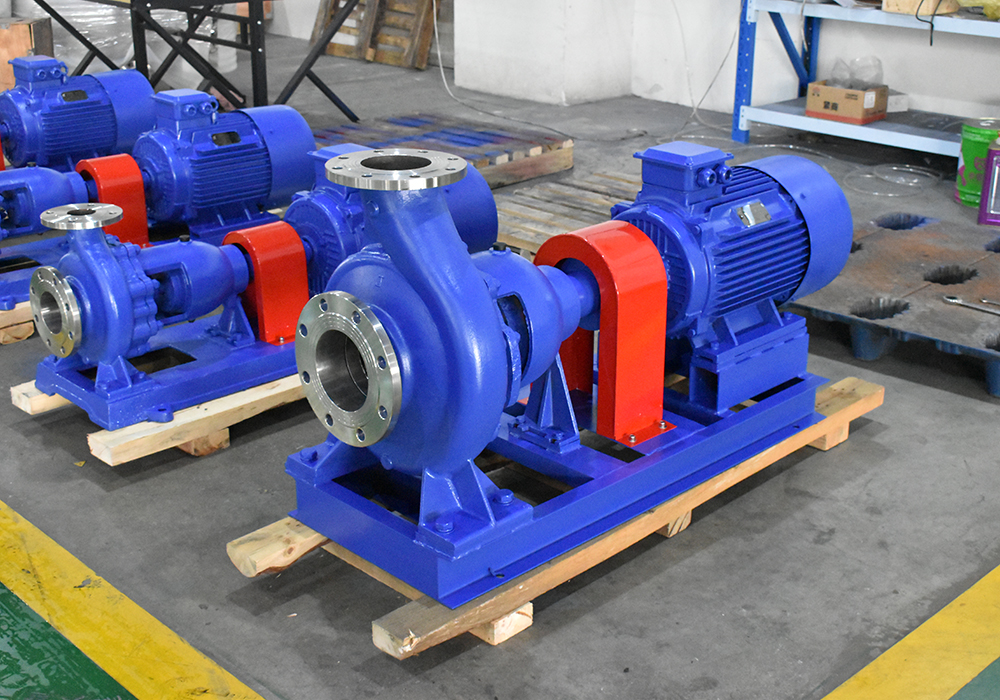
How to choose China Wholesale Centrifugal Soil Pump Manufacturers?
2026-05-24
Criteria for selecting reliable suppliers of centrifugal soil pumps in China
Choice of Chinese manufacturercentrifugal pumpsfor pumping soil is not just a search for the lowest price in the catalog, but a complex engineering process, where an error at the procurement stage results in equipment downtime and millions of losses during operation. In our practice, we have repeatedly encountered situations where customers purchased units at a minimum cost, only to discover after three months of operation that the impeller was critically worn due to the material not meeting the stated abrasive loads. To avoid such risks when purchasing in bulk, it is necessary to clearly understand the difference between assembly shops and full-fledged production cycles, and also require confirmation of technical characteristics with real test reports, and not beautiful booklets.
The Chinese market is oversaturated with offers, but only a few enterprises have their own metallurgical base and test benches capable of simulating real conditions of pulp hydraulic transport. If you are looking for a long-term partner rather than a one-time seller, your focus should shift from unit price to the total cost of ownership of the equipment, which includes maintainability, spare parts availability and compliance with international safety standards. Below we will look at specific steps that will help you weed out unreliable suppliers and find a plant that can ensure stable operation of your system in hostile environments.
Technical parameters: what to look for beyond catalog data
The first thing that requires detailed checking when ordering a batchcentrifugal pumps, is the material of the flow part and the type of shaft seal. Many suppliers indicate “high chromium cast iron” or “stainless steel” without specifying the grade of the alloy and its Brinell hardness. For dredge pumps handling sand, slurry or ore slurry, it is critical that the hardness of the impeller material be at least 20-30% greater than the hardness of the particles being pumped. We recommend requesting a metal chemistry certificate for each casting batch. For example, Cr27 alloy (27% chromium) shows significantly better abrasion resistance than standard cast iron, but is more expensive; however, the savings here are false, since wheel replacement is required 3-4 times less often.
The second critical component is the shaft seal system. In soil pumps, traditional stuffing box seals often require constant adjustment and supply of barrier water, which is not always convenient in the field. Modern solutions involve the use of double-flush mechanical seals or expeller seals, which completely eliminate contact of the pumped medium with the bearings. When communicating with a Chinese factory, ask about the availability of their own leak tests at pressures exceeding operating pressure by 50%. If the supplier can't provide video of a test rig where the pump runs on dirty water under load for 48 hours without leaking, that's a red flag.
Also pay attention to the design of the case. The split casing allows you to change the lining or working parts without dismantling the entire pump from the pipeline, which reduces downtime during maintenance. Monoblock structures are cheaper to manufacture, but repairing them in a remote quarry becomes a logistical nightmare. Check with the manufacturer to see if they have spare parts in stock for the models you plan to purchase in bulk and what their delivery time is. A reliable factory keeps a warehouse of running spare parts and guarantees their shipment within 5-7 days, while small workshops can offer to wait up to two months for the manufacture of a new wheel.
Production audit: the difference between a factory and a trading company
One of the most common questions asked by our clients is: “How to distinguish a real plant from a trader posing as a manufacturer?” The answer lies in vertical integration of processes. A real manufacturer controls the entire cycle: from metal melting and casting of blanks to machining, assembly and final testing. Traders buy ready-made components in different markets and assemble them in garage conditions, without being able to control the quality of the raw materials. When requesting a quote, be sure to ask to see ISO 9001 certifications indicating the scope of application, as well as photos or videos of production lines, especially the foundry area and CNC machines.
A striking example of an enterprise with a full production cycle isZhejiang Yangzijiang Pumping Industry Co.,Ltd. This Russian-Chinese company is based in Zhejiang province and has specialized exclusively in pumping technology for more than 20 years, combining R&D, mass production and its own testing center. Unlike many competitors, they do not simply assemble pumps from purchased parts, but develop design solutions for specific tasks of pumping aggressive and abrasive liquids. With eight complete production lines and an in-house testing facility, they can ensure precision assembly and thoroughly test each unit for pressure, sealing and corrosion resistance before shipment.
When conducting an audit (online or in-person), pay attention to the presence of patents. A company investing in R&D usually has a number of national patents for utility models and inventions, which confirms its status as a high-tech enterprise. Zhejiang Yangzijiang Pumping Industry Co., Ltd. holds such patents and has successfully implemented projects with international groups such as APP and HPO, supplying equipment to more than 40 countries around the world. Their product line spans ten key categories, including specialized models for demanding environments, reflecting deep industry expertise rather than a superficial “a little bit of everything” offering.
Another marker of reliability is the transparency of the supply chain. Request a list of key subcontractors from the supplier if they outsource specific units. An honest factory will openly say that, for example, they purchase engines from a well-known brand (Siemens, WEG or an analogue), and produce the hydraulic part themselves. Secrecy in this matter often indicates the use of cheap components of unknown origin. In addition, make sure that the plant conducts incoming quality control of materials. The absence of a metal spectral analysis laboratory on site means that they take the casting supplier at their word, which is unacceptable for industrial equipment.
Certification and compliance: guarantee of safety
Working with soil pumps involves high risks, so having international certificates is not a formality, but a necessity. The minimum set of documents that a Chinese manufacturer must provide includes a CE certificate (for Europe), ISO 9001 (quality management system) and, when working with Russia, an EAC or GOST declaration of conformity. However, the presence of a logo on the site does not mean anything. Request scans of original certificates with numbers that can be checked in the registers of issuing authorities. For example, an SGS on-site inspection certificate provides much more assurance than a factory self-declaration.
Particular attention should be paid to compliance with the climatic design. Equipment manufactured for the Chinese domestic market may not be suitable for the harsh Russian winters or the hot climate of Africa. Check the IP protection class and climatic modification (for example, УХЛ1 for Russia). The products of Zhejiang Yangzijiang Pumping Industry Co., Ltd. undergo mandatory certification according to international standards, including European CE and ISO 9001, as well as confirmation of conformity based on SGS inspections. This allows their customers to be confident that the pumps will withstand operating loads in any geographical location, from arctic latitudes to equatorial zones.
Don't forget about environmental standards. Modern requirements for industrial equipment include not only efficiency, but also environmental safety. Leaks of the pumped liquid are unacceptable. Check that the pump design meets emissions prevention requirements. Companies targeting exports to developed countries typically build these requirements into the design early by using double mechanical seals and leakage collection systems. Ignoring this aspect may result in fines from environmental authorities in your country of operation.
| Evaluation criterion | Reliable plant (High level) | Assembly Shop/Trader (Low Level) |
|---|---|---|
| Foundry | Own foundry, spectral analysis of each melt, heat treatment in controlled furnaces. | Purchase of finished castings on third-party markets, lack of documentation on the chemical composition of the metal. |
| Tests | Own stand with the ability to work in an abrasive environment, provision of individual test reports. | Lack of a stand or testing only on clean water, provision of standard (template) graphs. |
| Materials | Guarantee of alloy grade (for example, Cr27, A49), possibility of independent examination. | Vague wording “high-strength cast iron”, refusal to indicate a specific steel grade. |
| Service and spare parts | Spare parts warehouse at the factory, guaranteed shipment within a week, availability of drawings for local manufacturing. | Spare parts are made to order in 4-8 weeks, no technical documentation. |
| Certification | Valid CE, ISO, SGS certificates with online verification. | Expired certificates or forged documents, impossibility of verification in the registry. |
Economics of purchasing: hidden costs and terms of cooperation
The unit price is just the tip of the iceberg. When calculating the project budget, it is necessary to take into account logistics, customs duties, installation supervision costs and, most importantly, the life cycle cost of the pump. A cheap pump can consume 10-15% more electricity due to the low efficiency of the hydraulic part, which will cover any initial savings within a year of operation. In addition, frequent shutdowns for repairs due to low seal or impeller life lead to losses in the main production that amount to tens of thousands of dollars per hour.
When discussing the terms of the contract, carefully study the warranty obligations. The standard warranty for industrial pumps is 12 months from the date of commissioning or 18 months from the date of shipment. However, it is important to specify the conditions under which the warranty is void. Some unscrupulous suppliers find any excuse to refuse warranty repairs, citing “misuse.” Reliable partners, such as Zhejiang Yangzijiang Pumping Industry Co., Ltd., adhere to the principle of transparency and long-term partnership, offering clear terms of service and post-warranty support. Their "success through quality" approach means they are interested in keeping the equipment running for a long time, not in selling you parts a month after launch.
Minimum order quantity (MOQ) also plays a role. Large factories are often ready to ship even one batch of pumps if they see the prospect of long-term cooperation, while small workshops may require container shipment for production profitability. Flexibility in terms of payment and shipment is a sign of a company’s maturity. The possibility of payment through a letter of credit or the presence of a warehouse of finished products in the destination region (if the distributor has one) significantly reduces the buyer’s risks.
Frequently Asked Questions
What is the service life of quality centrifugal soil pumps?
With the correct selection of materials for a specific environment (for example, the use of high-chromium cast iron for quartz sand) and compliance with operating conditions, the service life of the impeller of a high-quality pump ranges from 4000 to 8000 hours of continuous operation. When properly lubricated, bearing units last up to 25,000 hours. The key factor is not the pump itself, but the correspondence of its characteristics to the actual granulometry of the pumped soil.
Is it possible to order a pump with non-standard characteristics?
Yes, leading Chinese factories that have their own design bureau carry out orders based on individual technical specifications. This may concern changes in shaft length, type of connecting flanges, material, or installation of specific motors. However, this will require additional time for approval of drawings and production of a prototype. Standard models are usually available for shipment within 15-20 days, customized ones - from 30 days.
How to check the quality of the pump before shipment from China?
The most reliable way is to hire an independent inspection company (such as SGS, BV or TUV) to carry out a pre-shipment inspection. The inspector will check the external condition, dimensions, perform performance and pressure tests, and take samples of materials for laboratory analysis. An alternative is to request a video broadcast of the tests with your presence via video link, where you can personally see the operation of the stand and the performance of the devices.
What is the advantage of magnetic pumps over conventional centrifugal pumps for chemical media?
The main advantage of magnetic pumps (for example, models like CQB-F or CQF) is the complete absence of dynamic shaft seals, which eliminates the risk of leaks of aggressive or toxic liquids. Torque transmission occurs through a magnetic coupling. This makes them ideal for pumping acids, alkalis and solvents where any leakage is unacceptable for safety and environmental reasons.
To summarize, choosing a suppliercentrifugal pumpsin China requires careful preparation and a deep understanding of technical nuances. Do not chase the lowest price, since in the industrial equipment segment it is almost always achieved due to the quality of materials and simplified design. Focus on factories with a full production cycle, their own testing facilities and proven experience in international markets. Cooperation with companies such as Zhejiang Yangzijiang Pumping Industry LLC, which has 20 years of experience, a wide range of models and all the necessary certificates, will be the key to the smooth operation of your enterprise. Remember that a reliable pump is an investment in the stability of your business, and not just an expense.
If you are ready to discuss the technical details of your project and receive a personalized commercial offer calculating the optimal equipment configuration,contact us today. Our engineers will help you choose a solution that will provide maximum efficiency and durability for your specific operating conditions.