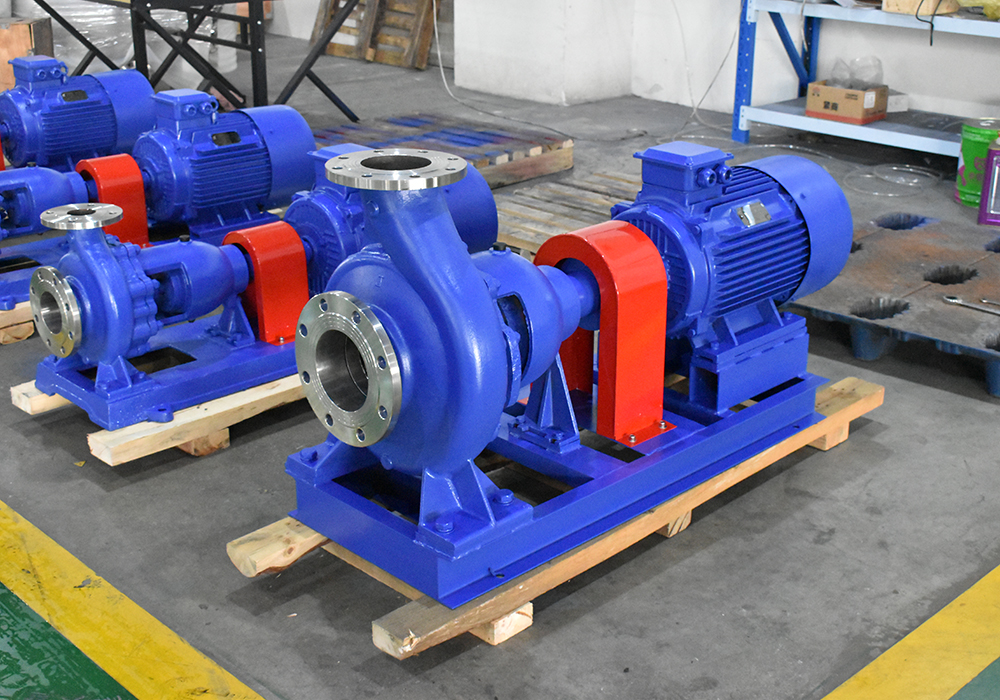
Wholesale semi-submersible centrifugal pump Manufacturers
2026-05-22
- Wholesale supplies of semi-submersible centrifugal pumps: selection criteria and technical nuances
- Specifications: What to look for in the specifications before purchasing
- Production Specifics and Quality Control at Zhejiang Yangzijiang Pumping Industry Co.,Ltd
- Comparative analysis: semi-submersible vs submersible vs cantilever pumps
- Logistics, certification and risks when importing from China
- Frequently Asked Questions
- Final recommendations and next step
Wholesale supplies of semi-submersible centrifugal pumps: selection criteria and technical nuances
Finding a reliable supplier offeringcentrifugal pumpswholesale often turns into a minefield for industrial equipment buyers. In our practice of working with Russian and international customers, we have repeatedly encountered a situation where savings of 10-15% on the initial purchase turned into three times the cost of repairs and downtime of the production line after just six months of operation. A semi-submersible centrifugal pump is not just a product from a catalog, but a complex engineering solution, where every millimeter of the gap between the impeller and the casing determines the fate of your project. The market is oversaturated with offers, but only a few manufacturers are able to guarantee that the declared characteristics correspond to the actual conditions of working with aggressive environments.
This article was written by engineers who have personally assembled, tested and commissioned hundreds of pieces of pumping equipment. We will not rehash marketing brochures. Instead, we will analyze the real parameters that affect the durability of the unit, discuss the hidden risks when importing from China, and show how to distinguish a quality product from a cheap analogue. If you are planning to purchase a batch of equipment for chemical production, electroplating workshop or water treatment system, the information below will save you budget and nerves.
Specifications: What to look for in the specifications before purchasing
The first thing beginners pay attention to is maximum pressure and delivery. However, an experienced engineer knows that these catalog numbers are often taken on the water under ideal laboratory conditions. The real picture begins to emerge when the viscosity of the pumped liquid or the presence of abrasive particles is added into the equation. For semi-submersible centrifugal pumps, the critical parameter is the depth of immersion and the design of the lower support. Unlike fully submersible models, here the motor is located above the liquid level, which requires special attention to the length of the console and the shaft material.
The material of the flow part is the foundation of reliability. Standard cast iron is only suitable for clean water. If your application involves pumping acids, alkalis or hot solutions, you need alloys such as 304 or 316L stainless steel, or a fluoroplastic lining (PTFE/F46). We have seen cases where customers choose plastic pumps for applications above 80°C without considering the coefficient of thermal expansion. The result was predictable: deformation of the housing and loss of tightness after two weeks of work. Always check the temperature range for your specific seal and housing material.
Shaft seal type deserves its own section. The gland seal requires constant tightening and supply of barrier fluid, which increases operating costs. A mechanical seal (mechanical) is more expensive to purchase, but provides a complete seal and requires minimal maintenance. For aggressive media, we strongly recommend the use of double mechanical seals with a flushing system. This creates a barrier that prevents acid from escaping into the atmosphere and protects the bearings from corrosion. Ignoring this requirement is a direct road to an emergency stop of production.
When analyzing technical data, be sure to request performance curves (Q-H curves). The pump must operate in the Best Efficiency Point. Working to the left of this point causes overheating of the fluid inside the housing and cavitation, working to the right causes engine overload. Many suppliers hide this nuance by selling universal models “for all occasions.” In fact, versatility often means a compromise in efficiency. The selection of a pump should be carried out strictly for your operating point with a reserve of engine power of at least 10-15% to prevent overheating at peak loads.
Production Specifics and Quality Control at Zhejiang Yangzijiang Pumping Industry Co.,Ltd
Understanding how equipment is created provides the key to assessing its quality.Zhejiang Yangzijiang Pumping Industry Co.,Ltdis an example of a vertically integrated enterprise where control is carried out at every stage - from casting blanks to final assembly. Based in Zhejiang Province, the company integrates a research and development center and eight modern production lines. This approach avoids the typical problems of outsourcing, when different components are manufactured in different factories without a uniform quality standard.
In the company’s own testing center, each product unit is tested for performance, pressure and tightness parameters. This is not a formality. We know of cases when batches of pumps left the factory without hydraulic tests, and the first failure occurred at the client’s site during commissioning. Here, the resistance of materials to corrosion in chambers with aggressive environments is tested, which is especially important for CQB-F series models with fluoroplastic lining or YCZ chemical pumps. The presence of such facilities is confirmed by CE and ISO 9001 certificates, as well as SGS inspection reports.
The company's product range covers ten key categories, including magnetic, diaphragm, screw and centrifugal pumps. Specific solutions for challenging applications include the CQB-L vertical magnetic pumps, which eliminate the risk of leaks due to the absence of dynamic seals, or the ZW self-priming wastewater pumps, which can handle contaminants. The development is carried out taking into account real industrial conditions: high temperatures, corrosive aggression and strict hygiene standards. This allows us to offer customers not just hardware, but ready-made engineering solutions, proven in projects with international groups such as APP and HPO.
The status of a provincial high-tech enterprise is supported by a number of national patents for design solutions. This means that you get access to technologies that have been modified to take into account the errors of previous generations of equipment. For example, improved impeller geometry in new models of centrifugal pumps reduces noise and vibration levels, extending the life of bearing units. Guaranteed assembly accuracy and end-to-end cycle monitoring ensure consistency of performance in every batch delivered, which is critical for large bulk orders.
Comparative analysis: semi-submersible vs submersible vs cantilever pumps
The choice of pump type is often a stumbling block when designing a system. To make the right decision, you need to clearly understand the differences in design and application. Below is a comparison table based on our experience in operating various types of equipment in the chemical and metallurgical industries.
| Comparison parameter | Semi-submersible centrifugal (Vertical) | Submersible pump | Horizontal cantilever |
|---|---|---|---|
| Engine location | Above the liquid level (on the frame or container lid) | Completely immersed in liquid | Separate from the tank, on the foundation |
| Risk of leaks | Low (shaft passes through cover, gland or mechanical seal is used) | None (monoblock), but there is a risk of liquid entering the motor if the cable is damaged | Medium/High (depending on mechanical seal quality) |
| Service | Convenient (access to the motor and bearings without draining the container) | Complex (requires lifting the pump from the tank, often requires a crane) | Very convenient (full access from all sides) |
| Application | Tanks of limited height, aggressive environments, galvanic baths | Deep wells, wells, large tanks without access from above | Pumping between tanks, main pipelines |
| Disadvantages | Shaft length limitation (risk of vibration with long lengths) | Difficulty in diagnosing the condition of motor windings | Takes up a lot of space, requires shaft alignment (coupling) |
Semi-submersible pumps benefit where the height of the liquid surface varies, or where installing a horizontal pump is not possible due to lack of floor space. They are ideal for galvanic lines where acid fumes will destroy conventional motors located nearby. Immersion options are good for deep tanks, but maintenance becomes a headache if there is hot acid in the tank. Horizontal models remain the standard for mainline pumping, but require complex piping and foundations.
An important nuance: when choosing a semi-submersible pump for depths of more than 2-3 meters, it is necessary to take into account the need to install an intermediate shaft support. Without it, resonant vibration will occur, which will quickly destroy the bearings. Many cheap Chinese analogues ignore this requirement, offering long shafts without support. In our practice, there was a case when such a pump failed after 40 hours of operation precisely because of shaft runout. Always check the drawing for intermediate journal bearings for your depths.
Logistics, certification and risks when importing from China
Purchasing industrial equipment directly from the manufacturer allows you to save up to 30% of the budget compared to purchasing through local distributors. However, this path is fraught with risks that brokers are silent about. The first and main risk is inconsistency of documentation. The CE certificate you see on the website may be issued by a dubious organization or may not apply to a specific batch of goods at all. Reliable manufacturers, such as the company mentioned above with 20 years of experience, provide original ISO 9001 certificates and SGS reports that can be verified in the registries.
The second risk is packaging and transportation. Centrifugal pumps are heavy and shock-sensitive equipment. Cheap wood sheathing may not withstand ocean shipping, causing the engine to become misaligned and misaligned. We require our partners to use reinforced pallets and secure internal components with polyurethane foam. It is also critical to check the motor voltage and frequency. The Chinese standard often differs from the Russian one (for example, 380V/50Hz versus specific industrial networks). An error here will lead to the windings burning out when first turned on.
Delivery times are another variable. The promise of “shipping in 7 days” for complex pumping equipment usually means stock of standard models. Individual production to your specifications (non-standard shaft length, special materials) takes from 3 to 5 weeks. Plan your purchase in advance, taking into account the time for production, customs clearance and delivery to the site. A delay in the delivery of one key pump can stop the entire line, the losses from which will many times exceed the cost of the unit itself.
Language barriers and technical communication often cause order errors. The phrase “acid-resistant pump” can mean different things: for one concentration of sulfuric acid one alloy is suitable, for another - a completely different one. Only work with suppliers whose engineers speak your language or have qualified technical translators. The ability to hold a video conference with a plant engineer before placing an order is an excellent marker of the company’s seriousness. This allows you to clarify details that are lost in correspondence.
Frequently Asked Questions
What is the minimum order quantity (MOQ) for bulk purchase?
For standard models of centrifugal pumps, many manufacturers are willing to ship even one unit as a sample, but wholesale prices usually range from 5-10 units. When ordering non-standard equipment or pumps with specific materials (titanium, Hastelloy), the MOQ may be higher due to changeover costs. We recommend immediately discussing the possibility of consolidating different models into one container to optimize logistics.
Is there a guarantee and how does the service work?
The standard warranty for industrial pumps is 12 months from the date of commissioning or 18 months from the date of shipment. An important condition is compliance with the installation and operation rules. Leading factories offer remote technical support and dispatch of spare parts (impellers, shafts, seals) in the shortest possible time. The presence of a spare parts warehouse at the manufacturer is a mandatory selection criterion.
Is it possible to order a pump with a specific brand motor (Siemens, WEG)?
Yes, most serious manufacturers work under the OEM scheme and can install an electric motor of any famous brand according to your requirement. This increases cost and lead time, but ensures compatibility with your corporate standards and simplifies subsequent maintenance. Please clarify this possibility at the stage of requesting a commercial proposal.
How is delivery cost calculated and what are the delivery terms (Incoterms)?
The cost depends on weight, packaging volume and destination port. The most popular terms are FOB (Free on Board), where you pay for shipping from a port in China, or CIF (Cost, Insurance and Freight), where the seller takes care of shipping and insurance to your port. For complex projects, it is better to use FCA or EXW if you have your own reliable forwarder who can control the quality of packaging at the factory.
Final recommendations and next step
Choosing a semi-submersible centrifugal pump supplier is an investment in the continuity of your production. Do not chase the lowest price on the market, as it is almost always achieved through hidden deterioration in the quality of materials or simplification of design. Focus on manufacturers with their own testing base, transparent history and willingness to provide a customer reference list. Equipment fromZhejiang Yangzijiang Pumping Industry Co.,Ltd, combining 20 years of experience, CE/ISO certification and a wide range of models from magnetic to diesel units, is able to meet the needs of the most demanding industrial facilities.
Check your current technical specifications: do they correspond to real operating conditions? Have power reserves been taken into account and is the material of the flow part selected correctly? If you still have doubts or need to select a specific model for a non-standard task, do not put off the decision until later. A mistake in choosing a pump is too expensive.
Contact us today to receive detailed advice and calculate the cost of a batch of equipment. Our engineers are ready to analyze your parameters and offer the optimal solution that will last for years.Catalog of industrial centrifugal pumpsis available for review, but an individual calculation is always more accurate than a standard offer.