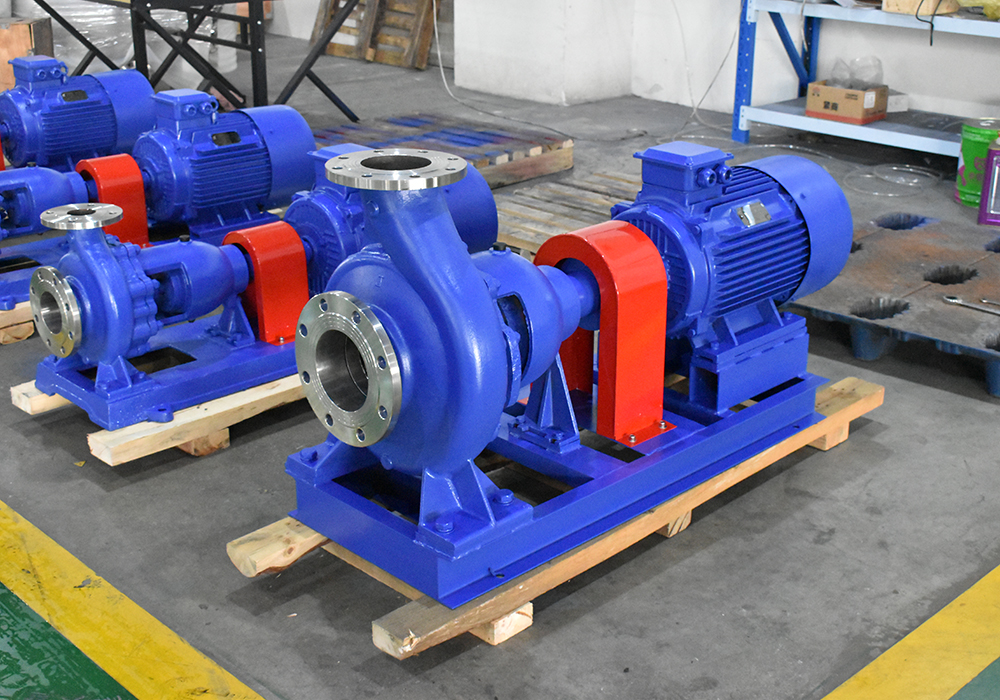
Buy IS Types Horizontal Chemical Centrifugal Pumps Manufacturer
2026-05-21
- Technical characteristics and selection criteria for IS type horizontal centrifugal pumps
- Risk analysis when purchasing industrial pumping equipment in China
- Comparative analysis of materials and their impact on service life
- Integration of Production Experience of Zhejiang Yangzijiang Pumping Industry Co.,Ltd
- Installation rules and typical errors during commissioning
- Economic efficiency and total cost of ownership calculation
- Frequently Asked Questions
Technical characteristics and selection criteria for IS type horizontal centrifugal pumps
IS type horizontal centrifugal pumps are single-stage, overhung units that have become the industry standard for pumping clean water and liquids with physical and chemical properties similar to water. The key parameter when choosing equipment is not just the rated performance, but the operating point on the characteristic curve where the coefficient of performance (efficiency) reaches its maximum. In our practice, we have repeatedly encountered a situation where customers chose a model with a power reserve “just in case,” which led to engine operation in underload mode, overheating of seals and premature failure of bearing units. Real system efficiency is only achieved when the hydraulic parameters of the pump exactly match the process requirements.
Structurally, the IS series is based on the international standard ISO 2858, which ensures complete interchangeability of the main connecting dimensions with products from leading European manufacturers. This means that when upgrading existing pumping stations, you can replace outdated equipment with modern models without reworking the foundation slabs or piping. The impeller, which is the heart of the pump, can be of an open, semi-open or closed type, depending on the requirements for the presence of solids in the pumped medium. For standard water supply applications we recommend closed impellers to provide higher pressure, while for low viscosity fluids with fibers, semi-open designs are preferred to reduce the risk of clogging.
The most important aspect of operation is the material of the flow part. The standard design involves the use of gray cast iron for the body and wheel, however, aggressive environments require the use of AISI 304 or AISI 316L stainless steel. A mistake in the selection of body material is often fatal: one of our clients in the chemical sector saved on the initial purchase by choosing a cast iron version for a slightly acidic solution, but after 8 months was faced with perforating corrosion of the volute and the need to completely replace the assembly, which tripled the total cost of ownership. Always request a fluid safety data sheet from process engineers before finalizing equipment specifications.
Risk analysis when purchasing industrial pumping equipment in China
China's industrial pumping market is highly fragmented, with hundreds of garage workshops offering products at dumped prices alongside high-tech factories. The main risk for the importer is the discrepancy between the declared characteristics and real indicators, especially in terms of pressure and cavitation reserve. Unscrupulous manufacturers often overestimate the diameter of the impeller or use motors of lower power than specified in the specification, which is revealed only under load. To minimize these risks, it is necessary to require the provision of factory test reports carried out on certified stands, and not just declarations of conformity.
Another hidden problem is the quality of the casting and the balancing of the rotating parts. Vibration exceeding the permissible limits according to the ISO 10816 standard leads to the destruction of mechanical seals and fatigue cracks in the shaft. We carry out incoming inspection of each batch using vibration analyzers, and statistics show that up to 15% of pumps in the budget segment have a rotor imbalance that is unacceptable for long-term continuous operation. When ordering a batch, it is important to stipulate the permissible level of vibration in the contract and provide for penalties for exceeding these limits, since this directly affects the service life of the equipment.
Certification also plays a critical role in customs clearance and further operation in the EAEU countries. The absence of EAC marking or a certificate of compliance with the technical regulations of the Customs Union may lead to the delay of cargo at the border or the impossibility of putting the facility into operation by supervisory authorities. A reliable supplier always has a full package of permits, including ISO 9001 certificates for the quality management system and reports from independent laboratories like SGS. Ignoring this stage to save time or money creates legal risks that can paralyze the entire renovation or construction project.
Comparative analysis of materials and their impact on service life
The choice of material for the flow part determines not only corrosion resistance, but also the ability of the pump to withstand abrasive wear and cavitation erosion. Below is a comparison chart of the main materials used in centrifugal pumps to help you make an informed decision based on your specific environment.
| Material of execution | Applicability | Benefits | Limitations and risks |
|---|---|---|---|
| Gray cast iron (HT200/HT250) | Pure water, neutral liquids, heating systems | Low cost, good machinability, high compressive strength | Susceptible to corrosion in acidic and alkaline environments, brittle under shock loads |
| Stainless steel (AISI 304) | Food industry, slightly alkaline solutions, hot water | Versatile, hygienic, resistant to general corrosion | Insufficient resistance to chlorides (risk of pitting corrosion), high price |
| Stainless steel (AISI 316L) | Chemical industry, sea water, chloride-containing environments | High corrosion resistance thanks to molybdenum, durability | Significantly more expensive than analogues, difficult to repair and weld in the field |
| Reinforced polypropylene / PTFE | Aggressive acids, alkalis, organic solvents | Absolute chemical inertness, absence of electrochemical corrosion | Temperature limitation (usually up to 90-120°C), risk of deformation due to overheating |
When working with abrasive slurries such as slurries or laitance, even stainless steel can wear out quickly. In such cases, it is advisable to consider pumps lined with high chromium cast iron or specialized elastomers, although the basic IS series is not designed for this. We have observed that attempting to pump sand with water in a standard cast iron pump resulted in a 2mm increase in the impeller-to-casing clearance in just two weeks, reducing efficiency by 40%. For such tasks, it is better to immediately turn to specialized slurry pumps or order a version with reinforced parts.
Temperature conditions also dictate the choice of seal material and bearing lubrication. Standard rubber seals lose their elasticity at temperatures above 80°C, leading to leaks. If your technology involves pumping coolant with temperatures up to 120°C, you must require the installation of mechanical seals made of graphite and ceramic, as well as the use of heat-resistant grease in the bearing assembly. Ignoring the temperature factor is one of the most common causes of emergency stops in winter, when heating systems operate at the limit of their capabilities.
Integration of Production Experience of Zhejiang Yangzijiang Pumping Industry Co.,Ltd
In the context of choosing a reliable partner for the supply of IS type equipment, it is important to consider not only the unit price, but also the technological maturity of the manufacturer. Zhejiang Yangzijiang Pumping Industry Co., Ltd., as a Russian-Chinese enterprise with more than 20 years of history, combines the advantages of Chinese production scale with an understanding of the specific requirements of the Russian market. The company operates as an integrated organization, with R&D, serial production and comprehensive testing concentrated at one site in Zhejiang Province. This approach allows you to control every stage of product creation, from casting blanks to final balancing of the rotor, eliminating intermediaries and associated quality risks.
The enterprise's production base includes eight automated lines and its own testing center, where each product unit is tested for pressure, performance and tightness parameters before shipment. This is especially important for centrifugal pumps, where the slightest casting or assembly defect can lead to cavitation and vibration. CE, ISO 9001 and SGS inspections ensure you are getting a product that meets international standards and not a hand-me-down. In addition, the company has successfully completed projects for international groups such as APP and DALI, which serves as indirect confirmation of its ability to complete large orders on time.
A wide product line, including, in addition to centrifugal pumps, magnetic, screw and membrane units, allows us to solve complex problems of pumping aggressive and viscous media within the framework of one contract. For example, if your process requires not only water supply from IS pumps, but also dosing of reagents or pumping of thick suspensions, the company's engineering team can select the optimal combination of equipment. The principle of “success through quality” is implemented through strict incoming control of materials and end-to-end monitoring of the production cycle, which ensures the stability of the characteristics of each batch. For Russian customers, this means the opportunity to receive equipment with adapted documentation and service support that takes into account local operating conditions.
Installation rules and typical errors during commissioning
Even the highest quality pump will fail prematurely if its installation is carried out in violation of the basic rules of hydraulics and mechanics. The first and most common mistake is incorrect alignment of the pump and motor shafts. Axle misalignment of just 0.1 mm can cause excessive vibration that will destroy bearings and mechanical seals within months of operation. We strongly recommend using laser alignment systems instead of the eye or ruler method, as human error is unacceptable here. After installation, be sure to check the alignment at operating temperature, taking into account the thermal expansion of the metal.
The second critical point is the configuration of the suction piping. The presence of air in the suction line inevitably leads to cavitation, which sounds like gravel inside the pump and quickly corrodes the impeller. The pipeline must have a constant slope towards the pump to prevent the formation of air pockets, and the diameter of the suction pipe must be equal to or greater than the diameter of the pump inlet. Installation of a check valve and gate valve at the suction is mandatory to prevent water hammer and facilitate filling of the pump before starting. In our practice, there was a case when a client installed an elbow immediately in front of the pump inlet, which created an uneven flow and caused one-sided wear of the wheel, reducing the life of the unit by half.
The third aspect is engine protection and operating mode control. Operating a centrifugal pump with the pressure valve completely closed for a long time leads to overheating of the liquid inside the housing and deformation of parts. Although modern engines have thermal protection, it operates with a delay long enough to damage the seals. Be sure to install pressure gauges on the suction and pressure, as well as an ammeter in the motor circuit to visually monitor the load. Regular monitoring of these parameters makes it possible to predict the development of malfunctions, such as filter clogging or ring wear, even before an emergency occurs.
Economic efficiency and total cost of ownership calculation
When deciding to purchase industrial equipment, the price of the pump itself is only part of the total cost. Total cost of ownership (TCO) includes costs for energy, maintenance, repairs and production downtime. Energy consumption is the most significant cost item during the life cycle of a pump, accounting for up to 90% of total costs. The difference in efficiency between a premium pump and a budget model may be only 3-5%, but in terms of 24/7 operation over 10 years, this translates into tens of thousands of dollars in savings. Therefore, choosing a more expensive but energy-efficient unit often pays off within the first year of operation.
Maintainability and availability of spare parts also affect the economics of the project. IS pumps are designed from the ground up to be easy to service: the rear opening design allows the impeller and seal shaft to be removed without removing the casing or piping. This reduces downtime when replacing worn parts from days to hours. However, it is important to ensure that the supplier guarantees an in-stock parts program. Lack of original seals or impellers may force you to outsource them, often leading to imbalance and reduced reliability.
The durability of equipment directly depends on the correct selection and operating conditions. Investments in a high-quality inlet filtration system and dry-running protection pay for themselves many times over due to an increase in the overhaul interval. We recommend a preventative maintenance schedule that includes checking vibration, bearing temperatures and lubricant conditions every 3 months. This proactive approach allows you to plan repair budgets and avoid sudden production stops, which can cost much more than the pump itself. Ultimately, the reliability of the pumping system is the foundation for the stability of the entire technological process of the enterprise.
Frequently Asked Questions
What is the maximum solids size allowed for IS series pumps?
Standard IS type pumps are designed for pumping clean liquids or media containing mechanical impurities of no more than 0.1% by weight, while the size of solid inclusions should not exceed 0.2 mm. Exceeding these standards will lead to rapid abrasive wear of the sealing rings and impeller. If your application requires pumping more contaminated media, you will need to consider modifications with increased clearances or turn to the slurry pump class, since the IS design is not designed to work with abrasives.
Can IS pumps be used to pump hot oil?
The use of standard hot oil versions is only possible if standard rubber seals are replaced with heat-resistant materials (for example, Viton or graphite) and high-temperature grease is used in the bearings. However, the viscosity of oil is significantly different from water, which changes the operating characteristics of the pump: pressure and performance will decrease. It is necessary to recalculate the engine power, since the viscous liquid increases the load on the shaft. For such applications, we recommend consulting with factory engineers to select a special version or alternative pump type.
What is the warranty period and conditions for its provision?
The standard warranty period for industrial pumps is 12 months from the date of commissioning or 18 months from the date of shipment, whichever occurs first. The warranty covers defects in materials and workmanship, but does not cover damage caused by improper installation, operation outside specifications, or exposure to aggressive environments not specified in the specifications. To maintain the warranty obligations, it is necessary to keep the commissioning report and the maintenance log, confirming compliance with the operating regulations.
Choosing the right pumping equipment is an investment in the stability of your operation for years to come. Don’t risk quality for the sake of dubious savings, trust trusted partners with real production base and technical expertise. Contact us today for detailed advice, performance calculations and a quote for IS type pumps and other industrial equipment.Centrifugal pumps from the manufacturerwith quality assurance and full technical support will help you optimize processes and reduce operating costs.