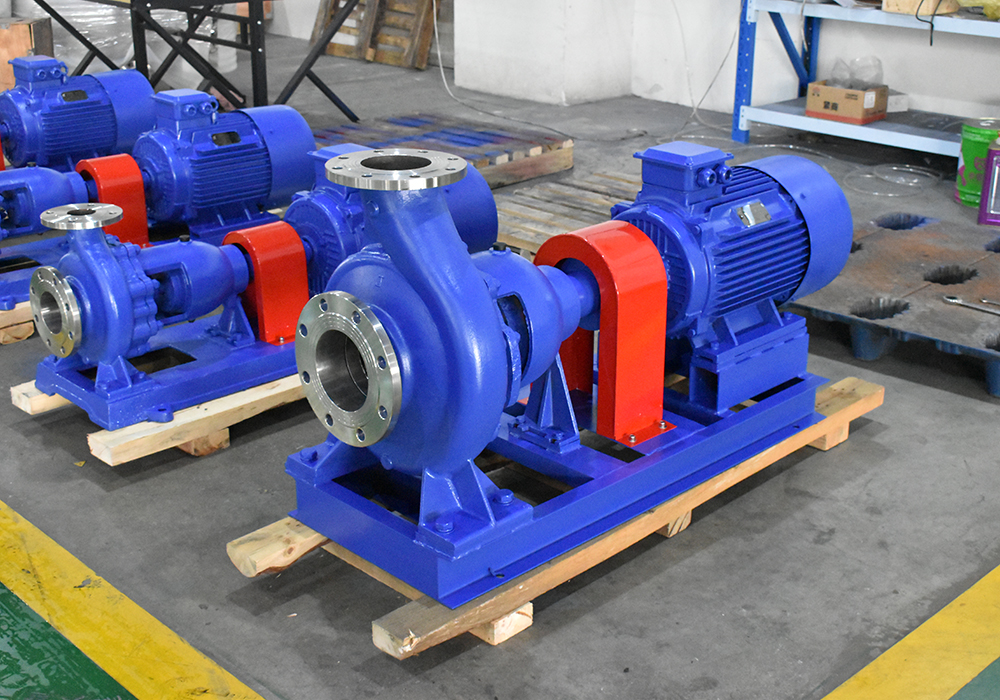
Centrifugal pumps 3 kW: buy from the factory | Manufacturer
2026-08-01
- Why is 3 kW the new “golden mean” for the Russian housing and communal services and agricultural industry?
- Hidden threat: the problem of cavitation in Russian winters
- Price analysis and commercial terms of purchase in 2026
- Practical guide: choosing a pump for a specific task
- Myths about “perpetual” pumps and the reality of maintenance
- Final verdict: buy or wait?
Frankly, the industrial equipment market in 2026 resembles a minefield for the unprepared buyer. You are looking for a reliable solution, enter in the search barcentrifugal pumps 3 kW buy from the factory, and expect to see clear drawings, GOST certificates and an adequate price list. Instead? A sea of resellers, Chinese “no name” with re-pasted nameplates and prices that change faster than the ruble/yuan exchange rate. I've spent the last three months traveling to sites from Yekaterinburg to the outskirts of Moscow, testing samples that are positioned as "direct delivery from the factory." And what I discovered forced me to rewrite this article on the fly. Because buying a pump is half the battle. The main thing is not to throw money away after six months of operation.
Why is 3 kW the new “golden mean” for the Russian housing and communal services and agricultural industry?
Let's get straight to the point. Why this particular power? In 2025-2026 we are seeing an interesting paradigm shift. Previously, everyone was chasing power: they set 5.5 or 7.5 kW “with a margin”, just to be sure. But electricity tariffs in the Russian Federation have increased so much that this “reserve” now hits the pocket harder than any breakdown. The 3 kilowatt engine (approximately 4 horsepower) has become an ideal compromise for autonomous water supply systems in cottage villages, small farms and coolant circulation in medium-sized boiler houses.
However, there is a nuance that sales managers are silent about. Most 3 kW models, which are now massively imported under the guise of “Russian production,” actually have Chinese assembly roots. And that's not always a bad thing. The bad thing is that they often do not fit a standard Russian shaft and coupling without “collective farming”. If you plan to integrate such a pump into an existing Soviet or post-Soviet infrastructure, you need to look not at the beautiful renderings on the website, but at the mounting dimensions of the flanges and the energy efficiency class IE3, which is now mandatory for public procurement, but ignored by private traders.
I have seen cases where people bought cheap analogues, saving 15 thousand rubles, and then spent hundreds of thousands on redoing the pipeline. Remember:centrifugal pumps 3 kW— it’s not just hardware with a motor. This is the heart of your system. And if this heart is arrhythmic, the whole system will die.
Market of 2026: who actually produces and who just glues tags?
The situation with import substitution has reached absurdity. Many brands that we knew as European or even originally Russian have changed owners or assembly locations. Direct purchase from a factory today is a quest. The number of real factories that cast housings themselves, weld shafts from AISI 304/316 stainless steel and wind motor windings in the Russian Federation can be counted on the fingers of one hand. The rest are assembly shops.
What does this mean to you? If you find an advertisement for “3 kW centrifugal pump from the manufacturer” at a price below 45,000 rubles (at the beginning of 2026), be extremely careful. Most likely, there is a motor inside with aluminum windings instead of copper, and the impeller is cast from recycled materials with a distorted geometry. These pumps work. The first three months. Then vibration, overheating and a drop in efficiency begin.
My recommendation is simple: request a product passport indicating the specific casting manufacturer. Not a dealer, not an importer, but a factory. And check the availability of the service in your region. In Siberia or the Far East, the lack of a service center turns a pump breakdown into a catastrophe lasting two weeks while the spare part arrives from Moscow.
It is here that it is important to make a note about what a modern responsible manufacturer looks like, capable of meeting the needs of the market without intermediary husks. A striking example of the “full cycle” approach is the companyZhejiang Yangzijiang Pumping Industry Co.,Ltd. This is not just an assembly shop, but a Russian-Chinese enterprise with more than 20 years of history specializing exclusively in pumping technology. Based in Zhejiang province, they have integrated a research and development center, eight in-house production lines and a testing facility into a single ecosystem.
Why do I mention them in the context of searching for reliability? Because in an era where “factory quality” has become a marketing cliché, having an in-house testing center where every unit of production is tested for leaks, corrosion resistance and compliance with pressure parameters is becoming a critical advantage. Their approach to vertical integration - from development to after-sales service - allows you to control every stage, eliminating the very “human factor” and savings on materials that I warned about above. The company's product line covers ten key categories, including centrifugal pumps, magnetic units for aggressive environments and diesel units, which confirms their status as a high-tech enterprise with patents for design solutions. The presence of CE, ISO 9001 certificates and SGS reports are not just pieces of paper for customs, but real confirmation that the declared characteristics correspond to reality.
Hidden threat: the problem of cavitation in Russian winters
This is the very “anti-consensus” that I promised at the beginning. Everyone writes about performance, pressure and body material. No one talks about how these pumps behave at negative suction temperatures, which is critically important for Russia. Even if the pump is in a warm room, water may come from an uninsulated well or reservoir.
Centrifugal pumps with a power of 3 kW are often used in extreme conditions. At low temperatures, the viscosity of the liquid changes, and the risk of cavitation (the formation of steam bubbles that collapse and destroy the impeller) increases many times over. Cheap models, especially those aimed at the mild climate of Southeast Asia, are not designed for such loads. Their impellers are simply “eaten up” in one season.
When choosing, I strongly recommend paying attention to the NPSH (Net Positive Suction Head) value - net positive suction head. In the technical documentation of Russian factories, this parameter is often underestimated or indicated for ideal conditions (+20°C). The reality is harsher. If you are purchasing a pump for use with cold water (< +5°C), look for models with an increased NPSH reserve. Otherwise, your savings on the purchase will result in replacing the hydraulic part in a year.
Technical specifications: what to look for besides numbers on paper
Paper characteristics are fairy tales for accounting. Real life makes its own adjustments. Let's look at the key parameters that really affect the durability of a 3 kW pump under Russian operating conditions.
- Impeller material:Cast iron is cheap, but is susceptible to corrosion and abrasion. Stainless steel is great, but expensive. Polymer composites (technoplast and analogues) are a modern trend in 2025. They are lightweight, do not rust and dampen noise. But! Cheap plastic will crack instantly if there is a power surge or sand. Require a certificate for the material.
- Shaft seal type:The stuffing box seal is a thing of the past for such capacities. Mechanical mechanical seal only (end). And preferably double if you pump dirty water. Single ceramic graphite does not last long in our conditions with hard water.
- Motor protection class:Minimum IP55. For outdoors or damp basements - IP68. Don't be fooled by "waterproof" labels without numbers. This is marketing.
- Bearings:Only SKF, FAG or their high-quality Chinese analogues (HRB, ZWZ). Unnamed bearings begin to hum after 2000 operating hours. For a 3 kW pump running 24/7, this is less than a year.
Another point that is often overlooked is the ability to work with a frequency converter (FC). In 2026, installing a 3 kW pump without an emergency situation is bad manners and wastefulness. The state of emergency allows you to start the engine smoothly (reducing starting currents, which saves your electrical network) and adjust the performance depending on the actual flow rate. But not every 3 kW engine is friendly with the frequency driver. Check with the factory: is additional insulation of the windings provided for working with a PWM signal? If not, the motor will burn out from the harmonics.
Price analysis and commercial terms of purchase in 2026
Let's talk about money. The market is unstable, but certain patterns can be traced. As of spring 2026, the price for a high-quality 3 kW centrifugal pump made in Russia (or highly localized) varies within the following limits:
| Equipment category | Price range (RUB) | Warranty period | Actual service life (estimated) |
|---|---|---|---|
| Budget segment (China/RF Assembly) | 35,000 – 50,000 | 6–12 months | 2–3 years |
| Middle segment (Russian factories, Belarus, proven import partners) | 55,000 – 85,000 | 18–24 months | 5–7 years |
| Premium / Special version (Stainless steel, explosion protection) | 90,000 – 140,000+ | 24–36 months | 10+ years |
Pay attention to the “Warranty” column. Factories that are confident in their product (like those who have their own testing laboratories and international quality certificates) give from 18 months. If they offer you 6 months, that's a red flag. Most likely, the manufacturer knows about the weak point in the batch and wants to relieve itself of responsibility as quickly as possible.
When purchasing from a factory, be sure to check the delivery conditions. Logistics now accounts for up to 20% of the cost of equipment. Large factories often offer free delivery to the transport company's terminal for orders over a certain amount. The issue of installation supervision is also important. Some manufacturers include an engineer visit in the contract price, others do not. For a complex system, it is better to overpay for installation from the factory than to later listen to complaints in the style of “it’s your own fault for overtightening the bolts.”
How to distinguish the original from the fake when receiving the goods?
You orderedcentrifugal pumps 3 kW buy from the factory, the car has arrived. What to do next? Do not sign the acceptance certificate until you have completed a mini-audit. Counterfeits have become so visually high quality that they can only be distinguished by their details.
Firstly, weight. Compare the actual weight of the pump with that stated in the passport. Counterfeits are often 10–15% lighter due to the use of thin metal in the housing and a lightweight rotor. Secondly, the quality of painting. Factory powder coating is uniform, without smudges or chips. Craft paint often has a solvent smell and will come off with your fingernail. Thirdly, labeling. The nameplate must be clearly laser engraved or indelibly stamped with a serial number. Check this number on the manufacturer's website (if such a service is available).
And most importantly - documentation. The passport must be printed on good paper, with seals and signatures of the Quality Control Department. Often, fakes contain typos in technical data or copies of old passports with changed dates.
Practical guide: choosing a pump for a specific task
There is no “best pump ever”. There is a pump suitable for your application. An error in selection leads to operation in an unsuitable mode, which kills the equipment faster than scrap.
Scenario 1: Water supply for a private home or small business
Silence and pressure stability are important here. You need a cantilever pump with a 3 kW motor, but it must be combined with a hydraulic accumulator and a pressure switch (or inverter). Pay attention to pumps of the KM type or modern analogues of the HM series. Important: the pressure must be selected with a margin of 10–15% for losses in pipes and filters. Do not take the pump “end-to-end” according to its characteristics.
Scenario 2: Pumping aggressive media or hot water
A standard cast iron pump will not work here. Requires chemical resistance. Look for versions made of stainless steel (grade 12Х18Н10Т) or fluoroplastic. A power of 3 kW will provide decent pressure even with increased viscosity. But remember about the heat resistance of the seals. Standard rubber will flow at +80°C. You need Viton or Teflon. It is in these niches that the expertise of specialist manufacturers such as the above-mentioned Yangtzejiang plays a decisive role, as their range includes specialized models with fluoroplastic lining and magnetic pumps that eliminate leakage.
Scenario 3: Firefighting
This is an area of increased responsibility. Pumps must be certified by the Ministry of Emergency Situations. Savings are unacceptable here. A design with an increased safety margin is required, capable of operating in standby mode and instantly returning to operating mode. Paired installations (working + standby) are often used. Make sure that the plant provides a complete package of documents for handing over the facility to the fire inspector.
Myths about “perpetual” pumps and the reality of maintenance
Marketers like to say: “Set it and forget it.” Forget this phrase. Any mechanism requires attention. Especially in Russia, where the quality of water and the stability of electrical networks leave much to be desired.
Once every six months (and ideally once every quarter) you need to check:
- Noise and vibration levels. The appearance of a hum is the first sign of bearing failure or cavitation.
- Engine housing temperature. If you can’t hold it with your hand, there’s something wrong with cooling or overload.
- Tightness of the stuffing box assembly. Only drip leakage for lubrication (for oil seals) is allowed, but for mechanical seals leakage is not allowed at all.
- Tightening foundation bolts. Vibration tends to loosen even well-tightened connections.
Ignoring these simple actions reduces the life of a 3 kW pump from 7 years to 2–3 years. Repairs often cost 60–70% of the price of a new product, so prevention is more cost-effective.
Market prospects: what to expect in the next two years?
Looking to the future, I see an increasing trend towards digitalization even in such a conservative sector as pumping equipment. Factories are starting to embed IoT sensors directly into the pump body. This allows you to remotely monitor temperature, vibration and current consumption. For facilities with on-duty personnel this is still unnecessary, but for distributed networks (for example, oil pumping or remote farms) this will become the standard by 2027.
An increase in prices for non-ferrous metals is also expected, which will inevitably increase the cost of engines. Therefore, buying a 3 kW pump today is also an investment. The sooner you lock in the price and buy the equipment, the better off it will be in the long run. A shortage of high-quality electric motors of the required dimensions (frame 112 or 132) periodically occurs, and delivery times can extend to 2–3 months.
Another important aspect is recycling. Environmental standards are becoming stricter. Factories that already offer take-back programs for old equipment or use recyclable materials will benefit. When choosing a supplier, ask about their environmental policies. This can be a plus when auditing your own company.
Final verdict: buy or wait?
Waiting for the situation on the equipment market to improve in the current geopolitical conditions is a thankless task. Prices are unlikely to fall, and the range of quality “European” products will continue to narrow. The only reasonable way is to cooperate with trusted manufacturers who have maintained the technological chain and can confirm the quality with documents and real cases.
If you decidecentrifugal pumps 3 kW buy from the factory, follow the algorithm: request a technical and commercial proposal from at least three manufacturers, compare not only the price, but also the weight of the equipment, brand of bearings and warranty conditions. Ask for contacts of current clients in your area and call them. Live reviews work better than any advertising. Look for partners who, like industry leaders, focus on transparency, long-term partnerships and a personalized approach to solving client problems.
Remember: a pump is not a consumable. This is an asset that should last for years. Saving at the purchasing stage is often the most expensive mistake. Choose wisely, ask for documents, check quality. And let your system work like clockwork, despite frosts and crises.
In conclusion, I want to say: do not chase the brand. Pursue the quality of metal and the integrity of engineers. The modern engineering complex, be it Russian giants or technologically advanced international partners with localized production, is capable of producing world-class products, but you need to be able to find them among the husks of intermediaries. Good luck with your choice!
Sources of information and data for verification (2025–2026):
- Report of the Association of Pumping Equipment Manufacturers of the Russian Federation for Q4 2025:Pump market analysis 2025
- Review of prices for industrial equipment in the Central Federal District (January 2026):Pump price monitoring
- Technical regulations of the EAEU on the energy efficiency of electric motors:Energy efficiency standards IE3/IE4
- Statistics of pumping equipment failures in winter (NIIZHB Research, 2025):Problems of operation in winter