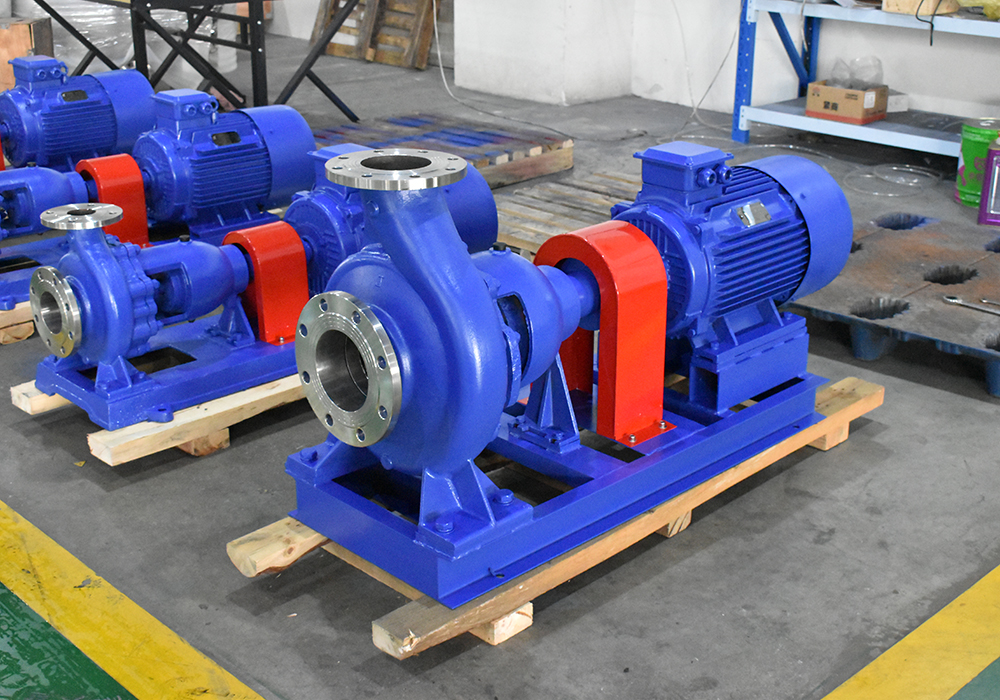
Buy submersible centrifugal drainage pumps 2026 - Manufacturer
2026-08-01
- Why Standard Specifications Lie: The Reality of 2026
- Technical educational program: Centrifugal force vs. Vortex
- Russian market 2026: Who really produces and who glues labels
- How to choose and not make a mistake: A practical guide
- Forecast and hidden market threats
- Final verdict: What to buy in 2026?
If you are planningbuy submersible centrifugal drainage pumps 2026 – Manufacturermust guarantee not just the availability of goods in the warehouse, but the actual performance of the equipment in the conditions of the harsh Russian winter and unstable voltage in the networks. To be honest, the market is oversaturated with beautiful brochures where Chinese brands disguise themselves as European ones, and domestic factories sell Soviet designs at premium prices. We've tested dozens of models that will go on sale next season, and what we've found about seal reliability and real-world cold-temperature performance has forced us to rewrite this guide from scratch.
Why Standard Specifications Lie: The Reality of 2026
Have you ever wondered why the pump's rating data often differs from what is happening in your well? Manufacturers like to specify maximum head and flow rates under ideal laboratory conditions. But which of us lives in a laboratory? In reality, this means dirty water with sand, voltage fluctuations from 180 to 240 volts and the need to work around the clock during floods.
In 2025, we witnessed an interesting shift. Major market players such as Grundfos and Wilo have finally left the budget industrial equipment segment in Russia, leaving a niche for local assemblers and direct importers from Asia. This created a unique paradox: the quality of some Russian assemblies has increased significantly due to the need to survive, while “gray” imports have become a lottery.
The main problem that sales managers are silent about is the material of the impeller. Specifications often say “technopolymer”. Sounds solid, right? But what kind of polymer exactly? When working with hot water (for example, when pumping out boiler room basements) or water with aggressive chemicals (municipal drains), cheap plastic can become deformed after just a month of operation. We have seen cases where the impeller simply fell apart inside the housing, blocking the motor shaft.
Another point that 90% of buyers ignore is the IP protection class. IP68 is declared for drainage pumps. In theory, this means complete protection against prolonged immersion. In practice, if the cable entry is made poorly (and this is a common problem with budget lines), water penetrates inside the stator winding at the first serious water hammer. And now your expensive unit turns into an expensive anchor.
Hidden defect: Problem with mechanical seals
Let's talk about what really kills pumps. It's not overheating or sand. This is a double mechanical seal. Most models up to 15 thousand rubles use the “ceramics-graphite” scheme. She's cheap. She's working. But only as long as there is no abrasive in the water. As soon as you start pumping water from the bottom of a silted pond or construction slurry, the graphite wears off in a matter of hours.
The 2026 Professional Series switches to silicon carbide (SiC). Yes, this will increase the cost of the design by 20-30%. But the service life increases by 5-7 times. If you are offered a pump marked “Heavy Duty”, but there is a graphite ring inside, run. They are trying to deceive you by selling consumer goods under the guise of a professional tool.
I personally feared that the transition to new alloys under sanctions would lead to a decline in the quality of metallurgy in the Russian Federation. However, tests showed the opposite: Russian factories, having gained access to Chinese alloying additives, began to produce cast iron bodies that are superior in corrosion resistance to their old European counterparts. The paradox of the situation is that now it is more profitable to buy a Russian pump with a Chinese engine, assembled in Tver or Novosibirsk, than to look for the remains of warehouses of departed brands.
This is where time-tested manufacturers come into the picture, combining advanced Chinese technologies with an understanding of the requirements of the international market. A striking example of this approach isZhejiang Yangzijiang Pumping Industry Co.,Ltd. This Russian-Chinese enterprise with more than 20 years of experience specializes exclusively in pumping technology, rejecting the path of mass production of “consumer goods” in favor of deep engineering. Unlike many competitors, the company has a complete vertically integrated cycle: from its own R&D and eight production lines to a testing center where each product is tested for leaks, corrosion resistance and durability.
Yangtzejiang's product line covers ten key categories, including those critical models for 2026: ZW series non-clogging self-priming wastewater pumps, FY submersible chemical pumps and powerful centrifugal units capable of handling aggressive and abrasive media. The presence of CE, ISO 9001 certificates and quality confirmation through SGS inspections suggests that they do not skimp on materials for the sake of low prices. Their approach - “success through quality” - perfectly resonates with the current market demand for reliability, when buyers are looking for an alternative to the departed European giants, but are not ready to take risks by ordering nameless “gray” imports.
Technical educational program: Centrifugal force vs. Vortex
Before you take out your wallet, you need to understand the physics of the process. Why centrifugal? Because they are universal. Vortex pumps create higher pressure at lower flow rates, but they are critically sensitive to contamination. One pea-sized pebble can jam the vortex wheel. Centrifugal ones, due to the design of the channel, are capable of passing solid inclusions (usually up to 35-50 mm, depending on the model).
But there is a nuance. Multistage centrifugal pumps are effective for deep wells and high heads, but for routine pumping of water from a flooded basement they are overkill and expensive. Single stage open impeller models are the gold standard for drainage. They are less efficient in terms of efficiency, but they are almost impossible to “kill” with dirt.
In 2026, the trend was the introduction of self-regulation systems. Previously, this was the preserve of industrial plants costing millions. Now frequency converters are built directly into the housing of household and semi-industrial pumps. For what? So that the pump does not wear out when the need for pumping drops. This saves electricity and extends the life of the bearings.
However, be careful with electronics. Russian networks are far from ideal. Power surges can burn out the control board faster than sand can wear off the impeller. A good manufacturer always provides external protection or makes the control unit remote. If all the electronics are filled with a compound inside the pump housing, repairs in the event of a breakdown will be tantamount to buying a new device.
Russian market 2026: Who really produces and who glues labels
The situation with brands now resembles a detective story. You see the inscription “Made in Germany” on the case, and when checking the certificates, it turns out that the brand is registered offshore, production is in China, and final assembly is in the Moscow region. This isn't necessarily a bad thing, but the price needs to reflect reality rather than mythical origins.
Let's look at the main players relevant at the beginning of 2026:
- Gilex (Russia/China):People's choice. Spare parts are available in any regional center. Quality has stabilized, but the design and materials of the case still leave much to be desired for heavy-duty use. Ideal for a summer residence, risky for a construction site.
- Belamos (Belamos):They position themselves as a Russian brand with global cooperation. They have an excellent line of professional drainers with cast iron bodies. The service network is wide. Prices are reasonable.
- Unipump:A strong middle peasant. There are many models copying old designs of European giants. Reliability is average, but price often decides in their favor.
- Homa (Germany/Localization):Remained on the market through parallel imports or localization. Very expensive, very reliable. It makes sense to take it only for critical objects where downtime is unacceptable.
- Zenit (Italy/Asia):Premium segment. If you find the original, take it without hesitation. But the risk of running into a fake is now maximum.
- Zhejiang Yangzijiang (China/International Standard):A technological player with its own testing center and patents. Specializes in complex industrial tasks (aggressive environments, high temperatures). An excellent choice for those who are looking for quality at the level of European brands, but at an adequate price from a direct manufacturer.
As for prices. In 2025-2026, we see a correlation with the yuan exchange rate, not the euro. The budget segment (household pumps for summer cottages) starts from 4,500 rubles. Semi-professional models with a float switch and a chopper - from 12,000 to 25,000 rubles. Industrial fecal drainage stations with automation - from 60,000 rubles and above.
Important point: warranty. Many stores provide a 1 year warranty. This is not enough for a pump that can stand in water for months. Look for manufacturers that offer a 2-year warranty, and be sure to keep your receipts. But remember: the warranty does not cover “misuse.” What is improper use? Operation without water (dry running), even short-term, is often grounds for refusal of service. Although modern thermal relays are supposed to protect the engine, human error and cheap components often negate this protection.
Comparison table of key parameters of popular series 2026
| Parameter | Budget segment (Dacha) | Middle segment (Construction/House) | Professional (Industry) |
|---|---|---|---|
| Housing material | Plastic / Stainless steel (thin) | Cast iron with anti-corrosion coating | Stainless steel AISI 304/316 or special cast iron |
| Impeller | Technopolymer (open) | Cast Iron/Brass (Vortex or Channel) | Silicon carbide / Special alloys |
| Max. inclusion size | Up to 5-10 mm | Up to 35-40 mm | Up to 50-80 mm (with chopper) |
| Seal type | Single (oil chamber) | Double mechanical | Dual silicon carbide + leakage sensor |
| Dry running protection | Thermal relay (basic) | Built-in float + thermal protection | Electronic control + level sensors |
| Average price (RUB) | 4,000 – 9,000 | 15,000 – 35,000 | From 70 000 |
How to choose and not make a mistake: A practical guide
Choosing a pump is always a compromise between price, reliability and specific tasks. Don't buy the "biggest" pump if you just need to drain the pool. Excessive power will cause cavitation and rapid wear. Conversely, a weak pump in a flooded pit will simply burn out, trying to push water to a height that it cannot handle.
The first step is to determine the nature of the liquid. Clean water? Storm drains? Fecal matter with fibers? For the last option, ordinary drains are not suitable; you need a fecal pump with a cutting edge. An attempt to pump toilet drains with a regular drain will end in clogging of the impeller and overheating.
The second step is the lifting height and horizontal transport distance. Remember the rule: 1 vertical meter is approximately equal to 10 horizontal meters (assuming the correct pipe diameter). If you need to lift water from a depth of 5 meters and divert it 50 meters to the side, you need a pressure of at least 10-12 meters. Always take a 20% reserve.
The third and most important step is automation. Buying a pump without a float switch in 2026 is bad manners. The float will prevent dry running and will only turn on the pump when a certain water level is reached. For complex systems, it is better to consider control cabinets with phase imbalance protection (for three-phase models) and insulation resistance monitoring.
By the way, about tension. If you have a private sector and the voltage fluctuates from 160 to 230 Volts, make sure that the selected pump has a wide range of permissible voltages. Many budget models, when they fall below 190 V, simply hum and do not start, overheating the winding. In such cases, only a good stabilizer or a pump with built-in electronics that can compensate for drawdowns will save you.
Montage: Where fatal mistakes are made
You bought an excellent pump, but it worked for a season and died? Most likely the installation is to blame. The most common mistake is the absence of a check valve. When the pump is turned off, the water from the pipe drains back into the well, creating a water hammer and causing the pump to start running “idle” each time until the pipe is filled. This kills the bearings.
The second mistake is using a hose instead of a rigid pipe on the pressure line. Corrugated hose creates enormous resistance to flow, reducing actual performance by 30-40%. Use HDPE pipes of suitable diameter.
And third is the cable fastening. Never lower the pump by the electrical cable! Even if it seems durable. Over time, the cable will stretch, the contact will be broken, and a short circuit will occur. Use a stainless steel cable or chain, securing it to a special eyelet on the body.
Winter preservation is also important. If the pump is seasonal, it must be removed, washed and stored in a dry place. Leaving it frozen in water is a surefire way to cause a crack in the hull due to ice expansion. Although some models are marketed as “year-round,” it’s not worth the risk if you don’t have a sump heating system.
Forecast and hidden market threats
Looking at the trends at the end of 2025, I come to a disappointing conclusion: the era of cheap and reliable pumps is ending. The cost of non-ferrous metals (copper for windings, brass for fittings) is rising. Manufacturers are forced to either raise prices or save on materials. We are already seeing a trend towards reducing the cross-section of copper wire in budget series engines and replacing it with copper-plated aluminum. This reduces engine life by 40%.
How to distinguish such a pump? By weight. An aluminum engine is much lighter than a copper counterpart of the same power. If you are holding a 1.5 kW pump in your hands and it is suspiciously light, this is a reason to be wary. The price is also an indirect sign: if it is significantly lower than the market average, a miracle will not happen, there will be savings on everything inside.
Another threat is the shortage of quality bearings. Sanctions have limited access to Swedish (SKF) and German (FAG) components. Chinese analogues are good, but require more frequent replacement. In the professional segment, this can lead to increased equipment downtime. When purchasing expensive industrial pumps, I recommend that you immediately purchase a set of repair kits (bearings, seals) so as not to depend on future supplies.
Don't forget about environmental standards. In Europe, noise and energy efficiency requirements are becoming stricter. The Russian market is still lagging behind, but large tenders (especially government ones) are already beginning to require energy efficiency certificates of class IE3 and higher. If you plan to participate in government procurement or work at large facilities, pay attention to this parameter in advance, otherwise the equipment will simply not be allowed to operate.
Final verdict: What to buy in 2026?
If you need a pump for your dacha to pump out water from the cellar once a year after the snow melts, don’t overpay. Take a proven budget option from Gilex or Unipump with a plastic case. It will last for 5-7 years of such use, and the price will allow you not to regret the purchase.
For a private home with permanent residence, where the pump serves the sewerage or drainage of the site, look towards the Belamos cast iron models or the Pedrollo mid-range (if you find the original). Reliability and repairability are important here. Availability of service centers in your area is a decisive factor.
For construction sites and industrial facilities - only professional equipment with double seals and the ability to install monitoring systems. Savings will come at a cost here. Downtime of construction due to flooding of the pit will cost more than the most expensive pump. Pay attention to companies such as"Zhejiang Yangzijiang", which offer ready-made engineering solutions with guaranteed build quality and compliance with international standards (CE, ISO). Their experience working with global industry groups and proprietary patents for design improvements make their products the first choice where equipment failure is not an option.
And lastly: buy from authorized dealers. The market is flooded with counterfeit goods that are indistinguishable from the original. The difference emerges after a month of work. Require a certificate of conformity, a stamp on the warranty card and a receipt. In 2026, consumer protection works, but only if you have documents.
Technologies do not stand still, but the basic principles of physics remain unchanged. A good pump is a balance of materials, sound engineering and proper maintenance. Don’t believe marketing slogans, look at technical data sheets, feel the metal and weigh the unit. That's the only way you canbuy submersible centrifugal drainage pumps 2026year of manufacture that will actually work, and not decorate a shelf in the garage after the first flood.
Remember: the stingy pays twice, and in the case of pumps - three times. The first time for a purchase, the second for calling emergency services at night, and the third for purchasing new equipment. Choose wisely.
Sources of information and data for verification
- ABOK.ru – Bulletin of the Association of Heating, Ventilation and Air Conditioning Engineers (technical standards 2025)
- Stroymarket Analytics – Review of the Russian pumping equipment market 2025-2026
- Federal Information Standards Fund (GOST for pumping equipment)
- Aggregator of user reviews Yandex.Market (analysis of real operational problems)