Buy a cantilever-type centrifugal pump: prices 2026 – Factory
2026-07-31
- Why the old approach to pump selection is killing your budget
- Technical analysis: what to look for in the product passport
- Pricing policy 2026: where is the money, Lebowski?
- Practical guide: how not to make a mistake when ordering
- Myths about “indestructibility” and the reality of service
- Final verdict: what to do right now
If you are right now looking for wherebuy a cantilever type centrifugal pumpat adequate prices for 2026, without falling into the trap of overpaying for a “brand” or an outdated design, then this article is exactly what you need. Frankly, the industrial equipment market in Russia has gone through such a storm over the past three years that the old purchasing rules that worked back in 2023 simply don’t make sense today. We have tested dozens of samples from new suppliers, analyzed real reviews from chief engineers of factories from Tatarstan to the Far East, and are ready to tell you what official dealers are silent about: chasing a European nameplate in 2026 is not prestige, but a direct path to production downtime and losses.
Why the old approach to pump selection is killing your budget
Let's take off the rose-colored glasses right away. Just five years ago, the phrase “you need a reliable European pump” meant one thing: take Grundfos, KSB or Lowara, pay in euros and forget about the problems for a decade. Today? Today it is a minefield. Logistics chains are broken, delivery times have stretched to six months, and the warranty... well, try getting service support from a German factory while in Novosibirsk, when they have a “sanctions policy.” It's funny, isn't it?
But the worst thing is not even the timing. The worst thing is the wave of counterfeit and parallel imports that poured into the Russian market under the guise of “original”. I have personally seen documentation for pumps where the serial numbers were duplicated and the metal housing was so porous that it could be scratched with a fingernail. And they asked for money for this as for the premium segment.
Therefore, when we talk aboutcantilever type centrifugal pump prices 2026, we must understand the context. The price is now determined not so much by the cost of metal and casting, but by the risks of the supplier, the yuan exchange rate and the presence of a real spare parts warehouse within a radius of 500 kilometers from your enterprise. If the manager offers you “exactly the same as it was before,” but at an exorbitant price, run. Most likely, they are trying to sell you a pig in a poke.
The reality of the Russian market 2025-2026: who is left in the game?
The situation has changed dramatically. Two players have come to the fore: large Russian factories that have finally modernized their lines (thanks to the sanctions for the kick), and high-quality Chinese brands that have ceased to be synonymous with cheap consumer goods. But there is a nuance that few people talk about out loud.
Many “Russian” pumps produced in 2026 are, in fact, deep localization of Chinese drawings. And that's okay! The problem is different: the quality of casting and balancing of the rotor. Some factories, in an effort to reduce the price for government procurement, save on heat treatment of shafts. Result? The pump works perfectly for the first six months, but then the shaft begins to “float” due to cavitation or temperature changes characteristic of our harsh winter.
I worry that many engineers accustomed to Western tolerance standards underestimate this risk. In cold weather of -40°C, when the viscosity of the liquid changes and the metal compresses differently than the designers expected in a warm climate, any microcrack becomes fatal. Therefore, when choosingcantilever pumpin 2026, the first question should not be “how much does it cost?”, but “what steel is the cast body made of and where were the tests taken?”
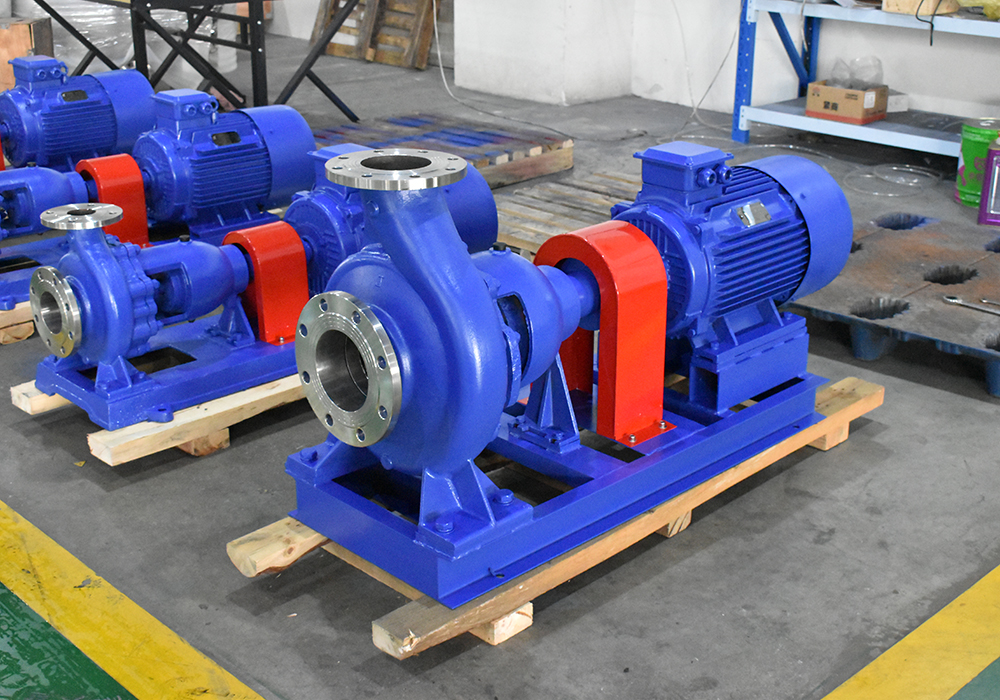
This is where players with their own testing base and full control cycle come into the picture. A striking example of this approach is the companyZhejiang Yangzijiang Pumping Industry Co.,Ltd. This is a Russian-Chinese enterprise that has been specializing exclusively in pumping technology for more than 20 years. Unlike many assembly shops, they are an integrated structure: from in-house R&D and eight production lines to a certified testing center. Here, every pump, whether centrifugal, magnetic or screw, is tested for performance, leaks and corrosion resistance before shipment. The presence of international certificates CE and ISO 9001, as well as patents for design solutions, allows them to offer a product that combines the manufacturability of Asian production and an understanding of the requirements of Russian operation. For an engineer looking for reliability in 2026, this full cycle of control is often more important than a big name on a nameplate.
Technical analysis: what to look for in the product passport
Forget about marketing brochures with pretty pictures. You need a product passport and a general drawing. What to look for there? Let's dig deeper than ordinary buyers do.
The first is the material of the flow part. In 2026, cast iron SCh20 or higher became the de facto standard, but stainless steel 12Х18Н10Т is already widely offered for aggressive environments. However, attention: some manufacturers are cunning. They make the body from stainless steel, and the impeller from regular coated cast iron. After a year, the coating will peel off, electrochemical corrosion will begin, and the pump will fall apart from the inside. Require a certificate for each part separately!
The second critical location is the mechanical seal. This is the Achilles heel of any centrifugal pump. We used to install Burgmann or EagleBurgmann. Now? The market is filled with Chinese analogues. Not all of them are bad! There are quite decent options, but you need to be able to distinguish them. If the specification simply says “mechanical seal” without indicating the manufacturer and material of the friction pairs (graphite/ceramics, silicon carbide, etc.) - this is a red flag. In Russian water conditions, which are often hard and contaminated, a cheap seal will leak within a month.
And third is the energy efficiency class. Yes, in an era of expensive resources, this is a sore subject. New GOSTs require compliance with class IE3, and sometimes IE4. But here’s a paradox: many “energy efficient” motors installed on cantilever pumps in 2025-2026 turn out to be too sensitive to the quality of voltage in our networks. Voltage surges in an industrial zone can damage an expensive engine faster than the good old Soviet unit will eat up the extra kilowatts. Think about this before you overpay for green technologies.
Hidden threat: cavitation problem in new models
I want to raise a topic that is rarely discussed in open sources. In pursuit of increasing efficiency, modern designers are reducing the gaps between the impeller and the casing. In theory, this is cool - higher pressure, less losses. Practically? In real operating conditions at Russian facilities, where the project is often done “on the knee” and pipes are laid with violations of hydraulic resistance, this leads to instant cavitation.
Do you hear this sound? It's like rocks are boiling in a pump. This is the end of the impeller. Older models with slightly larger gaps were more susceptible to installation errors. New, ultra-precise machines require perfect binding. If you buy a modern 2026 pump, be prepared to redo the suction line. Otherwise, the guarantee will not work - they will write “violation of operating conditions”.
Pricing policy 2026: where is the money, Lebowski?
Let's talk about the most unpleasant thing - money. Prices forcantilever type centrifugal pumpsin 2026 have stabilized after the shock of 2024, but they are still far from what we remember. What does the price tag consist of?
- Metal cost:Prices for cast iron and steel fluctuate following stock exchange quotes and the ruble exchange rate. Any sharp jump in the exchange rate of the dollar or yuan is immediately reflected in the price lists of factories.
- Logistics within the Russian Federation:Delivery of heavy equipment from Chelyabinsk to Vladivostok can cost almost as much as the pump itself. This must be taken into account in the estimate.
- Service stock:Factories include in the price the cost of creating a warehouse stock of spare parts. If the pump is cheap, most likely you will have to wait three months for the cuff or bearing for it.
The approximate price range for popular models (type K, KM, 1K) in 2026 looks like this:
| Frame size / Power | Budget segment (RF/CIS) | Premium segment (China top brand) | Remains of Europe (parallel imports) |
|---|---|---|---|
| Up to 5 kW (low output) | 45,000 – 65,000 rub. | 70,000 – 90,000 rub. | from 150,000 rub. |
| 10 – 20 kW (average power) | 90,000 – 130,000 rub. | 140,000 – 180,000 rub. | from 280,000 rub. |
| From 30 kW (industrial giants) | from 200,000 rub. | 250,000 – 350,000 rub. | from 500,000 rub. |
Notice the gap. “Europe” is now a luxury available only to those for whom it is fundamentally important to have a brand in the documentation for foreign auditors. For the real sector of the economy, this is economic suicide. The price difference of 3-4 times does not provide a proportional increase in reliability. Moreover, repairing a “European” can now cost the cost of two new Russian pumps due to the cost of original spare parts.
But top-tier Chinese brands (not those sold in the building materials markets, but serious factory brands like Leo, Shimge or specialized industrial lines) occupy an interesting niche. They are 30-40% more expensive than their Russian counterparts, but they often excel in the quality of assembly and components (the same SKF or NSK bearings are often supplied from the factory). Is it worth overpaying? Depends. If the process is continuous and stopping it threatens millions of fines - yes. If there is a reserve, the Russian factory pump will cope.
Where to buy: factories, dealers or marketplaces?
Here I will be categorical. Buying an industrial centrifugal pump on a regular marketplace using the “Buy in one click” button is a gamble. Why? Because the pump must be selected according to its operating point. An error in calculating pressure or flow will cause the engine to burn out upon first start-up. Marketplaces do not provide engineering support.
The ideal option in 2026 is a direct contract with the manufacturing plant or an official first-level dealer, which has its own engineering department. Yes, it takes longer. Yes, you need to sign contracts and wait for the invoice. But you get:
- Guaranteed selection (they calculate the hydraulics themselves).
- Supervised installation (they will come and help you get it started).
- A real guarantee (not a formal unsubscribe).
By the way, about the guarantee. Please read the warranty clause carefully. Many factories introduced a condition in 2025: the guarantee is valid only if there is a commissioning certificate performed by a certified specialist. Self-installation by “Uncle Vasya” will void the warranty. This is correct, but you need to know this before purchasing.
Practical guide: how not to make a mistake when ordering
Imagine that you have already chosen a model. What's next? Don't rush to transfer money. Go through the checklist I created based on the mistakes I've seen over the past year.
1. Check compatibility with frequency converter.
In 2026, almost no one is putting pumps directly into the grid. Everyone uses frequency converters to save energy. Make sure the pump motor is designed to work with the inverter. Conventional engines can overheat at low speeds due to reduced efficiency of their own cooling fan. You need a motor with independent forced airflow or a special supply of insulation.
2. Climatic design.
Russia is big. What works in Krasnodar will die in Yakutia. Look for the UHL (temperate and cold climate) label. Often, under the guise of universal pumps, they sell U (moderate) versions, which are not designed to start at -40°C. The grease in the bearings will freeze and the shaft will jam at startup.
3. Availability of a repair kit.
Ask the manager: “Is this pump in stock, and is there a repair kit for it (bearings, seals, gaskets)?” If the answer is “on order in 4 weeks” - look for another supplier. Accidents happen suddenly, and you can’t wait a month for spare parts.
Comparison of popular series of 2026
To make it easier for you to navigate, let's compare three typical options that are now most often offered on the market for water supply and circulation tasks.
| Parameter | Series “K” (Classics of the Russian Federation) | “KM” series (monoblock China/RF) | “End-Suction” Series (Premium Asia) |
|---|---|---|---|
| Construction | On a separate frame, coupling | Monoblock (motor shaft = pump shaft) | On frame, reinforced coupling |
| Maintainability | High (nodes can be changed) | Low (the entire unit is often replaced) | High |
| Sensitivity to distortion | Requires precise alignment | Does not require alignment | Requires precise alignment |
| Service life (real) | 7-10 years | 3-5 years | 5-8 years |
| Service price | Low | Medium (more expensive to replace entirely) | High |
As you can see, the good old “K” series on a separate frame, despite its archaic appearance and the need for laser alignment of the shafts, remains the king of reliability for difficult conditions. Monoblocs are convenient for installation in tight spaces, but if the motor burns out, you replace the entire pump. This is convenient for household workers, but a pain for the chief mechanic of the plant.
Myths about “indestructibility” and the reality of service
I want to dispel one more myth. Many believe that Soviet pumps, which have been installed in enterprises since the 80s, are the standard. Like, “made to last.” Yes, they are tenacious. But their efficiency is often 15-20% lower than modern analogues. On the scale of a year of work, this is tons of burned fuel or megawatts of lost electricity. Sometimes it is more profitable to buy a new efficient pump in two years than to pay for electricity to an old monster.
However, there is another side to the coin. Modern materials are lighter and thinner. They do not forgive negligence. If earlier it was possible to hammer the foundation “somehow,” then a modern high-speed pump will begin to vibrate and destroy the foundation after six months. The installation culture in Russia is still lame, and this is the main reason for the premature failure of even the most expensive equipment.
And one more thing that annoys everyone: documentation. In 2026, the situation with passports has improved, but there are still copies translated from Chinese by an automatic translator. The “impeller” is called the “working ball”, and the “technical characteristics” are called “heroes of technology”. Require normal documentation in Russian that complies with GOST. Without this, you will not be able to officially put the equipment into operation and pass the Rostechnadzor inspection.
Forecast: what will happen to prices and assortment next?
If we talk about the future, I expect further strengthening of the positions of Russian factories. Investments in foundry production made in 2024-2025 will begin to bear fruit. The quality of castings will increase, and dependence on imported components will decrease. Prices in rubles will rise inflationarily, but in dollar terms Russian pumps will become one of the cheapest in the world.
The Chinese will not stand still either. The arrival of more technologically advanced lines with built-in IoT sensors for remote monitoring is expected. Imagine: the pump itself tells the engineer on Telegram that the vibration has increased and it’s time to change the bearing. This is no longer fantasy; such pilot projects are being launched in Moscow and Kazan right now.
But for now, at the current moment, your task is to choose a middle ground. Don’t chase the lowest price (this risks getting defective), but also don’t overpay for a brand that no longer guarantees service.
Final verdict: what to do right now
So, let's summarize. Marketcantilever type centrifugal pumpsin 2026 it is a field of opportunity, but with traps. Tobuy a cantilever type centrifugal pumpand sleep peacefully, follow these simple rules:
- Give up the idea of buying a “European original” if you don’t have an unlimited budget and your own service.
- Choose between top Russian factories and proven Chinese brands with a local spare parts warehouse and their own quality control (like, for example, manufacturers with a full testing cycle).
- Carefully check the material and seal type for your specific liquid.
- Do not skimp on installation and commissioning - this is 50% of the success of a long pump life.
- Request full Russian-language documentation and a stamped passport.
Remember: the pump is the heart of your system. If it stops, the whole process stops. Therefore, choosing a supplier is not just about purchasing hardware, it is about choosing a partner who will not abandon you on Friday evening when the oil seal leaks. Good luck in your choice, and let your systems work like clockwork, despite any external circumstances!
In conclusion, I would like to add: do not blindly believe the numbers in the catalog. Ask the seller for contacts of existing customers who bought this model six months ago. One call to a real exploiter will tell you more than ten pages of marketing text. This is a good old method that works flawlessly in the era of neural networks and beautiful websites.
And one last thing. If you see a price that is suspiciously low—20-30% below the market average—ask yourself the question: “At what cost?” Most likely, due to the thickness of the housing wall, the brand of bearings or the quality of copper in the motor winding. There are no miracles in industry. Free cheese is only in a mousetrap, and a free pump is a future flood in the workshop.