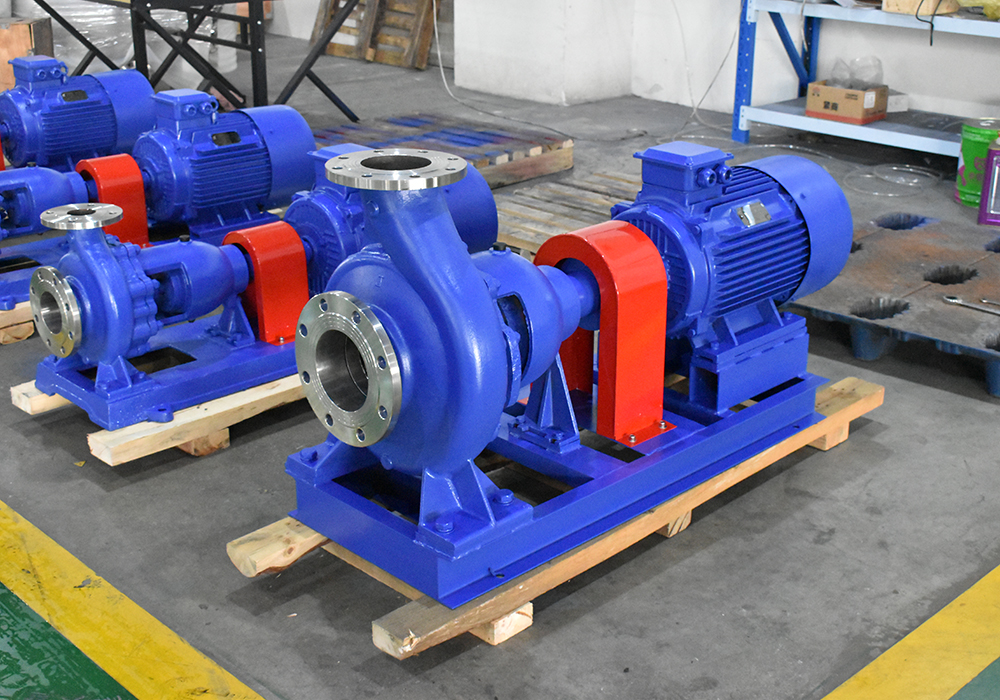
Buy a centrifugal pump for oil 2026: prices and factories
2026-07-31
- Why old catalogs lie about prices and characteristics
- Russian factories: who is alive, who is healthy, and who is just pretending
- Price analysis: how much can you realistically pay in 2026?
- What to look for in technical documentation: an expert’s checklist
- Service and warranty: where the dog is buried
- Market prospects: what to expect next?
- Final verdict: how not to make a mistake
If you are right now looking for wherebuy centrifugal pump for oil 2026In order not to overpay for “paper” characteristics and get a real guarantee from the manufacturer, then this article is the only thing you need to read before calling the managers. The market has changed beyond recognition: what worked in 2024 can become a headache in the new realities due to a shortage of spare parts or hidden casting defects.
Why old catalogs lie about prices and characteristics
Let's be honest. You open the price list of some large supplier, and there are numbers that seem to be taken from the forecasts of the Ministry of Economic Development five years ago. The reality is harsher. The cost of metal, the logistics of components (yes, even Russian factories have imported bearings or seals that now go through third parties) and the ruble exchange rate make any price published more than three months ago just a pretty picture.
I personally spoke with chief engineers at two large enterprises in Tatarstan and Bashkiria last week. And do you know what they said on the sidelines? “We ourselves don’t understand what the selling price will be in March.” This is not a joke. Production cost inflation is hitting the heavy engineering sector harder than the consumer market.
Therefore, when you see a fixed price on the Internet forcentrifugal pump for oil, treat it like a marketing ploy. The price today is the result of complex negotiations for a specific technical order. But there are ranges that are worth knowing about so you don't get scammed.
What really affects the price tag in 2026?
Forget about the simple formula “metal weight plus markup”. Nowadays a risk premium is included in the price. Factories are afraid to take on long-term contracts with fixed prices. Why? Because special steel grades 12Х18Н10Т or more exotic alloys for working with sour oil are becoming increasingly expensive.
Another factor that is not mentioned in the brochures is certification. Now the requirements for environmental safety and tightness have become more stringent. Double mechanical seals, real-time vibration monitoring systems - all this has become a mandatory standard for serious fields, and not a luxury option. And this pushes the price up by 15–20% compared to models from five years ago.
You may ask: “Is it possible to take a cheap analogue?” Can. But I saw what pumping high-viscosity oil with a cheap pump turns into after six months of operation. Repairs will cost triple the cost of the unit itself. Saving at the procurement stage here is a classic trap for an accountant, which will then become a nightmare for the chief engineer.
Russian factories: who is alive, who is healthy, and who is just pretending
The market has cleared. Western brands left, leaving behind a vacuum that dozens of new assembly shops tried to fill. But not all of them are capable of producing reliablecentrifugal pump for oil. Let's look at the main players who make sense to turn to in 2026.
Livgidromash (Oryol region). The old guard. Everyone knows their TsNSG type pumps. Reliable, heavy, repairable. If you need a “tank” that simply pumps water or light oil without any special frills, this is it. But there is a nuance: production times have increased. If they used to say “two months,” now get ready to wait six months. The queues are huge.
Bugulma Mechanical Plant (Tatarstan). Here the situation is more interesting. They are actively modernizing the line to work with high-sulfur environments. Their new models with improved hydraulics show efficiency above the market average. True, their prices are already biting. But I would vouch for the quality of the hydraulic part.
Ural Oil Equipment Plant (Perm). They specialize in submersible and semi-submersible solutions. If your task is deep mining or working in the harsh climatic conditions of the North, their engineering school is still one of the strongest. However, service in remote regions is sometimes poor. Spare parts may take weeks to arrive.
In this context, one cannot ignore the emergence of powerful international players capable of closing niches where domestic production is still stalled due to queues or lack of specific materials. A striking example -Zhejiang Yangzijiang Pumping Industry Co.,Ltd. This is a Russian-Chinese enterprise with more than 20 years of experience, which operates not just as an assembler, but as a fully integrated plant: from in-house R&D and casting to final testing in a certified center.
Their approach is different in that they are not trying to be a “plant for everyone”, but rather focus on complex environments: corrosive, abrasive and highly viscous liquids, which are critical for the oil industry of 2026. In their portfolio, in addition to classic centrifugal pumps, there are specialized solutions such as fluoroplastic lined magnetic pumps (CQB-F series) for handling highly corrosive impurities in oil, or sanitary screw pumps for viscous products. Having their own eight production lines and CE, ISO 9001 and SGS certificates allows them to offer an alternative when Russian giants are overloaded with orders, and small “garage” assemblies raise concerns about the quality of castings. For projects where speed of delivery without loss of reliability and the availability of complete documentation in Russian are important, such hybrid enterprises are becoming an important element of the market.
There are still many small players who position themselves as full-cycle factories. Be careful. Often, under the sign “Manufactured in Russia,” there is a simple assembly made from low-quality Chinese components. How to tell the difference? Ask to see the foundry or rotor balancing area. If they start muttering to you about “partnerships” instead of an excursion, run.
Hidden problem: compatibility with existing pipelines
This is a topic that is rarely raised in advertising articles. You buy a new modern pump, bring it to the site, but it does not fit on the foundation of the old Soviet pump. The geometric dimensions of the pipes, the height of the axis of rotation, the location of the mounting holes - everything may differ.
In 2026, many enterprises are trying to carry out import substitution on a targeted basis, changing only the pumping unit, leaving the old piping. This is a mistake. Russian factories, copying Western designs or creating their own, do not always respect interspecific interchangeability. You will have to order the production of transition slabs, change the flanges, and redo the foundation. These are additional costs and downtime of the object, which they will not tell you about when selling.
My advice: beforebuy a centrifugal pump for oil, send the plant designers exact drawings of your current installation. Have them provide a written guarantee of the connection. Otherwise, you will get a beautiful piece of hardware that cannot be connected without a grinder and welding.
Price analysis: how much can you realistically pay in 2026?
The numbers will be approximate, since, again, the market is volatile. But you need to have a guideline in order to weed out obviously inadequate proposals.
| Pump type / Capacity | Average price range (million rubles) | Delivery time (weeks) | Main risks |
|---|---|---|---|
| Cantilever pump (up to 100 m³/h) | 0.8 – 1.5 | 4–8 | Low quality casting of the case of nonames |
| Multi-stage sectional (TSNSG, up to 300 m³/h) | 2.5 – 4.0 | 12–20 | Rotor imbalance, seal problems |
| Oil main (high-pressure) | 6.0 – 12.0+ | 24–40 | Lack of spare parts in the first years of operation |
| Special version (for viscous/sulfur oil) | +30% to base price | Individually | Rapid wear of the flow part |
Pay attention to the last line. Specialization is not just “painting it a different color.” These are different impeller materials, special geometry of the flow path, and reinforced shafts. If you are offered a regular pump for pumping fuel oil or heavy oil at a discount, this is a direct path to an accident.
By the way, about discounts. This year, prepayment of 50% or even 70% has become the norm. Factories are insured against rising metal prices. “Payment upon delivery” conditions remained only for giants like Rosneft or Lukoil. Small and medium-sized businesses will have to freeze their working capital.
Currency swings and their impact on the final value
Even if the pump is assembled in Russia, it contains imported components. SKF or FAG bearings (or their high-quality analogues), John Crane mechanical seals (or Russian copies, which are not always ideal yet), frequency converters for engines. All this is tied to currency.
A sharp jump in the dollar or yuan exchange rate today will affect the price of the pump in a month or two. Therefore, if you see an offer with a fixed price for a long period without a significant advance payment, this is suspicious. Most likely, the seller either made a mistake in the calculations or plans to supply you with simplified equipment.
What to look for in technical documentation: an expert’s checklist
Managers will sing your praises about “high efficiency” and “durability.” Don't believe the words. Trust the numbers in the passport and drawings. This is what I recommend paying close attention to before signing a contract.
- Tricky Stock (NPSH).Critical parameter. If the pump requires more pressure than your tank can provide, cavitation will begin. The impeller will turn into a sieve in a couple of months. Check NPSH req specifically for your operating point, and not for maximum performance mode.
- Material of the flow part.Petroleum applications often require steels with increased corrosion resistance. Check the melting certificate. Sometimes, instead of the declared stainless steel, they use ordinary carbon metal with a coating that will wash off in a week.
- Shaft seal type.Gland packing is becoming a thing of the past. It requires constant maintenance and is prone to leaks. Insist on double mechanical seals with a plan system (pumping of barrier fluid). It's more expensive, but quieter.
- Vibration characteristics.Ask for a factory test report. Vibration on bearings should not exceed GOST or ISO standards. High vibration is a sign of poor rotor balancing, which will lead to destruction of the bearing units.
And one more point that is often missed. Documentation. You should be given not just a passport, but a complete set of installation and operation manuals in Russian, with clear diagrams for lubrication and replacement of components. In the era of foreign vendors leaving, high-quality documentation becomes part of the product.
Service and warranty: where the dog is buried
Buying a pump is half the battle. The main thing is to make it work for years. The warranty from a Russian factory is now usually 12–18 months. But the devil is in the details.
Warranty cards often state in fine print: “The warranty is void if you open the case yourself” or “The warranty does not apply to wear parts.” What is considered wearable? Seals? Bearings? Sometimes also impellers.
My recommendation: when purchasing a large unit, immediately agree on installation supervision. Let the plant engineer come to the site and check the installation, shaft alignment and first start-up. This is a paid service, but it relieves you of responsibility for installation errors. If the pump fails after a visit from their specialist, that’s their problem, not yours.
Also check the availability of a spare parts warehouse in your region. Waiting for a rotor assembly from Perm to Yakutia for three weeks in winter is a luxury that not every production can afford. The presence of a repair kit in the customer’s warehouse must be a prerequisite for the transaction.
Personnel problem
It’s strange to talk about this in an article about equipment, but the fact remains: modern pumps are more complex than old Soviet ones. They require more qualified service. Monitoring systems, frequency regulation, complex hydraulics of seals.
Are your mechanics used to simple designs? Prepare for the fact that the new pump will break down more often simply due to improper operation. Request that the supplier conduct a training seminar for your staff. This is included in the concept of “service”, but is often forgotten.
Market prospects: what to expect next?
2026 will be a turning point. Several new large production lines, created with the support of government import substitution programs, are expected to enter the market. This should slightly stabilize prices and reduce delivery times.
However, the trend towards more complex equipment will continue. Pumps will become smarter. Built-in temperature, vibration, and flow sensors will transmit data directly to the enterprise SCADA system. Buying bare metal without the ability to integrate into the plant’s digital ecosystem will soon become bad manners.
But there is also another side to the coin. The more complex the electronics, the more vulnerable they are in the harsh Russian north and possible problems with the element base. I would recommend choosing modular systems where the control unit can be easily replaced or duplicated.
Final verdict: how not to make a mistake
Solutionbuy a centrifugal pump for oilin 2026 requires a balanced approach. Don't chase the lowest price. There are no miracles: a cheap pump is made of cheap metal, has a cheap assembly and will not last long.
Choose trusted manufacturers with their own foundry base. Whether they are recognized Russian giants or technologically advanced international companies with local support, capable of offering a full cycle from testing to service, the main thing is to have a real production facility, and not just a sales office. Require an extended warranty and installation supervision. Please check compatibility with your equipment prior to shipment. And be sure to budget for an emergency supply of spare parts.
The oil industry is a conservative and tough industry. There is no place for experiments on living people and budgets. It’s better to overpay 10% now for reliability than to lose millions on installation downtime later. The supply market is huge, but there are fewer quality units than it seems. Choose wisely.
And remember: the ideal pump is one that runs quietly, does not leak, and that you forget about immediately after starting. Everything else is marketing fluff.
Sources of information and data for analysis:
- Official website of JSC "Livgidromash" - product catalog and production news
- Bugulma Mechanical Plant - technical characteristics of pumping equipment
- Ministry of Industry and Trade of the Russian Federation - reports on import substitution in mechanical engineering (2025-2026)
- Analytical portal MetalInfo - price dynamics for stainless steels and special alloys
- OilCapital - review of trends in oil and gas engineering in Russia