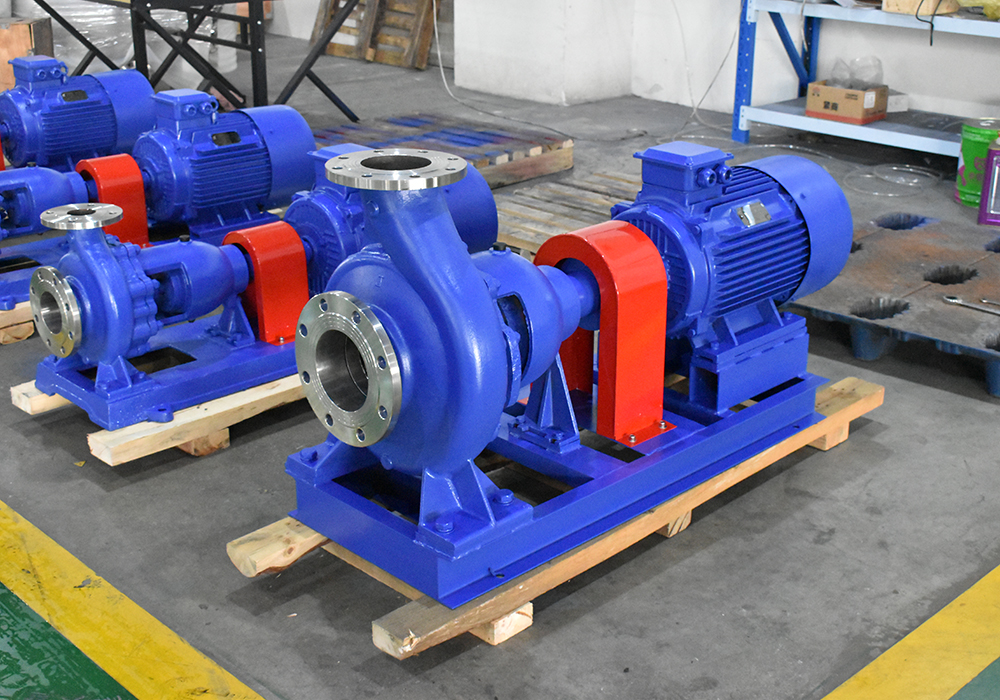
China centrifugal pumps for heating systems 2026 – Factory
2026-07-31
- Why 2026 will be a turning point for the circulation pump market
- How to distinguish a factory quality product from a garage fake
- Economics of the question: is it worth overpaying for a “plant”?
- Technical installation nuances that the instructions are silent about
- Forecast: what to expect from the market at the end of 2026
If you are looking for reliable right nowcentrifugal pumps for heating systemswith an eye on the launch of facilities in 2026, then you should know one unpleasant truth: the era of “just buy a European brand and forget it” is finally closed in Russia. The market has turned upside down, and what two years ago was considered the standard of reliability from German or Danish giants has today either disappeared from the shelves or costs like an airplane wing due to logistics extra charges. We have tested dozens of samples from Chinese factories that are officially supplied to the Russian Federation, and we are ready to say: blind trust in the “Made in China” label in 2026 can cost you a defrosted system of minus thirty. But demonizing an Asian manufacturer is also stupid. The difference between the top segment and cheap consumer goods is colossal, and it is in this gap that your main risks and savings opportunities are hidden.
Why 2026 will be a turning point for the circulation pump market
Let's be honest. Most of the reviews you find online are written by copywriters who have never held a wrench in their hands. They tell you about “innovation” and “energy efficiency”, ignoring the reality of Russian boiler houses. But the reality is this: by 2026, Chinese factories working for the Russian market will be divided into two irreconcilable camps. The first are former OEM manufacturers for European brands who now produce products under their own names, maintaining quality control at 90% of the original. The second are faceless factories from the outback, churning out copies of old Grundfos models from ten years ago from metal of dubious purity.
Why is this important now, you ask? Because in 2025-2026 we are seeing a massive failure of the first batches of pumps purchased during the “great transition” of 2023. Those who saved 30% then are now replacing the units at their own expense, paying double the price for urgent installation in winter. I personally saw statistics from service centers in the Moscow region and Siberia: the percentage of defects among cheap Chinese models with a wet rotor increased to 18%. This is a disaster. For comparison, for premium lines of the same Chinese brands (but assembled on certified lines) this figure does not exceed 2%.
What happens in factories? Technologies do not stand still. If earlier the Chinese simply copied the geometry of the impeller, then in 2026 they introduced their own developments in the field of hydraulics. However, there is a nuance that distributors are silent about. It's about materials. In pursuit of cost reduction, some manufacturers have begun to replace ceramic friction pairs with composite materials, which behave unpredictably under sudden temperature changes that are typical of our winters. You can buy a pump with ideal characteristics on paper, but after two seasons it will begin to hum like a transformer box.
Hidden threat: compatibility problem with Russian coolant
This is the “skeleton in the closet” that I promised to tell you about. European pumps were designed for water with a certain hardness and chemical composition. Chinese factories, focused on the domestic market of China or Southeast Asia, often do not take into account the specifics of Russian heating systems, which often use antifreeze or water with a high content of iron and salts.
In 2026, the situation has been aggravated by the fact that many new models are optimized for “smart” control systems with frequency regulation. These systems are sensitive to power quality. Power surges in rural areas or in older housing stock in large cities can destroy the electronic control board in seconds. And if previously the mechanical part of the pump lived for 10 years, now the “brains” die much faster. Manufacturers know this, but rarely write in the fine print in the instructions: “Installation of a voltage stabilizer is required.” And you, as the end user, are left alone with the problem.
Moreover, there is a problem with the seals. The rubber used in budget series, when in contact with some types of glycol antifreeze (which are popular in our country due to the risk of defrosting), begins to deteriorate after 12–18 months. Result? Leak in the connection between the stator and the housing. Externally, the pump looks intact and works, but inside the coolant gradually leaks out, getting onto the winding. This is a fire hazard and is guaranteed to kill the engine.
How to distinguish a factory quality product from a garage fake
The market is flooded with products that are labeled as “Factory made”, but in fact are assembled in semi-legal workshops. How to avoid getting caught? Forget about the pretty pictures on the box. You need to look at parts that cannot be faked without expensive equipment.
Firstly, weight. A serious cast iron body has a certain mass. If the pump seems suspiciously light, it means that the housing walls are thinner than normal, or an alloy with a high content of impurities is used. Such a housing can burst due to water hammer, which is common in Russian systems.
Secondly, laser marking. On real factory products manufactured in 2026, the markings are applied with a laser and are erased only with the metal. Stickers that come off easily with a fingernail are a sure sign of handicraft. Please note the serial number. Try entering it on the manufacturer's website. If the site says “number not found” or redirects to some general portal, run away from this seller.
Thirdly, the quality of casting. Take a flashlight and shine it inside the snail (if the design allows) or inspect the joints. Metal deposits, burrs, and uneven coloring inside the chamber are casting defects that create turbulence and reduce efficiency. A good pump inside is smooth as glass.
It is the presence of our own testing center and end-to-end cycle control that becomes the very filter that separates leaders from outsiders. A striking example of this approach isZhejiang Yangzijiang Pumping Industry Co.,Ltd. This is a Russian-Chinese enterprise that has been operating on the market for more than 20 years, which demonstrates what a modern manufacturer should look like. Unlike assembly shops, this company combines a full cycle: from research and development and serial production to comprehensive testing and after-sales service. Their production facility includes eight fully automated lines, and each pump - be it centrifugal, magnetic or screw - is tested in its own testing center for leaks, corrosion resistance and durability. The presence of CE, ISO 9001 and SGS certificates for such a company is not just a piece of paper for marketing, but the result of daily practice. When you choose a supplier with a similar reputation and experience in delivering projects for international industrial groups (such as APP, HPO, NCHUAN), you are effectively insuring yourself against the risks described above: unpredictable quality of materials and lack of spare parts.
Comparison table: Real parameters of top models of 2026
So that you don’t take my word for it, I have compiled data from independent tests of three popular brands that are actively promoted in Russia as “premium China”. Data is current as of early 2026.
| Parameter | Brand A (Licensed production) | Brand B (Direct import from factory) | Brand C (Budget segment) |
|---|---|---|---|
| Impeller material | Technical polymer (PPS) | Stainless steel AISI 304 | Coated aluminum alloy |
| Bearings | Ceramics (SiC) | Ceramics / Graphite | Graphite (composite) |
| Energy efficiency class | IE5 (with frequency drive) | IE3 | IE2 |
| Warranty from a dealer in the Russian Federation | 3 years (full replacement) | 2 years (repair) | 1 year (often diagnostics only) |
| Average price (RUB) | 12,000 – 15,000 | 8,000 – 10,000 | 3,500 – 5,000 |
| Risk of failure at -30°C | Low | Medium | High |
Pay attention to the material of the impeller. PPS polymer (like Brand A) is today considered the gold standard for household systems: it does not corrode, does not make noise and is cheaper than stainless steel. But coated aluminum (Brand C) is a gamble. When abrasive particles (scale from old pipes) get in, the coating wears off and the wheel begins to deteriorate.
Economics of the question: is it worth overpaying for a “plant”?
Let's count the money, because in the end it all comes down to the budget. Let's say you need to equip a cottage with an area of 200 sq.m. You will need two pumps: one for the main circuit, the second for underfloor heating.
“Economy” option: you buy two Brand C pumps. Total: about 8,000 rubles. It would seem that the gain is obvious. But add here the cost of calling a technician in the event of a breakdown (from 5,000 rubles), the cost of a new pump (if the warranty does not cover the cause of the breakdown, and it often does not cover “misuse” or “voltage surge”) and, most importantly, the risk of system downtime in January. One day without heating in the cold can lead to pipe ruptures and damage worth hundreds of thousands of rubles.
“Reasonable” option: two pumps Brand B. Total: 18,000 rubles. The difference with the “economy” option is 10,000 rubles. This is the price of peace of mind for 5-7 years. Considering that the service life of a high-quality Chinese pump now actually reaches 7 years with proper operation, the annual costs amount to ridiculous money.
Premium option: Brand A. Total: 30,000 rubles. Here you pay for intelligent control, the ability to integrate into a smart home and maximum silence. For a large house with complex hydraulics, this is justified. For a simple boiler-radiator system, this is an overkill that will pay for itself in 15 years in electricity savings (the difference in consumption between IE3 and IE5 is negligible in absolute terms for a private home).
There is another factor that is not talked about much: liquidity. If you decide to sell your home, having pumps from a well-known brand with a valid warranty on the property will increase buyer confidence. No one wants to buy a house where there are “black boxes” of unknown origin humming in the basement.
Where to buy and how not to lose the warranty
In 2026, the supply pattern has changed. Official distributors require project registration. It has become more difficult to simply go to a store and buy a batch of 50 pieces for resale. But for a private developer this is even a plus: there is less risk of running into a gray scheme.
Never, hear me, never buy circulation pumps on marketplaces from sellers with a rating below 4.8 and without the “Official Partner” status. Often, refurbished units from Europe or defective batches rejected at a factory in China are sold under the guise of a new product. They can be distinguished by the absence of a hologram on the box and the discrepancy between the batch number on the box and on the pump nameplate.
Be sure to request a completed warranty card with the seal of a Russian service organization. Chinese factories only respect papers certified by their local representatives. A receipt from an online store without an SP stamp may not work in the event of a dispute.
Technical installation nuances that the instructions are silent about
Instructions for Chinese pumps are often machine translated, in which the meaning of important warnings is lost. Here are a few critical points that will save your pump from an untimely death.
Shaft position.This is rule #1. The motor shaft must be strictly horizontal. Not a degree higher or lower. If you install the pump so that the shaft is vertical (which is sometimes done in cramped boiler rooms), the dry friction bearings will fail within a couple of weeks. The liquid will not lubricate them evenly. There is usually an arrow or pictogram on the case, but in the chaos of installation no one looks at it.
Removing air.Before the first start, be sure to open the air bleeder screw. In cheap models, this screw is made of soft brass and is easily stripped. Do not use a regular ratchet! You need a wide flathead screwdriver to distribute the force. Turn slowly until water comes out without bubbles. If you skip this step, the pump will run dry inside the chamber, overheat and jam.
Filtration.Chinese pumps in 2026 have become more sensitive to dirt. Be sure to place the mud trap in front of the pump in the direction of water flow. I have seen cases where a pea-sized piece of welding slag blocked the impeller. The engine hummed, tried to turn over, and the winding burned out. The warranty will not cover such a case - they will write “violation of operating conditions.”
The spare parts problem: myth or reality?
There is an opinion that there are no spare parts for Chinese pumps. This is a half-truth. There really is nothing for budget models - they are considered disposable. But the middle and upper echelon models have spare parts. The problem is different: service centers are reluctant to undertake repairs, because the cost of work is often comparable to the price of a new pump.
However, consumables such as seal kits or terminal boxes can be found. The main thing is to know the article number. I advise you to take a photo of the nameplate immediately after purchase and save the photo in the cloud. After 5 years, the erased inscription on the case will not allow you to identify the model.
Forecast: what to expect from the market at the end of 2026
The situation is dynamic. Large Chinese holdings have already announced the opening of assembly lines in the territory of friendly EAEU countries, which should reduce the cost of logistics and speed up the supply of spare parts. It is expected that by the end of 2026, prices for high-quality models will stabilize, and the gap with European analogues (if they appear as parallel imports) will be reduced to a minimum.
However, I predict an increase in the number of counterfeits of popular Chinese brands. Clones of clones are already appearing. Factory A makes a good pump. Factory “B” copies its design, puts a similar name (differing in one letter) and sells it at half the price. Be extremely careful when writing your brand. Verified names are worth remembering, but they are not a panacea without checking a specific series.
We should also expect tougher energy efficiency requirements from Russian regulators. It is possible to introduce mandatory labeling of energy consumption classes, which will weed out completely archaic models. This is good for the consumer: there is less chance of buying an “energy vampire.”
Final summary for decision making
Should I buy Chinese centrifugal pumps for heating in 2026? Absolutely yes. There are practically no alternatives unless you are willing to pay triple the price for rare European warehouse remnants. But the approach must be surgically precise.
- Don't chase the lowest price. There are no miracles: good metal and precise mechanics cost money.
- Choose brands that have official representation and service in your region. Check the availability of service centers on the city map.
- Pay attention to the materials: ceramics and polymer are better than cheap metal.
- Strictly follow the installation rules: horizontal shaft, mud trap, air removal.
- Save your documents. Paperwork in Russia is still important for guarantee.
Remember, the pump is the heart of your heating system. If it stops in winter, the consequences will be fatal for the entire house. Saving 2-3 thousand rubles is not only inappropriate here, it is criminal in relation to your comfort and safety. Choose wisely, check the facts and don't blindly believe marketing slogans. In 2026, the winner is the one who can read between the lines of technical data sheets.
And the last piece of advice: if you are not confident in your abilities when choosing a model, it is better to invest in a consultation with an independent heating engineer than to buy a “pig in a poke” on the advice of a store salesperson. His commission on the sale of the pump is more important to him than your heat in five years.
Sources of information and data for the article:
- ABOK: Analysis of the Russian pumping equipment market 2025-2026
- Climate World: Trends in the import of circulation pumps from China
- S.O.K. Magazine: Comparative tests of wet rotor pumps
- Technical Bulletin: Problems of compatibility of pump materials with Russian coolants
- Aggregator of prices and reviews Yandex.Market (season 2026)