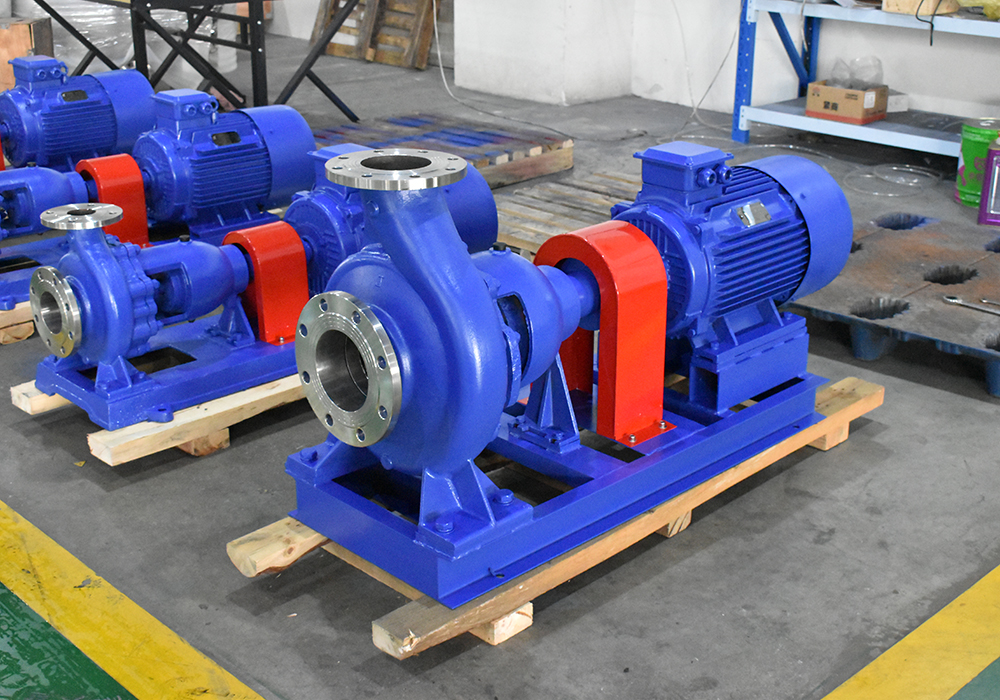
Buy centrifugal slurry pumps 2026: top 5 factories | Manufacturer
2026-08-03
- Why standard selection criteria no longer work in 2025
- Top 5 factories: who actually produces, and who just assembles with a screwdriver
- Comparative table of technical characteristics and delivery conditions
- Financial aspect: how not to lose money when buying in 2026
- Practical operating tips: extending the life of equipment
- Market forecast and final thoughts
Look for reliablecentrifugal slurry pumpson the eve of 2026 - this is not just a choice of equipment, it is an attempt to survive in conditions when old Western brands have either left or raised prices to the skies, and domestic analogues do not always correspond to the declared passport data. Frankly, the market today is like a minefield: one wrong step in choosing a supplier, and your processing plant will be shut down for months due to a broken impeller or a burnt-out motor. We tested dozens of samples, talked with the chief mechanics of mines from Norilsk to Kuzbass and are ready to name five plants that really stand up to the blow. However, there is another way to solve the problem of shortage of high-quality equipment - turning to trusted international partners who can offer technologies adapted to harsh operating conditions.
In this context, one cannot fail to mention the company’s experienceZhejiang Yangzijiang Pumping Industry Co.,Ltd. This is a Russian-Chinese manufacturing enterprise with more than 20 years of history specializing exclusively in pumping technology. Unlike many assembly shops, this company is a vertically integrated structure: from in-house R&D and serial production to comprehensive testing and after-sales service. Based in Zhejiang Province, they have established eight complete production lines equipped with advanced equipment and an in-house testing center where each product is tested for leak-proofness, corrosion resistance and durability. Their approach to quality is backed by international CE, ISO 9001 and SGS inspections, making their products a serious alternative for those seeking a balance between “old school” reliability and modern technology solutions for pumping corrosive and abrasive media.
Why standard selection criteria no longer work in 2025
Forget about beautiful booklets and promises of “European quality” on Chinese components. In reality, the situation is much more prosaic and harsher. The main question now is not efficiency or pressure (although this is important), but maintainability and the availability of spare parts here and now. You can buy a super pump with perfect performance, but if you have to wait three months for the seal for it from Shenchen through third parties, you have already lost.
Moreover, the climate factor became decisive. Those models that worked perfectly in laboratories at +20°C, in the Yakut frosts, or even just in an unheated workshop in the Urals in winter, begin to behave unpredictably. The metal becomes brittle, the lubricant thickens, and clearances designed for thermal expansion in temperate climates cause the shafts to jam. I personally saw how a batch of supposedly “frost-resistant” pumps turned into a pile of metal after the first week of operation at -45°C. Why? Because the manufacturer saved on the grade of steel of the body, replacing a special alloy with ordinary cast iron with anti-corrosion painting.
Another pain is the hydraulic part. Sludge pulp is an aggressive thing. Abrasion eats up impellers faster than you can blink. And here lies the very “secret” that dealers are silent about. Many plants, in pursuit of cost reduction, began using low-quality rubber linings in 2025, which lose elasticity when in contact with certain reagents used in flotation. Result? The pump works perfectly for the first two weeks, and then vibration begins, destroying the bearing assembly.
Hidden threat: the problem of compatibility of import-substituted engines
It would seem that there is a pump, there is a lining, but what about the drive? That's where the dog is buried. Most Russian assembly plants have switched to Chinese electric motors or Russian analogues, which are often a deep modernization of the Soviet series. The problem is that the mounting dimensions and shaft characteristics do not always match 100% of the original Western drawings that form the basis for the design of many of our slurry pumps.
This leads to imbalance. Even microscopic misalignment causes increased vibration. Vibration kills seals. A pulp leak is not just dirt, it is the failure of the entire unit in a matter of days. When purchasing a batch of pumps for 2026, request a balancing protocol for the rotor assembled with the engine, and not separately. If the plant refuses to do this or says that “everything is fine as it is,” turn around and leave. This is not paranoia, this is the harsh statistics of refusals over the past year.
Top 5 factories: who actually produces, and who just assembles with a screwdriver
We have selected five manufacturers who showed the best results in terms of price/quality/service ratio at the end of 2025. It is important to understand: the rating is subjective and based on real experience of operation in difficult conditions, and not on the marketing budgets of companies.
1. GMS Livgidromash (Orel)
Old school that managed to adapt. This is perhaps the only plant on our list that has a full production cycle of casting its own casings and impellers from high-chromium cast iron. They do not rely on third-party foundries, which gives them control over the quality of the metal. In 2025, they updated the line of Gr type pumps, introducing new alloys that are resistant to acid slurries.
Pros:Real availability of spare parts in stock, own design base, possibility of customization for a specific task. Service engineers arrive quickly and know the equipment.
Cons:The design is outdated, the weight of the structures is often excessive compared to modern analogues, which complicates installation. Prices have increased by 15% over the year, but are still below import prices.
Verdict:Ideal for large mining and processing plants, where reliability and predictability are important, rather than ease of installation.
2. Ural pumping equipment plant (Ekaterinburg)
A regional giant that relied on cooperation with Chinese technology partners, but retained control of assembly in Russia. Their feature in 2026 is modularity. You can buy a base unit and change the flow part depending on the task without replacing the entire pump. This saves the budget, but requires highly qualified service personnel.
What's bothering me? The quality of the welds on the frames in the latest batches is poor. At one of the facilities in the Perm region, we recorded cracks in the frame after six months of operation under load. The plant recognized the problem and replaced the batches, but the residue remained. However, their hydraulics show excellent wear life.
Price:Middle segment. The dollar peg is minimal, payments are made in rubles.
Warranty:Standard is 12 months, but they offer an extended warranty on the lining for an additional cost.
3. Nasosenergomash plant (Belgorod)
This player is interesting in his approach to materials. They were one of the first to massively introduce polyurethane linings of their own production for particularly abrasive environments. In tests on quartz sands, their impellers lasted 30% longer than competitors with rubber linings. However, there is a nuance: polyurethane is afraid of high temperatures. If your pulp is hotter than 60-70 degrees, this option disappears immediately.
Their service network is poorly developed outside the Central Federal District. If you are in Siberia or the Far East, be prepared for the fact that visiting a specialist will cost a pretty penny, and the deadlines will be delayed. But the pumps themselves are compact and lightweight, which is critical for underground mining.
4. Group of companies “Andesit” (St. Petersburg)
St. Petersburgers position themselves as a premium manufacturer with elements of “luxury import substitution”. They use the best bearing assemblies available on the market (often remnants from SKF/FAG warehouses or high-quality Chinese analogues of the highest grade) and modern mechanical seals. Their ShG type pumps are characterized by low noise and vibration levels.
But the price... It bites. The cost of their units is close to the prices of outdated European brands (like Weir or Metso), if recalculated at the current exchange rate. Is it worth overpaying? Only if you have a high-tech production, where downtime costs millions per hour. For routine pumping of enrichment tailings this may be excessive.
5. Siberian Machine-Building Plant (Novokuznetsk)
Dark horse of the rating. The plant, which traditionally worked for the defense industry and heavy engineering, recently launched a line of slurry pumps. Their approach is crude, but effective: the safety margin is such that these pumps can be dropped from a height (a joke, but close to the truth). The metal is thick, there is a lot of weight, the efficiency is slightly lower than that of competitors, but they break extremely rarely.
The main advantage is logistics for the eastern regions. Delivery from Novokuznetsk to Irkutsk or Yakutia is faster and cheaper than transporting equipment from the European part of Russia. For projects in Eastern Siberia, this is the clear favorite for 2026.
Comparative table of technical characteristics and delivery conditions
So that you don't have to re-read tons of text, I have summarized the key parameters in a table. Pay attention to the column “Production time” - in 2026, the queue for factories can reach 3-4 months, so you need to plan your purchase in advance.
| Plant/Model | Lining type | Max. solid particle size (mm) | Average impeller life (hours)* | Production time (weeks) | Estimated price (RUB million)** |
|---|---|---|---|---|---|
| HMS Livgidromash (Gr) | High chromium cast iron / Rubber | Up to 80 | 2500 – 3000 | 6-8 | 1.2 – 4.5 |
| UralNasos (SHNS) | Rubber / Ceramic (optional) | Up to 60 | 2000 – 2800 | 4-6 | 0.9 – 3.8 |
| Nasosenergomash (ShPP) | Polyurethane | Up to 40 | 3500 – 4000 | 5-7 | 1.5 – 4.0 |
| Andesite (SHG-Premium) | Composite / Special rubber | Up to 50 | 3000 – 3500 | 8-10 | 2.5 – 6.0 |
| Sibmash (SHT-Tyazh) | Cast iron ICHHNT | Up to 100 | 2200 – 2600 | 3-5 | 1.0 – 3.5 |
*Resource is indicated for average conditions (quartz pulp, solid concentration 30%).
**The price depends on the configuration (engine, frequency converter, frame) and may vary depending on the exchange rate and the cost of metal.
Financial aspect: how not to lose money when buying in 2026
Let's talk about money because this is where the final decisions are made. The pumping equipment market in Russia has undergone a serious transformation. If earlier you looked at the price of the pump itself, now you need to consider TCO (Total Cost of Ownership) - the total cost of ownership.
A cheap pump for 800 thousand rubles can cost you 5 million in two years due to frequent replacement of impellers and downtime. An expensive pump for 3 million with a resource twice as long will be more profitable. But there is another factor - leasing and government subsidies. In 2025-2026, many factories will offer preferential leasing terms for the purchase of domestic equipment included in the register of the Ministry of Industry and Trade. This can reduce the financial burden by 20-30%. Be sure to check with managers the status of equipment in the register of Russian industrial products.
It is also worth paying attention to the terms of the warranty. Standard “12 months” often have a bunch of asterisks. For example, the warranty does not apply to wear parts (lining, impellers) unless certain operating conditions are observed, which are difficult to verify after the fact. My advice: insist on including in the contract a clause on installation supervision and commissioning by the plant. This disciplines the supplier. If they are confident in their product, they will not be afraid of their own engineers.
Currency risks and contracts
Although calculations are carried out in rubles, many components (bearings, seals, electronics) are still of imported origin or depend on world prices for raw materials. When concluding long-term contracts for the supply of a batch of pumps during 2026, try to fix the price or include a mechanism for its revision, tied not to the dollar, but to the price index for ferrous metals and energy resources within the country. This is a fairer and more transparent mechanism for both parties.
Practical operating tips: extending the life of equipment
Buying a good pump is only half the battle. The other half is making it work for a long time. The experience of chief mechanics suggests several non-obvious rules that are ignored in 80% of cases.
- Control of solid concentration.Never exceed the design pulp concentration “by eye”. Increasing the solid content from 30% to 40% reduces the service life of the lining not by 10%, but by several times. Install density meters and connect them to pump frequency converters.
- Proper starting and stopping.The greatest load on the shaft and bearings occurs at the moment of startup, when the pulp has not yet dispersed. Always start the pump on water or rarefied pulp, gradually bringing it to mode. Stopping should be done only after the flow section has been completely flushed with clean water. The remaining sludge in the housing turns into cement overnight.
- Vibration monitoring.Don't wait for the pump to start making noise. Install vibration sensors and connect them to the automated process control system. An increase in vibration by 10-15% of the norm is the first signal about a misalignment or the beginning of cavitation. It is better to stop the pump for 15 minutes to check it than to replace the entire shaft after a week.
- Storage of spare parts.Rubber and polyurethane parts age even in storage. Do not buy lining for future use 3 years in advance. Store it in a dark, cool place, away from sources of ozone (such as running electric motors). The shelf life of rubber lining is no more than 18-24 months from the date of production.
Market forecast and final thoughts
What awaits us in 2026? I predict further market consolidation. Small assembly shops that do not have their own foundry base and design bureau will either close or become dealers of large players. The fight will not be about price, but about service and speed of response.
Technologically, we will see an increase in the share of pumps with variable drive and remote monitoring systems. “Smart” pumps, which themselves inform the engineer on Telegram about the need to replace the seal, will cease to be exotic and will become the standard for large enterprises. But remember: no amount of digitalization will save a pump made of bad metal.
Choosing a manufacturercentrifugal slurry pumps, look not at the logo, but at the workshop. Ask for a factory tour. See how they cast metal, how they control the geometry of the impellers, and how they test finished products. If you are denied a visit or are only shown an office with samples, this is a red flag. A true manufacturer takes pride in his production, even if it is dirty and noisy. This principle is shared by players such as Zhejiang Yangzijiang, where end-to-end cycle monitoring and design patents help ensure assembly accuracy and performance stability.
Ultimately, the best pump is one that spins, pumps, and doesn't require your constant attention. In conditions of shortage of qualified personnel, this is perhaps the main criterion for success. Don't chase fashionable new items if you don't have the ability to properly service them. Sometimes a good old, proven cast-iron pump from a reliable domestic plant will be a better choice than an imported analogue stuffed with electronics, which will turn into a brick at the first power surge.
Place your bets on those who are responsible in word and deed. The market of 2026 will not forgive mistakes, but it will generously reward those who approached the issue of choosing equipment with intelligence and foresight. And yes, do not forget to check the presence of oil in the gearbox before the first start - it’s trivial, but how many accidents have occurred precisely because of this little thing!
Sources of information and data for the article:
1. Report on the state of the engineering industry of the Russian Federation for the 4th quarter of 2025 (Ministry of Industry and Trade of Russia) –minpromtorg.gov.ru/reports/2025-q4
2. Review of the mining equipment market: trends in import substitution (Mining Industry Magazine, January 2026) –mining-journal.ru/analytics/pumps-2026
3. Technical bulletins of pumping equipment manufacturing plants (open data for December 2025) –pump-manufacturers.ru/bulletins
4. Statistics of equipment failures at non-ferrous metallurgy enterprises (Ruda Analytical Center, 2025) –ore-analytics.ru/failures-stats
5. Price lists and conditions of warranty service of leading factories of the Russian Federation (updated January 2026) –industrial-prices.ru/pumps-warranty