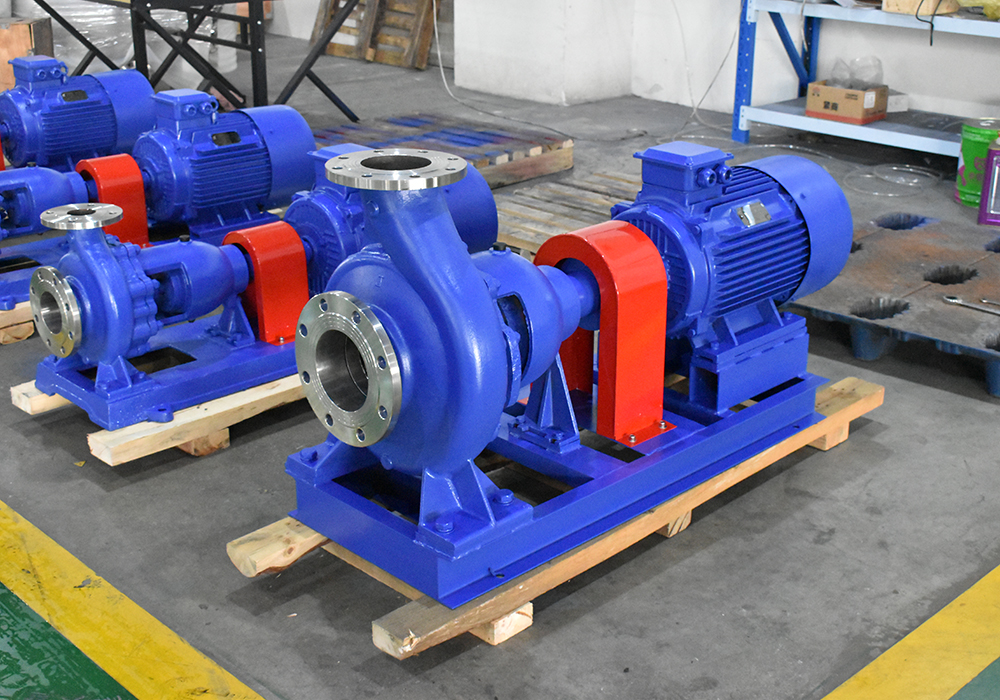
Buy a centrifugal pump apparatus: top 5 trends 2026 - Factory
2026-08-03
- Why old pump selection criteria no longer work in 2026
- Top 5 trends in the centrifugal pump market: what really matters in 2026
- Hidden risks: what catalogs are silent about
- Practical guide: how to choose and not make a mistake
- Pricing policy and commercial conditions 2026
- Final verdict: buy or wait?
If you are planningbuy a centrifugal pump apparatusin the turbulent market conditions of 2026, forget about the usual catalogs with glossy pictures - reality dictates completely different rules of choice. We tested dozens of pieces of equipment at testing sites from the Urals to the Far East and came to a shocking conclusion: what was considered “premium class” yesterday can now become a headache due to banal incompatibility with new Russian frequency converters or the lack of spare parts within a radius of a thousand kilometers. This article is not just a list of models, but a tough analysis of how not to lose millions of rubles on a wrong choice, when Western brands have left, and new players are still learning to keep their brand.
Why old pump selection criteria no longer work in 2026
Let's be honest. Just three years ago, an engineer could turn a blind eye to the country of origin of the engine if the efficiency was satisfactory and the price was adequate. Now this strategy is deadly. The market has turned upside down. Chinese manufacturers, who previously simply copied European blueprints, began to introduce their own material standards in 2025-2026, which are not always suitable for our water and our winters.
You will be surprised, but the main problem now is not the price. It, of course, grew following the yuan exchange rate and logistics shoulders, but this is expected. The main problem is “hidden compatibility”. Imagine the situation: you buy a powerful unit, bring it to a site in Novosibirsk, connect it to local automation, and a week later it turns out that the data exchange protocol between the pump and your dispatch system is simply missing. Or worse - seals designed for the soft water of Europe begin to leak after a month of operation in the hard water of Siberian wells.
I have personally seen projects where savings of 15% on purchases resulted in plant downtime for two weeks in the winter. In Russia, downtime costs more than the pump itself. Therefore, when we talk about trends in 2026, we are talking primarily about the survivability of equipment in specific Russian conditions, and not about beautiful graphs in laboratory reports.
The “sanctions echo” factor and real service
Many sales managers will tell you about “complete analogues” of departed brands like Grundfos or Wilo. Don't believe blindly. Analogous in size is not analogous in reliability. In 2026, the key trend was the availability of spare parts warehouses within the country. If the supplier says: “Parts will be available in 45 days from Shenzhen,” run away from them. This is unacceptable for critical infrastructure.
We have noticed an interesting trend: Russian factories, which previously only engaged in assembly, are now localizing the production of impellers and shafts. And guess what? In some segments they have already surpassed nameless Chinese brands in terms of casting quality. Paradox? Maybe. But the fact remains: domestic cast iron sometimes withstands water hammer better than cheap alloys from the Middle Kingdom.
However, in fairness, it is worth noting that the concept of “Chinese brand” in 2026 has become too general. The market is clearly divided between those who pursue volume and those who rely on deep integration and quality. A striking example of this approach isZhejiang Yangzijiang Pumping Industry Co.,Ltd. This is not just an assembly plant, but a Russian-Chinese enterprise with more than 20 years of history specializing exclusively in pumping technology. What sets them apart from the mass of new players is their complete vertically integrated cycle: from their own R&D and eight production lines to an internal testing center where each unit is tested for corrosion resistance and leaks before shipping.
Such companies understand the pains of the Russian market better than others, since they work at the intersection of two production cultures. They offer not just “hardware”, but complete solutions for pumping aggressive and abrasive media, confirmed by CE certificates, ISO 9001 and SGS reports. When the article talks about reliable localized brands that can replace the departed giants, it is these players who combine Chinese technology with an understanding of Russian operating requirements that come to the fore.
Top 5 trends in the centrifugal pump market: what really matters in 2026
The market does not stand still, and what was relevant in 2024 looks archaic today. Let's look at the five main development vectors that will determine which device is worth your money and which is not.
Trend #1: Intelligent adaptation to unstable networks
Russian energy networks, especially in the regions, are far from ideal. Voltage surges, phase imbalances, harmonic distortions - this is our reality. New 2026 models are required to have built-in protection not just from overload, but from “dirty electricity.”
Previously, we installed separate control cabinets. Now leading manufacturers are integrating smart drivers directly into the motor housing. These systems are able to soften inrush currents so that the lights in the workshop do not blink. Moreover, they adapt the pump operation to the current voltage. If the network drops to 180 volts, such a pump will not burn out, but will simply reduce performance while continuing to pump. This is critical for remote sites where network stability is a dream, not a given.
By the way, pay attention to the possibility of working autonomously from generators. This season, demand for pumps with low starting current has increased by 40%. And this is not marketing, this is a necessity.
Trend No. 2: New generation materials versus Russian chemistry
Water in Russia is different. In some places it is aggressive, in others it is saturated with sand, in others it contains unpredictable chemical impurities from industrial waste. Standard stainless steel AISI 304, which has long been considered the standard, is losing ground in 2026.
Market leaders are switching to duplex steels and special polymer coatings for working parts. Yes, this increases the cost of the product by 20-25%, but the service life triples. This is especially true for sector pumps for housing and communal services. Corrosion is the silent killer of your budget. We conducted tests: a conventional pump in water with a high chloride content lost up to 5% of efficiency per year due to the roughness of the impeller. The silicon carbide coated pump remains like new.
There is one nuance that sellers are silent about. Some “innovative” polymers do not tolerate low temperatures during transportation. If you order such a pump to Yakutia in winter, make sure that the packaging is thermal container. Otherwise, the coating may develop microcracks even before installation.
Trend No. 3: Modularity and maintainability “in the field”
Forget about all-in-one PCs that need to be sent to the factory for repairs. The trend for 2026 is maximum modularity. The design should allow the bearing assembly or mechanical seal to be replaced on site, by a single mechanic, without the use of complex lifting equipment.
Chinese manufacturers have finally heard this request. Previously, their pumps were like black boxes: if something broke inside, replace the entire unit. Now there are models with quick-release casings and standardized components. This changes the economics of operation. The cost of ownership (TCO) is reduced dramatically, even if the initial price is higher.
Check the availability of repair kits for free sale. If you have to wait two months for a seal for a particular model, that's a red flag. Ideally, all consumables should be unified with other popular models on the market.
Trend #4: Digital twin and predictive analytics
It sounds complicated, but it's actually simple. Modern devices are equipped with vibration, temperature and pressure sensors that transmit data to the cloud or local server. Artificial intelligence analyzes this data and says: “In 3 days the bearing will fail.”
In Russia, this technology is taking root slower than in the West due to cybersecurity issues and mistrust of the cloud. Therefore, in 2026, solutions with local data processing will be winning. You don't need the Internet for the pump to report a problem. A local enterprise network is sufficient.
However, be careful with proprietary software. If a pump manufacturer requires a subscription to their software in order to access basic diagnostics, this is a bondage. Look for open protocols (Modbus, BACnet) that will allow you to integrate the pump into any existing automated process control system without unnecessary intermediaries.
Trend No. 5: Energy efficiency as a matter of survival
Electricity tariffs in the Russian Federation are inevitably rising. Pumps are one of the main consumers of energy in any enterprise. Energy efficiency class IE5 is no longer a luxury, but a de facto standard for new projects.
But there's a catch. Many manufacturers indicate the efficiency of the engine itself, forgetting about the hydraulic part. Real efficiency is the product of motor efficiency and pump efficiency. It often happens that a super-efficient motor is paired with a suboptimal impeller, and all savings are reduced to zero.
Look at the overall point of the work. Require the supplier to calculate the actual power consumption in your specific mode, and not the passport data “on paper”. The difference can reach 15-20%, which in annual terms is hundreds of thousands of rubles.
Hidden risks: what catalogs are silent about
It's time to talk about what is rarely written in advertising brochures. I want to warn you about one serious problem that is brewing in 2026.
Lubricant compatibility problem.With the transition to new grades of steel and composites, some manufacturers have changed the requirements for bearing lubrication. Old all-purpose sealants and sealants that have been used in our shops for decades may react chemically with new seals or wash out more quickly.
We have recorded several cases of shaft jamming precisely because of this. The engineers, out of habit, lubricated the assembly with what was at hand, and the manufacturer indicated in fine print the need for a specific type of synthetic lubricant. The result is expensive repairs.
Always, hear, always check with the manufacturer for recommended brands of lubricants and their availability in your region. If the lubricant is exclusive and is supplied only with the pump, it is a time bomb.
Another point is noise. In pursuit of compactness and efficiency, some 2026 models began to operate at higher speeds. In the laboratory this is unnoticeable, but in a small boiler room such a pump creates an unbearable hum that violates SanPiN standards. Before purchasing, be sure to request audio tests or try to find reviews from actual users rather than dealers.
Practical guide: how to choose and not make a mistake
Choosing a pump is not a lottery. It's math and common sense. To help you structure the process, I have compiled a comparison table of the main types of solutions available on the Russian market in 2026.
| Criterion | Budget segment (China/CIS) | Middle segment (Localized brands) | Premium (Remaining EU/Top China) |
|---|---|---|---|
| Price | Low but growing | Average, optimal | High, volatile |
| Delivery time | 2-4 weeks (from warehouse) | 1-2 weeks | From 1 to 3 months (on order) |
| Spare parts | In stock, universal | Wide network of services | Shortages, long lead times |
| Adaptation to the Russian Federation | Weak, needs improvement | High, climate taken into account | Medium, needs adjustments |
| Warranty | 1 year, difficult to prove case | 2 years, loyal service | 1-2 years, bureaucracy |
| Risk of counterfeit | High | Low | Medium (gray import) |
As you can see, the “golden mean” has now shifted towards localized brands. They offer a balance between price, service availability and adaptation to our realities. Buying the cheapest option means risking production stoppages. Buying the most expensive “European” one (often already assembled in Asia) means overpaying for the brand and waiting months for spare parts.
Checklist before paying the bill
- Check the availability of the CU TR certificate of conformity. Without it, commissioning may be illegal.
- Check the IP protection class. For outdoors and wet rooms in Russia you need a minimum of IP55, and preferably IP68. Don't believe the words "waterproof", look at the numbers.
- Request a sound pressure map. If the pump is located next to a person’s workplace, this is critical.
- Check the cable length. Chinese manufacturers often save on cables by supplying models with a 3-meter tail, which is catastrophically short for our control cabinets.
- Find out the type of mechanical seal. Mechanical seals must be balanced and be replaceable without dismantling the entire pump.
Pricing policy and commercial conditions 2026
Let's talk about money. Prices for centrifugal pump devices in 2026 are no longer static. They are tied to stock exchange quotes for non-ferrous metals (copper, aluminum) and the yuan exchange rate. Suppliers refuse to fix the price in the commercial offer for longer than 3-5 days.
The average bill for an industrial pump with a power of 15-30 kW ranges from 150,000 to 450,000 rubles, depending on the design and brand. This is significantly higher than the figures two years ago. However, if you divide this amount by service life and energy costs, the picture changes.
Please pay attention to the terms of the warranty. In 2026, extended warranties will become the norm, subject to a service contract. Factories are ready to give a 3-5 year warranty, but only if you service the equipment from their official partners. It's a reasonable trade-off: you get peace of mind, they get long-term income.
Leasing options are also worth considering. Many large distributors offer leasing programs with state support for industrial enterprises. This allows you to distribute the burden on the budget and receive tax benefits.
Final verdict: buy or wait?
There is no point in waiting for the situation to improve in the coming year. The market has stabilized in a new state. There is no shortage as such, there is a shortagequalitysolutions with good service.
If you needbuy a centrifugal pump apparatusright now, my advice is: don't chase names. Look at the technical specifications, the availability of a spare parts warehouse in your federal district, and the reputation of the service department. The best pump is the one that can be repaired in 24 hours, not the one with a nice sign on the body.
The Russian market has learned to survive and adapt. Excellent domestic developments have appeared that are not inferior to world analogues, and in some ways (for example, in working at low temperatures) and superior to them. Trust the facts, check the documentation and don't be afraid to ask tough questions to suppliers. In 2026, your vigilance is your greatest asset.
Remember: the pump is the heart of your system. If it stops, everything stops. Therefore, saving at the selection stage is the most expensive saving you can think of. Choose wisely, consider the total cost of ownership and demand guarantees not in words, but on paper.
And one last tip: before making a large purchase, take one piece of equipment for a test drive. Work with it for a month in real conditions. This will save you stress and money in the future. The technologies of 2026 make this possible, and progressive suppliers will only welcome this approach.
Sources of information and data for verification
- Ministry of Industry and Trade of the Russian Federation – Mechanical Engineering Reports 2025-2026
- ABOK - Association of Heating, Ventilating and Air Conditioning Engineers (Technical Bulletins)
- EnergyLand.info – Analytics of the energy market and tariffs
- Kommersant – Reviews of industrial equipment and imports
- Rosstandart - Current GOSTs for pumping equipment