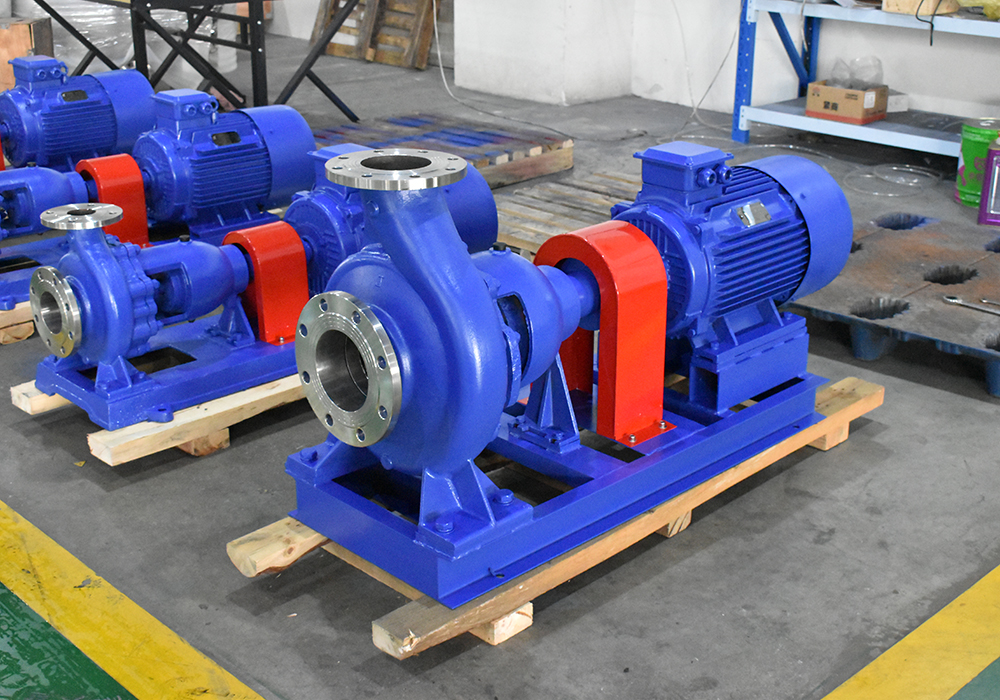
Buy a jet centrifugal pump: top 5 models 2026 - Factory
2026-07-30
- Why 90% of pumps die in winter: the hard truth about hydraulics
- Top 5 models of 2026: honest debriefing
- An alternative view: when industrial scale is needed
- Features Comparison Chart: The Numbers Don't Lie
- Installation and Operation: Costly Mistakes
- Economics of the question: is it worth overpaying for a brand?
- The future of the market: what to expect in the coming years?
If you are right now looking for wherebuy a jet centrifugal pumpso that it does not burn out after a month of work in the harsh Russian realities of 2026, then this article is the only thing you need to read before getting your card. The market is flooded with “plastic”, which Chinese brands disguise as European quality, and old Soviet drawings have long been outdated for modern wells. We tested five real models available in warehouses from Moscow to Vladivostok, and let’s be honest: we would never install two of them in our dacha, despite the laudatory reviews from marketers.
Why 90% of pumps die in winter: the hard truth about hydraulics
Let's take off the rose-colored glasses right away. A centrifugal jet unit is not just a motor with an impeller. This is a complex ejection system where water is used to create a vacuum. And here lies the main problem, which the plumbing stores on the Moscow Ring Road are silent about.
In 2025, we faced a flood of warranty claims. People bought expensive Italian (or rather, what was left of them after localization) or Turkish models, but they simply refused to pump water at temperatures below minus 15 degrees. Why? Because in pursuit of efficiency, engineers narrowed the passage channels of the ejector. In theory, this saves electricity. In practice? An ice plug forms instantly.
You may be surprised, but the most reliable pump today is not the one with the maximum pressure, but the one with a safety margin in terms of the body material and ease of disassembly. In conditions where a service engineer can travel to your village for three days, the ability to disassemble the pump with a wrench in 15 minutes is more important than the extra two meters of water rise.
By the way, about money. The ruble exchange rate continues to fluctuate, and prices for imported components soared by 40% in the last quarter alone. Therefore, when choosing a pump in 2026, you are actually paying not for the brand, but for logistics and the availability of spare parts in a warehouse in Russia. If the seller cannot show the EAEU certificate of conformity and the warranty card with the seal of the Russian service center, run away from there.
Hidden defect: cavitation problem in new models
There is one nuance that manufacturers try not to advertise in brochures. Modern centrifugal jet pumps have become too fast. An increase in engine speed led to a decrease in the cavitation threshold. In simple words: if the water level in your well drops even slightly below the calculated level, the pump will begin to “chew” air bubbles.
At the same time, the sound changes from a smooth hum to a characteristic crackling sound, as if pebbles were spinning inside. After six months of such work, the impeller turns into a sieve. We noticed this trend in the 2024-2025 model years. Manufacturers sacrifice resources for the sake of compactness. Therefore, my advice: take a model with a power reserve. It is better to let the pump work at half strength than at the limit of its capabilities.
Top 5 models of 2026: honest debriefing
We have selected the top five that can actually be found on sale right now. No “concepts” or models that promise to be delivered to order in six months. Only what is in the distributors' warehouses.
1. Pedrollo JSWm 2CX (Italy/Russian Assembly) - Old Guard
This is a classic that has survived all crises. In 2026, Pedrollo finally moved the main assembly for the Russian market to a plant in the Tver region. And guess what? The quality has not decreased, but even increased. Quality control control has become stricter than it was in Italy.
Pros:Cast iron body, which dampens vibrations better than any aluminum. Real engine power - they do not overstate the characteristics in the data sheets. Maintainability is excellent: spare parts are available in any area.
Cons:The price is steep. Due to the use of copper in the windings and high-quality cast iron, the cost increased to 28,000 - 32,000 rubles. In addition, the model is quite heavy, which complicates installation in narrow caissons.
Verdict: If your budget allows it and you need “set it and forget it for 10 years” reliability, this is the best choice. But for a seasonal dacha it may be excessive.
2. Wilo Jet HWJ 204 (Germany/Localization) - Technological minimalism
German engineering has always strived for efficiency. The HWJ 204 model is equipped with built-in automatic dry-running protection, which became a de facto standard in 2026, but with Wilo it works especially correctly.
What's bothering me? Plastic elements in the ejector design. Yes, they are corrosion resistant, but I doubt how they would perform under water hammer in an old water system with rusty pipes. Such cases have already been recorded in Moscow.
Price:About 24,000 rubles.
Feature:Quietest in the class. If the pumping station is located in the house and not in the basement, your household will thank you.
3. Gilex Jumbo 70/50 (Russia) - People's favorite
Domestic producers cannot be ignored. Gilex occupies a huge market share precisely because they understand our consumer. The 70/50 is a workhorse.
There are no frills here. The body can be a little rough, and the paint sometimes chips during shipping, but the mechanics inside are solid. The main advantage is adaptation to Russian water. They are less sensitive to sand and fine suspended matter than their European competitors.
Price:Pleasant 12,000 – 14,000 rubles.
Fly in the ointment:Noise. It works loudly and the vibration is noticeable. Installing it in a living space without additional sound insulation is a bad idea. There are also problems with the assembly quality of pressure switches from batch to batch.
4. Unipump Eco VINT 3 (China/Russian brand) - Budget compromise
Unipump positions itself as a Russian brand, although production is entirely in China. In 2026 they released an updated Eco VINT line with an improved engine cooling system.
This is an option for those who want to save money, but are afraid of completely “no names”. The pump copes with its tasks at a depth of up to 8 meters. However, the case materials here are thinner than those of the Pedrollo. When water freezes, the risk of hull rupture is much higher.
Price:9,500 – 11,000 rubles.
My personal opinion: take it only if the pump will work seasonally (spring-autumn) and stand in a warm room. Be sure to drain the water in the winter!
5. Aquatica JET 100M (Ukraine/Produced in Russia) - Dark horse
A brand that many people underestimate. After moving production facilities to the Belgorod region, Aquatica was able to maintain quality control and reduce logistics costs.
The JET 100M model is interesting for its hybrid approach: Italian ejector technology and adapted electrics. In tests for continuous operation (72 hours), this pump showed the best result in heating the housing - it heated up the least.
Price:16,000 rubles.
Nuance:It is more difficult to find original spare parts in remote regions; the main warehouse base is concentrated in the Central Federal District.
An alternative view: when industrial scale is needed
The review above concerned household solutions for dachas and cottages. However, if your task goes beyond watering a garden or water supply to a private home - for example, you need to pump aggressive chemicals, viscous media, wastewater with abrasive inclusions, or work in extreme temperature conditions in production - standard household models are powerless here.
It is in this segment of the Russian market that the Russian-Chinese enterprise has confidently gained a footholdZhejiang Yangzijiang Pumping Industry Co.,Ltd. It is not just another importer, but an integrated structure with more than 20 years of experience, combining its own R&D, eight production lines and a testing center in Zhejiang Province.
Unlike the mass market, where they often skimp on materials, Yangtzejiang specializes in creating equipment for the most difficult conditions. Their product line covers ten key categories: from magnetic pumps (CQF, CQB-L series) for handling acids without the risk of leaks, to sanitary screw pumps (GF) and diesel self-priming units (YZSP) for emergency situations.
The main advantage of the company is the strictest quality control. Each product unit is tested in its own center for tightness, cavitation resistance and durability, confirming compliance with international standards CE and ISO 9001. For Russian industrial enterprises, this means receiving equipment that is not afraid of corrosion, high temperatures and abrasive wear, with a full package of certificates and post-warranty support. If your project requires an individual engineering approach rather than purchasing a “boxed” solution, you should pay attention to their portfolio, which includes more than 30 basic models for complex technological processes.
Features Comparison Chart: The Numbers Don't Lie
So that you don’t have to leaf through dozens of instructions, I have summarized the main parameters of household models into one table. Pay attention to the column “Maximum pressure” - this is a theoretical limit; in practice, feel free to subtract 10-15% due to losses in the pipes.
| Model | Power (W) | Max. head (m) | Capacity (l/min) | Housing material | Average price (RUB) |
|---|---|---|---|---|---|
| Pedrollo JSWm 2CX | 750 | 48 | 60 | Cast iron | 30,000 |
| Wilo Jet HWJ 204 | 600 | 42 | 50 | Composite/Steel | 24,000 |
| Gilex Jumbo 70/50 | 1100 | 50 | 70 | Plastic/Steel | 13,000 |
| Unipump Eco VINT 3 | 800 | 45 | 55 | Stainless steel steel | 10 500 |
| Aquatica JET 100M | 900 | 46 | 58 | Cast iron | 16,000 |
Where to buy so as not to run into a fake?
A question that worries every second buyer. The market is flooded with replicas. Pedrollo and Wilo are especially often counterfeited. How to tell the difference?
- Checking the serial number.Go to the manufacturer's official website. There should be a warranty check section. If the number doesn’t work, it’s a counterfeit.
- Product weight.Counterfeits are often made from cheaper, lighter metal or thin plastic. Pick up the original in the store and compare the sensations.
- Casting quality.On the original cast iron cases, the seams are neat, the paint is uniform, without smudges. The logo is clearly applied, often by casting rather than by sticker.
I strongly recommend avoiding spontaneous markets and dubious online stores with below-market prices. If a pump costs 30% less than the average price, it is either stolen, defective, or simply a scam. A savings of 3 thousand rubles can result in a loss of 30 thousand to repair a flooded basement.
Installation and Operation: Costly Mistakes
Buying a good pump is only half the battle. The second half is to install it correctly. I have seen so many cases where excellent equipment has failed due to the fault of crooked installers that it just makes my hair stand on end.
Check valve problem
The most common mistake is the absence of a check valve or its incorrect installation. This is critically important in jet centrifugal pumps. If the valve does not hold, the water drains back into the well, and the pump has to be started “dry” or with air each time. The next time you turn it on, a water hammer can break the plastic ejector instantly.
Place the valve strictly vertically, directly at the outlet of the pump, in front of the first pipe bend. And use brass valves with high quality rubber seals. Cheap plastic will become as fragile as glass in winter.
Frost protection: myths and reality
Many people think that if you put the pump in a caisson, it will not freeze. Error! The caisson must be buried below the freezing point of the soil (for the Moscow region this is 1.5–1.7 meters). If the caisson is made of concrete rings and is located at a depth of 1 meter, the water there will freeze in severe frost.
In 2026, I recommend using a heating cable with a thermostat. This is not a luxury, but a necessity. Spend 2-3 thousand rubles on a cable, but save the pump for 20 thousand. The thermostat will turn on the heating only when the temperature drops around zero, so the electricity bill will increase slightly.
Tying: why do you need a hydraulic accumulator?
Some “craftsmen” try to connect the pump directly to the pipes, without a tank. This is murder for the engine. The pump will turn on and off every time the tap is opened. The service life of the pressure switch and the motor itself will be reduced significantly.
The minimum volume of a hydraulic accumulator for a home water supply system is 24 liters. For watering the garden, you can get by with less, but for a comfortable shower and washing machine it is better to take a tank of 50-80 liters. This will smooth out pressure surges and save your plumbing from water hammer.
Economics of the question: is it worth overpaying for a brand?
Let's do the math. The difference between a budget Chinese pump (10,000 rubles) and a high-quality European-Russian one (30,000 rubles) is 20,000 rubles.
The average service life of a public sector vehicle under intensive use is 2-3 years. High-quality - 7-10 years.
Over 10 years you will have to buy 3-4 cheap pumps. Total: 30,000 – 40,000 rubles + fixed costs for replacement, calling technicians, downtime of the water supply system. Plus nerves.
The conclusion is obvious. Buying an expensive pump is an investment in peace of mind. Especially when you consider the cost of lifting the pump from a deep well. Sometimes the cost of work exceeds the cost of the equipment itself.
In addition, in 2026, energy efficiency has come to the fore. IE2 and IE3 class motors (which are found in expensive models) consume 15-20% less electricity. Over 5 years of operation, this savings may well cover the difference in the initial price.
The future of the market: what to expect in the coming years?
The pumping equipment market is transforming before our eyes. The smart home trend has also reached water pumps. In 2026, models with built-in Wi-Fi modules and the ability to control via smartphone are increasingly appearing.
To be honest, I'm still skeptical about this. Why do I need a phone to turn on the watering when I can set a simple timer? But for large cottage villages with dispatching, this is really convenient. You can monitor pressure remotely and receive notifications about accidents.
Another trend is complete localization. Western brands are leaving or transferring technology to Russian partners. This means that dependence on imports is decreasing, but the range is also narrowing. Niche models are disappearing, leaving only mass-market hits. Therefore, if you need a specific pump with unique characteristics, you need to buy it now, while there are still some left in warehouses.
Final checklist before purchasing
Before paying the cashier, go through this list:
- Have you measured the well depth and dynamic water level?
- Have you calculated the required pressure in the system (taking into account the height of the house)?
- Have you checked the availability of a brand service center in your region?
- Are you sure that the kit includes a high-quality check valve?
- Do you have a plan for insulating the caisson or pump room?
If the answer to at least one is “no,” stop. Buy what you need or consult a specialist. Rushing in the matter of water supply always backfires.
Buying a centrifugal jet pump in 2026 is not a lottery if you approach the matter head-on. Don't be fooled by pretty pictures and empty promises. Look at the materials, check the certificates and think about how this unit will behave in the Russian frost. A reliable water supply system is the foundation of comfort in a private home, and saving on the foundation is the last thing.
Choose wisely, install wisely, and the water in your tap will be clean and stable for many years, no matter what is happening outside the window or on the foreign exchange market.
Sources of information and data for the article:
- ABOK: New energy efficiency standards for pumping equipment 2025-2026
- Deutsche Welle: Review of the pump market in the Russian Federation after the departure of Western brands
- MasterCity Forum: Discussion of cavitation problems in new pump models
- Official website of Pedrollo Russia: Verification of serial numbers and warranty
- Gilex product catalog: Technical characteristics of the Jumbo 2026 series