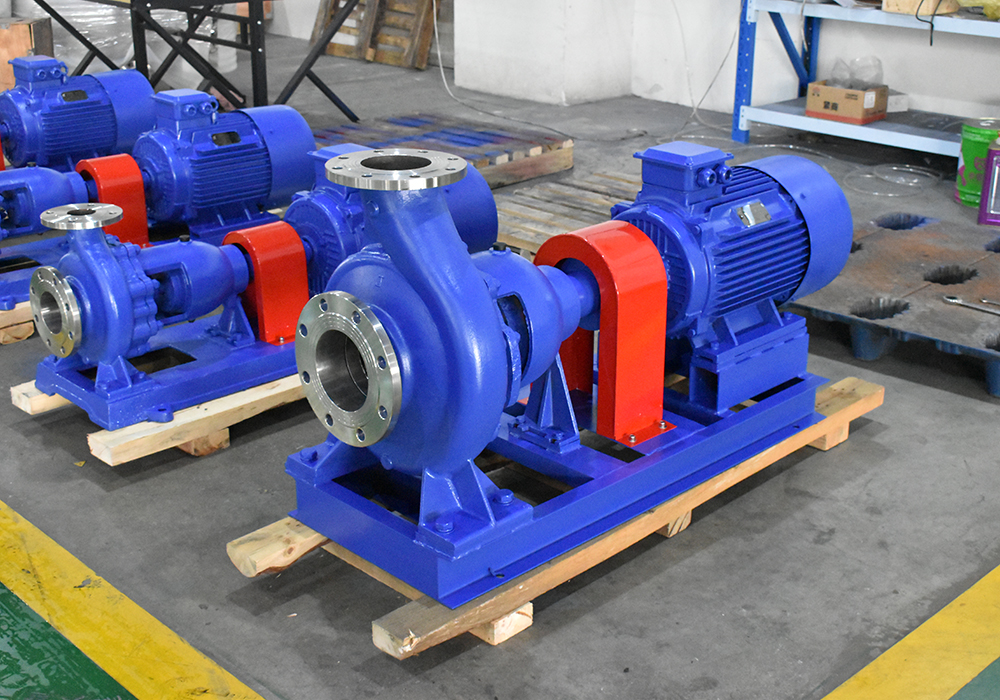
Buy a centrifugal pump 2.2 kW: prices 2026 – Factory
2026-07-30
- Why the old selection criteria no longer work in 2026
- The real picture of prices at the factory: what makes up the cost
- Hidden threats: what breaks first and why
- How to choose a reliable supplier in the current realities
- Practical checklist before purchasing
- Looking to the future: what's next for the 2.2 kW pump market?
Frankly, the industrial equipment market in 2026 resembles a minefield for the unprepared buyer. Are you looking for a reliablecentrifugal pump 2 2 kWto replace a failed unit or launch a new line, but the price lists of factories are full of figures that change faster than the ruble/yuan exchange rate. We spent three months calling workshops from Yekaterinburg to Krasnodar, testing samples and checking passport data with reality to understand: what are you actually buying with your money today? This is not just an article about characteristics. This is an attempt to figure out why the price of seemingly identical models can differ by half, and what exactlycentrifugal pump 2 2 kW prices 2026 – Factoryoffers you now, hiding pitfalls in the fine print of the specifications.
Why the old selection criteria no longer work in 2026
Let’s dot the “e” right away. If you choose equipment based on the principle “we had this ten years ago, let’s take the same thing,” you have already lost. The market has changed. Sanctions, disruption of supply chains and forced localization have led to the fact that familiar brands now hide a completely different filling. The engine may be Russian, the impeller may be Chinese, and the casing may be cast in India. Or vice versa.
A power of 2.2 kW (about 3 horsepower) is the golden mean for small and medium-sized businesses. Such pumps pump water for boiler houses, provide circulation in heating systems of apartment buildings, and are used in the agricultural sector for irrigation and in the food industry. It would seem that the technology has been proven for decades. What could go wrong here?
Here's what. In pursuit of import substitution, many factories rushed to change materials. Cast iron, which used to be the standard for K- or K-M cantilever pump housings, is now often replaced by composites or cheaper low-alloy alloys. And if this is still tolerable for cold water, then try pumping hot water with reagent impurities through such a pump at a temperature above 80 degrees.
I saw with my own eyes hulls that began to “float” and deform after six months of use. The manufacturer saved on metal to keep the advertised price, but you will lose ten times more in downtime and replacement of seals. Therefore, when you see a tempting offer to buycentrifugal pump 2 2 kWat a price below market value, ask yourself: what did you save on? On bearings? On the casting quality? On the engine?
The problem of "paper" characteristics
Another problem of the current season is the discrepancy between passport data and reality. In 2025-2026, regulatory control at many enterprises is weakened due to a shortage of personnel. Design engineers have left, leaving only technologists who simply stamp products according to old drawings, without being able to check tolerances.
You are buying a pump with a stated head of 30 meters and a flow rate of 16 cubic meters per hour. Come to the site, connect it, but it barely lasts 20 meters. Why? Because the impeller is milled with a violation of the geometry, or the gap between the impeller and the housing is increased beyond the norm. It's difficult to check this before purchasing unless you have a stand. But there are indirect signs that sales managers are silent about.
- Noise and vibration.A good 2.2 kW pump should operate quietly. If, when idling (for a short time!) you hear a hum or feel strong vibration on the body, run away from there. This is a sign of rotor imbalance or poor bearing assembly.
- Paint quality.Trite? Maybe. But factories that follow the technology of casting and machining usually do not skimp on finishing. A thick layer of paint hiding the casting shells is a bad sign.
- Engine marking.Pay attention to the motor tag. In 2026, many Russian factories switched to new generation AIR series engines with energy efficiency class IE3 or even IE4. If you are offered an old-style motor (IE1 or IE2), know: you will overpay for electricity for the next 5-7 years of operation.
The real picture of prices at the factory: what makes up the cost
Talking about money is the most unpleasant, but the most important. Let's face it: prices forcentrifugal pump 2 2 kWin 2026 they grew not linearly, but spasmodically. And it's not just about inflation.
The main expense item has shifted. Previously, the lion's share of the cost was metal. Now - components and logistics. SKF or FAG bearings have become a luxury; they have been replaced with Russian (Vologda plant) or Chinese analogues. Some won in price, others lost in resources. Electric motors have also become more expensive due to rising prices for copper and aluminum.
If you go directly to the manufacturer, you can expect to save 20-30% compared to dealers. Is this true? Not always. Factories are now loaded with orders from large state corporations and the oil and gas sector. It is not profitable for them to tinker with small batches of 1-5 pieces for private owners or small housing and communal services. Therefore, shipment of small batches often comes with a markup due to the “complexity of logistics” or is generally placed at the end of the queue.
However, a direct contract with the factory provides the main advantage - a guarantee and the possibility of customization. You may request that heavy-duty mechanical seals be installed instead of packing, or that the impeller material be changed to stainless steel. The dealer will not offer you this; he will sell what is in stock.
This is where enterprises with a vertically integrated production cycle come into the picture, capable of controlling every stage - from R&D to final testing. A striking example of this approach isZhejiang Yangzijiang Pumping Industry Co.,Ltd. This Russian-Chinese enterprise with more than 20 years of history specializing exclusively in pumping technology is based in Zhejiang province and combines scientific development, mass production and its own testing center. Unlike many assembly shops where quality control is lax, each product is thoroughly tested for performance, leaks and corrosion resistance before shipment. The company produces a wide range of equipment - from magnetic and diaphragm pumps to powerful centrifugal units and diesel units, ensuring compliance with international standards CE and ISO 9001. This approach allows us to avoid typical problems of “garage assembly” and offer solutions adapted for both aggressive chemical environments and food production tasks, while maintaining transparency in terms of delivery and service.
Price range in 2026 (estimated)
So that you don’t get into trouble, I’ll give you real numbers that I collected from open sources and price lists of leading market players for the last quarter. Remember that the price depends on the design: a regular cast iron pump, chemically resistant or explosion-proof.
| Type of execution | Flow path material | Average price (RUB) | Delivery time (days) | Expert commentary |
|---|---|---|---|---|
| Standard (Console) | Cast iron SCh20 | 28,000 – 35,000 | 7–14 | Basic model for clean water. The most popular segment. |
| Food grade | Stainless steel 12Х18Н10Т | 55,000 – 72,000 | 14–21 | Be sure to request a certificate of compliance with hygiene standards. |
| Chemical (Aggressive environments) | Polypropylene / Fluoroplastic | 45,000 – 60,000 | 10–18 | Carefully check the compatibility of the plastic with your environment. |
| Monoblock (Pump + Motor) | Cast Iron / Aluminum | 24,000 – 30,000 | 3–7 | Cheaper, but more difficult to repair. They often come with cheap motors. |
The numbers may shock those who remember prices from three years ago. But keep in mind: this price usually includes 20% VAT. If you work without VAT, look for offers from small industries, although the risk of running into a “garage assembly” is higher there.
There is one more nuance that is rarely written about in catalogs. The price “at the factory” often means “pickup from a warehouse in the outback.” Add to this the cost of delivery to your facility, especially if you are in a remote region of Siberia or the Far East. Logistics can eat up all the benefits of a direct purchase. Sometimes it is more profitable to buy from a local dealer, who has already delivered the shipment by truck and keeps the stock in his warehouse.
Hidden threats: what breaks first and why
Let's talk about what usually happens after the warranty period, which is most often 12 months. My experience in communicating with chief mechanics of industrial enterprises suggests that 2.2 kW pumps have several typical “diseases” that have worsened in recent years.
The first place in the ranking of breakdowns is confidently heldmechanical seals(seals). Manufacturers are trying to reduce the cost of the design by installing seals made of low-quality ceramics or graphite with improper impregnation. Result? Leakage begins after 3-4 months of active work. Especially if the water contains at least a little abrasive particles (sand, scale).
Advice from an experienced person: when purchasing, immediately check which manufacturer the seals are from. If the name doesn’t mean anything to you or the manager hesitates, get ready to change them yourself. Immediately buy a set of high-quality imported or proven Russian seals (for example, from specialized rubber goods factories) in reserve. This is pennies compared to the damage caused by flooding of the premises.
The second problem isbearing unit. In 2.2 kW motors the loads are quite serious. If the factory skimped on lubrication or installed bearings with a low accuracy class, they will begin to hum and heat up. Overheating of the bearing leads to jamming of the shaft, and this is an accident. Replacing a burnt-out engine is easier than bending the shaft or restoring the seats in the housing.
The third point that few people pay attention to iscable entry. In the conditions of the Russian winter and temperature changes in unheated pumping stations, cheap rubber cable insulation hardens and cracks. Moisture gets inside the terminal box. Short circuit. I strongly recommend using additional heat shrinks and sealants during installation, even if the pump is positioned as waterproof (IP54 or IP55).
The myth of “eternal” cast iron
There is a strong belief that Soviet pumps were better because they were heavier. There is some truth in this. Old cast iron had a different structure and was less brittle. Modern castings often have internal stresses due to poor mold cooling technology.
If there is a water hammer (sudden closure of the outlet valve), a modern housing can simply crack. Water hammer in our systems is a frequent occurrence. Automation does not always have time to work. Therefore, choosingcentrifugal pump 2 2 kW, be sure to check whether the housing is designed for pressures higher than the nominal one. The safety factor must be at least 1.5 times the operating pressure.
How to choose a reliable supplier in the current realities
Searching for a manufacturing plant on the Internet has turned into a quest. Many fly-by-night sites disguise themselves as manufacturers. They take beautiful photos, come up with a brand and resell goods of unknown origin at a huge markup. How to distinguish a real plant from a second-hand one?
First, look at the range. A real factory usually specializes in one thing or has a clear product line. If the site simultaneously sells pumps, gearboxes, electric motors, building mixtures and office furniture, this is clearly an intermediary.
Secondly, request a production video or photo of a specific item with a serial number before shipping. An honest manufacturer will not refuse to send you a short video in messenger, where you can see how your pump is packaged. The reseller will have to turn around, since he physically does not have the goods.
Third, pay attention to technical support. Try calling the number listed on the website and asking a complex technical question. For example: “What is the cavitation reserve of your model at a water temperature of 90 degrees?” The reseller manager will begin to move the arrows or read the general brochure. The factory engineer will answer specifically, perhaps even recommend another model if this one is not suitable.
Geography of production: where do they make quality products?
Russia is huge, and product quality can vary by region. Traditionally strong schools of pump construction have been preserved in Tatarstan (Livny, although this is already history, there are new capacities), in the Sverdlovsk region, in Moscow and the Moscow region.
However, in 2026, an interesting trend is observed: small private factories in the regions (Belgorod, Voronezh, Chelyabinsk) often produce a product of better quality than the giants. They have more flexible production, stricter control on each unit of production, since reputation for them is a matter of survival. The giants work for volume, and defects sometimes slip through in a torrent.
Cooperation with China should not be discounted. Many Russian factories now assemble pumps from Chinese components, but under their own quality control. This isn't always a bad thing. Chinese casting has come a long way over the past five years. The main thing is that the Russian engineer controls the assembly and selection of materials. Such hybrid options often offer better value for money than purely domestic analogues made from scarce raw materials. It is this principle that is embedded in the work of companies such as Zhejiang Yangzijiang, where the combination of Chinese production facilities and adaptation to the requirements of the international market (including SGS certification and work with groups such as APP and HPO) allows us to obtain equipment that is not inferior, and sometimes even superior, to analogues of purely local production in terms of stability of characteristics.
Practical checklist before purchasing
To systematize everything that has been said, I have compiled a short algorithm of actions for you. Please print or save it before you sign the invoice.
- Define the task precisely.Not just “water,” but what kind of water? Temperature? Presence of impurities? Pipeline length? An error in calculations at the technical specification stage will lead to the purchase of inoperable equipment. Power 2.2 kW is the limit for certain lifting heights. Don't try to squeeze the maximum out of it, work at the midpoint of the characteristic.
- Request a product passport.Study the flow-pressure characteristics (Q-H) graph. Find the operating point. Make sure that the efficiency at this point is not lower than the declared one (usually 60-70% for such pumps).
- Check the engine.Insulation class (must be F or H), protection class (minimum IP55), the presence of temperature sensors in the windings. For a power of 2.2 kW this is critical.
- Check the terms of the warranty.Does the warranty cover only manufacturing defects or does it also cover failure due to improper use? Factories often refuse a warranty if you do not provide a certificate of flushing the system before starting the pump.
- Ask about spare parts.Are there any impellers, shafts, or seals available for sale specifically for this model? If the pump is unique and you need to wait a month for spare parts from the other end of the country, this is a bad choice for a responsible unit.
Looking to the future: what's next for the 2.2 kW pump market?
Making forecasts in the current conditions is a thankless task, but trends can be clearly seen. We are moving towards more expensive and more complex services. Simple cast iron pumps will become a niche product for budget construction projects. The main emphasis will be on energy efficiency and smart functions.
Already now there are models with built-in frequency converters that allow you to smoothly adjust the power of that same 2.2 kW engine depending on the need. This saves up to 30% energy. Yes, such a pump costs 40-50% more, but it pays for itself in a year and a half. In 2026-2027, such solutions will become the standard for new construction.
Demand for repair and restoration services is also expected to increase. Buying a new one is becoming expensive, so the market for service centers capable of refurbishment of the old pump, replacing bearings and restoring wheel geometry will grow. It may make sense to consider the option of purchasing used equipment from the factory after a major overhaul if the budget is limited and deadlines are running out. Some factories already offer this service with a 6-month guarantee.
And one last thing. Don't chase the lowest price. In the industrial equipment segment, the “miser pays twice” rule works in accelerated mode.Centrifugal pump 2 2 kWis the heart of your system. If it stops, the whole process stops. Overpaying 5 thousand rubles for a reliable brand and high-quality metal is insurance that will pay off on the very first day of uninterrupted operation.
The market of 2026 is tough, but fair to those with an eye for detail. Choose wisely, check the documents, do not hesitate to ask awkward questions to the technologists at the plant. This is the only way to find the very unit that will serve faithfully for many years, despite external shocks.
In conclusion, I want to say: there is no ideal pump. There is one that is correctly selected for your conditions. And even though marketing brochures promise you a “perpetual motion machine,” reality makes its own adjustments. Your task is to minimize risks. I hope this review helped you see the situation from the inside, without embellishment and advertising fluff.
Sources of information and data for verification:
- Overview of the industrial pumping equipment market in the Russian Federation (January-March 2026):Data from the analytical center “PromRynok”
- Technical regulations for the energy efficiency of electric motors 2025-2026:Updated GOST and EAEU standards
- Statistics of failures of pumping equipment in housing and communal services (report for 2025):Report of the Association “Russian Heat Supply”
- Comparative test of pump housing materials (cast iron vs composite):Laboratory tests NIIMash
- Dynamics of prices for non-ferrous metals and the impact on the cost of pumps:Exchange data LME and St. Petersburg Exchange