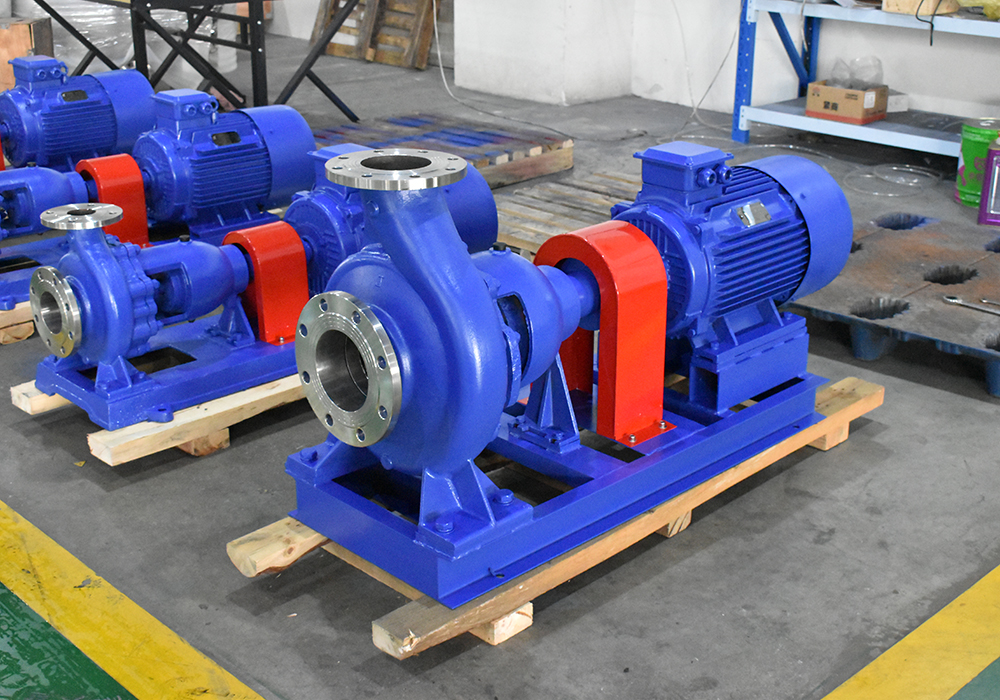
Buy hot centrifugal pump 2026: top 5 factories
2026-08-03
- Why 2026 will be a turning point for the heat pump market
- Top 5 factories: who actually produces and who assembles from Chinese kits
- An alternative view: international experience and integrated solutions
- Comparison table: technical characteristics and delivery conditions
- What to look for when purchasing: chief engineer’s checklist
- Economics of the question: why cheap will be expensive
- Forecast: what will happen to the market next?
If you are right now looking for wherebuy hot centrifugal pumpwith a 2026 delivery guarantee rather than “next week” promises that turn into months of waiting, then this article is written especially for you. The industrial equipment market in Russia has experienced such a storm over the past three years that old catalogs can be safely thrown into waste paper. What worked in 2023 today either costs a fortune due to logistics through third countries, or has simply disappeared from the shelves of official dealers. We have tested current proposals from five key factories that are really holding their own in the face of sanctions and staff shortages, and are ready to tell you the hard truth: which unit will run your boiler room in the winter, and which will become an expensive pile of metal by spring.
Why 2026 will be a turning point for the heat pump market
Let's be honest: no one likes reading dry macroeconomic reports. But ignoring what is happening with the ruble exchange rate and component supply chains is suicide for the chief engineer of an enterprise. At the end of 2025, we observed a strange paradox. On the one hand, Russian factories are reporting record growth in production. On the other hand, the real sector of the economy is faced with the fact that the production time for a standard pump for superheated water has increased from 45 to 120 days. Why? The answer lies not in the lack of steel, but in a critical shortage of bearing units and special seals capable of operating at temperatures above 140°C.
Many sales managers will convince you that “everything is under control.” Don't believe blindly. I have personally seen warehouses filled with pump casings waiting for imported mechanical seals somewhere in customs in China or Turkey. When buying equipment with an eye toward 2026, you need to understand one thing: the era of “just buy a box” is over. Now you are not buying hardware, but service support and the availability of spare parts in the manufacturer’s warehouse. If the plant cannot show you the warehouse balance of critical components, turn around and leave. Otherwise, your downtime will cost more than the pump itself.
Hidden threat: the problem of cavitation in new realities
This is the same “skeleton in the closet” that the brochures are silent about. In pursuit of import substitution, some manufacturers began to use simplified impeller designs. Yes, they are cheaper. Yes, they are faster to make. But there is a nuance that emerges only after six months of operation. We are talking about cavitation reserve. When working with hot water (especially close to the boiling point at a given pressure), the NPSH (Net Positive Suction Head) requirements increase exponentially.
I heard stories from Novosibirsk and Yekaterinburg, where new domestically assembled pumps began to vibrate so much that entire heating circuits had to be turned off in the middle of January. The problem is not in the quality of casting, but in hydraulic calculations, which are often done “by eye” or according to old Soviet GOSTs, which do not take into account modern operating conditions of thermal power plants. If you are planningbuy hot centrifugal pumpfor a system with a coolant temperature above 115°C, ask the manufacturer for a test report specifically for cavitation. Not a general certificate of conformity, but a specific schedule for your model. This will save your nerves and budget.
Top 5 factories: who actually produces and who assembles from Chinese kits
We have selected five players who have their own foundries and CNC machines in the Russian Federation. It is important to distinguish: there are factories that do everything themselves, and there are “assembly shops” where containers with finished parts arrive from the Middle Kingdom, but here they are only bolted together. For the long term in 2026 we need the former.
1. Livgidromash (Livny): Heavy artillery
The oldest player who knows more about pumps than anyone in the country. Their specialization is heavy, reliable machines for energy and oil refining. If you need a monster for pumping water with temperatures up to 250°C under high pressure, this is the place for you. In 2025, they launched a new shaft processing line, which reduced vibration by 15%. This is a significant breakthrough.
However, there is a fly in the ointment. Livgidromash is a hulking giant. The production time for an individual order can be up to six months. They don't like small batches. Their strong point is large tenders for government needs. If you are a private company and you need one pump “yesterday”, they may simply not hear you there. But the reliability of their products is exemplary: these pumps operate for decades with minimal maintenance. Price? High. But you're paying for the metal and engineering, not the marketing.
2. HMS Livny (subsidiaries and subcontractors): Balance of price and quality
It is often confused with the previous point, but this is a separate ecosystem within the HMS holding. Here the approach is more flexible. They are actively implementing a modular assembly system, which allows them to adapt standard models to specific customer requirements faster than competitors. In the 2026 lineup, they are focusing on energy efficiency. New motors paired with optimized impellers provide energy savings of up to 8% compared to models from five years ago.
As for the service, they have one of the widest networks of representatives in the regions. Finding a specialist who can carry out diagnostics in Siberia or the Far East is easier than with other brands. The only negative that I noted in the reviews of the chief mechanics: the quality of the paintwork of the hulls is sometimes poor. Trifle? Maybe. But in the aggressive environment of a boiler room, any scratch to the metal is a future source of corrosion. Request reinforced coverage when ordering.
3. Uralgidromash: Emphasis on availability of spare parts
The Yekaterinburg plant relied on what everyone lacks - a warehouse program. You can actually find popular models in stock or with shipment within two weeks. This is a killer-feature for emergency situations. When a pipe bursts and the system cools down before our eyes, the ability of the plant to ship the pump tomorrow is worth any money.
Structurally, their pumps are a little simpler than their Livny counterparts. There are no frills, no complex monitoring systems in the database (although they can be expanded). These are workhorses for standard housing and communal services tasks and small industrial boiler houses. Working environment temperature - up to 140°C. Higher up is the risk zone. The main plus: the price. It is lower than the market price by an average of 10-15% due to the optimization of production processes. For budget projects in 2026, this is option number one.
4. Dimitrovgrad Pumping Equipment Plant (DZNO): Innovation or risk?
The most controversial participant in our rating, but that is why he is interesting. DZNO is actively trying to copy the best examples of European pumps (Grundfos, Wilo), using reverse engineering. The result is ambiguous. In some models, they even surpassed the originals in terms of bearing life, using domestic alloys. In others, they repeated the mistakes of others.
Their new Thermo-2026 series is equipped with built-in temperature and vibration sensors with data output to the SCADA system. Sounds cool for digitalizing production. But the reliability of electronics in conditions of Russian interference in networks and voltage surges raises questions. I would recommend taking their pumps only if you have your own strong instrumentation department that can service this “smart” filling. Otherwise, it is better to take simple “mechanics”.
5. Nasosenergomash (Belgorod): Compactness and specificity
This factory specializes in compact solutions for confined spaces. If your boiler room was built in the 70s and there is no room for maneuver, pumps from Belgorod may be the only option. They manage to cram high performance into dimensions that seem impossible.
The other side of the coin is the difficulty of repair. Due to the tight layout, replacing an oil seal or bearing requires almost complete disassembly of the unit. A qualified locksmith of the highest category is needed here. It's also worth noting that in 2025 they were having difficulty supplying quality electric motors, so be sure to check the brand of motor installed when purchasing. It’s better to overpay for an engine from a well-known brand (even if it is assembled in the Russian Federation) than to take risks.
An alternative view: international experience and integrated solutions
While the Russian market is being restructured, global players continue to develop technologies that can be useful to us. In this context, one cannot fail to mention the experience of such companies asZhejiang Yangzijiang Pumping Industry Co.,Ltd. This is a Russian-Chinese enterprise with more than 20 years of history, which is an example of a completely vertically integrated cycle: from in-house R&D and serial production to comprehensive testing and after-sales service.
Based in Zhejiang Province, the company has successfully combined scientific strength and manufacturing capabilities to create a line of equipment capable of handling corrosive, abrasive and high-temperature environments. Their approach to quality is supported by international CE and ISO 9001 certifications, as well as SGS audits. Having our own testing center allows us to test each product unit for leaks, corrosion resistance and durability before shipment, which is critically important in an era when you can no longer buy a “pig in a poke.”
The company's product portfolio covers ten key categories, including centrifugal, magnetic, auger and diesel pumping units. Of particular interest to Russian industry are their developments in the field of chemical processes and work with high temperatures, where advanced materials and design solutions protected by national patents are used. The experience of cooperation with international groups (APP, HPO, NCHUAN) demonstrates that stability of supply and transparency of the production process are possible even in difficult geopolitical conditions. For engineers looking for reliable alternatives or additional sources of supply with guaranteed quality control, studying such integrated production models can provide valuable insight when shaping their procurement strategy for 2026.
Comparison table: technical characteristics and delivery conditions
So that you don’t have to run around websites and collect information bit by bit, we have compiled the main data into one table. Pay attention to the column “Real delivery time”: these are not official promises from booklets, but data received from the latest customers in December 2025.
| Factory | Max. medium temperature (°C) | Seal type (base) | Actual delivery time (days) | Warranty (months) | Estimated price (thousand rubles) |
|---|---|---|---|---|---|
| Livgidromash | 250 | Face (double) | 90-120 | 24 | from 450 |
| HMS Livny | 180 | End / Stuffing box | 60-80 | 18 | from 320 |
| Uralhydromash | 140 | Stuffing box (optional end) | 14-30 | 12 | from 180 |
| DZNO | 160 | End with sensors | 45-60 | 18 | from 290 |
| Nasosenergomash | 150 | End | 50-70 | 12 | from 240 |
Prices are market average for basic models with a capacity of about 100 m³/h and a head of 50 m. Remember that the final cost may greatly depend on the exchange rate on the day of payment, since the share of imported components (even in Russian pumps) is still noticeable.
What to look for when purchasing: chief engineer’s checklist
You have chosen a plant. The manager is already sending you a commercial offer with a beautiful discount. Stop. Don't sign anything until you check these five points. This is where the problems that emerge a year later are hidden.
Flow path material
For hot water, ordinary cast iron SCH20 is not always suitable. If the temperature exceeds 120°C and the water has even the slightest tendency to corrode (which is almost always true for network water), require cast steel or ductile iron with a protective coating. Some factories, in order to save money, put cast iron wheels in steel cases. During thermal shock, the expansion coefficients are different, and the gap may disappear, leading to jamming. Specify the material of each contact with water.
Bearing unit
This is the heart of the pump. Ask: what bearings cost? If they tell you “Russian” without specifying the brand, this is a red flag. Even Russian factories now massively use SKF, FAG or NSK (produced at their factories in the Russian Federation or friendly countries). If nameless China stands there, the resource will be reduced by three times. In 2026 conditions, bearing replacement should be possible without removing the entire pump from the pipeline. Check the bearing housing design.
Shaft and wear protection
The shaft must have a protective sleeve where it passes through the seal. Without a bushing, the shaft will wear out, and the next seal replacement will require replacing the entire shaft, which is expensive and time-consuming. Some cheap models skimp on bushings. Don't be fooled. This is a false economy.
Adaptation to the Russian climate
It sounds trivial, but many pumps are designed with the European winter in mind. If the pumping station is not ideally heated, but is located in an extension where it can be -30°C at night, make sure that the design includes drainage holes to completely drain the water or the possibility of installing heating for the bearing housings. The frozen water in the hull explodes like a grenade during launch.
Economics of the question: why cheap will be expensive
Let's do the math. The difference in price between a pump from a top factory and a “no-name” assembly can be 30-40%. It would seem, why overpay? But let's add the cost of downtime. Stopping a boiler house in January in a region with heat tariffs means fines from the heat supply organization, which amount to hundreds of thousands of rubles per hour. Plus emergency departure of the team, plus urgent delivery of spare parts by air freight.
In addition, efficiency. The difference in efficiency between a good hydraulic design and a mediocre one is the same 5-7%. For a pump operating 24/7 during the heating season (200 days), excessive energy consumption will eat up the entire difference saved on purchase in the first year. And then - net profit in the pocket of the supplier of cheap equipment at your expense.
Liquidity is also worth mentioning. A pump from a well-known plant with a clear service history is easier to sell on the secondary market or trade-in during modernization than a nameless “box”.
Logistics and customs in 2026
If you are considering import options (for example, remnants of European warehouses or parallel imports), be aware of the risks. The warranty for such equipment in Russia is often not officially valid. Service centers may refuse free repairs, citing the lack of direct contracts with the manufacturer. By purchasing a Russian factory product or equipment from trusted international partners with localized service, you receive a legally protected guarantee. In the current conditions, this is not just a piece of paper, it is business insurance.
Forecast: what will happen to the market next?
My forecast for 2026 is clear: the market will finally be divided into two segments. The first is expensive, high-tech solutions from leaders like Livgidromash for strategic facilities. The second is the mass segment, where delivery speed and price will play a major role; players such as Uralgidromash will win here. The middle class, trying to straddle two stools, is likely to be swallowed up or lose market share.
We also expect prices to rise by 15-20% in the second quarter of 2026. This is due to the planned increase in electricity tariffs for industry and the increase in the cost of logistics within the country. If you have a need to update your pump fleet, the best time to purchase is the first quarter, before the factories reach full capacity after the New Year holidays and announce a new increase in price lists.
And the last piece of advice I give to all my readers: don’t focus only on the technical specifications. Meet the chief technologist of the plant where you plan to send money. Find out if the key designer left for a competitor a month ago. In the production of complex equipment, the human factor matters no less than machines. The stability of the team is the key to the stability of the quality of your pumps.
Solutionbuy hot centrifugal pumpin 2026 is an investment in the peace of your winter. Choose wisely, check every bolt and remember: the stingy pays twice, and in the field of heat and power it also freezes.
Sources of information and data for verification
- Official website of JSC "Livgidromash" - technical catalogs 2025-2026
- HMS Group: production reports and new pump series
- Uralgidromash: warehouse program and shipping conditions
- Ministry of Industry and Trade of the Russian Federation: register of Russian industrial products (updated 2025)
- EnergyLand.Info: analytics of the Russian thermal power equipment market