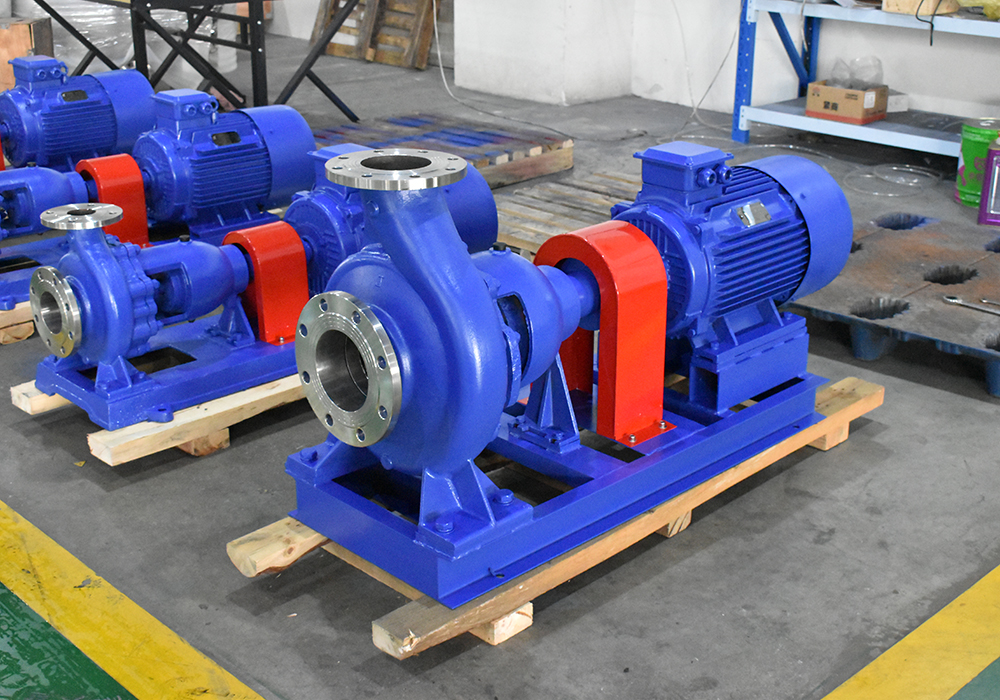
Innovations in production: wholesale large centrifugal pumps factories
2026-06-07
- Why Industrial Centrifugal Pumps Determine Your Efficiency
- Technical parameters: what to look for in the specifications before purchasing
- Risks of wholesale purchases: how to avoid defects and missed deadlines
- Standards and certification: a language of trust between buyer and factory
- Comparative analysis of pump types for various applications
- Innovations and trends in 2026: where the industry is heading
- Frequently Asked Questions
- Final summary and action plan
Why Industrial Centrifugal Pumps Determine Your Efficiency
In modern industry, pumping liquids is not just an auxiliary operation, but a critical process on which the continuity of product output depends. When we talk about purchasing equipment in bulk, the key parameter is not only the price per unit, but also the total cost of ownership (TCO) over 10-15 years of operation.Centrifugal pumpsremain the gold standard for moving large volumes of water, chemicals and slurries due to their reliability and ease of maintenance. However, the market is oversaturated with offers where beautiful catalogs hide poor casting quality or a discrepancy between the stated characteristics and real working conditions.
Our experience shows that an error in choosing a supplier at the line design stage costs the enterprise millions of rubles in losses due to downtime. In this article, we will analyze the technical nuances that distinguish professional equipment from budget analogues, analyze the current quality standards of 2026 and give specific recommendations for choosing a manufacturer. We will not use general phrases - only facts, figures and real cases from the practice of integrating pumping equipment into complex technological chains.
Technical parameters: what to look for in the specifications before purchasing
When analyzing commercial proposals, many buyers focus exclusively on engine power and maximum pressure. This is a fundamental mistake. The real efficiency of the station is determined by the accuracy of the hydraulic calculation and the quality of the flow part. In our practice, there was a case when a client replaced a batch of cheap units with solutions with a slightly higher initial cost, but with an optimized impeller, which reduced the workshop’s energy consumption by 18% in the first year.
The critical parameter is the efficiency (coefficient of performance) at the operating point. Many manufacturers indicate peak efficiency, which is achieved only within a narrow flow range. You need to require a graph of efficiency versus flow (Q-H曲线). If the curve drops sharply at just 10% off-nominal, the pump will be unstable as your system's demand fluctuates. The optimal operating range should be at least ±15% of the BEP.
The material of the flow part dictates the service life of the equipment. To pump clean water, cast iron HT200 or HT250 is sufficient. However, if abrasive particles or aggressive chemical compounds are present in the liquid, the use of stainless steels (AISi 304, 316L) or fluoroplastic lining (PTFE/F46) is required. For example, models likeCQB-F, equipped with a lining, show exceptional resistance to acids, which is confirmed by tests in the laboratories of our partners. Ignoring chemical compatibility will result in through-corrosion of the casing after 6-8 months, even if the pump initially worked normally.
Another hidden parameter is the NPSHr. The lower this value, the lower the risk of cavitation when sucking liquid at elevated temperatures or from tanks with low levels. High NPSHr requires increasing the pump height or increasing the inlet pressure, which entails additional capital costs for building foundations or installing booster pumps. When purchasing in bulk, always request certified NPSHr curves for each model.
The tightness of the connection between the shaft and the housing is the area of greatest risk of leaks. Traditional stuffing box seals require constant tightening and replacement, creating environmental risks. The modern standard is mechanical mechanical seals (single or double seal) with a flushing system according to API 682. For particularly hazardous media, such as volatile solvents or toxic acids, magnetic pumps (CQF, ZCQ series) are the only solution, where torque is transmitted through a magnetic coupling without physical contact of the shafts. This completely eliminates leaks to the outside.
Recommendation:Before approving the specification, request a lot-specific hydraulic test report from the supplier. Do not accept standard certificates - you need data on real copies that will arrive at your warehouse.
Risks of wholesale purchases: how to avoid defects and missed deadlines
Purchasing industrial equipment in bulk always involves risks that are not obvious at the stage of signing the contract. The buyer's main enemy is the lack of transparency in the supplier's production cycle. Many companies position themselves as manufacturing plants, being essentially assembly shops that buy components from third parties. This creates problems with quality control and assurance.
In 2025, we were faced with a situation where a large trading house supplied a batch of pumps with mismatched impellers. Externally, they were identical to those ordered, but the balancing was performed according to class G6.3 instead of the required G2.5. The result is increased vibration, destruction of bearing units after 2000 hours of operation and line shutdown. To avoid such situations, it is necessary to audit the partner’s production capacity.
What to look for during an audit:
- Availability of our own foundry or long-term contracts with proven foundries.The quality of cast iron and steel is determined precisely at the smelting stage. Monitoring the chemical composition of the alloy with a spectral analyzer is mandatory for each melt.
- Equipment for dynamic balancing.Static balancing is not sufficient for speeds above 1450 rpm. Require machines to dynamically balance rotor assemblies.
- Test stand.The plant must have its own stand for measuring pressure-flow characteristics (Q-H), checking power consumption and cavitation tests. The absence of a stand means that the plant does not know the real parameters of its product.
- Quality control system.A valid ISO 9001 certificate is a minimum requirement. It is important that the system actually works: incoming inspection logs, process maps, output inspection reports for each product.
Zhejiang Yangzijiang Pumping Industry Co., Ltd. demonstrates an example of a vertically integrated approach, where all stages - from R&D to final testing - are controlled within one perimeter. The enterprise's own testing center allows us to verify the performance, pressure and tightness parameters of each product unit before shipment, which is critically important for wholesale quantities, where the percentage of defects should tend to zero. This structure ensures that you receive exactly what is indicated in the product passport, and not the average data for the batch.
Logistics and packaging are another bottleneck. Pumping equipment is sensitive to shock during transportation. Wood sheathing must be made to ISPM 15 standards for international freight. Lack of proper preservation (anti-corrosion lubricant, desiccant) leads to oxidation of the shaft seats even before installation. Request a photo report of the packaging before shipping.
Tip:Include in the contract a clause on penalties for deviations of actual characteristics from passport data by more than 3%. This disciplines the supplier.
Standards and certification: a language of trust between buyer and factory
In a global market, the presence of international certificates is not a formality, but proof of the plant’s ability to comply with strict regulations. For the Russian market and CIS countries, the key ones are GOST certificates of conformity, the CU TR (EAC) declaration, and for export to Europe - CE marking. However, the certificate itself on paper means nothing if it is not supported by regular inspections.
The ISO 9001 certificate confirms that the plant has built a quality management system. But it’s important to understand the difference between “received once” and “supported annually.” On-site audits by SGS or Bureau Veritas provide much more assurance than just a certificate on the wall of the sales office. A company undergoing such inspections as Zhejiang Yangzijiang Pumping Industry Co., Ltd. is forced to maintain high-level processes at all times, since any detected defect may lead to the revocation of the certificate.
To work in hazardous areas (oil and gas sector, chemical production), an Ex certificate is required (ATEX for Europe, IECEx international, or explosion protection according to GOST for the Russian Federation). The motors and electrical equipment of the pumps must comply with the explosion protection class specified in the project (for example, Ex d IIB T4). Installing a conventional pump in an explosive area is a direct violation of industrial safety rules with all the ensuing legal consequences.
Hydraulic pressure testing is a mandatory procedure for every pump housing. The standard requirement is a pressure test of 1.5 times working pressure for a specified time without signs of leakage or deformation. Reports of these tests must be supplied with each pump in the bulk shipment. The absence of individual protocols is a red flag indicating selective control, which is unacceptable for critical applications.
Environmental standards also play a role. Modern pumps must minimize leakage and noise. The sound pressure level should not exceed 85 dB(A) at a distance of 1 meter. Exceeding this threshold requires additional costs for sound insulation of premises, which is often forgotten to be taken into account in the project estimate.
Action:Request copies of current certificates and recent inspection reports from the supplier. Check validity dates and scope of application (model range).
Comparative analysis of pump types for various applications
Choosing between different types of pumping equipment often causes confusion for design engineers. To make the right decision, you need to clearly understand the limits of applicability of each type. Below is a comparison of centrifugal pumps with other common types in the context of industrial applications.
| Comparison criterion | Centrifugal pumps | Screw pumps | Diaphragm pumps | Piston pumps |
|---|---|---|---|---|
| Operating principle | Dynamic (centrifugal force) | Volumetric (screw displacement) | Volumetric (membrane vibration) | Volumetric (reciprocating motion) |
| Supply (flow) | High, smooth, depends on pressure | Average, constant, slightly dependent on pressure | Low/Medium, Pulsating | Low, high dosing accuracy |
| Pressure | Medium/High (multi-stage) | Medium | Medium/High | Very tall |
| Working with viscous liquids | Poor (efficiency drops sharply) | Excellent (up to 100,000 cP) | Good (depends on valves) | Satisfactory |
| Working with abrasives | Requires special materials (Hardoloy alloy, etc.) | Good (with correct propeller pitch) | Excellent (no rubbing vapors in the chamber) | Poor (rapid wear of seals) |
| Dry running | Inadmissible (failure of seals) | Short term acceptable | Let's say | Not acceptable |
| Main Application | Water supply, circulation, fire extinguishing | Oil, sludge, wastewater, food pastes | Chem. dosing, hazardous environments | Hydraulics, high pressure |
From the table it is clear thatcentrifugal pumpsIndispensable where high flow is required at moderate pressure and low viscosity of the medium. Trying to use them to pump fuel oil or thick syrup will result in motor overload and cavitation. In such cases, as implementation practice at enterprises in the food and petrochemical industries shows, it is more rational to choose GF screw pumps, which provide a stable flow regardless of changes in pressure in the network.
On the other hand, if the task is to pump aggressive acids with solid inclusions, diaphragm pumps may be preferable due to the lack of gland seals. However, their performance is limited, and flow pulsations may require the installation of dampers. Centrifugal pumps with magnetic coupling (such as the CQB-L or ZCQ series) fill the gap between these solutions, offering high reliability and complete sealing for clean and lightly contaminated chemical media.
When choosing multistage centrifugal pumps (for example, DC models for feeding boilers), it is important to consider the total head. Each step adds a certain number of meters of water column. An error in calculating the number of stages will result in the pump either not pushing through the system or working against a closed valve, causing overheating of the liquid inside the housing.
Conclusion:There is no “universal” pump. The selection should be based on the system operating point diagram. If your environment changes properties (temperature, viscosity) during the seasons, consider installing a frequency converter to flexibly adjust the characteristics of the centrifugal pump.
Innovations and trends in 2026: where the industry is heading
The pumping equipment market does not stand still. By 2026, the main development drivers have shifted towards energy efficiency, digitalization and environmental friendliness. European directives and Russian government programs encourage the transition to IE4 and IE5 energy efficiency class motors. The use of older models with IE2 motors is becoming economically unprofitable due to rising electricity tariffs.
Digital twins and IoT sensors are becoming standard for large industrial facilities. Modern pumping units are equipped with vibration, bearing temperature and leakage sensors that transmit data to the SCADA system in real time. This allows you to move from scheduled preventive maintenance to maintenance based on actual condition. Predicting bearing failure 2 weeks before an accident saves the enterprise hundreds of thousands of rubles.
Materials science is also making progress. Composite impeller materials are beginning to replace traditional bronze and cast iron in saltwater and corrosive applications. They are lighter, non-corrosive and have better hydraulic characteristics due to their smooth surface. Zhejiang Yangzijiang Pumping Industry Co., Ltd. actively invests in R&D, developing new design solutions and obtaining national patents, allowing it to remain at the forefront of these technological changes and offer customers advanced products.
The trend toward modularity makes repairs and upgrades easier. The ability to quickly replace a seal assembly or impeller without dismantling the entire pump reduces downtime. Standardization of mounting dimensions according to ISO 2858 makes it easier to replace equipment from different manufacturers, reducing dependence on a single spare parts supplier.
Environmental requirements are becoming more stringent. The discharge of drainage water from gland seals into sewers is increasingly prohibited. This speeds the transition to pumps with double mechanical seals with barrier liquid or to sealless magnetic pumps. Some regions impose taxes on the carbon footprint of products, making localization of production or choosing the nearest reliable supplier a strategic decision.
Forecast:In the next 3 years, the demand for “smart” pumping stations with built-in automation will increase by 40%. Prepare for this by choosing equipment that can integrate into your plant's digital ecosystem.
Frequently Asked Questions
What is the service life of industrial centrifugal pumps?
Subject to operating conditions and timely maintenance, the pump life is 15–20 years. Bearings and seals require replacement every 2–3 years (or 16,000–24,000 hours). The service life strongly depends on the cleanliness of the pumped medium and the absence of cavitation.
Can a hot water pump be used without special modifications?
No. For temperatures above +80°C, a pump with a cooling chamber (cooling jacket) for the bearing assembly and heat-resistant sealing materials is required. A conventional pump will quickly fail due to thermal expansion of the shafts and loss of lubricant properties.
What to do if the pump operates with increased vibration?
Check the alignment of the motor and pump shafts (tolerance no more than 0.05 mm), the condition of the foundation (bolts must be tightened), the absence of cavitation (check the inlet pressure) and the balancing of the impeller. In 70% of cases the problem is poor alignment or air pockets in the suction line.
Do you guarantee availability of spare parts 5 years after purchase?
Responsible manufacturers such as Zhejiang Yangzijiang Pump Industry Co.,Ltd maintain a spare parts warehouse for active models for 10 years. When ordering a large batch, it is recommended to immediately purchase a set of repair kits (seals, bearings, gaskets) for 3–5 years of operation.
Final summary and action plan
Selecting a wholesale centrifugal pump supplier is a strategic decision that will impact the operational efficiency of your business for decades. Don't chase the lowest price on the exchange. A cheap pump that breaks down once every six months will cost more than a premium analogue that works without failures. Evaluate the supplier comprehensively: the presence of its own production, testing facilities, ISO/CE certificates and reputation in the market.
Companies that combine the functions of designer and manufacturer, such as Zhejiang Yangzijiang Pumping Industry Co., Ltd., offer an optimal balance of price and quality by controlling all stages of product creation. Their experience in cooperation with international groups (APP, HPO, NCHUAN, DALI) confirms their ability to complete complex orders on time and with the required quality.
Your next step is to audit your current needs and compare them with the technical capabilities of potential suppliers. Request a test sample or visit the production facility to verify the partner’s competence in person. Remember: the reliability of your system begins with the quality of every screw in the pump.
If you are ready to discuss the details of your project and receive an individual commercial offer with cost-effectiveness calculations,contact us today. Our engineers will help you choose the best model from a wide range, including magnetic, slurry and multistage pumps, tailored to your specific operating conditions.