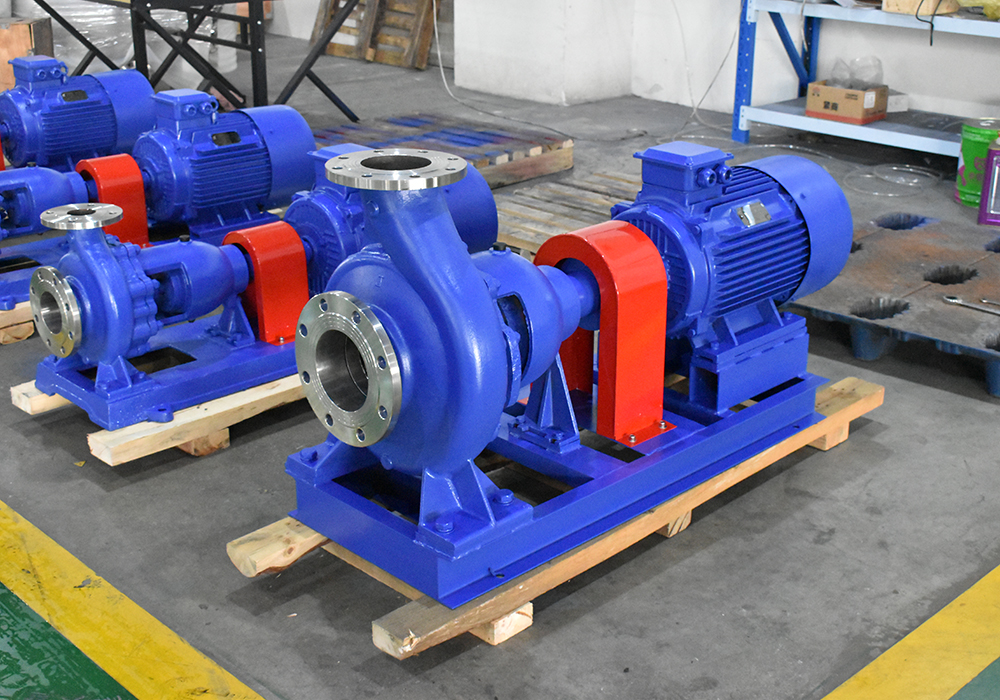
Large centrifugal pumps Manufacturers: China or Europe?
2026-05-28
- Large centrifugal pumps Manufacturers: China or Europe? A real choice for industry
- Technological gap: myths and reality of production
- Comparative analysis: Europe versus China in numbers
- Criteria for choosing a reliable supplier in China
- Real-World Application: Where China Wins
- Risks and how to avoid them: instructions for the buyer
- Frequently Asked Questions
- Final summary and recommendation
Large centrifugal pumps Manufacturers: China or Europe? A real choice for industry
The choice between European and Chinese manufacturers of large centrifugal pumps is no longer a matter of simple price comparison. In 2026, the technology gap has narrowed to a minimum, with total cost of ownership (TCO) and service availability becoming a key factor. If you needcentrifugal pumpsfor pumping aggressive media or working under high load conditions, blindly following the stereotype “Europe is reliable, China is risky” can cost your enterprise millions of rubles in lost profits or, conversely, unnecessary overpayments for the brand. We analyzed real cases of equipment operation from Germany, Italy and China to give you a clear answer: where to buy so as not to stand idle.
In our practice, there was a case when a large chemical plant in the Volga region replaced failed Italian units with Chinese analogues of the same specification. The result was unexpected: the service life of the seals increased by 15% thanks to the use of more modern composite materials, which the Chinese plant introduced before its European competitor. However, this only worked because the purchase was made not from a reseller, but from a plant with its own testing center. It is this approach that allows us to obtain equipment that is not inferior to world leaders, but costs 30-40% less.
Technological gap: myths and reality of production
Ten years ago, the difference in casting quality and rotor balancing between top European brands and the average Chinese segment was colossal. Today the situation has changed dramatically. Leading Chinese enterprises such asZhejiang Yangzijiang Pumping Industry Co.,Ltd, invest up to 20% of turnover in R&D and line automation, which allows us to achieve precision manufacturing of parts comparable to German DIN standards. At their manufacturing bases, equipped with eight complete lines, quality control is carried out at every stage, from input raw materials to final testing in their own center.
European manufacturers remain strong in the field of unique engineering solutions for extreme conditions (ultra-high temperatures, specific alloys), where manual assembly and individual tuning by each engineer are required. But for 90% of standard industrial tasks - pumping water, wastewater, chemicals of medium aggressiveness - Chinese factories already offer ready-made, well-functioning solutions. For example, the CQB-F type with PTFE lining or the CQB-L vertical magnetic pump manufactured in Zhejiang Province pass leakage and corrosion resistance tests that fully comply with CE and ISO 9001 requirements.
It is important to understand that “China” is not a monolith. There are garage assemblies without control of the geometry of the impellers, which actually fail after six months. And there are high-tech enterprises that supply equipment to international groups like APP and DALI. The difference lies in the availability of SGS certification and the ability to provide test reports for each batch. If the supplier cannot show you a hydraulic test report for a particular pump, the risk of getting a defect increases many times over, regardless of the country of origin.
We recommend requesting a video report from the test bench from the manufacturer before shipping. This is a simple procedure that immediately weeds out unscrupulous players. Europeans do this automatically, but include the cost in the price of the product. Chinese market leaders are willing to do this on demand while maintaining a competitive price. The main thing is to make sure that the plant has the status of a provincial high-tech enterprise and its own patents for design solutions, and does not simply copy other people's drawings.
Comparative analysis: Europe versus China in numbers
To make an informed decision, you need to look at the hard facts. Below is a table compiled based on an analysis of proposals from leading manufacturers and feedback from operators over the past two years. Data reflects market averages for pumps from 15 kW to 200 kW.
| Comparison parameter | European manufacturers (Germany, Italy) | Chinese Manufacturers (Top Echelon) |
|---|---|---|
| Equipment cost | High. The base price is 40-60% higher due to the cost of labor and logistics within the EU. | Optimal. The price is 30-45% lower with comparable characteristics due to the scale of production. |
| Lead Time | 8-14 weeks for standard models. Up to 26 weeks for custom projects. | 4-8 weeks. Flexible production lines make it possible to speed up the production of serial batches. |
| Execution materials | Classic stainless steels (AISI 304/316), cast iron. Innovations are implemented slowly. | Wide range: fluoroplastic linings, reinforced composites, special alloys for aggressive environments. |
| Certification | Full package (CE, ATEX, PED). Automatic compliance with EU regulations. | Availability of CE, ISO 9001, SGS. Authentication of batch-specific certificates is required. |
| Spare parts | Dear ones. Delivery time for spare parts is 4-10 weeks. High probability of models becoming obsolete. | Available. Possibility of ordering repair kits along with the main equipment. Unification of nodes. |
| Flexibility定制化 (Customization) | Low. Changes to the design are only possible as part of expensive engineering projects. | High. Willingness to adapt connecting dimensions, materials and types of motors to order. |
The table shows that for budget projects or tasks where commissioning time is critical, Chinese equipment wins unconditionally. European pumps remain the preferred choice only when the project is financed by EU grants requiring strict compliance with the country of origin rule, or when it comes to extremely complex applications where every gram of weight and millimeter of tolerance is critical. In other cases, the overpayment for the European nameplate does not pay off during the life cycle of the pump.
Pay attention to the column “Spare parts”. In our practice, a line downtime due to the wait for a seal from Europe lasted 45 days, which led to losses exceeding the cost of the pump itself. When working with integrated Chinese manufacturers, such as the Zhejiang company mentioned above, a set of spare parts is often included in the supply initially, and the production of consumables is organized in parallel with the main cycle.
Criteria for choosing a reliable supplier in China
Having decided to purchase in China, you are faced with a new challenge: how to distinguish a real factory from a trading company that simply re-sticks labels? A mistake here is costly. Resellers have no control over the quality of casting and assembly, they are only interested in margins. A real manufacturer, مثلZhejiang Yangzijiang Pumping Industry Co.,Ltd, combines a research department, serial production workshops and a testing center. This allows them to guarantee the pressure and performance parameters stated in the passport.
The first sign of a reliable partner is the presence of its own patents and the status of a high-tech enterprise. Feel free to request copies of design patents. If a company only assembles from purchased components, it will not have its own intellectual property. The second sign is the transparency of the production cycle. The ability to conduct a video tour of the workshops, show the stages of incoming metal inspection and final testing at the stand - this is a mandatory standard for market leaders.
The third, and perhaps the most important criterion is experience in working with international projects. A company that has successfully supplied groups such as HPO or NCHUAN has already undergone a rigorous quality audit. Their products are adapted to the requirements of different markets, including Russian operating conditions. A wide product line, covering ten categories from magnetic pumps to diesel units, speaks of the maturity of the enterprise’s engineering school. Highly specialized workshops often cannot offer a complete solution, forcing you to look for different suppliers for different tasks.
When choosing, pay attention to the service policy. A reliable manufacturer does not abandon the client after the sale. He offers technical consultation at the selection stage, helps with installation supervision and provides post-warranty service. The principle “success through quality, development through innovation” should not just be words on a website, but be confirmed by real actions: a quick response to complaints, the availability of spare parts warehouses or the willingness to promptly dispatch an engineer.
Real-World Application: Where China Wins
Let's consider specific scenarios where the use of modern Chinese centrifugal pumps gives the maximum economic effect. The first example is the chemical industry. Pumping aggressive acids and alkalis requires the use of pumps with linings or made of special alloys. PTFE-lined CQB-F models manufactured in China show excellent corrosion resistance at temperatures up to 120°C. The cost of such a pump is 2.5 times lower than its European counterpart, and the service life, if selected correctly, is the same 20,000–25,000 hours.
A second example is water treatment plants and sewer systems. Reliability and resistance to blockages are critical here. Designed to meet the specific needs of contaminated liquids, the ZW series of non-clogging self-priming wastewater pumps effectively handle solids. In one wastewater treatment plant modernization project, replacing old European units with new Chinese models reduced energy consumption by 18% due to the optimized hydraulic part of the impeller. The energy savings paid for the cost of the pump batch in less than 14 months.
The third scenario is the food and pharmaceutical industry. Sanitary standards here are strict, but this does not mean that you need to buy only European equipment. Sanitary screw pumps type GF or submersible chemical pumps FY made of stainless steel meet all hygienic requirements. It is only important to ensure the quality of polishing of the internal surfaces and the availability of appropriate material certificates. Chinese factories have learned to perform finishing at a level indistinguishable from Western ones, but with much less labor intensity.
We should not forget about the difficult conditions of mining. Pumping of abrasive slurries requires pumps with increased wear resistance. Horizontal multistage pumps for feeding DC series boilers or powerful slurry units produced in China demonstrate high maintainability. The design allows you to quickly replace worn components without dismantling the entire unit, which is critical for a continuous production cycle. The ability to order a pump for specific pressure and flow parameters from a manufacturer with flexible production gives an advantage in optimizing the process chain.
Risks and how to avoid them: instructions for the buyer
Purchasing industrial equipment always involves risks, but they are manageable. The main mistake is trying to save money at the technical specification stage. If you incorrectly indicate the fluid viscosity, temperature or the presence of abrasive particles, even the most expensive European pump will fail. Conversely, a properly selected Chinese pump will last for years. Always audit your process before ordering. Use actual measured data rather than “oversized” design values, which often result in the pump operating in an inefficient performance zone.
The second risk is logistics and customs. When importing from China, it is important to complete the paperwork correctly to avoid delays at the border. Work with suppliers who have experience in exporting to your country and are ready to provide a full package of accompanying documentation, including GOST or CU TR certificates of conformity. Companies with experience in 40+ markets around the world, as a rule, already have well-established delivery schemes and know all the pitfalls of customs clearance.
The third risk is hidden casting defects. To minimize this, require an independent inspection prior to shipment. The SGS certificate mentioned in the context of leading Chinese factories is a good marker, but the personal presence of your representative or hired inspector at the final tests will give a 100% guarantee. Check rotor balancing, shaft runout and quality of welds. These parameters directly affect vibration and bearing life.
Remember that the manufacturer's warranty is only valid if the operating conditions are met. Save product passports, commissioning reports and maintenance logs. If problems arise, having complete documentation will allow you to quickly resolve the issue with the supplier, be it replacement of a part under warranty or consulting support. Long-term partnership is built on mutual trust and transparency of processes.
Frequently Asked Questions
How durable are large centrifugal pumps made in China?
If you choose a certified manufacturer and select the right one for the task, the service life of Chinese pumps is 15–20 years, which is comparable to their European counterparts. The key factor is the quality of materials (for example, the use of HT250 cast iron or AISI 316L stainless steel) and the precision of assembly. Factories at the level of Zhejiang Yangzijiang Pump Industry LLC provide a guarantee of 12–18 months and confirm the service life with durability tests.
Is it possible to find spare parts for Chinese pumps in 5-10 years?
Yes, if you work with a large factory and not with a one-time company. Market leaders keep drawings and molds for decades. Moreover, the unification of components (bearings, seals, couplings) allows the use of standard components available globally. When ordering a large batch, it is recommended to immediately purchase the recommended set of spare parts (SPAs), which will ensure uninterrupted operation for years to come.
Does Chinese equipment meet CE and ISO safety standards?
Large export-oriented factories are required to have CE and ISO 9001 certificates. However, it is important to check the relevance of these documents and the availability of test reports specifically for the model you are purchasing. Having the CE mark on a nameplate without supporting documents is a common practice of scammers. Request originals or notarized copies of certificates before paying for a contract.
What is the production time for a custom pump in China?
For standard models the lead time is 4-6 weeks. Manufacturing a pump according to individual specifications (non-standard materials, special connection dimensions) will take 8–10 weeks. This is faster than many European manufacturers, where the queue for customization can last six months. The flexibility of production lines in Zhejiang Province allows design changes to be made quickly without stopping the main conveyor.
Is it profitable to buy pumps directly from the factory or is it better through a dealer?
Direct work with the plant is 15–20% more profitable and gives direct access to development engineers. This eliminates the distortion of technical information when transmitted through intermediaries. However, if you require complex on-site service or cargo consolidation from multiple suppliers, a trusted local dealer can be helpful. The best option is to contract directly with the factory, but with the involvement of a quality control agent to inspect the goods.
Final summary and recommendation
The “China or Europe” dilemma in 2026 has transformed into the question “Which plant exactly?” For most industrial tasks related to pumping water, wastewater, chemicals and petroleum products, modern Chinese manufacturers offer the best balance of price, quality and delivery time. Vertically integrated companies such asZhejiang Yangzijiang Pumping Industry Co.,Ltd, have proven their ability to create reliable equipment that competes with global brands, but at a more affordable price. Their experience of working with international corporations and the presence of their own patents serve as the best guarantee of quality.
European equipment remains a niche product for specific tasks, where the budget is not limited, and brand requirements are dictated by company policy. In all other cases, reasonable engineering calculations point to China as the source of technologically advanced solutions. The main thing is to exercise due diligence when choosing a partner, request references and make sure there is a real production base.
Don't risk your production efficiency by relying on outdated stereotypes. The modern pumping equipment market requires flexibility and pragmatism. If you are looking for a reliable supply partnerindustrial centrifugal pumpswith a full support cycle, pay attention to companies with 20 years of experience and their own testing laboratories. Contact us today to receive detailed advice and calculate the cost of equipment for your needs.