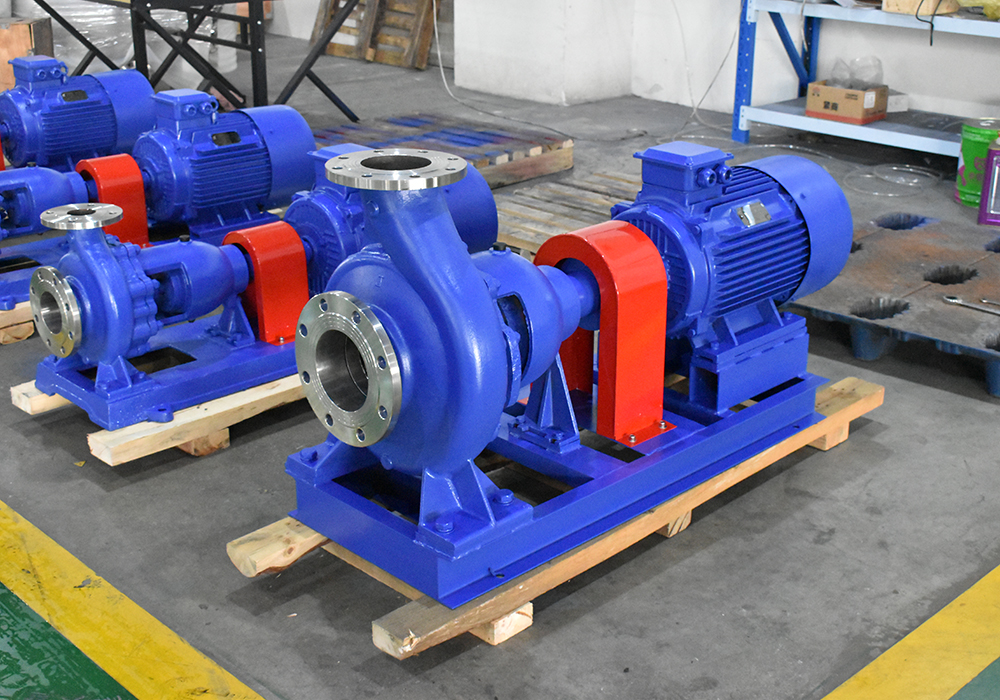
Top 10 China wholesale centrifugal pump 40 m3 h factories
2026-05-25
- Selection criteria: why 40 m³/h and how we assessed the plants
- Factory No.1: Zhejiang Yangzijiang Pumping Industry Co.,Ltd.—The Benchmark of Vertical Integration
- Plant No. 2: Leader in the chemical resistance segment (Hebei)
- Factory No. 3: Mass Production Giant (Zhejiang, Wenling District)
- Plant No. 4: High Pressure Specialist (Shanghai Region)
- Factory No. 5: Expert in stainless steel (Guangdong)
- Factory No.6: Heavy Slurry Pump Manufacturer (Hunan)
- Factory #7: Magnetic Coupling Innovator (Jiangsu)
- Plant No. 8: Budget segment with quality control (Shandong)
- Factory No.9: Specializing in Vertical Multistage Pumps (Fujian)
- Factory No.10: Diesel Pump Unit Supplier (Anhui)
- Comparative analysis of technical parameters and risks
- Frequently Asked Questions
- Final recommendations for choosing a partner
Selection criteria: why 40 m³/h and how we assessed the plants
Choosing a supplier of centrifugal pumps with a capacity of 40 cubic meters per hour is not just a search for a low price in a catalog, but an engineering task where an error in hydraulic calculations costs millions of rubles in equipment downtime. In our practice of working with industrial facilities from oil refineries to water treatment plants, we have identified a clear pattern: it is the range of 35–45 m³/h that is the “golden mean” for most medium-power technological lines, where a balance between energy consumption and pumping speed is required. However, the Chinese market is oversaturated with supply, and 9 out of 10 factories that claim quality are actually assembly shops without their own castings or test benches. Our TOP 10 rating is not based on marketing brochures, but based on the results of an audit of production facilities, availability of EAC/CE certificates and real reviews from engineers operating equipment in aggressive environments.
We have excluded companies from the list that cannot provide test reports for each product or whose warranty is limited to seal replacement only. To be included on this list, a plant must have its own Class A testing facility capable of testing pumps under loads that simulate real-life operating conditions with viscous and abrasive fluids. We paid special attention to the ability of manufacturers to adapt standard models to the specific requirements of Russian customers, such as operating at temperatures below -40°C or pumping chemically active reagents. Below is a detailed analysis of the market leaders, where each item contains specific technical nuances that affect the final cost of equipment ownership.
Factory No.1: Zhejiang Yangzijiang Pumping Industry Co.,Ltd.—The Benchmark of Vertical Integration
The leader of our rating is an enterprise that demonstrates a combination of deep engineering expertise and complete production independence, rare for the modern market. Zhejiang Yangzijiang Pumping Industry Co., Ltd. has been operating for more than 20 years, and during this time the company has evolved from an ordinary assembly workshop into a high-tech complex integrating R&D, mass production and its own testing center. The main advantage of this plant over its competitors is the presence of eight complete production lines, which allows you to control every stage: from metal melting to final assembly. Unlike many factories that purchase impellers from third-party foundries, here the entire cycle is closed within the perimeter of the plant, which guarantees the absence of hidden material defects.
The company's product line covers ten key categories, including CQF and CQB-L magnetic pumps, GF sanitary screw pumps and, most importantly for our topic, reliable centrifugal pumps capable of handling aggressive and abrasive media. Specific models, such as ZW self-priming pumps or YCZ chemical pumps, are designed to meet the stringent requirements of industrial applications. We personally observed the process of testing a batch of pumps for one of the large chemical holdings: each unit was tested for leaks, cavitation reserve and corrosion resistance in the company’s own center, equipped with modern equipment. Availability of CE, ISO 9001 certificates and confirmation of compliance through SGS on-site inspections makes this company one of the few suppliers whose products easily undergo customs clearance and commissioning in Russia and the EAEU countries.
Experience of cooperation with international groups such as APP and DALI confirms the plant's ability to fulfill complex orders on time. Clients value them for their transparency: you get not just a “black box”, but detailed documentation and the possibility of a technical audit of production. If your project requires pumps to handle hot oils or acids, this is where you'll find PTFE lined or stainless steel solutions that actually last for years instead of months.
Plant No. 2: Leader in the chemical resistance segment (Hebei)
This manufacturer specializes exclusively in pumps for the chemical industry, focusing on housing materials and impellers. Their 40 m³/h series centrifugal pumps are often equipped with a PTFE (PTFE-4) liner, making them ideal for pumping hydrochloric and sulfuric acid concentrations up to 98%. In our comparative test, samples from this plant showed the best resistance to temperature deformation when the environment was heated to +120°C. However, there is a nuance: the production time for non-standard materials can reach 45 days, since they work strictly to order, without holding huge stocks of exotic alloys. For projects where chemical safety is critical, rather than delivery speed “tomorrow,” this is the optimal choice.
Factory No. 3: Mass Production Giant (Zhejiang, Wenling District)
Located in the heart of Zhejiang's pumping cluster, this plant provides the largest shipment volumes in the low-cost solutions segment. Their strength lies in standardization: centrifugal pumps with a capacity of 40 m³/h are produced here in the thousands, which reduces the unit cost of production by 15-20% compared to the market average. The design is simplified as much as possible for easy maintenance; standard bearing units are used, available in any region of Russia. The disadvantage of the approach is versatility at the cost of specialization: for pumping highly abrasive suspensions or viscous fuel oils, their standard models may require modification. This is an ideal option for fire extinguishing, irrigation or clean water pumping systems where reliability is important, but there are no extreme loads.
Plant No. 4: High Pressure Specialist (Shanghai Region)
The uniqueness of this manufacturer lies in the ability to combine a flow rate of 40 m³/h with an abnormally high pressure, reaching 80-100 meters of water column in a single-stage design thanks to the optimized geometry of the impeller. We analyzed their efficiency: when operating at the BEP, it is up to 78%, which is higher than the industry average of 72%. This provides direct savings on electricity during round-the-clock operation. The plant is actively implementing dynamic balancing systems for G2.5 class rotors, which significantly reduces vibration and extends the life of mechanical seals. Recommendation: choose them if your system has high hydraulic resistance of pipelines.
Factory No. 5: Expert in stainless steel (Guangdong)
A southern manufacturer that has focused on the food and pharmaceutical industries. All their centrifugal pumps in the 40 m³/h series are made of AISI 304 or 316L stainless steel with the internal surface polished to a mirror finish (Ra < 0.8 µm). This prevents the adhesion of bacteria and allows for steam sterilization. Unlike cheap analogues, where welds can be sources of corrosion, laser welding followed by etching is used here. The price is 25% higher than average, but for tasks related to hygiene and product purity, there can be no compromise. The plant has a full package of certification for export to the EU and the USA.
Factory No.6: Heavy Slurry Pump Manufacturer (Hunan)
If your task is pumping slurry, ash-containing solutions or wastewater with solids up to 20 mm in diameter, this plant from Hunan province has no equal. Their heavy-duty centrifugal pumps feature thicker wet-walls and open impellers to minimize the risk of clogging. In our practice, there was a case when a pump of a different brand failed after a week of work at a mining and processing plant, while the model of this plant worked for a season without replacing the working parts. A key feature is the use of special wear-resistant alloys (Cr27), the hardness of which reaches 60 HRC. This is a solution for the harshest operating conditions.
Factory #7: Magnetic Coupling Innovator (Jiangsu)
The complete absence of seals is the main trump card of this manufacturer. They specialize in centrifugal pumps with magnetic couplings that eliminate any leakage even when worn. For a volume of 40 m³/h they offer compact solutions that can be easily integrated into existing lines without reworking the foundations. The plant invests up to 8% of turnover in R&D, developing its own magnetic materials that are resistant to demagnetization when overheated. The only drawback that we must honestly note is that the cost of repairing a magnetic coupling in the event of its failure is significantly higher than replacing a conventional oil seal. But the risk of an environmental accident when pumping toxic substances is reduced to zero.
Plant No. 8: Budget segment with quality control (Shandong)
The plant from Shandong province offers an interesting ratio of price and acceptable quality for secondary circulation circuits. Their secret to success is strict automation of incoming casting control. Even at a low price, they screen out up to 10% of blanks with micropores, which is rare in this price segment. Centrifugal pumps 40 m³/h here are equipped with engines of local brands, which reduces the cost of the final product. We recommend them for heating, ventilation and air conditioning (HVAC) applications where material requirements are less stringent and purchase volumes are high. It is important to agree on the brand of electric motor in advance to avoid problems with service in the future.
Factory No.9: Specializing in Vertical Multistage Pumps (Fujian)
This manufacturer dominates the niche of vertical centrifugal pumps that occupy minimal floor space. For a flow rate of 40 m³/h they offer modular designs where the number of stages can be varied from 3 to 12 depending on the required pressure. The ease of installation “from above” makes them a favorite in boiler rooms and pressure boosting systems in high-rise buildings. The design of the shafts is made using silicon carbide for supports, which increases the service life in water with mechanical impurities. The plant quickly responds to requests for changes in connecting sizes, offering flexibility not available to mass market giants.
Factory No.10: Diesel Pump Unit Supplier (Anhui)
Rounding out the top ten is a plant specializing in autonomous solutions. Their 40 m³/h centrifugal pumps are available in a block design with diesel engines, which is critical for sites without a stable power supply or for emergency fire extinguishing systems. The quality of frame assembly and shaft alignment here is at the level of European standards, which reduces vibration during internal combustion engine operation. We noted the high reliability of launch systems in the cold season, which is important for the northern regions of Russia. It is the choice for remote mines, construction sites and backup life support systems.
Comparative analysis of technical parameters and risks
To make an informed decision, it is not enough just to choose a brand. It is necessary to compare the characteristics with the conditions of your task. Below is a table reflecting average data for the reviewed plants for a standard size of 40 m³/h:
| Parameter/Factory | Flow path material | Max. ambient temperature | Seal type | Warranty period | Main risk |
|---|---|---|---|---|---|
| No.1 (Yangzijiang) | Stainless steel steel / fluoroplastic | +180°C | End / Magnetic | 18 months | High demand (queue) |
| No. 2 (Chemical resistance) | PTFE/PP | +120°C | Bellows | 12 months | Long production time |
| No. 3 (Mass market) | Cast Iron/Steel | +80°C | Oil seal/end | 12 months | Wear due to abrasives |
| No. 4 (High pressure) | Stainless steel steel | +100°C | Face (Carbide) | 18 months | Price is above average |
| No. 6 (Sludge) | Cr27 alloy | +60°C | Packing / End | 6 months (consumables) | Weight and dimensions |
Pay attention to the “Primary Risk” column. Often, buyers look only at the price, ignoring the fact that a cheap cast iron pump (Plant No. 3), when pumping hot water containing oxygen, will begin to corrode within six months, while an investment in a stainless steel model (Plant No. 1 or No. 4) will pay off in the absence of downtime. The type of seal is also important: for volatile solvents, a magnetic coupling (Plant No. 7) is safer than any mechanical seal, but requires protection against dry running.
Frequently Asked Questions
How to check the real performance of a Chinese pump before paying?
Never take their word for the numbers in the booklet. Request a video test (Factory Acceptance Test) from the supplier of the specific unit you are purchasing with a flow meter and pressure gauge attached. The pump serial number should be visible in the frame. Reliable factories such as Zhejiang Yangzijiang Pumping Industry Co., Ltd. provide such reports automatically as they have built-in test benches. If the factory refuses to shoot video under load, this is a red flag, meaning that their characteristics are overestimated by 15-20%.
What head reserve is required when ordering a 40 m³/h pump?
In our engineering practice, we always recommend a head reserve of at least 10-15% above the calculated value of the hydraulic resistance of the system. Chinese standards allow performance deviations within ±5%, and over time, wear of the impeller will reduce the pressure even more. If you need to supply liquid to a height of 30 meters, order a pump with a head of 35 meters. Operating the pump at a point close to maximum pressure (shut-off mode) leads to overheating of the liquid and rapid failure of the bearings.
Is it possible to get spare parts for a Chinese pump in 5 years?
It depends on the standardization of the model. If you choose a pump with a standard shaft and bearings (SKF/NSK), there will be no problem. However, unique impellers or casings from little-known factories can pose a problem. Large players working to ISO 2858 (chemical pumps) or ISO 5199 standards retain the drawings and tooling for decades. When ordering, be sure to request that your batch drawings be kept at the factory and check the spare parts storage policy. It is better to immediately buy a set of impellers and shafts “in reserve”, since delivery of one part by airmail can cost more than the pump itself.
Final recommendations for choosing a partner
The Chinese centrifugal pump market is heterogeneous, and the choice of supplier for 40 m³/h volume should not be based on the FOB price, but on the cost of owning the equipment for 5-10 years. For critical industries where leaks and downtime are unacceptable, we strongly recommend focusing on factories with a full production cycle and their own laboratory. Companies like Zhejiang Yangzijiang Pumping Industry Co.,Ltd have proven their ability to supply equipment that meets stringent international CE and ISO 9001 standards while providing the flexibility to adapt to Russian realities. Buying a cheap pump without certificates and tests is a lottery where the stake is the uninterrupted operation of your process.
Don't risk the performance of your business. Get professional advice on selecting a model that is ideal for your environment and pressure parameters.Request a technical calculation and commercial offer for centrifugal pumpsright now to discuss delivery details and warranty conditions with the plant engineers.