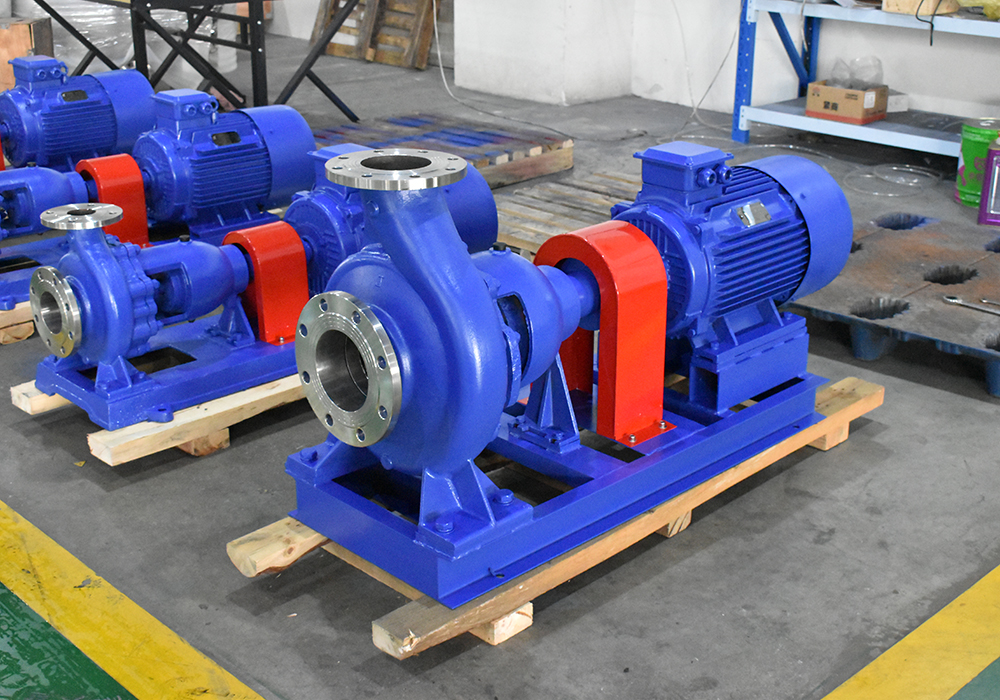
Positive displacement rotary pumps: how to choose the best option in 2026?
2026-06-08
Key criteria for choosing a vacuum pump in 2026
Choosing the optimalvacuum pumpin 2026 requires analysis of not only passport characteristics, but also real operating conditions, since the market is oversaturated with equipment with overstated declared parameters. In our practice, we observe a trend when enterprises buy expensive units that fail after six months due to incorrect selection of the type of rotor for a specific viscosity of the medium or gas temperature. To avoid these errors, it is necessary to immediately determine the required maximum residual pressure and pumping speed, and then compare them with the chemical resistance of the materials of the flow part. We recommend starting the selection with an audit of the technological process: if you work with aggressive vapors, standard oil models will require frequent oil and filter changes, which is economically unprofitable compared to dry screw or liquid ring analogs.
Zhejiang Yangzijiang Pumping Industry Co., Ltd.'s engineers, drawing on more than 20 years of experience in integrating pumping systems into projects of international groups such as APP and HPO, emphasize the importance of taking into account peak loads at system start-up. Often customers focus on average indicators, forgetting that at the time of equipment startup, the load on the motor can exceed the nominal value by 1.5–2 times, which leads to overheating of the windings and deformation of the seals. Based in Zhejiang Province and with its own testing center, we test each product, including vacuum pumps, for corrosion resistance and durability under conditions that simulate real industrial environments. This allows us to ensure that the solutions we offer, whether CQB-F magnetic pumps or dedicated vacuum units, comply with the strict CE and ISO 9001 standards.
Why rotor type determines equipment life
The rotor design is the heart of any positive displacement pump, and the ability of the unit to work with abrasive inclusions or highly viscous liquids without loss of performance depends on its geometry. Vane-rotor mechanisms do an excellent job of handling clean gases and creating deep vacuums, but they are extremely sensitive to dust and condensation, which act as an abrasive, quickly wearing out the blades and housing. At the same time, screw (screw) pairs, such as those used in GF sanitary pumps or specialized vacuum installations, provide smooth flow and are less susceptible to contamination, although they have a higher initial manufacturing cost. When choosing between these types, you need to honestly answer the question: how clean will the environment circulate in the system? If there is a risk of particulate matter larger than 50 microns, the vane pump will become a consumable item requiring replacement every 3-4 months.
We encountered a situation at one of the chemical plants where the client installed an imported rotary vane pump to pump out solvent vapors, without taking into account the presence of microscopic salt crystals in the condensate. The result was a stuck rotor after 800 hours of operation and a line downtime costing $15,000 per day. After replacing it with a reinforced clearance model with a PTFE coating similar to what we produce in the CQB-F series for aggressive environments, the life of the assembly increased to 12,000 hours without intervention. This example shows that savings at the procurement stage often result in a multiple increase in operating expenses (OPEX). It is also important to take into account the material of execution: for food production, AISI 316L stainless steel is required, while for pumping acids, lining or execution from special alloys, which our product line offers, is required.
Comparative analysis of types of vacuum pumps for industry
To make an informed decision in 2026, it is necessary to clearly distinguish between the areas of application of various technologies, since there is no universal solution “for everything”. Below is a detailed comparison chart based on our testing data and customer feedback from the 40 countries where we operate projects. Pay attention to the “Risks” column, since it is ignoring these factors that leads to most industrial accidents.
| Pump type | Ultimate pressure (mbar) | Working with condensate | Energy efficiency | Key risks and limitations |
|---|---|---|---|---|
| Vane rotor (oil) | 0.001 – 0.5 | Requires gas ballast valve, risk of oil emulsification | High at constant mode | Oil pollution, frequent filter replacement due to dust, temperature sensitivity |
| Liquid-ring | 30 – 100 | Excellent, condensate is removed along with the working fluid | Average, depends on the temperature of the working fluid | Limited deep vacuum, corrosion of impellers due to incorrect selection of material, water requirement |
| Screw (dry) | 0.01 – 1 | Good, no contact with oil, condensate is removed | Very high, especially with frequency converters | High cost of repairing the rotor pair, difficulty in restoring the geometry of the propellers after overheating |
| Membrane | 1 – 10 | Absolutely stable, completely sealed | Low for high volumes | Limited performance, the need for frequent replacement of membranes when working with aggressive media |
When analyzing the table, it is clear that for applications where high vacuum and process cleanliness are required (for example, in electronics or pharmaceuticals), dry screw pumps are becoming the industry standard, despite the price. However, for water treatment facilities or processes where the main working fluid is water with impurities, liquid-ring units remain the uncontested leader in reliability. In our company, we produce diesel self-priming pumps YZSP and non-clogging ZW pumps, which demonstrate similar principles of reliability in their segments: simplicity of design and maintainability are more important than maximum theoretical efficiency. If your budget is limited and the process allows traces of oil in the exhaust, vane-rotor models are still relevant, but only if quality oil traps are installed at the outlet.
The impact of certification and standards on supplier selection
In 2026, the safety requirements for industrial equipment have become more stringent, and the presence of CE, ISO 9001 or EAC certificates is no longer just a formality, but has become a guarantor of the real performance of the equipment. Purchasing a pump without supporting documents from independent laboratories such as SGS carries hidden risks: materials that do not meet the stated specifications, lack of rotor balance control, and disregard for electromagnetic compatibility standards. Zhejiang Yangzijiang Pump Industry Co., Ltd. undergoes mandatory certification for all products, including vacuum pumps, through on-site inspections. This is critically important for enterprises operating in areas with increased environmental and labor safety requirements, where the fine for using uncertified equipment can exceed the cost of the pump itself tens of times.
Particular attention should be paid to compliance with explosion protection standards if the pump is planned to be used in the petrochemical or paint production. A conventional engine in such an environment can become a source of vapor ignition. Our diesel pump units and electric models are designed to meet these requirements, undergoing intrinsic safety and temperature tests. We have seen cases where cheap analogues, purchased on open sites without checking documents, caused local fires due to overheating of bearings or static electricity. Therefore, when requesting a commercial offer, always ask for a copy of the certificate of conformity specifically for the model that is being offered to you, and not a general certificate for the factory. The presence of patents for design solutions, which our enterprise possesses as a high-tech company, also indicates that the equipment has gone through a stage of serious engineering study, and is not a simple copy of outdated drawings.
Total Cost of Ownership (TCO) Calculation
The purchase price represents only 20-30% of the total cost of operating an industrial pump over its life cycle, which is typically 7-10 years. The remaining 70% comes from electricity, maintenance, replacement of consumables (oil, filters, seals) and production downtime. Many buyers make the mistake of choosing the option with the minimum starting price, not taking into account that the efficiency of a cheap pump may be 10-15% lower than that of a premium model. With round-the-clock operation, this results in thousands of kilowatt-hours of excess energy consumption annually. For example, the difference in consumption between a pump of class IE2 and IE3 with a power of 15 kW over a year of continuous operation can be more than 10,000 kWh, which, at modern tariffs, fully pays for the overpayment for more efficient equipment in the first year.
In addition, the availability of spare parts and the speed of the service reagent must be considered. If a pump fails, and parts for it must wait 6-8 weeks from abroad, the losses from line downtime can be catastrophic. Zhejiang Yangzijiang Pumping Industry Co., Ltd. solves this problem through a vertically integrated production cycle and warehousing programs for key partners. We ensure the delivery of components for our CQF magnetic pumps, gear and centrifugal models in a short time, as we control the entire process from casting housings to final assembly. This gives our customers confidence that even in the event of an unexpected breakdown, the system will be restored in the shortest possible time. When calculating TCO, be sure to include the cost of one hour of downtime in your production - this figure often becomes the decisive argument in favor of more reliable, albeit expensive, equipment.
Frequently Asked Questions
Which vacuum pump is best to choose for pumping out moisture?
For handling large amounts of moisture and condensate, liquid ring vacuum pumps are the best choice. Their design allows condensate to be removed along with the working fluid without the risk of water hammer or oil emulsification, which inevitably occurs in vane-rotor models without special equipment. If the process requires a dry vacuum, consider progressive cavity pumps with a flushing system, but be prepared for a higher price.
How often should the oil in a rotary vane pump be changed?
The frequency of oil changes directly depends on the purity of the pumped-out medium and the intensity of use. Under ideal conditions (clean air), the oil lasts up to 2000–3000 hours, but in the presence of solvent vapors or dust, this interval is reduced to 500–800 hours. We recommend installing visual indicators of oil condition and conducting regular oil sampling to avoid operating with oxidized oil, which will lose lubricity and cause blade wear.
Can a regular centrifugal pump be used as a vacuum pump?
No, conventional centrifugal pumps are not designed to create a vacuum and handle gases. Their design is designed for pumping incompressible liquids. An attempt to use them in vacuum mode will lead to cavitation, rapid destruction of the impeller and engine failure. To create a vacuum, it is necessary to use specialized positive displacement pumps, such as our models from the vacuum pump category, which are structurally adapted for compressible media.
What guarantees do you provide for industrial pumps?
We provide a standard warranty of 12 months from the date of commissioning, but not more than 18 months from the date of shipment, which is in accordance with international practice. The warranty covers defects in materials and workmanship confirmed by a report from our service center or an authorized partner. It is important to note that the warranty does not cover damage caused by improper operation, operation in prohibited modes, or the use of non-original spare parts.
Final recommendations and steps towards implementation
To sum it up, choosing the best positive displacement rotary pump in 2026 is a balance between process requirements, operating budget and supplier reliability. Do not chase the lowest prices on the market, since in the industrial equipment segment, a low price almost always means a compromise in the quality of materials or the precision of parts. Focus on suppliers with their own production facilities, testing centers and proven experience in your industry, such as Zhejiang Yangzijiang Pumping Industry LLC, where the combination of Chinese production capacity and understanding of Russian market realities allows you to offer optimal solutions. Remember what is correctvacuum pumpshould work quietly, without vibrations and maintain the specified parameters for years, and not become a source of constant problems for the repair service.
If you are faced with difficulties in selecting equipment or want to audit your existing pumping station for energy efficiency, our engineers are ready to help. We offer a full range of services: from technical consultation and 3D modeling of components to installation supervision and commissioning. Contact us today to receive a personalized quote and advice on selecting pumping equipment that will ensure the stability of your production for decades to come. Explore our catalogindustrial pumps and vacuum systemsto view the full range of available solutions for your needs.