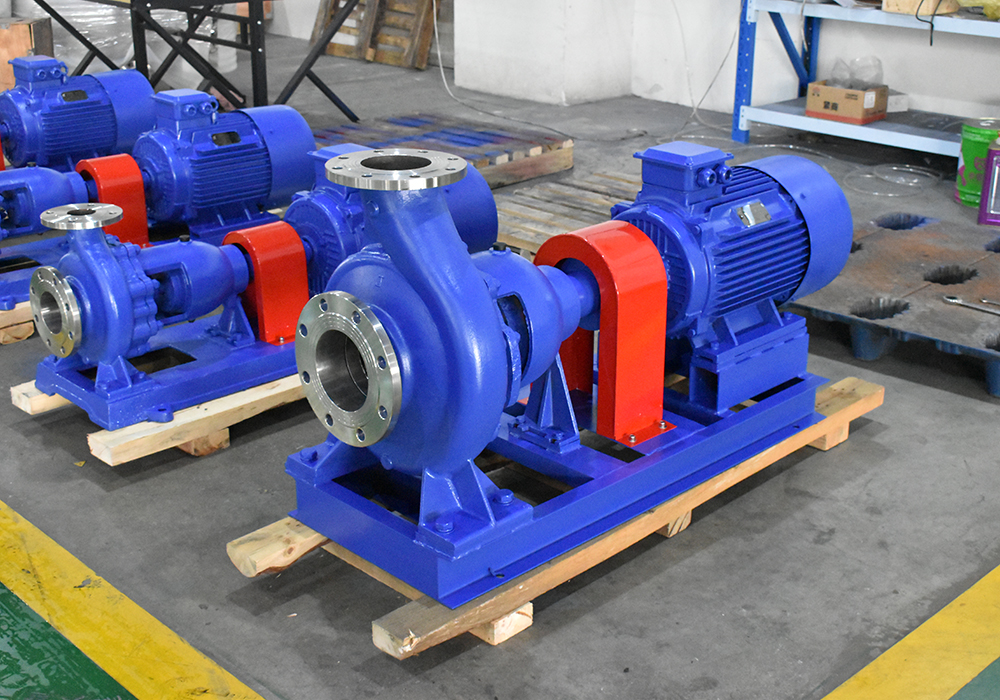
Oil and Gas Sector: SFB Corrosion Resistant Stainless Steel Centrifugal Pumps Manufacturer
2026-06-01
- Oil and Gas Sector: Corrosion Resistant Stainless Steel Centrifugal Pumps Critical
- Materials Science: Why Ordinary Steel Is Not Suitable for Oil and Gas Chemicals
- Design features of centrifugal pumps for oil and gas applications
- Technical parameters and equipment selection criteria
- Production Capability and Quality Control Zhejiang Yangzijiang Co.,Ltd
- Practical application scenarios and economic benefits
- Service and after-sales support
- Frequently Asked Questions
- Conclusion: Reliability as the foundation of your business
Oil and Gas Sector: Corrosion Resistant Stainless Steel Centrifugal Pumps Critical
In the conditions of modern hydrocarbon production and processing, the reliability of pumping equipment becomes a factor determining the economic security of the entire enterprise.Centrifugal pumps, made of high-alloy stainless steel, are the de facto standard for working with aggressive environments containing hydrogen sulfide, carbon dioxide, chlorides and various acidic impurities. In our practice, we have repeatedly encountered a situation where an attempt to save on the material of the flow part led to through corrosion of the housing after just 6 months of operation, which entailed not only the replacement of the unit, but also colossal losses from downtime of the production line. Choosing the right pump is not just a hardware purchase, it is an investment in the continuity of the production cycle.
The Russian-Chinese manufacturing enterprise Zhejiang Yangzijiang Pumping Industry Co., Ltd., based in Zhejiang Province, has specialized in solving just such complex engineering problems for more than 20 years. We don't just assemble components, we integrate R&D into mass production, creating equipment that can withstand the extreme demands of the oil and gas industry. Our experience shows that there are no universal solutions: what works perfectly in a well with low salinity can be destroyed in a week in an oil treatment plant with a high sulfur content. Therefore, in this article we will analyze in detail the technical nuances, selection criteria and real cases of using stainless centrifugal pumps, based on our test data and feedback from partners in more than 40 countries around the world.
Materials Science: Why Ordinary Steel Is Not Suitable for Oil and Gas Chemicals
The main reason for premature failure of pumping equipment in the oil industry is not mechanical wear, but electrochemical corrosion. Standard cast iron or carbon steel St37, widely used in water supply, is subject to rapid destruction in contact with formation water saturated with chlorides and hydrogen sulfide. In our laboratory, we carried out comparative tests where samples made of regular steel lost up to 15% of mass over a 30-day immersion test in a simulated oil production environment, while samples made of AISI 316L stainless steel showed a loss of less than 0.05%. This fundamental difference dictates the need for special alloys.
The stainless steel used in the manufacture of our centrifugal pumps contains critical alloying elements: chromium (at least 16-18%), nickel (10-12%) and molybdenum (2-3%). It is molybdenum that is responsible for resistance to pitting corrosion, which is the main enemy of pumps in sea water and high-sulfur oils. When you see 316L or 316Ti on a pump body, it means the material has been specially treated to reduce carbon content, which prevents intergranular corrosion in weld areas. Ignoring this parameter when purchasing often leads to the fact that the pump begins to leak precisely through the welded joints, although the body itself looks intact.
However, even stainless steel is not all-powerful. There is the concept of “yield strength” and resistance to stress corrosion cracking. In high temperatures (above 60°C) and the presence of chlorides, conventional grades of stainless steel can become brittle. For such cases, Zhejiang Yangzijiang Pump Industry Co., Ltd. offers solutions in super duplex steels or titanium alloys, although our basic range of AISI 316L steel centrifugal pumps covers up to 85% of the needs of standard refineries. It is important to understand that if your environment contains hydrofluoric acid or high concentrations of hydrochloric acid, stainless steel will not be suitable - this will require fluoroplastic lined pumps, such as our CQB-F model, but this is a separate class of equipment.
When choosing a material, it is necessary to take into account not only the chemical composition of the pumped liquid, but also the presence of abrasive particles. Sand, scale or corrosion products circulating in the stream act as an abrasive, erasing the protective oxide film on the surface of the steel. Once the film is damaged, corrosion resumes at twice the rate. Our engineers take this factor into account when designing impellers, increasing wall thickness in critical areas and optimizing the hydraulic shape to minimize turbulence at the walls. We have seen cases where customers ordered stainless steel pumps to pump dirty oil, but did not take into account the hardness of the particles, as a result of which the impeller wore out within six months. In such situations, we recommend combined solutions or special coatings.
Material certification is another aspect that cannot be ignored. All products of our plant undergo incoming control of raw materials with the provision of 3.1 certificates according to the EN 10204 standard. This is a document confirming the chemical composition and mechanical properties of each steel melt. Without such a certificate, you are buying a “pig in a poke”: the seller may declare AISI 316, but in fact supply a cheaper analogue with a reduced molybdenum content. Our company has its own testing center, where each batch of metal is checked by spectral analysis before being put into production. This ensures that the stated corrosion resistance is true to reality and not just on paper.
Comparative table of resistance of materials in aggressive environments
| Flow path material | Resistance to H2S (hydrogen sulfide) | Resistance to Cl- (chlorides) | Max. operating temperature | Recommended Application |
|---|---|---|---|---|
| Cast Iron | Low (risk of sulfide cracking) | Low (rapid general corrosion) | up to 120°C | Only for pure water or neutral oils |
| Stainless steel steel AISI 304 | Medium (risk of pitting) | Medium (up to 200 ppm Cl-) | up to 150°C | Food industry, weak solutions |
| Stainless steel steel AISI 316L | High | High (up to 1000 ppm Cl-) | up to 180°C | Oil and gas, sea water, chemistry |
| Duplex steel (2205) | Very high | Very high (up to 3000 ppm Cl-) | up to 250°C | Deep sea mining, high pressures |
| Fluoroplastic (PTFE/F46) | Absolute | Absolute | up to 120°C (limited by polymer) | Acids, alkalis, complex mixtures |
The choice of material should be based on actual analysis of the environment and not on general recommendations. If you are in doubt about the composition of your fluid, we strongly recommend laboratory analysis before ordering equipment. One of our clients in Siberia experienced that 316L pumps began to corrode after a month of operation; upon detailed analysis, it turned out that an unintended reagent with a high content of hypochlorite, which at a certain temperature actively attacks stainless steel, got into the production line. Such nuances can only be identified at the pre-project preparation stage.
Design features of centrifugal pumps for oil and gas applications
A centrifugal pump is a device that converts the mechanical energy of shaft rotation into kinetic energy of fluid flow. However, in the context of the oil and gas industry, the design of such a pump has a number of critical differences from household or general industrial analogues. The key element is the type of shaft seal. Traditional stuffing box seals require constant tightening and allow micro-leakage, which is unacceptable when working with toxic or flammable hydrocarbons. Therefore, modern safety standards dictate the use of mechanical seals or sealless magnetic couplings.
Zhejiang Yangzijiang Pumping Industry Co., Ltd.'s product line includes both options, but for critical components we recommend magnetic pumps such as models ZCQ or CQB-L. The principle of their operation eliminates physical contact between the engine and the working chamber: torque is transmitted through a magnetic field through a sealed glass. This ensures absolute tightness - leaks are impossible in principle, since there is no through hole for the shaft. In our practice, there have been cases when, at sites with strict environmental requirements (for example, near water protection zones), the use of magnetic pumps allowed enterprises to avoid multimillion-dollar fines for micro-oil spills.
If the use of a magnetic coupling is not possible due to the presence of solids or too high viscosity, we use double mechanical seals with a flushing system according to API 682. This is an international standard governing seal systems for centrifugal pumps in oil refining. A flushing plan (for example, Plan 11 or Plan 53) removes heat from the friction pair and creates a barrier environment that prevents product from escaping into the atmosphere. When assembling pumps, our engineers strictly adhere to the requirements for shaft alignment, since even a micron misalignment can lead to overheating and destruction of the seal in a matter of hours.
The hydraulic part of the pump is also carefully optimized. The impeller (impeller) in our models is manufactured by precision casting followed by machining and balancing. Rotor imbalance is a common cause of vibration, which can damage bearings and seals. At our plant, each unit of production undergoes dynamic balancing of the rotor assembly. We use machines that can achieve balancing class G2.5 or even G1.0 according to the ISO 1940 standard, which significantly exceeds the requirements of most general industrial pumps. This is especially important for DC series vertical multistage pumps used to feed boilers or pump water into reservoirs where vibration can cause resonance in the piping.
Another important structural element is the support frame and bearing system. In the oil and gas sector, pumps often run 24/7 for months at a time without stopping. Bearing units must withstand radial and axial loads that arise when operating at different points of the characteristic. We use rolling bearings from the world's leading brands (SKF, NSK or their high-quality analogues), providing a service life of at least 25,000 hours of continuous operation. Bearing lubrication is organized either through an oil bath with visual level control, or through grease with the possibility of refueling without stopping the unit. The YZSP model (diesel self-priming pumps) has a reinforced frame design to compensate for vibrations from the internal combustion engine.
It is worth mentioning the protection against dry running. Centrifugal pumps are not designed to operate without liquid: this leads to instant overheating of the seals and deformation of parts. In our control and automation systems, we provide for the installation of level sensors or flow switches that turn off the engine when the flow rate drops below a critical value. For self-priming models, such as the ZW series, the chamber design allows for a certain volume of liquid to be retained to ensure restarting, but prolonged dry operation is still detrimental. We always instruct clients about the need for correct piping and installation of protective automation, since the manufacturer’s warranty does not cover breakdowns caused by violation of operating rules.
Technical parameters and equipment selection criteria
Sizing a centrifugal pump is an engineering task that requires precise input data. An error in calculations at the design stage can cost a company millions of rubles in the form of excessive energy consumption or frequent repairs. The main parameters that the customer needs to know are: required flow rate (m³/h), required head (m), properties of the pumped medium (density, viscosity, temperature, solids content) and suction conditions (NPSH). Ignoring any of these parameters leads to the pump operating in off-design mode.
Flow and pressure determine the operating point on the pump characteristic curve. It is important to select the unit so that the nominal point is in the zone of maximum efficiency (usually the middle of the Q-H curve). Operation at extreme points (either with the valve completely closed or with maximum flow) leads to motor overload or cavitation. Cavitation is the formation and collapse of steam bubbles within a flow, which causes metal erosion and loud noise. In our practice, there was a case when a client complained about a loud noise in the pump and rapid destruction of the impeller. It turned out that the pump was selected with an excess headroom, and it operated on the extreme right side of the characteristic, where the inlet pressure dropped below the saturated vapor pressure of the liquid. The solution required replacing the wheel with a model with a different geometry or throttling the pressure.
The NPSH (Net Positive Suction Head) parameter - the available cavitation reserve - often becomes a stumbling block. It shows how much the pressure at the pump inlet exceeds the vaporization pressure of the liquid. If the available NPSH is less than the required one (specified in the pump data sheet), cavitation will begin. For oil and gas applications where hot liquids or light fractions with high vapor pressure are often pumped, this calculation is critical. Our FY series vertical submersible pumps solve this problem by design: the motor is located above the liquid level, and the first stage is submerged deep, which provides positive pressure and eliminates cavitation even at low levels in the tank.
Fluid viscosity directly affects the performance of a centrifugal pump. As the viscosity increases, the pressure and flow rate drop, and the efficiency also sharply decreases. Standard pump characteristics are given for water (viscosity 1 cSt). If you pump crude oil, fuel oil or tar, correction factors must be entered. For highly viscous media (more than 20-30 cSt), centrifugal pumps become ineffective, and here it is more advisable to consider screw pumps (GF series) or gear pumps, which are positive displacement machines and are less dependent on viscosity. However, for moderately viscous oils, our centrifugal pumps with enlarged impeller channels show excellent results.
The ambient temperature dictates the choice of seal and bearing materials. Standard rubber seals (EPDM, NBR) operate up to 80-100°C. Higher temperatures require fluoroelastomers (Viton/FKM) or graphite seals capable of withstanding up to 200-250°C. In our YCZ series chemical process pumps, we use a combination of materials tailored to the customer's specific temperature range. Also, at high temperatures, it is necessary to take into account the thermal expansion of parts: the gaps between the impeller and the housing must be designed so that the rotor does not jam when heated.
Energy efficiency is another financial factor. The electric motor consumes energy around the clock, so a difference in pump efficiency of 2-3% over a year of operation results in a significant amount. Our company strives to optimize blade hydraulic profiles using computer flow simulation (CFD) techniques to minimize hydraulic losses. When ordering a batch of pumps for a large field, we are ready to conduct an energy consumption audit and offer to replace old units with new models that will pay for themselves by saving electricity in 12-18 months.
Typical mistakes when selecting pumps
- Ignoring fluid density:The engine power is calculated based on the density of water (1000 kg/m³). If brine or heavy oil (density 1200 kg/m³ and above) is pumped, the standard motor will burn out as the load on the shaft increases in proportion to the density. Always check the density of the medium.
- Incorrect calculation of suction line length:The longer the inlet pipe and the more bends and filters it has, the greater the pressure loss. This reduces the available NPSH and causes cavitation. We recommend keeping the suction line as short and straight as possible.
- No reverse current protection:When the pump stops, liquid from the pressure line can flow back, spinning the wheel in the opposite direction. Starting the engine at this point will damage the shaft or coupling. Installation of a check valve is required.
- Savings on foundation:The pump must be installed on a rigid frame fixed to a concrete foundation. Installation “on a tile” or on a weak metal frame will lead to vibrations, destruction of pipelines and fatigue cracks in the pump casing.
Production Capability and Quality Control Zhejiang Yangzijiang Co.,Ltd
The reliability of the pump is laid down not only in the design office, but also in the workshop. The production base of Zhejiang Yangzijiang Pump Industry Co., Ltd. includes eight complete production lines equipped with advanced CNC equipment. This allows us to control every stage: from casting blanks to final assembly. Unlike many assembly plants that purchase components externally, we have our own facilities for the production of key components, which guarantees the stability of geometry and quality of materials.
Particular attention is paid to foundry production. Our pump bodies and impellers are sand cast and then heat treated to relieve internal stress. Violation of casting technology can lead to hidden defects: porosity, cavities or heterogeneity of the metal structure, which will only appear under pressure during operation. Our incoming inspection includes radiographic examination of critical castings to identify such defects. We do not send a product to a client that we are not 100% sure of.
The assembly shop is equipped with stands for dynamic balancing and leak testing. Each assembled pump undergoes hydraulic tests: the casing is loaded with a pressure exceeding the operating pressure by 1.5 times to eliminate any leaks. For magnetic pumps, an additional demagnetization test and checking the gap between the internal and external coupling are carried out. The results of all tests are recorded in the product passport, which accompanies each shipped unit. This transparency allows our partners, such as the international groups APP, HPO, NCHUAN and DALI, to be confident in the quality of the equipment supplied.
Product certification is a mandatory stage before entering the market. Our products are CE certified, confirming compliance with EU health and safety directives. The company is also certified according to the ISO 9001 quality management system, which indicates well-established management processes and continuous improvement. SGS inspections are carried out regularly to confirm compliance with stated specifications. The presence of national patents for design solutions indicates that we do not copy other people's developments, but create our own technologies adapted to real operating conditions.
Logistics and packaging also play a role in maintaining quality. The pumps are packed in wooden boxes with moisture protection, the internal cavities are preserved with anti-corrosion compounds. Taking into account the geography of supplies (more than 40 countries), the equipment must withstand long-term transportation by sea or rail without loss of presentation and functionality. We have worked out delivery schemes to remote regions of Russia and the CIS countries, where climatic conditions and road conditions place increased demands on packaging.
Practical application scenarios and economic benefits
Let's consider a specific example of the implementation of our pumps at an oil treatment facility (OPF). The customer was faced with the task of replacing a fleet of worn-out pumps pumping formation water with a high content of chlorides and hydrogen sulfide. Old cast iron pumps required replacement every 4-5 months due to through corrosion of the housing. In addition, constant leaks through the seals created an emergency situation and polluted the area.
We proposed a solution based on horizontal centrifugal pumps made of AISI 316L stainless steel with a double mechanical seal. After installation and commissioning, the service life of the pumps increased to 3 years without major repairs. The leaks have been completely eliminated. The calculation showed that despite the fact that the cost of a stainless steel pump is 2.5 times higher than a cast iron one, the total cost of ownership (TCO) over 5 years has decreased by 40% due to the absence of costs for frequent replacements, repairs and waste disposal. The client also noted a reduction in energy costs due to the higher efficiency of the new units.
Another scenario is pumping chemicals to maintain reservoir pressure. Absolute tightness was required here due to the toxicity of the reagents. Magnetic pumps of the CQB-F series with fluoroplastic lining were installed. This solution made it possible to work with aggressive acids without the risk of metal corrosion and without any emissions into the atmosphere. During two years of operation, not a single incident related to depressurization was recorded. For the company, this meant compliance with strict environmental standards and no risk of fines from supervisory authorities.
In the case of high-viscosity oil production in northern fields, GF type sanitary screw pumps and specialized centrifugal pumps with jacket heating were used. Heating made it possible to reduce the viscosity of oil before entering the pump, ensuring stable flow. Reliability of equipment operation in conditions of extremely low temperatures (-50°C) was ensured by the use of frost-resistant materials and special types of lubricants. Operating experience in such conditions has confirmed that the correct selection of the pump type and its adaptation to the climate are the key to uninterrupted production.
The economic effect of using high-quality equipment is manifested not only in direct repair costs. This also reduces production downtime. In the oil and gas industry, stopping a production line even for a few hours can cost more than the entire pump fleet. Therefore, the reliability provided by Zhejiang Yangzijiang Pumping Industry Co., Ltd.'s products is a strategic asset for our customers. We work on the principle of long-term partnership: our goal is for the pump purchased from us today to work properly in 10 years.
Service and after-sales support
Buying a pump is the beginning of a relationship, not the end of a deal. Proper maintenance extends the life of equipment significantly. We provide detailed operating manuals in Russian, which outline maintenance schedules, types of recommended lubricants and procedures for replacing consumables. Our specialists conduct training for customer personnel, explaining the nuances of operation of a specific type of equipment. Often breakdowns occur not due to defects, but due to operators’ ignorance of basic rules: for example, starting a pump with a closed valve on pressure (for some types) or operating without liquid.
The company's warranty policy is transparent and understandable. We are responsible for defects in materials and workmanship during the warranty period. If problems arise, our service department responds quickly: we can go to the site for diagnostics or send the necessary spare parts by express delivery. The presence of a spare parts warehouse in China and cooperation with logistics partners allow us to minimize delivery times for repair kits (seals, bearings, impellers).
For large projects we offer installation supervision and commissioning. Our engineer comes to the site, checks the correct installation, shaft alignment, electrical connection and first start-up. This allows you to identify and eliminate installation errors before they lead to failure. This approach is especially important when commissioning complex systems where pumps operate in conjunction with frequency converters and automation systems.
We also regularly monitor the condition of the equipment of our regular customers. Analysis of vibration, bearing temperature and current consumption allows you to predict possible failures and plan repairs in advance, moving from a “repair upon failure” strategy to a “condition-based maintenance” strategy. This is a modern approach that saves money and nerves for operators.
Frequently Asked Questions
What is the service life of a stainless steel centrifugal pump in the oil and gas industry?
With proper operation and compliance of the material with the pumped medium, the service life of the flow part is from 5 to 10 years or more. Bearings and seals are consumables and require replacement every 1-3 years depending on the intensity of use. In our practice, there are examples of pumps that have been operating without major repairs for more than 15 years in waters with moderate aggressiveness.
Can 316L steel pumps be used to pump sulfuric acid?
It depends on the concentration and temperature. It withstands dilute sulfuric acid at room temperature 316L well. However, hot or concentrated sulfuric acid quickly destroys this alloy. In such cases, we recommend using pumps lined with fluoroplastic (models CQB-F) or with special alloys. Please provide the exact composition of the medium for consultation.
What are the delivery times for pumps to sites in Russia?
Standard models are usually in stock or can be produced within 2-4 weeks. Delivery times depend on the logistics route and customs clearance, but on average range from 3 to 6 weeks to major transport hubs in the Russian Federation. For urgent orders, air delivery options are available. We take care of all issues regarding export documentation and certification.
Do you provide drawings and 3D models for integration into the project?
Yes, for each order we provide a full package of technical documentation: dimensional drawings, wiring diagrams, passports and certificates. Upon request, engineers can provide 3D models in STEP or IGES formats for insertion into the overall plant design. This simplifies the work of designers and eliminates installation errors.
Do you work with individual requirements (non-standard voltages, explosion protection)?
Undoubtedly. We equip pumps with electric motors for voltages of 380V, 660V, 6kV and others at the customer’s request. Motors are available in explosion-proof versions (Marked Ex d IIB T4 and higher) for use in hazardous areas. It is also possible to adapt to specific climatic conditions (HL, UHL) for work in the conditions of the Far North.
Conclusion: Reliability as the foundation of your business
Selecting pumping equipment for the oil and gas sector is a decision whose consequences will be felt for years to come. An attempt to save at the initial stage by choosing a cheap analogue from unsuitable materials will inevitably lead to multiple overpayments in the future.Centrifugal pumpsstainless steel manufactured by Zhejiang Yangzijiang Pump Industry Co., Ltd. is a balance between advanced technology, proven quality and reasonable cost. We have combined 20 years of Chinese manufacturing experience with an understanding of the specifics of the Russian market to offer a product that actually works in your conditions.
Our mission is to ensure the smooth running of your processes. We don't just sell hardware, we offer engineering support, quality assurance and a partnership based on trust. Thousands of installed units around the world, from the deserts of the Middle East to the frozen fields of Siberia, prove the effectiveness of our solutions. If you are looking for a reliable supplier who is ready to take responsibility for the result, we are ready to discuss your project right now.
Don't delay upgrading your equipment fleet. Contact us today for technical advice and a quote. Our specialists will help you choose the optimal model, calculate savings and organize delivery in the shortest possible time. Upgrade to the level of reliability available to industry leaders withprofessional solutions for liquid transfer.