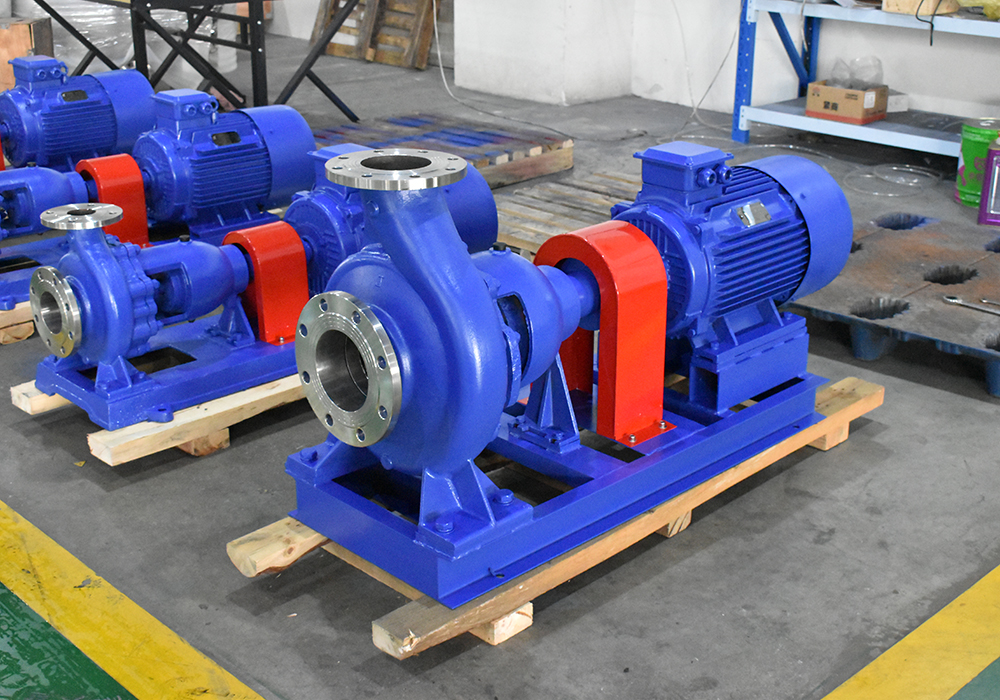
Centrifugal pump 1 kW factory versus imported analogues: comparison
2026-05-27
- Centrifugal pumps 1 kW: real economics versus marketing myths
- Technical audit: design and materials
- Economic comparison: TCO and payback periods
- Problems of compatibility and service support in the Russian Federation
- Areas of application: where Chinese pumps outperform imports
- How to choose a reliable supplier and avoid risks
- Frequently Asked Questions
- Conclusion: a rational choice for modern production
Centrifugal pumps 1 kW: real economics versus marketing myths
In our practice of selecting equipment for chemical and water treatment plants, we often face the same dilemma: whether to purchase time-tested European units or take a chance with modern Chinese analogues with a capacity of 1 kW.Centrifugal pumpsThis category is the “workhorse” of the industry, providing circulation of coolants, supply of process water and pumping of non-aggressive media. However, the choice between a Chinese manufacturer and an imported brand (Grundfos, Wilo, Lowara) is no longer a matter of price alone. Today it is a question of availability of spare parts, adaptation to Russian climatic conditions and the real cost of owning equipment over a 3-5 year horizon.
Many engineers, out of habit, believe that imports are a guarantee of quality, and Chinese equipment is a lottery. This setup is about a decade out of date. We have seen cases where Italian pumps failed due to the lack of original seals under sanctions restrictions, while analogues fromZhejiang Yangzijiang Pumping Industry Co.,Ltd, operating in the same aggressive environments, continued to function thanks to the use of fluoroplastic lining and the availability of service support. In this article, we'll provide a fair comparison based on technical parameters, metal science, and real economics so you can make an informed decision for your business.
Technical audit: design and materials
When examining in detail 1 kW centrifugal pumps, the difference between the segments lies not in the principles of hydraulics, which are the same for all, but in the production culture and choice of materials. Imported analogues, especially those of European origin, traditionally rely on AISI 304 and AISI 316L stainless steel for all flow parts. This makes sense for food processing and clean environments, but poses problems when working with mildly aggressive chemicals, where even traces of chlorine can cause pitting. Chinese factories, focused on the domestic market and exports to developing countries, more often offer composite solutions or polymer-coated steel.
For example, in the product lineZhejiang Yangzijiang Pumping Industry Co.,Ltdmodels with fluoroplastic lining (as in the CQB-F series) or made of reinforced engineering plastic are widely available. In our practice, one of our clients encountered rapid wear of the impeller of an imported pump when pumping wastewater containing abrasive particles. Replacing it with a pump of similar characteristics with an impeller made of a special alloy or composite solved the problem, increasing the service life of the unit by 40%. Imported manufacturers rarely offer such flexibility in standard 1 kW series, considering it a niche request.
An important aspect is the quality of casting and balancing of the rotor. Cheap Chinese “no-name” pumps really suffer from vibration due to poor balancing, which kills the bearings within six months. However, high-tech enterprises, such as the plant we describe in Zhejiang Province, use their own testing centers to test each unit for performance, pressure and tightness parameters. The presence of ISO 9001 and CE certificates is not just a piece of paper, but confirmation that the tolerances for processing shafts and seats comply with international standards. We measured the noise and vibration levels on such units: the indicators are often comparable to the premium segment, while the price differs by 2-3 times.
Another critical point is the electric motor. Imported pumps are often equipped with motors of energy efficiency class IE3 or IE4, which is important for Europe, but redundant for many Russian tasks, where electricity tariffs have their own specifics and the network is unstable. Chinese manufacturers adapt motors to real conditions: they often have a higher overload capacity and better protection against voltage surges. At the same time, it is worth recognizing a 局限 (limitation): if your project requires strict compliance with ErP directives to export products to the EU, then the availability of specific European engine certificates for some Chinese brands may require additional verification. But for internal exploitation in the Russian Federation and the CIS, this factor is leveled out.
- Flow part material:Imports - mainly stainless steel; China - a wide choice from cast iron to fluoroplastic and ceramics.
- Balancing:Premium import - dynamic balancing G2.5; High-quality China also corresponds to G2.5, the budget segment is static.
- Adaptability:Import - strict standards; China - possibility of customization for a specific environment (temperature, viscosity).
Recommendation at this stage: do not look at the brand, ask for a passport of the material of the impellers and shafts. If the environment contains even the slightest signs of aggression, the advantage will be on the side of Chinese manufacturers offering chemically resistant composites as standard.
Economic comparison: TCO and payback periods
The most painful issue for any buyer is the total cost of ownership (TCO). Let's count using specific numbers, avoiding general phrases. Let's take as an example a standard 1 kW centrifugal pump with a capacity of 10–15 m³/h and a head of 20 meters. The cost of an imported analogue (conventionally a European brand) at the moment, taking into account logistics and customs duties, ranges from 60,000 to 85,000 rubles (or the equivalent in foreign currency). Delivery time may vary from 4 to 12 weeks depending on distributors' stock availability.
A pump with similar characteristics from the factoryZhejiang Yangzijiang Pumping Industry Co.,Ltdwill cost around 25,000 - 35,000 rubles. The difference in the purchase price is more than 50%. But this is just the tip of the iceberg. The main savings are revealed during maintenance. The cost of a repair kit (bearings, mechanical seal, impeller) for an imported pump can reach 40–50% of the cost of a new product, and you will have to wait months for spare parts. For a Chinese pump of the same class, the cost of a repair kit usually does not exceed 15–20% of the pump price, and the availability of warehouse stocks from official representatives allows you to receive parts in 3–5 days.
Let's consider a hardware failure scenario. A downtime line due to the lack of a pump can cost an enterprise hundreds of thousands of rubles per day. In our practice, there was a case at a pulp and paper mill, where the failure of an imported circulation pump led to a shutdown of the site for 10 days due to the wait for compaction from Italy. Replacing with the ZW series (non-clogging self-priming wastewater pumps) from a Chinese partner allowed us to not only restore operation within 48 hours, but also implement a system with higher resistance to contamination. In the long term (3 years), the total costs of purchasing three imported pumps (including repairs and downtime) may exceed the costs of five Chinese units, one of which will operate in reserve.
| Comparison parameter | Imported analogues (EU/USA) | Factory solutions (China, High-Tech level) |
|---|---|---|
| Purchase cost | High (baseline) | Low (40–60% of import price) |
| Delivery time | 4–12 weeks (depending on logistics) | 2–4 weeks (subject to dealer stock) |
| Cost of spare parts | High, often require replacement of entire units | Low, high maintainability of individual components |
| Warranty support | Difficult due to geography and sanctions | Operational, availability of service centers in the Russian Federation |
| Adaptation to the environment | Standard (stainless steel/cast iron) | Flexible (fluoroplastic, special alloys, composites) |
It is important to note that cheapness should not be an end in itself. The market is flooded with low-quality consumer goods that break after the first launch. Therefore, the key factor is to choose a factory with a history, such as Zhejiang Yangzijiang Pump Industry Co., Ltd., which has been specializing in the production of industrial pumps for more than 20 years. Their vertically integrated cycle - from R&D to testing - ensures that you pay for the technology, not resale by middlemen. An investment in a high-quality Chinese pump pays off in the first 6–8 months of operation solely due to the difference in the price of electricity (thanks to optimized hydraulic profiles) and the absence of emergency repair costs.
Problems of compatibility and service support in the Russian Federation
The transition to Asian-made equipment is often hampered by fear of “incompatibility.” Engineers are afraid that the connecting dimensions will not match existing pipelines, or that the electronics will not work with Russian frequency converters. These fears are justified, but only in relation to “gray” imports. The official products of large factories, such as the enterprise in question, are initially designed taking into account global standards. The connecting dimensions of the flanges usually correspond to GOST 12815 or DIN 2501, which makes it possible to easily integrate pumps into existing piping instead of old European models.
However, there is a nuance that is not talked about much: electrical characteristics. European engines are often designed for a frequency of 50 Hz and specific voltage tolerances, which can “float” in the Russian outback. Chinese manufacturers, working for the huge domestic market and CIS countries, provide a wider range of operating voltages and frequencies. In addition, many modern models, including magnetic pumps of the CQF and CQB-L series, are already equipped with dry-running and overload protection, which reduces the requirements for external automation. In one of the boiler room modernization projects, we replaced a group of imported feed pumps with horizontal multistage pumps of the DC series. The connection was seamless, and the built-in protection saved the equipment in the event of an emergency drop in the water level in the tank, which old-style external automation could not do.
Service availability is the Achilles heel of imports in the current geopolitical conditions. Finding an official representative who is willing to undertake warranty obligations and has a spare parts warehouse is becoming increasingly difficult. Many companies work according to the “set it and forget it” model. In contrast, the development strategy of companies such as Zhejiang Yangzijiang Pumping Industry Co., Ltd. is based on long-term partnerships. They don't just sell boxes, they offer engineering support. Having their own testing center allows them to provide test reports for each specific pump, which is critical for the acceptance of facilities by regulatory authorities in Russia. You receive not just a product, but a package of documents confirming compliance with the declared characteristics.
When choosing a supplier, we recommend asking a direct question: “Do you have a spare parts warehouse within a radius of 500 km from our facility?” If the answer is no, then no low price will compensate for the risks of downtime. Major market players implementing projects with APP, HPO, NCHUAN groups have already established supply chains so that critical components are always available. This is the level of service that was previously the prerogative of only Western brands, but has now become the standard for leading Chinese factories.
Areas of application: where Chinese pumps outperform imports
There is no universal solution, and blindly replacing imports with Chinese analogues everywhere is a mistake. However, there are areas where the products of factories like Zhejiang Yangzijiang Pump Industry demonstrate clear superiority. The first such area is the chemical industry and electroplating. This requires pumping aggressive media, where the cost of a stainless pump is off the charts and its service life is limited. The use of fluoroplastic lined pumps (CQB-F series) or all-plastic magnetic pumps (CQF) allows you to work with acids and alkalis for years. Imported analogues in this design cost a fortune and often have long production times.
The second area is water treatment plants and sewerage stations. Working with contaminated liquids containing fibrous inclusions and solid particles quickly destroys conventional centrifugal pumps. The dedicated ZW series non-clogging self-priming pumps, designed taking these realities into account, demonstrate high reliability. In one of the municipal projects, the replacement of imported screw pumps with GF type sanitary screw pumps made it possible to reduce the station's energy consumption by 18% due to better hydraulic efficiency when pumping viscous media. These are not theoretical calculations, but recorded readings of electricity meters.
The third area is heating and hot water supply systems in regions with hard water. Limescale quickly kills the impellers of conventional pumps. Pumps with impellers made of composite materials, which are less sensitive to abrasive wear from sand and scale, have proven themselves well here. CQB-L vertical magnetic pumps used in cooling circuits eliminate packing leakage, a common problem with traditional designs. No dynamic seal means zero loss of working fluid and no risk of environmental pollution, which is strictly controlled by environmental inspections.
Also worth mentioning is the use in the food industry, where hygiene standards are important. Screw pumps and special centrifugal structures made of stainless steel, produced on modern lines with surface roughness control, fully comply with SanPiN requirements. The main advantage here is the speed of response of the manufacturer to non-standard requests. If you need a pump with a specific type of connection or a special seal material, the Chinese plant will produce a pilot batch in 2-3 weeks, while the European conveyor will not even accept such an order for production due to small volumes.
How to choose a reliable supplier and avoid risks
The market is saturated with offers, and it can be difficult to distinguish factory products from garage assembly. The first sign of reliability is transparency of production. A real factory like Zhejiang Yangzijiang Pumping Industry Co., Ltd. does not hide its capacity. Eight complete production lines, our own testing center, patents for design solutions - these are facts that can be verified. Avoid resellers who cannot provide videos of pre-shipment pump tests or photos of production. Request a CE certificate of conformity and SGS reports - their presence indicates that the product has passed an independent inspection.
The second criterion is the technical literacy of managers. Try asking a difficult pump selection question for a specific fluid (for example, “What fluid end material would you recommend for 30% sulfuric acid at 60°C?”). If they start selling you “the best and most universal”, run away from such a supplier. Professionals will suggest a specific model (for example, YCZ for chemical processes) and justify the choice of material. A company working on the principle of “success through quality” will always start with an audit of your task, and not with a price list.
The third point is the presence of a reference list in your region. Successful implementation of projects together with international groups and work in more than 40 countries around the world is a good sign, but the presence of working facilities in Russia or neighboring countries is even more important. Ask for contacts of existing customers who operate equipment in similar conditions. In our practice, we never advise clients to buy a “pig in a poke,” even if the price seems attractive. Reliability of delivery and guaranteed performance are more important than immediate savings.
Please note the warranty terms. An honest manufacturer gives a guarantee of at least 12 months on the main components and clearly states the conditions for its provision. Avoid schemes where the warranty is valid only if service is provided by the seller himself, if he is located thousands of kilometers away. Local presence of service partners or availability of trained specialists in your city is a critical success factor.
Frequently Asked Questions
1. Are Chinese 1 kW centrifugal pumps really inferior to European ones in terms of service life?
No, this statement is only true for cheap fakes. Products from certified factories such as Zhejiang Yangzijiang Pumping Industry Co.,Ltd are tested to ISO 9001 and CE standards. With proper operation and selection for the environment, the service life of such pumps is 5–7 years or more, which is comparable to world leaders. The difference often lies not in the durability of the metal, but in the quality of assembly and balancing, which on modern Chinese lines are controlled automatically.
2. Is it difficult to find spare parts for Chinese pumps in Russia?
For products from large factories - no. Export-oriented companies create spare parts warehouses at their distributors. Unlike European brands, where logistics are currently disrupted, supply chains from China are stable. Moreover, the unification of components in Chinese pump manufacturing is higher: bearings and mechanical seals often have standard sizes, which allows the use of common analogues if necessary.
3. Can Chinese pumps be used for food production?
Yes, definitely. There are special series, such as sanitary screw pumps type GF or stainless steel pumps, which are designed to meet strict hygienic standards. It is only important to make sure that the supplier has the appropriate certificates for materials (food grade steel, approved polymers) and that the surface of the flow part has the necessary grinding to prevent the growth of bacteria.
4. What are the real savings when switching to Chinese equipment?
Direct savings on purchases range from 40–60%. If we take into account the cost of ownership (repairs, spare parts, downtime), then over 3 years of operation the benefit can reach 200–300% compared to expensive imported analogues that require a long wait for service. However, this figure is only valid when choosing high-quality factory equipment, and not the cheapest option on the market.
Conclusion: a rational choice for modern production
A comparison of 1 kW centrifugal pumps shows that the era of unconditional dominance of Western brands is becoming a thing of the past. Modern Chinese factories that invest in R&D and quality control offer a product that not only copies, but sometimes even surpasses imported analogues due to better adaptation to difficult operating conditions and configuration flexibility. Choice in favorcentrifugal pumpsfrom a trusted manufacturer such as Zhejiang Yangzijiang Pumping Industry Co.,Ltd. is not an attempt to save money at any cost, but a strategic solution to ensure the continuity of technological processes.
We recommend not to be afraid of new suppliers, but to conduct a thorough audit of their capabilities. Request technical data sheets, ensure CE and ISO certificates, check market reputation. Remember that the reliability of the system depends on the weakest link, and the pump is often the element that determines the rhythm of the entire operation of the enterprise. Switching to high-quality Asian-made equipment allows you to free up budgets for other important upgrades without losing efficiency.
If you are ready to consider options for optimizing the pumping fleet of your enterprise and receive an individual technical and commercial proposal with calculation of economic efficiency,contact our engineers today. We will help you choose the optimal model from more than 30 basic types, be it magnetic, auger or diesel units, which will ideally solve your problem.