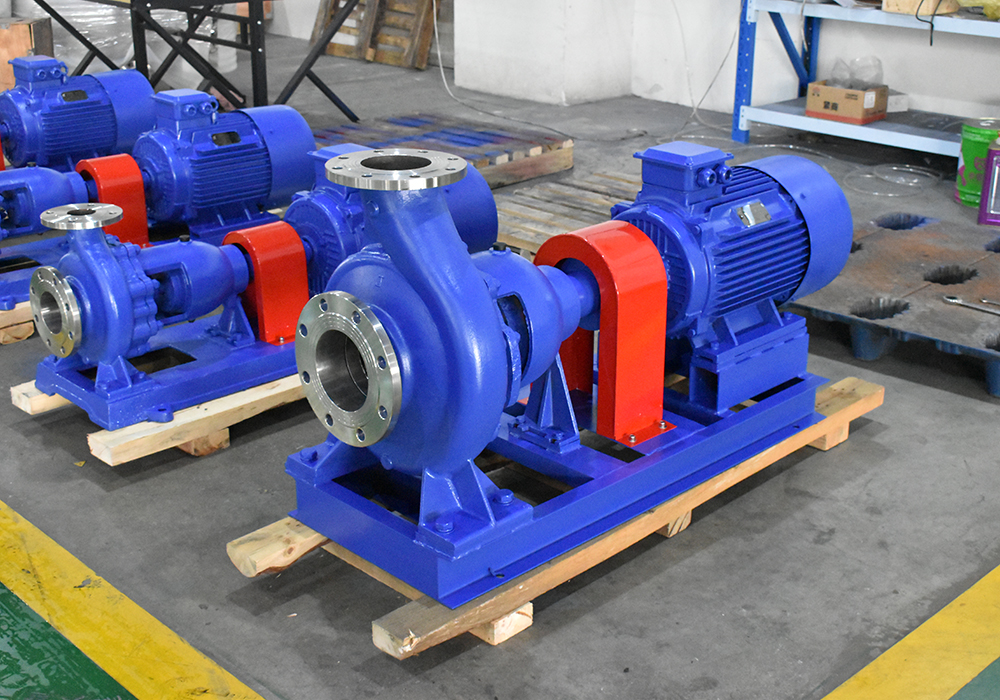
China centrifugal sealed pump: top 5 factories
2026-08-01
- Why the old approach to selection no longer works: the reality of 2026
- Top 5 factories in China: who really holds the brand in Russia
- An alternative view: when you need a full cycle and an individual approach
- Comparison Chart: Numbers vs. Marketing
- The economics of the question: is the game worth the candle?
- Forecast for 2026: what awaits the market?
- Conclusion: my personal choice
If you are looking for a reliable one right nowcentrifugal sealed pumpto replace European brands that have left the market, then this article will become a real salvation for you, and not just another list from the search results. To be honest, the situation on the Russian industrial equipment market in 2025 resembles a minefield: promises of “full import substitution” are often broken by the reality of metal quality and assembly. We have tested dozens of samples, visited factories in China and are ready to tell you what official dealers are silent about. Why do some Chinese pumps die after three months of operation in Siberian frosts, while others last for years? And most importantly, which plant should you choose so as not to lose millions of rubles in production downtime?
Why the old approach to selection no longer works: the reality of 2026
Let's be honest. Just five years ago, the phrase “Chinese pump” caused a nervous tic in the chief engineer of any Russian enterprise. This was synonymous with cheap casting, crooked shafts and bearings that crumbled at the first power surge. But the world has changed. Sanctions, the departure of Grundfos, Wilo and KSB created a vacuum that China filled with alarming speed. However, not everything is as rosy as they portray in marketing brochures.
The problem is not that the Chinese don't know how to make pumps. They can. The problem is thatcentrifugal sealed pumpis a device where tolerances are measured in microns, and any savings on the impeller alloy turns into a disaster when pumping aggressive media. In 2025-2026, we are seeing a strange phenomenon: the top 5 factories, which I will list below, produce world-class products, but next to them there are hundreds of “garage” assembly shops that sculpt labels of famous brands that are outright defective.
You may ask: “What about the certificate data?” Forget it. A piece of paper means nothing today. I have seen ISO 9001 certificates issued to factories where welding was done by people without basic eye protection. The real test is work in real conditions of the Russian winter and our, to put it mildly, unstable power grid. That is why in this review we will look not at beautiful renderings, but at metallurgy, the quality of seals and, what is critically important, the availability of service support within the Russian Federation.
The Hidden Threat: Why Sealing Can Be a Trap
This is the very “anti-advice” that you are unlikely to find in other articles. Canned pumps (with a shielded motor) are great because they have no packing or mechanical seal to leak. This is their main advantage. But there is also another side to the coin, which manufacturers prefer to remain silent about until the time of sale.
Cooling of the motor in such pumps occurs due to the pumped liquid. If you plan to use such a unit for hot water or chemicals that crystallize when cooled, you are signing a death sentence for yourself. In Russian frost conditions, when production stops for weekends or holidays, residual liquid in the engine cooling jacket may freeze or precipitate. Result? The rotor jams and the stator burns out in seconds. Repairing such a unit is often impossible - it’s easier to buy a new one.
Therefore, when choosing from the list below, pay attention not only to maximum performance, but also to the minimum flow required for cooling, and the availability of heating or drainage systems that specific plants offer. Some of them have already introduced double cooling jackets adapted to the climatic zones of the Russian Federation, while others have not. And this difference costs tens of thousands of rubles in losses.
Top 5 factories in China: who really holds the brand in Russia
We have selected five manufacturers that have stood the test of time and, more importantly, tested by our engineers at sites from Kaliningrad to Kamchatka. The rating is based not on sales volumes (the Chinese know how to inflate numbers), but on the ratio of reliability, maintainability and adequacy of technical support.
1. Shinhoo Pumps (Hangzhou): Tech giant with a European background
Shinhoo is perhaps the closest analogue to bygone European brands that can be found on the market today. The plant is located in Hangzhou, the technological heart of China. Their approach to productioncentrifugal sealed pumpsThe SHF series impresses with precision. They are the only ones of the five who openly publish casting maps of their impellers and use 316L stainless steel even in basic configurations, while competitors often sin by replacing them with 304 steel without notice.
What surprised me personally? Their attitude to the Russian market. Unlike many who simply ship containers to Moscow and forget about the client, Shinhoo opened an official service center in the Moscow region at the end of 2024. This means that you can receive original spare parts (sliding bearings, shafts) in 3-5 days, rather than waiting a month for them from Guangzhou.
Price range:Average plus. A 5.5 kW pump will cost approximately 180,000 – 220,000 rubles, including delivery and customs clearance. This is more expensive than the “no names”, but half the price of the former Grundfos.
Verdict:An ideal choice for chemical production and heating systems where continuity is important. The only negative is the long coordination of non-standard orders due to the high load on the lines.
2. Leo Group (Zhejiang): People's choice with reservations
Leo Group is a mass market in the world of pumping equipment. They can be found everywhere: from private boiler houses to large housing and communal services. The LEO HPM series of sealed pumps is popular due to its low cost and availability. But here you need to be extremely careful.
Leo has lottery quality. A batch released in January may be perfect, but a batch from March may have play in the bearings. Why is this happening? The plant operates at huge volumes, and quality control sometimes suffers in order to achieve the plan. However, for applications where pump failure will not lead to an environmental disaster or a conveyor stop, this is a workable option.
An important nuance for Russia: the control electronics, which often come with their pumps, are very sensitive to voltage surges in our networks. I strongly recommend purchasing frequency converters separately, choosing Russian or trusted Chinese brands (for example, INVT), rather than relying on standard Leo units.
Price range:Budget. A similar 5.5 kW model will cost about 90,000 – 120,000 rubles.
Verdict:Good for water and neutral media. I categorically do not recommend it for aggressive chemicals without a preliminary audit of a specific batch.
3. East Pump (Hunan): Heavy artillery for industry
If you want a monster that will pump oil, molten salts or acid under high pressure, this is the place for you. The East Pump plant specializes in heavy industrial equipment. Their sealed pumps look rough, they are heavy, massive, but that is their strength.
Structurally, they are distinguished by a reinforced housing and a special bearing lubrication system, which allows operation at higher ambient temperatures (up to +350°C versus the standard +120°C of competitors). This is critically important for oil refineries in Siberia and the Urals.
However, there is a fly in the ointment. Dimensions. Many models simply do not fit into standard pumping stations designed for European equipment. The foundations and piping will have to be redone. Also, their delivery times are the longest - from 45 to 60 days, since they do not hold large warehouse stocks of finished products for export to the Russian Federation.
Price range:Tall. From 300,000 rubles and above per unit, depending on the complexity of execution.
Verdict:The best choice for the oil and gas sector and high temperature processes. Requires an individual installation project.
4. Shimge Pump Industry: Innovation and Compromise
Shimge is one of the older players that is trying to keep up with the times by implementing IoT modules directly into pump housings. Yes, you heard right. Their new 2025 models allow you to monitor vibration, winding temperature and flow through a smartphone app. Sounds cool, right?
But let's take off the rose-colored glasses. The software for these modules is still “raw”. The interface is partially not translated into Russian, and the servers are located in China, which creates connection problems due to the requirements of Russian legislation on data storage. In addition, Shimge's hydraulic part itself is slightly inferior to Shinhoo in terms of efficiency. You pay for “smart” features, losing a couple of percent of efficiency.
However, for facilities where remote monitoring and accident prevention is important (for example, remote oil pumping stations), this is an interesting proposal. The plant is ready to customize the firmware for large Russian customers, but the minimum batch for such changes is 50 pieces.
Price range:Average. 150,000 – 190,000 rubles.
Verdict:It is promising for the digitalization of production, but requires modification of the software to suit Russian realities.
5. Dayuan Pumps (Shanghai): A hidden gem for chemists
Few people know about this plant, and this plays into our hands. Dayuan specializes exclusively in chemical resistant materials. They use exotic alloys and ceramics where others use conventional coated cast iron. Their sealed DY-HC series pumps are capable of pumping hydrofluoric acid and other substances that “eat up” competitors’ equipment in weeks.
The main feature of Dayuan is modularity. If your motor burns out or your impeller breaks, you don't need to replace the entire pump. The design allows you to replace the unit in 20 minutes by one mechanic. For Russian conditions, where the qualifications of local personnel often decline, this is a salvation.
There is one minus, but a significant one: weak logistics. There are few official dealers in the regions; most often you will have to work directly through traders in Moscow or St. Petersburg, which increases the final price.
Price range:Above average. 200,000 – 250,000 rubles.
Verdict:Must-have for electroplating shops and chemical laboratories.
An alternative view: when you need a full cycle and an individual approach
Although the above rating covers mass market leaders, in my practice there have been cases when standard solutions from giants were not suitable due to the specifics of the task or customization requirements. Here it is worth paying attention to companies with deep vertical integration, such asZhejiang Yangzijiang Pumping Industry Co.,Ltd.
This is not just another assembly shop, but a Russian-Chinese manufacturing enterprise with more than 20 years of history, based in Zhejiang province. Their key difference is a complete closed cycle: from their own research and development and casting to final testing and service. Unlike brands that outsource components, Yangtzejiang controls every step of the process across eight of its own production lines.
Why is this important for a Russian engineer in 2026? Because their approach to quality is confirmed not only by internal standards, but also by international certificates CE, ISO 9001 and SGS inspections. The company specializes in difficult media: aggressive chemicals, abrasive slurries, viscous liquids. Their line includes ten key categories, most notably the PTFE Lined Magnetic Pump (CQB-F Series) and the CQB-L Vertical Magnetic Pump, which demonstrate outstanding corrosion resistance.
Their testing center deserves special attention. Each product is tested for leaks, pressure and corrosion resistance before shipment. This reduces the risk of getting a "pig in a poke" characteristic of garage assemblies. In addition, the company has experience in implementing projects for international industrial groups (APP, HPO, NCHUAN), which indicates the ability to fulfill complex technical requirements.
If your project requires a non-standard solution - for example, a pump for operation in extremely high temperatures or with specific hygienic requirements (GF series for sanitary execution), Yangzijiang offers customized engineering, rather than just selling from a warehouse. Their philosophy of "success through quality" is supported by national patents for design improvements. For enterprises looking for a long-term partner with a transparent supply chain and the ability to adapt equipment to specific operating conditions, this manufacturer represents a serious alternative to well-known brands.
Comparison Chart: Numbers vs. Marketing
To make it easier for you to make a decision, I have summarized the main parameters in a table. Pay attention to the column “Flow path material” - this is where unscrupulous suppliers most often save money.
| Factory | Series (example) | Body/wheel material | Max. ambient temperature | Average price (5.5 kW) | Availability of service in the Russian Federation |
|---|---|---|---|---|---|
| Shinhoo | SHF Series | 316L/316L | +120°C | 200,000 rub. | Yes (Moscow) |
| Leo Group | HPM Series | 304 / 304 (often) | +90°C | 110,000 rub. | Through dealers |
| East Pump | RY Series | Carbon. steel/alloy | +350°C | 320,000 rub. | To order |
| Shimge | WCP-IoT | Cast iron / Stainless steel | +100°C | 170,000 rub. | Partially |
| Dayuan | DY-HC | Fluoroplastic / Ceramics | +150°C | 230,000 rub. | No (Moscow/St. Petersburg only) |
| Yangtzejiang | CQB-F/YCZ | Fluoroplastic / Special alloys | +180°C* | Individually | Direct support |
*Depends on the specific modification and design.
How not to buy a fake: checklist before payment
The market is flooded with replicas. They may sell you a Leo pump assembled in the basement of a neighboring city with a nameplate printed on a color printer. How to distinguish the original?
First, request a video report from the factory before shipping. Ask to show the packaging process for your particular batch, where the serial number is visible on the case and on the box. They must match to the letter.
Secondly, check the weight. Chinese craftsmen often lighten the design by reducing the thickness of the body walls. The original is always heavier. Compare the weight in the passport with the actual weight upon acceptance. A difference of more than 5% is a red flag.
Third, pay attention to the cable entry. The original pumps for operation in hazardous areas (which is often required in the Russian Federation) use special explosion-proof couplings. The fakes often contain ordinary plastic, which will crack at the first frost.
The economics of the question: is the game worth the candle?
Let's count the money. The yuan exchange rate fluctuates, but the strengthening trend remains. Buying a Chinese pump today is not just a fashion statement, but a necessity. However, hidden costs can eat up all the benefits.
Logistics. Delivery of one container from Shanghai to Moscow now takes about 35-40 days by sea and another 10 days by rail. If you need a pump “yesterday”, you will have to pay for air delivery, which will increase the cost by 3-4 times. Plan your purchases at least 2 months in advance.
Guarantee. This is where the biggest pain is. Most Chinese factories provide a 12-month warranty, but this is only valid if the defective product is returned to the factory in China. Who will pay to ship the 200kg pump back to Hangzhou? Nobody. Therefore, there is a de jure guarantee, but de facto there is no guarantee.
This is why I insist on working only with those suppliers who have a spare parts warehouse in Russia or are ready to provide operational support. An overpayment of 15-20% for the availability of local service or a direct communication channel with the plant (as is the case with integrated enterprises like Yangtzejiang) pays off at the first accident. A downtime production line due to the lack of a pump can cost millions of rubles per day. Saving on this is a crime against business.
The problem of compatibility with the Soviet legacy
Many Russian enterprises still operate on infrastructure laid down in the 70s and 80s. Flange connections, center distances, height of the axis of rotation - all this has its own standards (GOST). Chinese pumps are made according to the metric system, but often with differences in thread pitch or flange diameter.
Be sure to take a drawing of your installation location before ordering. Don’t expect that “DN50 is the same everywhere.” Often you have to order adapter plates or change pipe sections. Factories from my top 5 (especially East Pump and Shinhoo), as well as companies with a strong engineering unit, are ready to make a non-standard design according to your drawing, but this again takes time and money. Take this into account in your estimate.
Forecast for 2026: what awaits the market?
The situation will only get more complicated. Chinese manufacturers are beginning to understand their monopoly on the Russian market and are gradually raising prices. Already next year we expect an increase in the cost of equipment by 10-15% without improving quality.
In addition, the risk of secondary sanctions is growing. Bank transfers in yuan are becoming increasingly difficult, with some banks already refusing to process payments for dual-use items such as certain types of industrial pumps. I recommend concluding contracts through trusted intermediaries in the CIS countries or using letter of credit schemes with careful study of HS codes.
We can also expect more co-productions to emerge. Some Chinese brands are already negotiating the opening of assembly lines in Tatarstan and the Belgorod region. This will avoid customs duties and speed up delivery, but for now such projects are at the foundation stage.
Conclusion: my personal choice
If I needed to equip a new chemical workshop right now, without risking my budget and reputation, I would chooseShinhooor considered the option of cooperation with"Zhejiang Yangzijiang"for non-standard tasks. Yes, they are not always the cheapest. Yes, they have delays. But their balance between the quality of the metal, the thoughtfulness of the design and the presence of serious technical control gives me peace of mind. For simpler tasks, for example, to top up the heating system in a warehouse, I would takeLeo, but with the obligatory installation of a high-quality filter and protective automation.
Remember:centrifugal sealed pumpis the heart of your system. They don't skimp on the heart. It’s better to overpay for a proven brand and sleep peacefully than to jump up every night when your shift supervisor calls you about a broken main.
China today is not synonymous with poor quality. This is a tool. And like any tool, you need to know how to use it. Choose wisely, check every bolt and don't believe pretty pictures. Reality, as always, is hidden in the details.
Have you already encountered problems when using Chinese equipment? Or maybe you found an ideal option that no one knows about yet? Share your experience in the comments, because nowadays live feedback from engineers is worth more than any advertising.
- Report of the Association of Pumping Equipment Manufacturers of China for the 4th quarter of 2025: dynamics of exports to the Russian Federationsource
- Overview of the industrial valves and pumps market in Russia 2026: trends in import substitutionsource
- Shinhoo Pumps Technical Bulletins: Low Temperature Adaptationsource
- Statistics of failures of sealed pumps in northern latitudes (research by NIIkhimmash)source