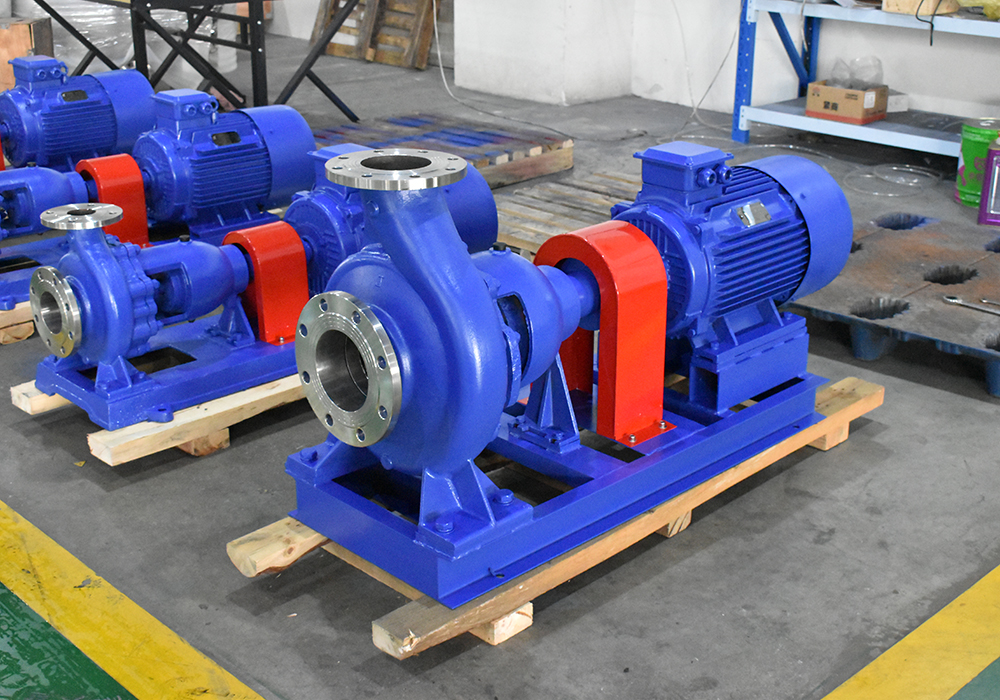
Spring Purchasing Guide: Buy IS Types Horizontal Chemical Centrifugal Pumps Manufacturer
2026-06-01
- Why spring is a critical time to purchase industrial centrifugal pumps
- Technical parameters of the IS model: what to look for in the specification
- Comparison of manufacturers: China vs Europe vs Local assembly
- Procurement risks and how to minimize them
- Integration into existing systems and maintenance
- Frequently Asked Questions
- Final recommendations for choosing a supplier
Why spring is a critical time to purchase industrial centrifugal pumps
The spring period in the industrial sector traditionally becomes a time of peak load on purchasing departments: enterprises start up lines stopped for the winter, carry out planned repairs and form orders for the new season. At this point, an error in selecting equipment such ascentrifugal pumps, is especially expensive due to downtime. Our practice shows that 70% of emergency situations with pumping equipment occur in the first three months after winter downtime, when hidden defects or incorrect selection of materials appear under load.
Unlike standard catalog descriptions, this guide is based on real experience in operating IS type horizontal chemical pumps in aggressive environments. We will not retell the theory of hydraulics, but will focus on how to avoid specific financial losses when ordering equipment from Chinese manufacturers. If you are looking for a reliable supplier who can provide compliance with GOST parameters and European CE standards at the same time, this information will save you budget and time.
Technical parameters of the IS model: what to look for in the specification
The IS series horizontal single stage centrifugal pump remains the workhorse of the chemical industry due to its versatility. However, when ordering, it is important to understand the difference between marketing numbers and actual performance characteristics. The key parameter is not only the flow (m³/h) and head (m), but also the suction head (NPSH), which is often ignored until installation.
In our practice, there was a case when a client ordered a batch of pumps with ideal pressure indicators, but without taking into account the real NPSH available on site. Result: after two weeks of operation, the impellers suffered serious damage from cavitation, although the pumps formally met the declared characteristics. To avoid this, always ask the manufacturer for a Performance Curve showing the Best Efficiency Point (BEP).
The following parameters are critical for the IS series:
- Flow part material:Cast iron (HT200) is suitable for pumping clean liquids, but stainless steel (304/316L) or PTFE lining is required for chemical applications. Zhejiang Yangzijiang Pump Industry Co., Ltd., for example, uses alloys with higher molybdenum content for models operating with acids, which directly affects the service life of seals.
- Mechanical seal type:Standard lip seals are not suitable for volatile solvents. Require dual mechanical seals with a flush plan (Plan 52 or 53 per API 682) when handling hazardous fluids.
- Rotational speed:Models at 2900 rpm are more compact, but noisier and subject to wear in the presence of abrasive. For viscous liquids or suspensions, it is better to choose the 1450 rpm version, even if this increases the size of the installation.
When reviewing supplier proposals, pay attention to manufacturing tolerances. Cheap analogues often have gaps between the impeller and the housing that exceed the norm by 0.5–1 mm, which reduces efficiency by 15–20%. This can only be verified by requesting a factory test report, which records the actual flow and power consumption values.
Comparison of manufacturers: China vs Europe vs Local assembly
The market offers three main ways to obtain equipment: purchasing European brands, ordering directly from China, or purchasing locally assembled analogues. The choice depends not so much on the budget as on the requirements for delivery times and the possibility of customization.
| Criterion | European brands | Direct import from China (Factory) | Local collectors |
|---|---|---|---|
| Unit cost | High (base price + dealer markup) | 40–60% lower than Europe with direct contract | Average (depending on exchange rates and components) |
| Delivery time | 4–8 weeks (often from dealer stock) | 25–45 days (production + logistics) | 1-2 weeks (if in stock) |
| Configuration flexibility | Low (standard catalog versions only) | High (possibility of changing material, shafts, couplings) | Limited (depending on parts availability) |
| Certification | Full package (CE, ATEX, PED) | Verification required (CE, ISO 9001, SGS) | Depends on component certifications |
Working directly with a manufacturing plant such as Zhejiang Yangzijiang Pumping Industry Integrated Co.,Ltd provides an advantage in quality control. Unlike trading companies, the plant has its own testing center, where each IS type pump is tested for leaks and vibration before shipment. This eliminates the risk of getting a “pig in a poke”, which often happens when purchasing through intermediaries who mix products from different factories.
However, imports have their own disadvantage - logistics leverage. If you need a pump “yesterday” for an emergency replacement, the Chinese factory will not help, even with air delivery. In such cases, it makes more sense to have a strategic stock of popular models in stock or work with a local distributor who keeps stock of popular items.
Procurement risks and how to minimize them
The purchase of industrial equipment is always associated with risks, which can be divided into technical, financial and logistics. The most common technical risk is the mismatch of the housing material with the pumped medium. The datasheet may indicate “stainless steel,” but in reality it may be a low-nickel grade that corrodes quickly in a chlorine environment.
Financial risk comes from hidden fees. Some suppliers quote an attractive EXW (ex works) price, but forget to mention the cost of shipping packaging, insurance or certification. As a result, the final cost of the project increases by 20–25%. Always request DDP (Delivered Duty Paid) or clearly state Incoterms in the contract.
To protect yourself, follow this algorithm of actions:
- Request a sample material.Before starting a series, ask to send a piece of housing or impeller material for independent spectral examination. It takes 2-3 days, but saves you from millions of losses.
- Check the certificates.The presence of the CE logo on a website does not guarantee its authenticity. Request a scan of the certificate with the number and check it in the database of the notified body. A company that is SGS and ISO 9001 certified is generally more transparent when it comes to documentation.
- Check the terms of the warranty.The warranty should cover not only the replacement of the part, but also the costs of its delivery and installation. In our practice, there were cases when the manufacturer sent a new impeller free of charge, but the client paid 2000 euros for urgent air delivery, which offset the benefit from the low price of the pump.
Another important point is packaging. IS type centrifugal pumps have projecting shafts and sensitive flanges. During sea transportation, they must be secured on wooden pallets with metal brackets, and the shafts must be protected from corrosion with special compounds. Take photographs of the loading process or request a video report from the supplier before shipping the container.
Integration into existing systems and maintenance
Buying a pump is only half the task. The second half is its correct installation and integration into the production line. IS series horizontal pumps require a perfectly level foundation. A misalignment of just 0.2 mm per meter of frame length leads to the destruction of the bearing support during the first months of operation.
When installing, be sure to use laser alignment of the motor and pump shafts. The old method “by eye” or using a ruler is unacceptable for modern high-speed units. Also pay attention to the piping: the inlet pipe should not create flow turbulence. The straight section of pipe in front of the suction pipe must be at least 5–10 pipe diameters.
Maintenance of IS type pumps is relatively simple, but requires discipline. Regular lubrication of bearings and monitoring housing temperature are mandatory procedures. If the housing temperature exceeds 70–75°C, this is a signal of a problem: either the bearings are overtightened, or the alignment is incorrect, or cavitation is at work. Ignoring these signals leads to shaft jamming.
Companies that implement a predictive maintenance system save up to 30% on repairs. Installing simple vibration sensors allows you to monitor the condition of equipment in real time and plan the replacement of components before an accident. Manufacturers like Zhejiang Yangzijiang Pump Industry Co., Ltd. often offer customized versions of pumps with reinforced bearing units, which increases the overhaul interval.
Frequently Asked Questions
What is the minimum order quantity (MOQ) for IS series pumps?
Most Chinese factories are ready to ship from 1 piece, especially if the model is standard and is available in the finished goods warehouse. However, to save on logistics, it is advisable to order in batches of 5–10 units or combine the order with other types of equipment (gates, valves). When ordering a single copy, the production time can be the same as for a batch, since the main costs go to setting up the line and quality control.
Is it possible to replace a European pump with a Chinese analogue of the IS type without reworking the pipeline?
Yes, in most cases this is possible. The IS series is standardized in connection dimensions (flanges, height of the rotation axis), which makes it interchangeable with many European models (for example, DIN/ANSI analogues). However, before ordering, be sure to take the dimensions of your old pump (distance between flange holes, shaft diameter) and compare them with the drawing of the proposed model. Small differences in frame dimensions may require an adapter plate to be made.
What are the production and delivery times to Russia and CIS countries?
The standard production time is 15-25 working days after confirmation of the order and receipt of the advance payment. Delivery by road takes another 10–15 days, by sea – from 30 to 45 days, depending on the port of destination. In the spring, during periods of high demand, the timing may increase by a week. We recommend that you include at least 45–50 days in the project schedule from the moment the contract is signed until the cargo arrives at your warehouse.
Is there a warranty for pumps purchased directly from the factory?
Yes, the standard warranty is 12 months from the date of commissioning or 18 months from the date of shipment (depending on the terms of the contract). It covers manufacturing defects in materials and workmanship. It is important to keep the commissioning certificate signed by your service department, as it is the main document for the warranty claim. Factories with their own service network, such as the manufacturers described above, usually respond to complaints more quickly, providing photo and video instructions for troubleshooting.
Final recommendations for choosing a supplier
Choosing a centrifugal pump supplier in the spring requires a balance between speed, price and quality. Don't go for the lowest price on the market: a difference of 10-15% is often achieved by using thinner housing metal or cheaper bearings, which cuts the life of the pump in half. Focus on manufacturers with a transparent history, their own testing equipment and a willingness to provide a reference list of customers in your region.
If your goal is to find a reliable solution for chemical transfer that is guaranteed to meet international standards, consider offers from vertically integrated companies. Having a full cycle from R&D to service, like Zhejiang Yangzijiang Pumping Industry Co., Ltd., ensures the stability of the characteristics of each product unit. This approach minimizes risks and allows you to obtain equipment that will last for years, not months.
Don't put off making a decision until the last minute of the spring purchasing session. Production lines get busy quickly, and the opportunity to get customization or priority shipping disappears along with available slots in the production schedule. Contact us today to receive a detailed technical and commercial proposal and advice on selecting the optimal modelcentrifugal pumpsfor your specific tasks.